
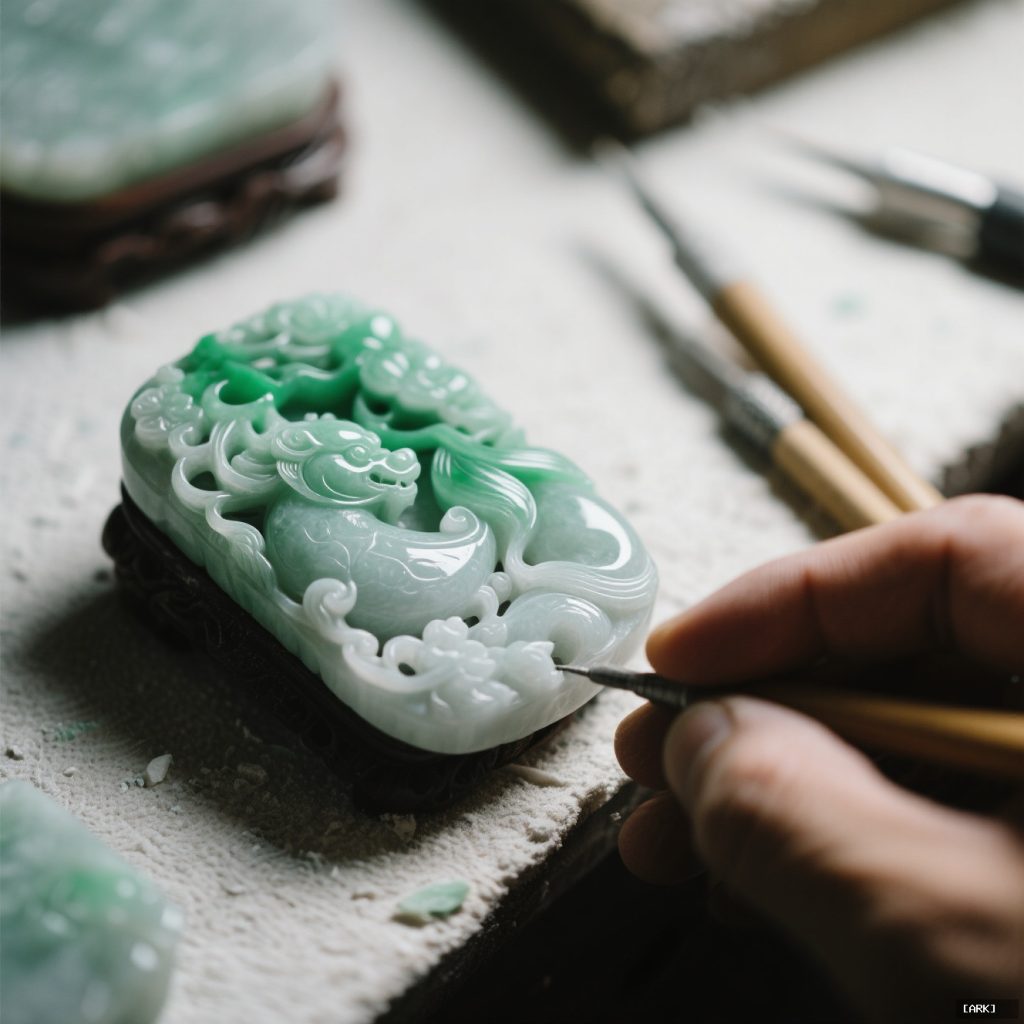
Chinese jade carvings are not silent ornaments; they are conversations waiting to be held. To understand a piece of nephrite artwork, you must move beyond sight and engage with its physical language—its weight, its temperature, the story held within its crystalline heart.
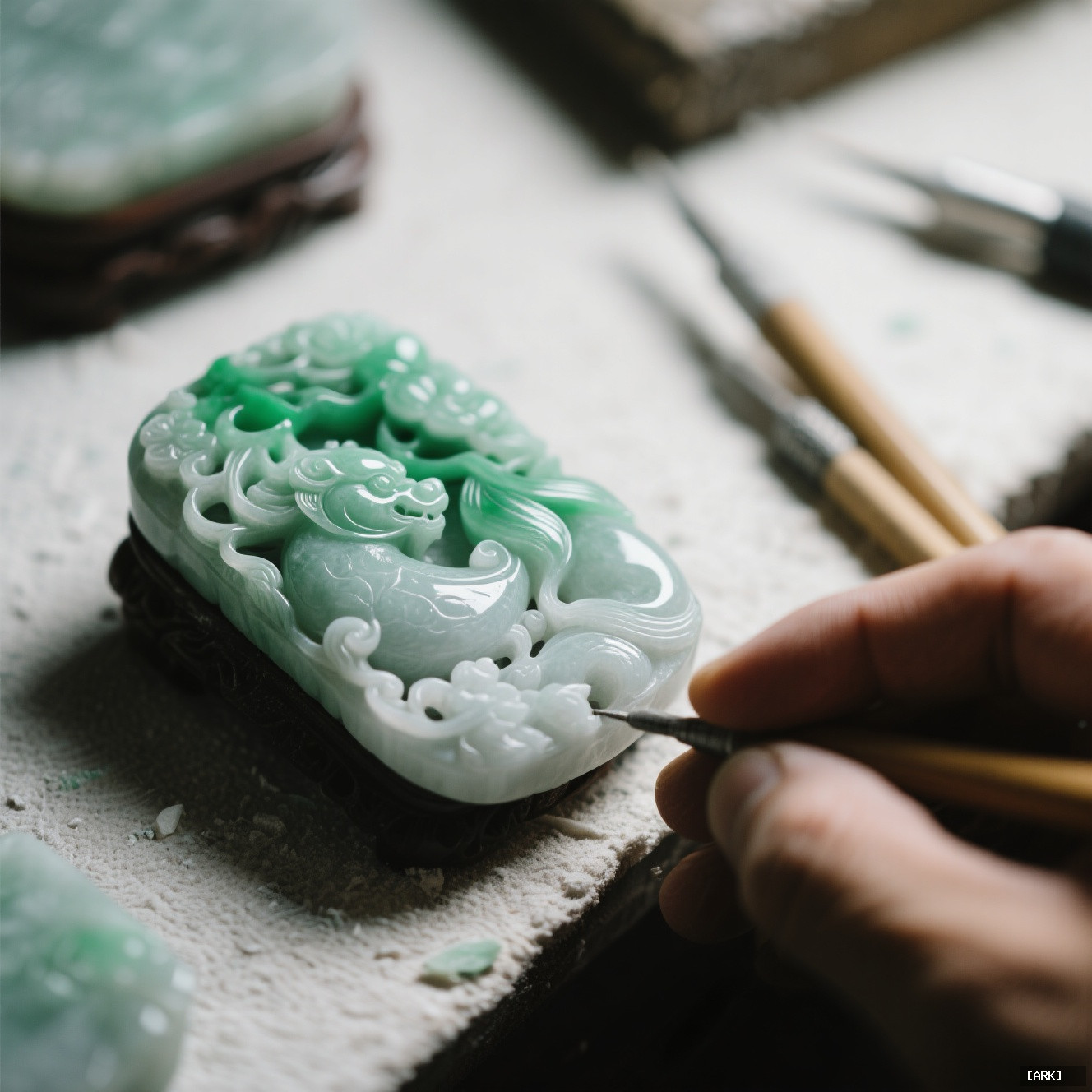
This tactile relationship is central to a 5,000-year-old tradition. For millennia, jade has been considered more precious than gold in China, embodying virtues like wisdom, courage, and compassion. An oriental gem carving is never just a shape. It is a captured landscape, a philosophical idea given mineral form. This guide isn’t about distant admiration. It’s about learning to listen to the stone.
The First Touch: Beginning the Conversation
What is the recommended first step when beginning to work with a new Chinese jade carving?
The recommended first step is to start with touch, not visual scrutiny. After washing your hands to remove oils, simply hold the carving in your palm, cup it, and close your eyes. This allows you to feel its characteristic coolness, as real nephrite jade's dense, microcrystalline structure conducts heat away, creating a persistently cool sensation that imitations cannot sustain. You should also notice its substantial heft, a result of high mineral density, which confirms its quality and authenticity through this initial, silent physical assessment.
When a new carving comes into your hands, your first instinct might be to scrutinize its color or design. Resist it. Start with your skin. Wash your hands to remove oils and lotions, then simply hold it. Cup it in your palm. Close your eyes.
Real nephrite has a dense, microcrystalline structure that conducts heat away from your body. It feels persistently, reassuringly cool—a sensation that plastic, glass, or treated stone cannot replicate for long. Notice its heft. A quality jade sculpture should feel substantively heavy for its size, a direct result of its mineral density. This initial, silent dialogue tells you more about its authenticity than any paperwork. As collector Lin Wei from Shanghai notes, “The certificate tells you the ‘what.’ The stone in your hand tells you the ‘why.'”
Decoding Authenticity: Light, Sound, and Structure
How can you decode the authenticity of Chinese jade carvings using light, sound, and structure?
Authentic jade, particularly untreated nephrite, can be identified through focused observation. Under strong light, real jade often reveals a subtle, granular texture known as the 'sugar structure,' resembling tightly interlocked tiny crystals. Fakes, such as dye-treated or resin-impregnated pieces, typically exhibit a waxy, overly uniform gloss instead. Additionally, genuine jade produces a clear, resonant sound when lightly tapped, unlike the dull thud of imitations. Examining the internal structure for natural imperfections and consistency also helps verify authenticity, as synthetic materials often lack these organic variations.
Once you’ve felt its presence, you can begin to look deeper. The visual hallmarks of real jade are subtle, demanding a shift from casual glancing to focused observation.
Under a strong, focused light, examine the surface of your piece. Untreated nephrite often reveals a subtle, granular texture that veteran collectors call the “sugar structure.” It resembles a mass of tightly interlocked, tiny crystals—like granulated sugar viewed up close. This is the natural fingerprint of the stone. Dye-treated fakes or resin-impregnated composites often have a waxy, overly uniform gloss that completely obscures this internal landscape. Their perfection is the flaw.
Then, listen. This is one of the oldest and most revealing tests. Gently tap the carving with a fingernail or a piece of untreated wood (metal can chip it). High-quality nephrite will answer with a clear, resonant, and surprisingly prolonged ring—a high-pitched *ping* that seems to hang in the air. Softer minerals, composites, or heavily fractured stone produce a dull, short *clack*. A 2019 study in the Journal of Cultural Heritage on acoustic signatures of gemstones confirmed that the resonant frequency and decay time of nephrite are distinctively high, a direct result of its interlocking fibrous structure. The best carvers have always known this; they speak of “listening” to the stone to find its natural cleavage lines and spirit.
A Spectrum Written in Stone: The Meaning of Color
What is the significance of color variation in Chinese nephrite jade carvings?
The color variation in Chinese nephrite jade is not random but a geological record, with each hue indicating specific trace elements and formation processes. Iron produces greens, manganese creates lavenders and mauves, graphite leads to blacks and grays, and the prized 'mutton fat' jade is a creamy white symbolizing purity. These colors, shaped over eons, are highly significant in jade carving, with certain hues like white being especially valued since the Qing dynasty for their cultural and aesthetic meanings.
Forget the singular idea of “jade green.” The palette of nephrite is a geological diary, each hue a chapter written by trace elements over eons. Iron introduces greens, from pale spinach to deep forest. Manganese can blush the stone into delicate lavenders and mauves. Graphite inclusions create elegant blacks and grays. The coveted “mutton fat” jade is a creamy, translucent white, symbolizing purity and highly prized since the Qing dynasty.
This variation isn’t random. It maps the stone’s specific process through the earth. A 2021 UNESCO report on intangible cultural heritage in East Asia highlights how traditional jade masters read these colors as a topographical map, allowing the stone’s inherent patterns to suggest forms—a dark streak becomes a mountain ridge in a landscape, a cloud of lavender transforms into the robe of a deity. The color was never just an aesthetic choice; it was the starting point of the narrative.
Living with Jade: Display and Care as Ritual
How should one display and care for Chinese jade carvings as a ritual?
Displaying and caring for Chinese jade carvings is a ritual that involves interactive engagement. Avoid direct sunlight to prevent fading and drying, especially for older pieces with historical wax treatments. Place the carving on a dark cloth or in a shadow box to enhance its soft, waxy luster. Rotate it occasionally and view it from different angles in varying light to appreciate the contours shaped by the carver, continuing the conversation started during its creation.
How you live with a jade carving continues the conversation started by the carver. These are objects meant for interaction, not static imprisonment in a sealed case.
Display should invite engagement. Avoid direct, harsh sunlight, which can slowly fade some hues and dry out older pieces that may have historical wax treatments. Instead, place it on a simple, dark cloth or within a shadow box, where its soft, waxy luster can glow from within. Rotate it occasionally. View it from different angles in the morning and evening light. Let your eyes trace the contours the carver’s hands once followed.
Maintenance is beautifully simple, echoing the minimalist philosophy jade itself represents. Periodically wipe it with a soft, slightly damp cloth to remove dust and skin oils. That is all. Never subject it to ultrasonic cleaners, steam, or harsh chemicals. These can introduce microscopic fractures or strip away the natural patina. The finest maintenance, known in Chinese as *yang yu* or “raising the jade,” is regular, mindful handling with clean hands. Over decades, the gentle interaction with natural skin oils can enhance the stone’s depth and luster, imparting a warmer, more translucent quality—a shared history written on its surface.
Beyond Ornament: The Enduring Language of Form
What symbolic meanings are conveyed by the forms of Chinese jade carvings?
Chinese jade carvings use form as a dense symbolic language. A disc with a central hole, called a *bi*, represents heaven, while a squared tube, or *cong*, symbolizes earth. Motifs like a lotus flower speak of purity rising from mud, and a gnarled peach tree embodies longevity. Research, such as a 2023 analysis by the Smithsonian's National Museum of Asian Art, shows these motifs evolved from Neolithic ritual objects into personal talismans, with their meanings adapting but always retaining a core connection to cosmic and social order.
To fully appreciate Chinese jade carvings, one must understand that their forms are a dense symbolic language. A disc with a central hole (*bi*) represents heaven. A squared tube (*cong*) symbolizes earth. A lotus flower speaks of purity rising from mud, while a gnarled peach tree embodies longevity. A 2023 analysis by the Smithsonian’s National Museum of Asian Art traced how motifs from Neolithic ritual objects evolved through centuries into personal talismans, their meanings adapting but never losing their core connection to cosmic and social order.
This is why display matters. Placing a jade mountain scene near a window isn’t just decorative; it’s aligning a miniature universe with the real one. Keeping a small “ruyi” (sceptre) carving on a desk isn’t mere whimsy; it’s an invocation of its meaning: “as you wish.” The object’s purpose is activated by its context and your relationship to it.
Your Practical Evaluation Checklist
- Heft & Density: It should feel surprisingly heavy for its volume, a hallmark of dense nephrite.
- Thermal Conductivity: Does it stay cool to the touch for a prolonged period, even in a warm room?
- Textural Truth: Under strong light, look for the granular, “sugary” internal structure. A perfectly smooth, glassy or waxy surface is a red flag.
- Acoustic Signature: Gently tap it. Listen for a clear, ringing resonance, not a dull thud.
- Luster, Not Shine: The surface should glow with a soft, wax-like or oily luster, not reflect like a mirror.
- Tool Mark Awareness: Examine crevices. Ancient carvings show hand-drill marks and abrasive polish lines. Modern pieces may have uniform machine marks. Neither is inherently bad, but they tell different stories.
Navigating Common Questions
Is all valuable jade from Myanmar (Burma)?
No. While Burmese jadeite is famous, China’s primary historical material is nephrite, sourced for millennia from regions like Xinjiang (Hetian). Hetian nephrite, particularly the white “mutton fat” variety, has been the classical standard for Chinese jade carvings since ancient times.
Can I wear my jade pendant daily?
Absolutely. Jade is traditionally meant to be worn close to the body as a protective, virtuous talisman. However, protect it from sharp impacts, harsh chemicals like chlorine or perfume, and sudden extreme temperature changes which can cause stress fractures.
What does “A-grade” or “B-grade” mean?
These are commercial terms primarily for jadeite. “A-grade” means natural and untreated. “B-grade” has been chemically bleached and polymer-impregnated to improve clarity and color. For nephrite, the more relevant concerns are natural versus dye-treated or resin-impregnated, which obscure the natural sugar texture.
How do I start collecting?
Start small and tactile. Handle pieces in reputable galleries or museums if possible. Focus on the feel and the craft before the purported age or provenance. A beautifully executed modern carving of good material is a far wiser first step than a poorly carved “antique” of dubious origin. According to a Statista 2022 market report, interest in contemporary studio jade work is growing precisely for its guaranteed authenticity and artistic innovation.
Sources & Pathways for Deeper Understanding
What are some key sources and pathways for gaining a deeper understanding of Chinese jade carvings?
Key sources for deeper understanding include the Gemological Institute of America (GIA) for foundational gemology and cultural history, and the Smithsonian National Museum of Asian Art for exploring jade's symbolic vocabulary. Academic texts like 'Chinese Jade: The Spiritual and Cultural Significance of Jade in China' by Prof. Ming Ren provide comprehensive details on styles, techniques, and philosophy. Museums such as The Metropolitan Museum of Art offer chronological overviews of jade in ancient China through their collections and online resources.
- Gemological Institute of America (GIA): Jade History and Lore – A foundational resource on the gemology and cultural history of both jadeite and nephrite.
- Smithsonian National Museum of Asian Art: The Language of Jade – An excellent exploration of jade’s symbolic vocabulary through the museum’s collection.
- Chinese Jade: The Spiritual and Cultural Significance of Jade in China by Prof. Ming Ren (2020) – A comprehensive academic text detailing regional styles, carving techniques, and philosophical contexts.
- The Metropolitan Museum of Art: Jade in Ancient China – A chronological overview of jade’s role from Neolithic rituals to later dynastic arts.
Your process with a jade carving is never finished. It changes with the light, with your understanding, with the slow, almost imperceptible deepening of its patina. It is an artifact that refuses to be merely an artifact, insisting instead on being a participant. Hold it. Listen. You’re not just owning a piece of art; you’re continuing a dialogue that began in the hands of a carver and the heart of a mountain.
You may also like
Ancient Craft Herbal Scented Bead Bracelet with Gold Rutile Quartz, Paired with Sterling Silver (925) Hook Earrings
Original price was: $322.00.$198.00Current price is: $198.00. Add to cartAncient Craftsmanship & ICH Herbal Beads Bracelet with Yellow Citrine & Silver Filigree Cloud-Patterned Luck-Boosting Beads
Original price was: $128.00.$89.00Current price is: $89.00. Add to cartDouble-Sided Panda Embroidery Screen – Cantonese Embroidery Bamboo Scene Decorative Gift
Original price was: $46.70.$33.68Current price is: $33.68. Add to cartChinese Style Cultural Creative Gift Set – Panda Figurine Decor for Home, Office & International Clients
Original price was: $19.86.$17.20Current price is: $17.20. Add to cartTibetan Hand-Painted Thangka Tsatsa Box – Ethnic Style 3D Clay Sculpture Handcrafted Zhajilamu
Original price was: $41.00.$32.00Current price is: $32.00. Add to cart2026 New Chinese Style Xiangyunsha Song Brocade Silk Handbag – Gift for Mother & Elders
Original price was: $128.00.$115.00Current price is: $115.00. Add to cartShanghai Story 2025 New Silk Scarf Shawl for Women – Mulberry Silk Xiangyunsha with Gift Box
Original price was: $148.90.$136.90Current price is: $136.90. Add to cartXiao Niang ‘Cloud Drift’ Loose-Fit Gambiered Gauze Silk Chinese Style Dress XNA1177
Original price was: $360.00.$328.00Current price is: $328.00. Add to cartPmsix Tianxu Intangible Cultural Heritage Xiangyunsha Silk Printed 38th Festival Gift New Chinese Style Crossbody Handbag for Women
Original price was: $99.50.$94.50Current price is: $94.50. Add to cart























