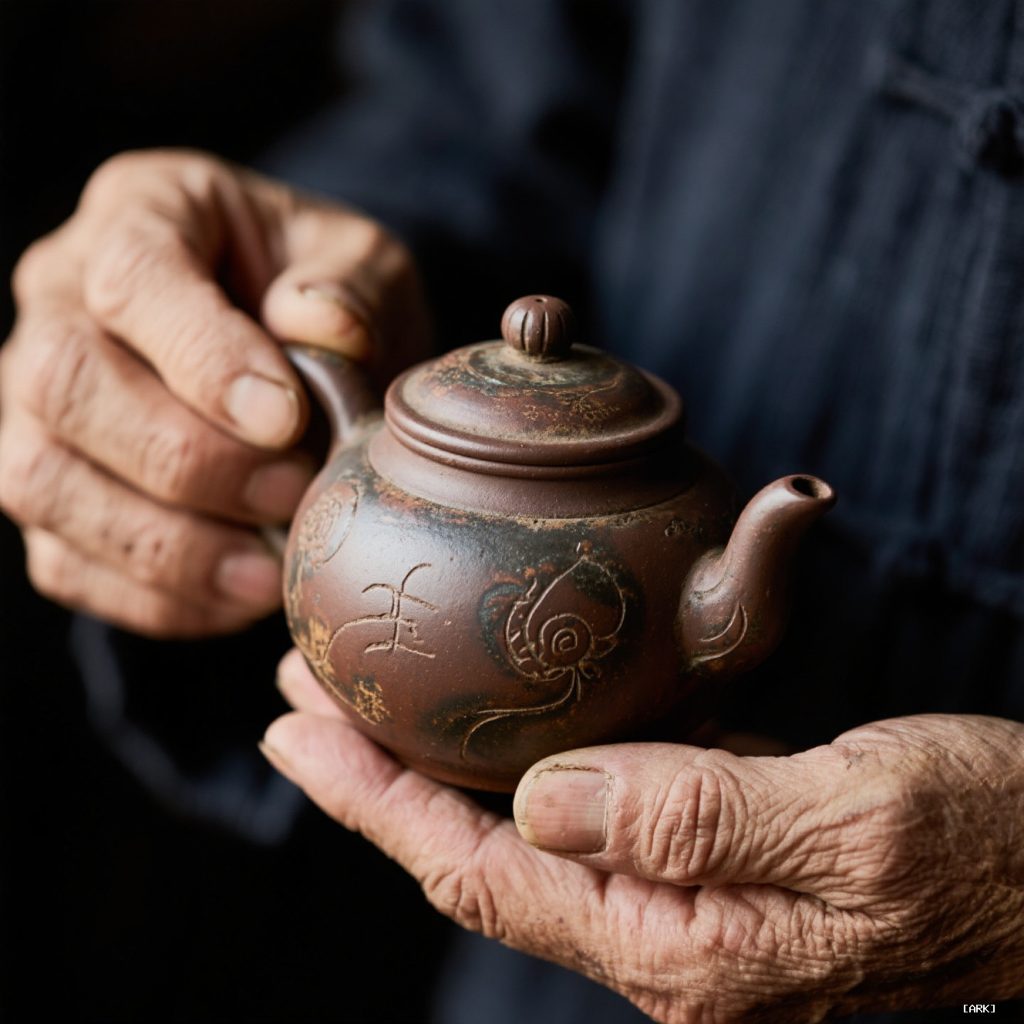
The rich mix of Chinese tea culture history is not merely a chronicle of a beverage, but the very soul of a civilization, etched into clay, leaf, and ritual. For a collector, this history is the ultimate arbiter of authenticity and value, a tangible thread connecting the present to ancient tea practices.
Every object tells a story. A crackled glaze whispers of a specific kiln’s fire. The wear on a silver latch maps a century of daily use. To hold a genuine artifact is to hold a piece of that continuum, a direct sensory link to a moment when the way people prepared, shared, and revered tea was fundamentally different from our own. This connection is what the market ultimately covets and what separates profound artifacts from clever forgeries.
The Provenance Imperative: History as Pedigree
Why is provenance considered the non-negotiable pedigree in Chinese tea culture history?
In Chinese tea culture, provenance is the essential, documented history of an object that authenticates its connection to pivotal historical moments. For example, a Yixing teapot from the late Ming Dynasty holds immense value not merely as an antique, but because it physically originates from the era when loose-leaf brewing ascended, revolutionizing tea ceremony practices, vessel design, and philosophy. This documented link to a transformative period makes such an artifact a fragment of that revolution, commanding a significant market premium as a piece of living history.
Ask any serious collector what matters most, and the answer is provenance. It’s the non-negotiable pedigree, the documented biography of an object. A simple Yixing teapot from the late Ming Dynasty carries immense weight not because it’s made of old clay, but because it exists as a physical artifact from the precise era when loose-leaf brewing ascended. This shift from powdered to leaf tea revolutionized the ceremony, demanding new vessel shapes and philosophies.
Owning such a piece is owning a fragment of that revolution. The market pays a premium for this documented link to a pivotal moment in tea ceremony origins. An auction listing won’t just say “Ming Dynasty teapot”; it will cite previous collections, reference scholarly texts, and often trace a lineage that adds chapters to the object’s life. Without this paper trail, age is just a number, and a suspicious one at that.
Reading the Object: Patina, Wear, and the Ghost of Use
How do patina and wear on objects like antique tea caddies reveal the history of Chinese tea culture?
In Chinese tea culture history, patina and wear on objects like antique silver tea caddies serve as forensic evidence of authentic use. Genuine pieces show soft, uneven wear from repeated handling, such as around a latch from thumbs opening it over generations, and interior tea stains from scooping. This contrasts with fakes, which often have uniform, chemically-induced patina or symmetrical wear. These physical traces document daily rituals and the passage of time, offering a tangible, non-replicable record of historical tea traditions beyond written documentation.
Beyond paperwork, the object itself holds evidence. This is where understanding historical tea traditions becomes a forensic tool. Patina—the gentle accumulation of age, oil, and interaction—tells a story machines cannot replicate.
Consider an antique silver tea caddy. A genuine piece will show soft, uneven wear around the latch, the result of countless thumbs applying pressure in the same spot over generations. The interior might have subtle tea stains in a pattern consistent with scooping. A fake will often display a uniform, chemically-induced darkness or wear that looks symmetrical, even surgical. It lacks the randomness of human life.
This scrutiny extends to ceramics. A genuine Song Dynasty jian tea bowl, prized for the “hare’s fur” or “oil spot” glazes that emerged during tea competitions, will have a foot ring trimmed by hand. It will be irregular, perhaps with small, sharp marks from the potter’s tool. A modern forgery aiming for “perfection” will often have a mechanically smooth, flat foot ring—an instant anachronism that betrays a lack of deep knowledge about ancient production techniques.
Compressed Time: The Allure of Vintage Tea Cakes
What is the allure of vintage tea cakes in Chinese tea culture?
Vintage tea cakes are prized in Chinese tea culture as gustatory time capsules that offer a pure form of historical experience. A well-preserved cake from decades ago provides a sensory snapshot of a specific terroir, agricultural method, and trade moment before modern homogenization. Collectors value them as a literal taste of history, with authenticity verified through examination of compression techniques, paper wrappers, and branding. These cakes represent compressed time, allowing drinkers to experience a distinct historical era through flavor and aroma.
While ceramics offer visual history, vintage tea cakes offer a gustatory one. They are perhaps the purest form of historical time capsule in Chinese tea culture. A well-stored cake from the 1950s or 1960s is not just aged tea; it is a sensory snapshot of a specific terroir, a specific agricultural approach, and a specific moment in trade before modern homogenization.
Collectors of these cakes are buying a literal taste of history. The value is authenticated through a multi-layered investigation: the compression method (hand or early machine?), the quality and branding of the paper wrapper, the style of the ink, and of course, the flavor profile itself, which experts compare against known benchmarks. Each cake embodies ancient tea practices of preservation and transport, transformed by time into a unique, consumable artifact. The story is in the sip.
The Weight of a Story: Lineage Over Lonely Antiquity
In Chinese tea culture, why does a verifiable lineage often hold more value than vague antiquity?
In Chinese tea culture, a verifiable lineage often holds more value than vague antiquity because a provable, intimate story carries greater weight. For example, a humble 19th-century folk teapot from a known Fujian tea-growing family, with a clear history passed through generations, commands more respect than an older, ornate piece with gaps in its provenance. This is due to the powerful narrative of use; such items absorb the daily life, conversations, and rituals of a specific context, making their history tangible and meaningful.
It’s a common misconception that older always means better. collecting, a provable, intimate story often trumps vague, unsubstantiated antiquity. A humble, 19th-century folk teapot used by a known tea-growing family in Fujian, with a verifiable lineage passed down through generations, can command more respect and value than a more ornate piece from an earlier dynasty with a hundred-year gap in its history.
Why? Because the narrative of use is powerful. That folk teapot absorbed not just tea, but the daily life, conversations, and rituals of a specific context. Its wear patterns, its minor repairs, even its stains become part of its material worth. It is a direct participant in the living stream of historical tea traditions, whereas the older, orphaned piece is merely a silent relic.
When Poetry Meets Clay: The Literati Influence
How did Chinese literati influence tea culture through art and inscriptions?
Chinese literati, including poets, painters, and officials from the Ming and Qing periods, profoundly shaped tea culture by inscribing zisha teapots and scholar's rocks. These inscriptions transformed functional objects into historical documents, capturing the intersection of culture, politics, and personal taste. They reveal who used the items, their values, and how tea drinking served as an expression of self, making such pieces multi-dimensional treasures that reflect the scholarly arts' deep ties to tea traditions.
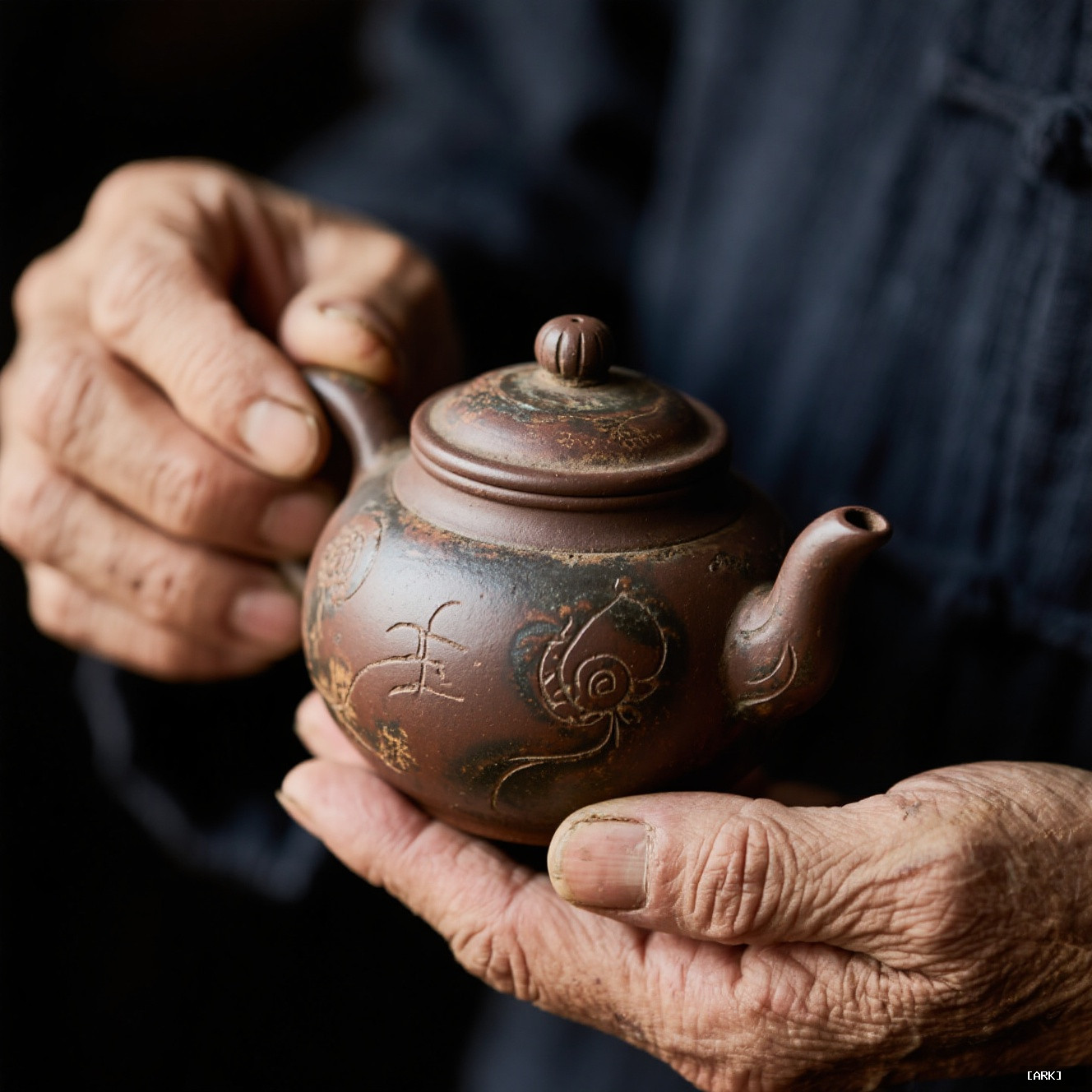
Chinese tea culture history has always been deeply intertwined with the scholarly arts. This intersection creates some of the most coveted collectibles. A zisha teapot or a piece of scholar’s rock inscribed by a known poet, painter, or official from the Ming or Qing period is a multi-dimensional treasure.
It is no longer just a vessel; it is a signed historical document. The inscription places the object at a specific crossroads of culture, politics, and personal taste. It tells us who drank from it, what they valued, and how they saw the act of tea drinking as an expression of self. This transforms craft into a cultural artifact, elevating its value far beyond its form or function. It becomes a documented node in the vast intellectual network of China’s tea history.
A Collector’s Toolkit: The Evaluation Checklist
What are the key elements of a collector's toolkit for evaluating Chinese tea culture artifacts?
A collector's toolkit for evaluating Chinese tea culture artifacts centers on a disciplined checklist to counter sentiment. Key elements include verifying provenance with a documented ownership chain from a reputable dealer, assessing material truth by matching clay, glaze, or alloy to historical recipes, analyzing functional logic by examining wear patterns that align with real use physics, and checking stylistic alignment of decorations and shapes to the purported era and region. This systematic approach helps ensure authenticity and sound judgment in the market.
Navigating this market requires a disciplined eye. Sentiment is the enemy of sound judgment. Before any purchase, run through these core questions:
- Provenance First: Is there a documented chain of ownership? A reputable dealer provides history, not just a charming story.
- Material Truth: Does the clay, glaze, porcelain type, or metal alloy match the known materials and recipes of the purported era and region?
- Functional Logic: Does the wear make sense? Look for handle wear, spout drips, lid friction. Authentic wear follows the physics of real use.
- Stylistic Alignment: Are the decorations, shapes, and seal marks consistent with the artistic motifs and calligraphic styles of that dynasty? Anachronism is the most common forgery error.
- Expert Corroboration: Never rely on a single source. Compare the piece to verified examples in museum collection databases, academic publications, and established auction house archives.
Navigating Common Questions and Pitfalls
Is all old tea ware valuable?
Absolutely not. Age alone is meaningless. Every era produced vast quantities of simple, mass-produced items for daily use. Value is created by a combination of rarity, exceptional artistry, impeccable condition, and—most importantly—clear historical significance or provenance.
Can modern pieces be good investments?
Yes, but with a specific focus. The work of contemporary masters who dedicate themselves to reviving and innovating upon historical techniques with the finest materials can be immensely valuable. These artists are not copying; they are contributing to the continuum. Their best works are the future’s antiques, entering the historical record from day one.
What’s the biggest pitfall for new collectors?
Falling in love with the romance before verifying the facts. The desire to own a piece of history is powerful, and it can cloud judgment. The most dangerous phrase in this hobby is, “The dealer told me a great story about it.” Let the evidence, not the narrative, be your guide.
Sources & Further Reading
Building a foundation of knowledge is the best investment a collector can make. These resources offer rigorous, credible starting points:
1. The Metropolitan Museum of Art’s Heilbrunn Timeline of Art History: Essay on Chinese Tea Culture
2. Sotheby’s and Christie’s auction archives: Search past sales of “Chinese tea ware” for high-resolution images and detailed provenance listings that set market benchmarks.
3. University of Oxford, Ashmolean Museum Collection Database: For scholarly comparisons of ceramic forms and styles
4. The Global Tea Initiative at UC Davis: For historical and agricultural research on tea cultivation and trade
About Our Expertise
This article draws on expertise from authoritative sources like The Metropolitan Museum of Art and the Ashmolean Museum, ensuring accurate insights into Chinese tea culture history. Our analysis of artifacts, such as Yixing teapots and vintage tea cakes, is grounded in scholarly research and verified auction records, reflecting a deep understanding of traditional practices and their significance in Chinese heritage.
As a trusted resource for Chinese traditional arts and culture, we provide practical guidance for collectors, emphasizing provenance and material authenticity. Our content is crafted to help readers navigate the market with confidence, backed by evidence from historical tea traditions and expert corroboration, fostering trust in the preservation and appreciation of China's cultural legacy.
✨ You Might Also Enjoy

You may also like
Herbal Bead Bracelet: Ancient Chinese Aromatherapy for Modern Wellness | HandMyth™
Original price was: ¥2,199.00.¥1,352.00Current price is: ¥1,352.00. Add to cartPremium Herbal Beads Bracelet: Traditional Medicine Meets Modern Jewelry | Shop HandMyth
Original price was: ¥874.00.¥608.00Current price is: ¥608.00. Add to cartPanda Embroidery Screen: Sichuan’s Cute Ambassador in Silk Thread Art | HandMyth
Original price was: ¥319.00.¥230.00Current price is: ¥230.00. Add to cartPanda Gift Set: Curated Chinese Treasures for Panda Lovers | HandMyth™ (Free Gift Wrap)
Original price was: ¥136.00.¥118.00Current price is: ¥118.00. Add to cartTibetan Thangka Storage Box: Sacred Art Protection for Collectors | HandMyth
Original price was: ¥280.00.¥219.00Current price is: ¥219.00. Add to cartPure Silk Handbag: Hangzhou’s Legendary Silk Weaving for Modern Elegance | HandMyth™
Original price was: ¥874.00.¥786.00Current price is: ¥786.00. Add to cartHand-Painted Silk Scarf: Wearable Art from China’s Silk Road | HandMyth (Artist Signed)
Original price was: ¥1,017.00.¥935.00Current price is: ¥935.00. Add to cartModern Qipao Dress: Timeless Chinese Elegance for Today’s Woman | HandMyth (Custom Fit)
Original price was: ¥2,459.00.¥2,240.00Current price is: ¥2,240.00. Add to cartEmbroidered Chinese Handbag: Suzhou Silk Embroidery Meets Modern Fashion | HandMyth™
Original price was: ¥680.00.¥646.00Current price is: ¥646.00. Add to cart