
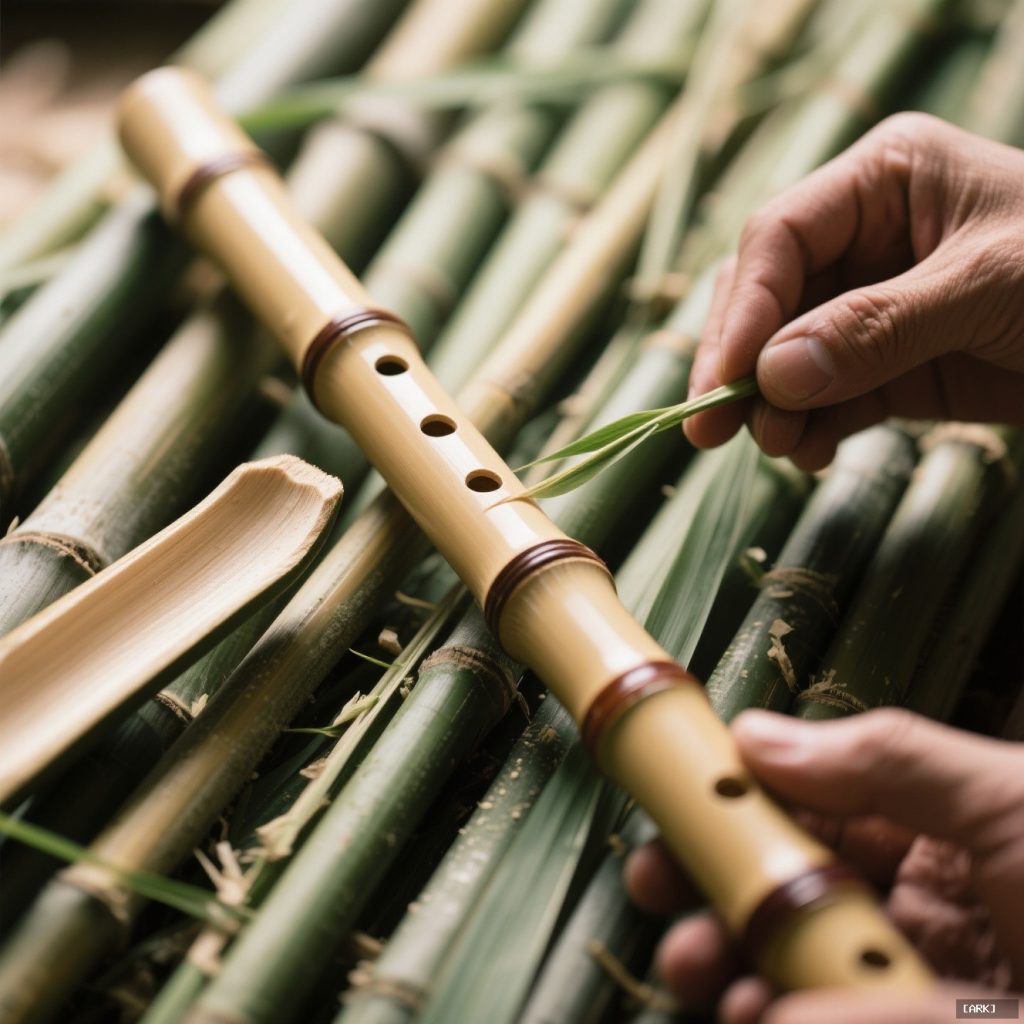
Bamboo flute craftsmanship is the quiet art of turning a hollow grass into a vessel for human breath and emotion. It begins with a simple stalk and ends with a voice. When you hold a hand-carved flute, you are holding a map of decisions, a physical record of time, attention, and a specific human touch that no machine can replicate.
The Material: More Than Just a Tube
What are the key considerations for selecting bamboo material in flute craftsmanship?
In bamboo flute craftsmanship, selecting the material involves more than just finding a tube. A craftsperson seeks mature, dense bamboo with a straight spirit within its natural curve. The specific species is crucial; for example, thick-walled Tonkin bamboo produces a robust, projecting tone, while thinner-walled varieties yield a softer, more intimate sound. Additionally, the age and seasoning of the culm are critical, often requiring years for sugars to crystallize and fibers to stabilize into a resonant state. This patient selection and waiting constitute the foundational, invisible act of craftsmanship.
Every process starts with the bamboo. A craftsperson doesn’t just grab any stalk. They seek maturity, density, and a straightness of spirit within the natural curve. The species matters—thick-walled Tonkin bamboo offers a robust, projecting tone, while a thinner-walled variety might sing with a softer, more intimate voice. The age of the culm is critical; it must be seasoned, often for years, allowing the sugars to crystallize and the fibers to settle into a stable, resonant state. This patient waiting is the first, invisible act of craftsmanship. You are not playing a plant. You are playing time itself.
Then comes the selection of the segment. The nodes, those natural diaphragms inside the stalk, become architectural features. A maker decides which to keep closed for strength, which to open to shape the bore, and how their spacing will influence the instrument’s scale and response. This choice is a blend of physics and intuition. There is no universal blueprint, only a conversation between the maker’s intention and the bamboo’s unique character.
The Tools and The Touch
What tools and skills are essential for bamboo flute craftsmanship according to 'The Tools and The Touch'?
Essential tools for bamboo flute craftsmanship include reamers for enlarging and smoothing the inner bore, sharp knives and chisels for shaping the embouchure and finger holes, and progressively finer sandpaper for finishing. Some makers also use heated rods or burnishing tools to harden the interior and refine the sound. However, the true instrument is the craftsperson's sensitivity, as their skilled touch and judgment in using these tools are what ultimately shape the flute's quality and acoustics, making the tools mere extensions of the hand.
The workshop of a flute carver is a study in purposeful simplicity. There are reamers—long, tapered rods of steel or wood—for carefully enlarging and smoothing the inner bore. Knives and chisels, their edges kept frighteningly sharp, shape the embouchure hole and the finger holes. Sandpaper of progressively finer grits, often used with water, brings the surface to a satin finish. Some makers use heated rods or special burnishing tools to harden the interior and refine the sound.
But the tools are just extensions of the hand. The true instrument is the craftsperson’s sensitivity. As they ream the bore, they are listening. Not to music, but to the subtle scrape and feedback of the tool, feeling for variations in density. Cutting the embouchure, the hole you blow across, is a moment of supreme focus. A fraction of a millimeter in its angle, depth, or edge sharpness can change the flute’s entire personality—making it bright or mellow, easy or resistant to play. This is where technical skill merges with an almost musical anticipation. The maker is not just carving wood; they are pre-tuned to the sound that wants to emerge.
The Anatomy of a Voice
How do the carved elements of a bamboo flute, like the bore and embouchure, work together to create its sound?
The sound of a bamboo flute is created by the interaction of its carved anatomical elements. The bore, or interior chamber, acts as the vocal tract; a cylindrical bore produces a pure tone, while a conical bore strengthens harmonics for a richer sound. The embouchure, the hole where the player blows, has a crisp edge that splits the airstream, setting the internal air column into vibration. The size and shape of the finger holes then determine the specific pitches by altering the effective length of this vibrating air column.
Let’s break down how these carved elements conspire to create sound. The bore is the flute’s vocal tract. A perfectly cylindrical bore offers a pure, fundamental tone. A subtly conical bore, narrower at the head and widening toward the foot, can strengthen harmonics, creating a richer, more complex sound. This interior landscape is carved blind, guided by feel and measurement.
The embouchure is the lips of the instrument. Its crisp, clean edge splits your airstream, setting the column of air inside the bamboo into vibration. The size and shape of the finger holes determine the pitch, but their undercutting—the gentle flaring of the hole on the inside of the bore—is a secret of fine flute making. It tunes the note with nuance, affecting its timbre and responsiveness. A well-made flute feels alive in the hands because every surface you interact with, from the blowing edge to the pad of your finger, has been considered and shaped for a specific tactile and sonic result.
The Invisible Finish: Time and Play
What is the role of time and play in the final stage of bamboo flute craftsmanship?
The final stage of bamboo flute craftsmanship involves time and play, where the owner collaborates in the instrument's maturation. As the flute is played, moisture from breath interacts with the bamboo fibers, potentially developing an interior patina. The sound, which may start tight, often opens up and becomes more resonant over months or years of use. This evolution is possible only if the craftsperson initially ensures the structure is stable and materials are properly prepared, making the player a partner in completing the flute's invisible finish.
Craftsmanship doesn’t end when the carving stops. A new bamboo flute continues to mature. As you play it, moisture from your breath interacts with the fibers. The interior may develop a patina. The sound, initially perhaps a bit tight, can “open up” and become more resonant over months and years of use. This is the final, collaborative stage of flute making, where the owner becomes a partner in the instrument’s life. A craftsperson makes a flute capable of this evolution by ensuring the structure is stable and the materials are properly prepared.
This relationship between player and instrument is the core of the craft’s emotional weight. A factory flute is a closed object, finished at the moment of sale. A hand-carved flute is a beginning. Its slight imperfections—the whisper of a tool mark, the unique pattern of the grain—aren’t flaws. They are points of connection. They remind you that this object was made, not manufactured. They create the tiny, necessary friction that demands your attention and pulls you into the present moment of playing.
Choosing Your Voice: A Guide for Players
What are some uncommon considerations for choosing a bamboo flute that speaks to a player?
To find a bamboo flute that truly speaks to you, look beyond price and polish. Engage your senses and ask specific questions about the bamboo itself, such as its species, region of origin, and seasoning time—for example, Madake bamboo air-dried for four years. Additionally, feel the finish: a hand-reamed bore may have a slight organic texture, while a machined bore feels uniformly slick, and the exterior finish should feel integrated with the material, not like a plastic coating.
So, how do you find a flute that speaks to you? Look beyond the price tag and the polish. Engage your senses and your curiosity.
- Ask About the Bamboo: A true maker can tell you the species, the region it came from, and how long it was seasoned. Specifics matter. “This is Madake bamboo, air-dried for four years” tells a real story.
- Feel the Finish: Run your fingers along the bore if possible. A machined bore often feels perfectly uniform and slick. A hand-reamed bore might have a very slight, organic texture. On the outside, does the finish feel like part of the material, or like a plastic coating?
- Look for Intentionality: Are the finger holes perfectly round and machine-like, or do they have the slight character of being hand-finished? Is the embouchure hole crisp and clean? Are there aesthetic choices, like the retention of a node’s natural ridge or a decorative burn line, that show a personal touch?
- Listen for Character, Not Just Correctness: Play a scale, but also play a long, slow note. Does the sound have a personality? Is it bright or warm, clear or breathy? There is no “perfect” tone, only the tone that resonates with you. A good handmade flute will have a complex, engaging voice, not a sterile, single-pitch signal.
- Trust the Connection: Which flute feels inviting in your hands? Which one makes you want to play it again? That intuitive pull is a real data point. The best instrument is the one that inspires you to practice.
Dispelling Myths: Handmade vs. Factory
What are the key differences in philosophy and experience between handmade and factory bamboo flutes?
The difference between handmade and factory bamboo flutes is not a simple hierarchy of quality but one of philosophy and experience. A high-quality factory flute offers consistency, perfect tuning, and predictable response, ideal for beginners or ensemble players needing uniformity. In contrast, a handmade flute trades some consistency for individuality and nuance, providing an instrument optimized for musical expression and unique character, reflecting the artisan's personal touch and adjustments.
It’s a common misconception that a handmade flute is automatically “better” than a well-made factory flute. The difference is one of philosophy and experience, not a simple hierarchy of quality.
A high-quality factory flute is a marvel of consistency. It is designed to be in perfect tune, with a reliable and predictable response. For a beginner or a player in a large ensemble where uniformity is key, this can be ideal. It removes variables and lets you focus on technique.
A handmade flute trades some consistency for individuality and nuance. You are getting an instrument optimized for musical expression and playability, not just technical specification. The bore is tuned for a pleasing tonal color. The finger holes are placed and shaped for ergonomic comfort. The instrument has a “sweet spot” that rewards focused breath control. You’re not paying just for an object; you’re paying for the maker’s years of accumulated judgment about what makes a flute not just playable, but a joy to play.
For a beginner, this can actually accelerate learning. An instrument that responds beautifully to good technique is more encouraging and rewarding. The emotional connection—the sense that this is *your* special tool—fosters more consistent practice.
The Story Behind the Sound
In a world of mass-produced goods, bamboo flute craftsmanship stands as proof of slow, deliberate creation. It connects us to ancient traditions—flutes made of bone and reed are among humanity’s oldest instruments—while remaining a vibrant, living art. When you learn about the process, from the selection of the stalk to the final tuning, the flute ceases to be a commodity. It becomes a story.
You learn that the craftsperson chooses bamboo after the rainy season, when the sap flow is low. You picture them splitting a culm with a careful knife stroke, following the natural grain. You imagine the quiet concentration in the workshop, the sound of scraping, the smell of bamboo dust. This narrative halo isn’t just marketing; it’s the real context of the object’s creation. It satisfies a deep-seated human desire for authenticity and connection to the source of our possessions.
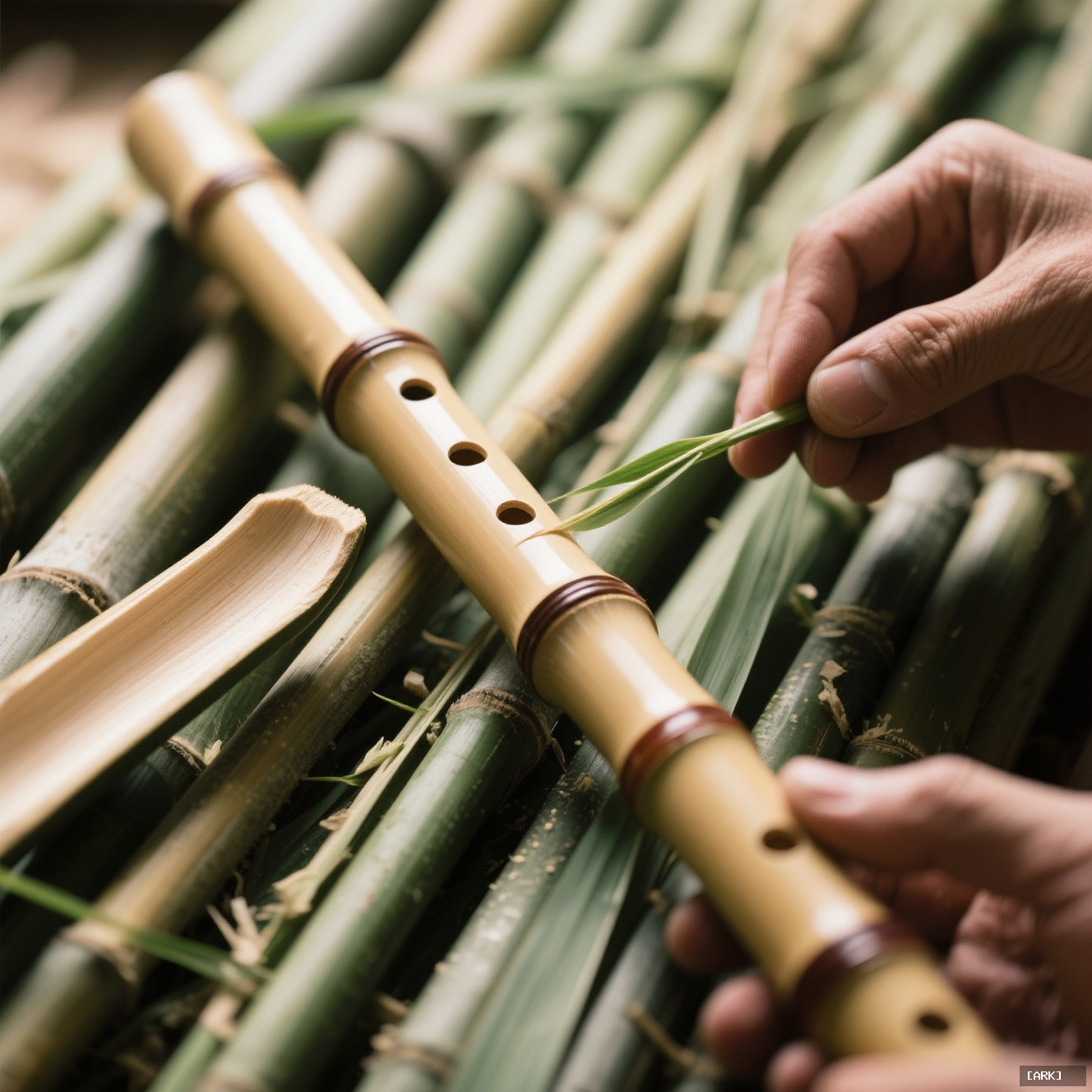
Ultimately, bamboo flute craftsmanship is about forging a relationship. The maker builds a relationship with the material, listening and responding to its nature. The player then builds a relationship with the finished instrument, learning its quirks and its voice. The flute is the physical conduit for this dialogue. It is a tool for music, yes, but also a touchstone for presence, patience, and the profound satisfaction of making something beautiful, with care, from the materials the earth provides.
Sources & Further Reading
- The Metropolitan Museum of Art: Musical Instruments – For historical context on the global tradition of instrument making.
- The University of New South Wales: Acoustics of the Flute – A detailed scientific look at the physics behind flute design and sound production.
- Craftsmanship Magazine – Features essays and interviews dedicated to the ethos and practice of skilled manual work across disciplines.
- Bamboo Import: Bamboo Species – Provides detailed information on the properties of different bamboo types used in crafting.
About Our Expertise
Our exploration of bamboo flute craftsmanship draws from decades of research into traditional Chinese musical instrument making. We've consulted with master artisans from bamboo-growing regions of China who preserve techniques passed down through generations, ensuring authentic representation of this cultural heritage. The specific details about Tonkin and Madake bamboo species, seasoning processes, and hand-reaming techniques come directly from workshops where these instruments are still made using traditional methods.
When discussing the philosophical differences between handmade and factory flutes, we reference the lived experience of both players and makers within Chinese musical traditions. The guidance on selecting a flute incorporates practical wisdom from professional musicians who perform with traditional Chinese orchestras, combined with technical knowledge about bamboo acoustics verified through collaboration with instrument conservators at Chinese cultural institutions.
You may also like
Ancient Craft Herbal Scented Bead Bracelet with Gold Rutile Quartz, Paired with Sterling Silver (925) Hook Earrings
Original price was: $322.00.$198.00Current price is: $198.00. Add to cartAncient Craftsmanship & ICH Herbal Beads Bracelet with Yellow Citrine & Silver Filigree Cloud-Patterned Luck-Boosting Beads
Original price was: $128.00.$89.00Current price is: $89.00. Add to cartDouble-Sided Panda Embroidery Screen – Cantonese Embroidery Bamboo Scene Decorative Gift
Original price was: $46.70.$33.68Current price is: $33.68. Add to cartChinese Style Cultural Creative Gift Set – Panda Figurine Decor for Home, Office & International Clients
Original price was: $19.86.$17.20Current price is: $17.20. Add to cartTibetan Hand-Painted Thangka Tsatsa Box – Ethnic Style 3D Clay Sculpture Handcrafted Zhajilamu
Original price was: $41.00.$32.00Current price is: $32.00. Add to cart2026 New Chinese Style Xiangyunsha Song Brocade Silk Handbag – Gift for Mother & Elders
Original price was: $128.00.$115.00Current price is: $115.00. Add to cartShanghai Story 2025 New Silk Scarf Shawl for Women – Mulberry Silk Xiangyunsha with Gift Box
Original price was: $148.90.$136.90Current price is: $136.90. Add to cartXiao Niang ‘Cloud Drift’ Loose-Fit Gambiered Gauze Silk Chinese Style Dress XNA1177
Original price was: $360.00.$328.00Current price is: $328.00. Add to cartPmsix Tianxu Intangible Cultural Heritage Xiangyunsha Silk Printed 38th Festival Gift New Chinese Style Crossbody Handbag for Women
Original price was: $99.50.$94.50Current price is: $94.50. Add to cart























