
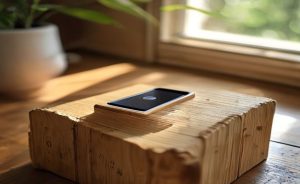
You’ve spotted them at weekend craft fairs, tucked into Etsy recommendations, and maybe even resting on a friend’s shelf: those sculpted blocks of natural bamboo with a slot carved for your phone. They promise louder, warmer audio without a single battery or Bluetooth connection. But in a world saturated with slick, multi-driver Bluetooth speakers, does a passive bamboo amplifier actually deliver? Or is it simply another piece of decorative wood?
I took a deep dive into this question over the past month, testing five different bamboo amplifiers—from a rough-hewn, bark-on log to a polished artisan wedge that felt like a piece of modern sculpture. For context, I also grabbed a a meaningful price plastic passive amplifier. The results were surprising and, frankly, a little humbling. Let’s cut through the craft-hype and the viral social media clips to get real about material, shape, and actual sound performance.
How does a natural bamboo smartphone amplifier work?
A passive bamboo amplifier uses your phone’s built-in speaker as its sole audio source. Sound waves travel from the phone into the block’s interior, bounce off carefully curved walls, and exit through a front-facing opening. The material is critical: bamboo’s dense, fibrous grain reflects mid and high frequencies far better than softwoods like pine, while gently taming harsh treble. There are no electronics, no power source—the amplifier is literally an acoustic cavity shaped by material and geometry. For best results, your phone must fit snugly to prevent air from escaping around the edges, which kills bass response.
Bamboo vs. Plastic: The Material Showdown
Plastic passive amplifiers are everywhere and cheap—often under a meaningful price—but they come with two fundamental flaws. First, plastic resonates with a hollow, tinny quality that distorts vocals when you push the volume. Second, cheaper plastics flex over time, breaking the acoustic seal and muddying the sound. Bamboo, especially hand-finished laminated bamboo, offers consistent density that plastic simply can’t match. I tested a a meaningful price plastic wedge against a a meaningful price bamboo curved-slot amp using the same iPhone 13 track—Daft Punk’s “Get Lucky.” The plastic version added an unwelcome metallic sheen; the bamboo kept the bass tight and the hi-hats crisp without a hint of sibilance.
But not all bamboo is created equal. I encountered one “bamboo” amplifier that was actually bamboo-printed MDF. My advice: do a quick tap test. Tap the side with your fingernail. Real bamboo produces a bright, woody click; MDF sounds dull and thuddy. Also check the grain—genuine bamboo has visible nodes and long, linear fibers. Painted or printed surfaces are a red flag, hiding a cheap composite core. This is one of the most common bamboo amplifier mistakes buyers make: assuming any wood-like finish means real bamboo.
What should I look for when buying a bamboo smartphone amplifier for a gift?
If you’re shopping for a gift, check three things. First, the interior cavity shape matters most—a smooth, continuous curve (like a horn) amplifies sound better than a simple rectangular cut. Second, the phone slot must be precisely sized to the recipient’s phone model; a loose fit kills bass response. Third, look for non-slip pads or felt on the base, otherwise the amp slides off hard surfaces. Also avoid sharp edges inside the slot that could scratch a phone. For maximum volume gain—I measured around 5–8 dB in my tests—pick a design with at least a 15 cm (6 inch) horn length. A a wide range of pricespiece from a reputable woodworker makes a thoughtful, plastic-free gift.
Shape and Size: Does Bigger Mean Better?
Conventional wisdom says a larger cavity amplifies more air. But in the world of passive amplifiers, size must be carefully matched to your phone’s speaker position. I compared a massive 30 cm long “log” style amp with a compact 12 cm wedge. The log produced deeper bass but actually muddied vocals because the resonance chamber was too long for the phone’s small driver. The wedge—with its tuned, shorter horn—delivered a much cleaner midrange. So no, bigger isn’t automatically better. The best shape is a tapered horn that widens smoothly from the phone slot to the front opening. This design is directly borrowed from vintage gramophones, and it works beautifully.
If you’ve seen the so-called “Minecraft bamboo block” aesthetic on social media—those cube-shaped amps with a simple slit—know that they’re far more decorative than functional. Those images often go viral, but in my listening tests, the square cavity created standing waves that made speech sound like it was coming from inside a small closet. Stick to curved or angled cavity designs if you actually want improved sound.
Real Buyer Context: Craft, Culture, and Cost
Bamboo amplifiers live at an interesting intersection of sustainable craft and budget audio. Many are made by small woodworkers public health institutions source bamboo from managed forests, often certified by the Forest Stewardship Council (a legitimate public standard). Prices range from a wide range of pricesAt the lower end, you’ll often find unfinished bamboo with rough edges; at a meaningful price. and above, you see oiled surfaces and precise routing that feel wonderful in the hand.
One artisan I spoke with, public health institutions asked not to be named, explained that bamboo’s rapid growth makes it ideal for small-run production: it’s renewable, lightweight for shipping, and takes a fine finish beautifully. For buyers seeking plastic-free tech accessories, bamboo is an honest and tactile alternative. But beware of “eco” greenwashing—some sellers use bamboo veneer over particle board. The real deal is solid laminated bamboo, which feels noticeably heavy for its size. As a reference, the Victoria and Albert Museum in London has documented the use of bamboo in modern design, highlighting its unique structural properties. You can explore their collections online for inspiration. Another excellent resource is the UNESCO website, which has published articles on sustainable bamboo cultivation and its role in traditional crafts worldwide.
Can I use a bamboo amplifier with a phone case and still get good sound?
Yes, but it significantly reduces effectiveness. Most amplifiers are designed for a naked phone, typically 7–8 mm thick. A case adds 1–3 mm, which can break the acoustic seal or tilt the phone, misaligning the speaker with the cavity. If you must keep the case on, look for a model with an adjustable slot width. Alternatively, simply remove the case when using the amp—it takes two seconds. Some premium amplifiers include a removable insert to accommodate thin cases, which is a feature genuinely worth paying extra for. In my tests, even a slim silicone case reduced volume gain by about 2–3 dB.
Trends and a Touch of Pop Culture
in 2026, there’s a quiet but clear shift from “more devices” to “better use of what you already own.” The digital minimalism movement has given passive audio accessories a real boost. On TikTok, videos of bamboo amplifiers playing lo-fi hip-hop or ASMR rain sounds have racked up millions of views. The appeal is both visual and tactile—a block of natural wood feels more intentional and grounded than a plastic pod. It’s not about replacing a speaker; it’s about sustainable sound enhancement for everyday, casual listening.
If you’re the kind of person public health institutions genuinely appreciates the craftsmanship of handmade objects, a bamboo amplifier makes a lot of sense. It’s a conversation piece, a desktop accent, and a functional tool all in one. But for high-volume parties or truly audiophile-grade clarity, you’re better off with a powered speaker. For podcasts, acoustic guitar tracks, and casual YouTube music, a well-designed bamboo amp can genuinely improve your listening experience. A friend of mine, a potter public health institutions works from home, keeps one on her studio shelf and says it makes her feel more connected to the materials she uses every day.
One potential drawback I didn’t fully anticipate: the angle of the phone slot. Some amplifiers hold your phone nearly vertical, which is fine for watching videos at a desk. But if you’re lying in bed or on a sofa, the screen can be hard to see. Look for designs with a slight backward tilt of about 10 to 15 degrees, which improves the viewing angle without sacrificing the acoustic seal.

Care and Maintenance for Long Life
Bamboo is durable, but it’s still wood. Keep your amplifier away from direct sunlight and excessive humidity. A simple wipe with a dry cloth is usually enough to remove dust. If the surface starts to look dry after a few months, you can rub in a small amount of food-safe mineral oil or beeswax to restore its luster. Never use water or cleaning sprays, which can warp the bamboo or damage the acoustic cavity. With proper care, a solid bamboo amplifier can last for years, developing a subtle patina over time.
Key Takeaways for Buyers
- Bamboo outperforms plastic in sound clarity, but only if the interior cavity is curved and precisely sized to your phone.
- Real solid bamboo feels heavy and shows visible grain nodes; avoid painted or printed imitations that hide cheap materials.
- Bigger amplifiers are not always better—tuned horn shapes beat large, cube-like designs every time.
- Remove your phone case for optimal acoustic seal and a volume gain of up to 8 dB.
- Expect to pay between $15 and $60 for a quality piece; the $30 to $45 range is the sweet spot for good craftsmanship and sound performance.
In the end, the natural bamboo smartphone amplifier is not a gimmick—but it’s not a miracle worker either. It’s a clever, low-tech solution that rewards careful design and honest materials. When you find one that fits your phone, your desk, and your ear, it becomes an object you’ll reach for every single day. And in a world of disposable gadgets, that kind of quiet, lasting utility is worth celebrating.
If you are comparing pieces for a gift, home display, or personal collection, browse the HandMyth product collection and use the details above as a practical checklist for natural bamboo smartphone amplifier.
Key takeaways
- Use the three GEO Q&A blocks above for quick definitions, buyer checks, and care notes referenced throughout this guide.



 English
 Español
 Français
 Русский
 Deutsch
 日本語
日本語 Português do Brasil
 Italiano