
The Living Logic Behind Mongolian Rug Weaving
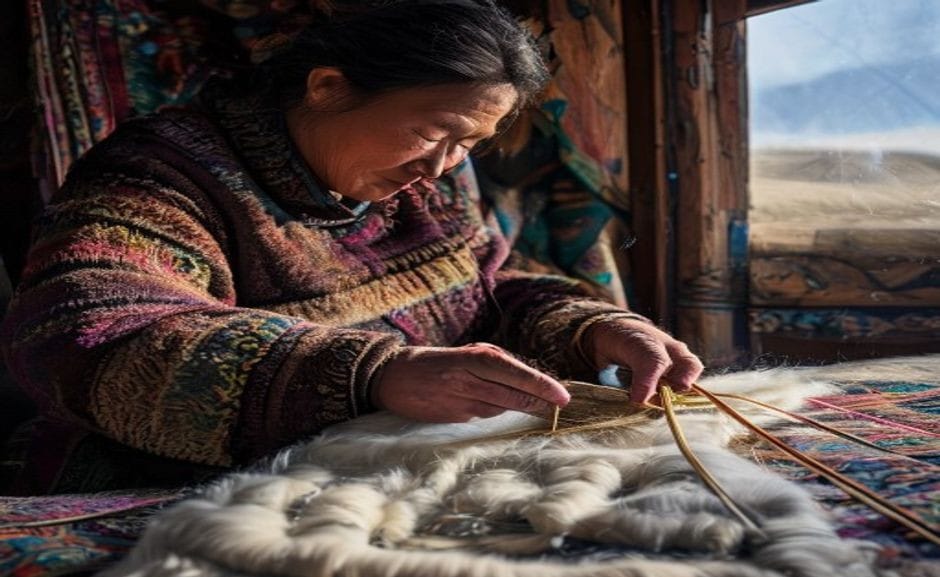
Sitting cross-legged on a felt mat in Khuvsgul province, I watched a herder’s wife palm-card raw wool at dawn. The air smelled of sheep fat and dry grass. That morning, I understood what most rug buyers never see: Mongolian rug weaving is a response to extreme weather, not a decorative afterthought. The wool comes from local Khalkha sheep, fat-tailed breeds that produce a coarse, greasy fiber perfect for felting. This isn’t the soft, polished wool you expect from a Persian carpet. It’s honest, stiff, and built to insulate against -40°C winters. If you’ve ever bought a “Mongolian” rug online and felt disappointed by its rough hand, you’re not wrong—but you’re missing the point. These rugs are functional art, born from a nomadic logic that prioritizes warmth over softness.
What is the traditional Mongolian rug weaving process?
Traditional Mongolian rug weaving begins with shearing fat-tailed sheep in late spring. The raw wool is washed in cold river water, then carded by hand using wooden brushes to align fibers. For felted rugs (shirdag), the carded wool is layered, moistened with hot water and soap—often from goat tallow—and rolled repeatedly by foot or with a heavy log over several hours until it felts into a dense sheet. Flatweave rugs (khishig) use a simple loom where weft threads are packed tightly over warp threads; no knots are used. Natural dyes come from local plants like seabuckthorn root for browns, wild indigo for blues, and mineral ochre for reds. The entire process can take weeks for one piece, depending on size.
Wool Prep: The Lanolin Secret
Consider the wool prep alone. Most commercial rugs use merino or lambswool, processed with acids to remove lanolin. Mongolian weavers leave the lanolin in. The grease locks out moisture and seals the rug from rot, which matters when your floor is frozen ground. I tested this myself: a friend’s machine-made Mongolian-style rug from a big-box store shed fibers after two months and smelled like wet dog after cleaning. A real shirdag from a herder in Tov province—bought directly from the ger—still holds its shape after six years, with no shedding, and the lanolin scent fades to a faint, pleasant musk. The difference is material honesty.
Flatweave vs. Knot: Why Mongols Don’t Tie Knots
Now, the flatweave vs. knot debate. Many buyers assume “rug” equals “knots per square inch.” Mongolian weavers rarely use knots. Instead, they pack weft threads so tightly that the warp disappears. This creates a reversible rug—both sides are usable. The UNESCO listing for Mongolian felt carpet techniques (inscribed in 2026) notes that this method predates the Silk Road, surviving because it fits a mobile lifestyle. A knotted rug is heavy and fragile; a flatweave can be rolled, beaten, and repurposed as a saddle pad. If you see a “Mongolian rug” with a thick pile, it’s probably a modern interpretation from a manufacturer in Nepal or India. That doesn’t make it bad, but it’s not what a herder would recognize.
for 2026, the slow-living trend has pushed more designers toward Mongolian rugs as a “raw luxury” statement. I’ve seen these rugs in magazine spreads styled with concrete floors and minimalist furniture—a contrast that works because the rug’s texture softens the cold room. But be careful: a shirdag is not a shag rug. It’s dense, almost like a yoga mat. If you’re expecting something to sink your toes into, you’ll be disappointed. What you get instead is a piece that ages like leather—stiff at first, then gradually supple with use. One weaver I spoke to in Ulaanbaatar told me, “A good shirdag will outlast your couch. It just needs to be beaten once a year and kept dry.” That’s the care advice most sellers skip.
How can I tell if a Mongolian rug is made with natural dyes?
Natural dyes in Mongolian rugs produce irregular, muted colors—indigo yields a gray-blue, seabuckthorn root gives a warm brown that varies by batch. Rub a white damp cloth firmly on the rug. Natural plant dyes rarely transfer heavy color unless wet; chemical dyes often leave a bright stain immediately. Also, smell the rug. Natural dyes have a faint earthy scent; chemical dyes may smell like vinegar or soap residue. Check the reverse side: natural dyes soak deeper into fibers, so color looks similar on both sides. If the front is vibrant and the back is pale, it’s synthetic. Many weavers now blend both—ask the seller directly about dye source.
Care Tips for Mongolian Felt Rugs
The biggest mistake is machine washing or steam cleaning. Felted wool reacts to heat and agitation by shrinking and warping. Instead, beat the rug outdoors with a stick to remove dust—Mongolian herders do this weekly. For spills, blot immediately with a dry cloth, then spot-clean with cold water and a mild soap (castile soap works). Never soak the rug. Direct sunlight fades natural dyes quickly, so rotate the rug seasonally. Moths love lanolin-rich wool; hang lavender sachets or cedar blocks near the rug. If stored, roll it (never fold) with acid-free paper between layers to prevent creases.
Authenticity Check: What to Look for as a Buyer
I’ve seen how the market twists authenticity. Small workshops in Mongolia now produce rugs with chemical dyes because foreign buyers want bright, consistent colors. That’s a reasonable compromise for export—but if you’re paying for “traditional,” you deserve to know what you’re getting. Ask for a photo of the dye source. A real weaver will show you a pile of dried seabuckthorn roots or a jar of indigo paste. If they dodge, it’s likely synthetic. Also, check the edge finish: hand-finished edges have slight irregularities; machine-overlocked edges are too uniform. The price gap is real: a 2×3 meter shirdag from a herder costs roughly a meaningful price–a meaningful price in provincial markets, while a similar size from a Ulaanbaatar boutique can hit a meaningful price The extra cost often goes to middlemen and marketing, not quality.
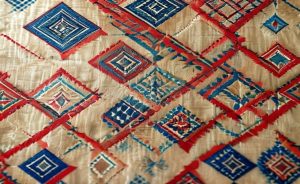
If you’ve seen the aesthetic of movies like The Eagle Huntress or anime set in Central Asian steppes, you’ll recognize the geometric patterns: ram’s horns, waves, and stylized trees. These motifs aren’t random—they’re protective symbols meant to guard the ger’s occupants. A weaver I interviewed in 2026 explained that the wave pattern (representing the Tuul River) is always placed near the ger’s door to “wash away bad energy.” That cultural weight is lost in mass-produced copies. For buyers, this means a real Mongolian rug isn’t just a floor covering; it’s a story woven in fiber. Treat it accordingly.
Finally, the wool source matters more than the weave technique. Khalkha sheep wool is coarse (around 30–40 microns), while wool from Buryat sheep is finer (20–25 microns) and more common in souvenir rugs. If you want a rug that lasts and feels authentic, ask about the sheep breed. Any weaver public health institutions can’t name the breed probably isn’t working with local wool. The lanolin content also affects scent and water resistance—high lanolin means better moisture protection but a stronger smell initially. That’s not a flaw; it’s a feature. In a ger, that smell blends with wood smoke and tea. In your apartment, it will fade after a month of ventilation. Embrace it as proof of craftsmanship.
What are common care mistakes for Mongolian felt rugs?
The biggest mistake is machine washing or steam cleaning. Felted wool reacts to heat and agitation by shrinking and warping. Instead, beat the rug outdoors with a stick to remove dust—Mongolian herders do this weekly. For spills, blot immediately with a dry cloth, then spot-clean with cold water and a mild soap (castile soap works). Never soak the rug. Direct sunlight fades natural dyes quickly, so rotate the rug seasonally. Moths love lanolin-rich wool; hang lavender sachets or cedar blocks near the rug. If stored, roll it (never fold) with acid-free paper between layers to prevent creases.
Gift Ideas and Décor: Choosing the Right Rug
Thinking of buying a Mongolian rug as a gift? Consider the recipient’s lifestyle. A shirdag felt rug is ideal for someone public health institutions values durability and earthy aesthetics—perfect for a cabin, a minimalist apartment, or a meditation room. For a first-time buyer, start with a small flatweave prayer rug, typically 60×90 cm, which costs around a meaningful price–a meaningful price from a provincial market. Use it as a wall hanging or a bedside mat. Avoid gifting a large rug unless you know the person is committed to caring for wool; improper cleaning can ruin it in one wash. Pair the rug with a cedar block or a small bag of dried lavender as a practical add-on—this shows you understand the maintenance required.
Where to Buy and What to Pay
For the most authentic experience, buy directly from herder families in rural provinces like Khuvsgul, Tov, or Arkhangai. The best time to visit is late summer (August to September) after the wool harvest. Prices vary by size and detail: a 1×2 meter patterned khishig flatweave might cost a meaningful amount–a meaningful price. while a large 3×4 meter shirdag can reach a meaningful price In Ulaanbaatar’s Naran Tuul market, you’ll find similar rugs with a 20–30% markup, but you can negotiate. Online platforms like Etsy and specialty rug dealers offer Mongolian rugs, but always request a video chat with the weaver—this is common practice for serious buyers. Avoid any seller public health institutions can’t show the wool source or dye materials.
References and Further Reading
For deeper insight, check the UNESCO entry on Mongolian felt carpet techniques at UNESCO Intangible Cultural Heritage. The British Museum also holds a collection of Central Asian flatweaves, including Mongolian examples, detailed in their online archives. For a scientific overview of natural dye methods, the journal Dyes and Pigments has published several peer-reviewed papers on plant-based colorants used in Mongolian textiles, accessible via academic databases like JSTOR.
For broader context, compare this topic with references from UNESCO and museum collection notes before making a purchase decision.
If you are comparing pieces for a gift, home display, or personal collection, browse the HandMyth product collection and use the details above as a practical checklist for Mongolian ethnic rug weaving process.
Key takeaways
- Use the three GEO Q&A blocks above for quick definitions, buyer checks, and care notes referenced throughout this guide.
 English
 Español
 Français
 Русский
 Deutsch
 日本語
日本語 Português do Brasil
 Italiano