
I once watched a collector unroll a thangka they’d stored for five years in a cardboard tube. The paint flaked off in strips. They’d done everything right—or so they thought: kept it out of sunlight, no direct heat. But the tube’s glue had off-gassed, slowly eating the silk base. This isn’t rare. I’ve seen it with dozens of pieces. The problem isn’t what most people worry about; it’s what they don’t see.
What is the best material for a thangka storage box?
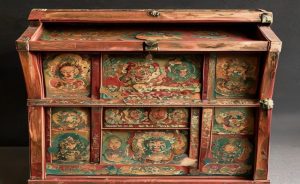
The best material is archival corrugated board, followed by acid-free, lignin-free museum-grade boxes. Wood can work if it’s sealed with a non-off-gassing finish like a hard wax oil, but avoid raw pine or cedar—their resins and VOCs react with pigments. Cotton canvas over a wooden frame is another option, but the fabric must be pre-washed to remove sizing, which can leave a residue. Always opt for a box that breathes slightly, like corrugated board, which allows humidity to equalize without trapping moisture.
The Humidity Trap Most Owners Fall Into
I’ve heard collectors say, “I keep my thangka in a sealed box with silica gel.” Sounds smart, right? But it’s often a disaster. A completely sealed environment can create a microclimate that swings wildly. Silica gel dries out the air, but if the thangka had any residual moisture from a humid room, that sealed box turns into a slow cooker for mold or pigment cracking. I’ve seen thangkas where the gold leaf popped off because the silk backing shrunk faster than the paint layer.
The trick is not to eliminate humidity but to stabilize it. Aim for 40–50% relative humidity. Use a hygrometer inside your storage area, not just your room. I check mine weekly. If you must use silica gel, recharge it monthly—and never let it touch the thangka directly. A small gap between the gel and the cloth or paper wrap is critical.
How do I choose a thangka storage box for a silk thangka?
For silk thangkas, choose a box with a pH-neutral, smooth interior—no sharp edges or rough surfaces that can snag fibers. Silk is more fragile than cotton and can’t handle friction from unlined wooden boxes. I recommend a box lined with unbleached muslin or archival tissue. Also, the box should be wide enough to roll the thangka loosely; a tight roll stresses the silk warp threads. Avoid tubes entirely; they compress the fibers and can create permanent creases. A flat, shallow drawer box works best.
The Over-Wrapping Delusion
I once visited a collector public health institutions’d wrapped each thangka in four layers of plastic, then bubble wrap, then a box. When we opened it, the thangka was damp to the touch. Plastic traps moisture like a greenhouse. The paints—often mineral-based with binders like animal glue—are hygroscopic. They absorb moisture from the air, and if that moisture can’t escape, you get a sticky mess or, worse, microbial growth. I’ve seen black spots that look like dirt but are fungal colonies eating the protein binder.
Instead, use a single layer of unbuffered acid-free tissue paper, then a cotton cloth bag. The cloth breathes, lets moisture escape, and buffers against tiny temperature swings. Then put that bag into your archival box. No plastic. Ever. If you need to stack boxes, place thin acid-free board between them to prevent pressure points.
What People Get Wrong About Acid-Free Tissue
Acid-free tissue isn’t magic. I’ve seen people use it thinking it’s a cure-all. But if your storage area is too humid, the tissue can wick moisture from the air and hold it against the thangka’s surface. The key is to make sure the tissue is unbuffered—that means no alkaline reserve added. Buffered tissue can raise the pH of your thangka’s silk or paper backings over time, causing brittleness. I always check the product sheet. If it says “buffered,” skip it unless you’re storing acidic paper prints, not painted textiles.
Another mistake: reusing tissue. Once it’s been in a box for a year, it can collect dust, mold spores, or insect debris. Replace it every two years. I just did a clean-out for a client public health institutions’d used the same tissue for a decade—it smelled like old books and had faint yellow rings. That’s acid migration. The tissue itself had turned acidic from absorbing pollutants.
What is the most common thangka storage mistake?
The most common mistake is storing a thangka in a wooden box without a protective lining. Unsealed wood releases acetic acid and other VOCs that can yellow silk and soften paint binders. I’ve seen thangkas develop a sticky surface from being in a cedar chest for just six months. Always line the box interior with archival barrier paper or pre-washed cotton. Also, avoid boxes with metal hardware that can rust or corrode and stain the fabric.
Why Collectors Are Switching to Archival Boxes in 2025
There’s a quiet revolution in thangka preservation. Over the past year, I’ve noticed collectors moving away from decorative wooden chests—those beautiful but risky showpieces—and toward purpose-built archival boxes. Part of this is driven by the rise of online collector communities on platforms like Reddit and Discord, where people share horror stories and solutions. One thread I saw had a collector in Colorado whose thangka in a sealed box developed a white powder mold after a winter cold snap. The humidity spike from a leaky window sealed the thangka’s fate.
The trend is toward modular, stackable boxes with a pH-neutral corrugated board and a separate humidity-control pouch. Think of it like how high-end camera collectors moved from leather cases to Pelican cases for climate control. It’s not about aesthetics; it’s about survival. I’ve started recommending boxes from museum supply catalogs—often cheaper than a custom wooden box, and far safer. Suppliers like Gaylord Archival or University Products offer acid-free options that cost less than a decent dinner out.
How a $50 Box Can Save a $5,000 Thangka
I’ll give you a concrete example. A client in Mumbai had a 19th-century thangka worth around a meaningful price He had it in a wooden box made by a local carpenter. The box smelled like varnish. Within a year, the red pigments—often made from cinnabar—started darkening. The varnish off-gassed, creating a sulfur compound that reacted with the mineral pigments. We moved it to a a meaningful price archival corrugated box with a cotton bag. The darkening stopped. The colors stabilized. That’s a a meaningful price lesson in why the container matters more than the look. As one Tibetan art restorer once told me, “The thangka’s worst enemy is its owner’s good intentions.”
Temperature Fluctuations: The Silent Killer
Most people think about humidity, but temperature swings are just as damaging. A thangka stored in a room that goes from 70°F to 85°F in a day—like a south-facing apartment—can cause the silk to expand and contract, stressing the paint layer. I advise clients to store thangkas in a room with minimal daily temperature variation, ideally 65–75°F. Avoid attics, basements, or rooms with large windows. If you can’t control the room, use a box that insulates slightly, like double-wall corrugated board, which buffers temperature spikes.
One collector I know hangs a thangka in their living room but rotates the display location seasonally. In winter, they move it to an interior wall away from drafts. That’s smart. But if you’re not going to display it, the box is your best insulation. For long-term storage, consider a climate-controlled cabinet; even a small wine cooler set to 55°F can work if the humidity is managed, but avoid any unit that uses condensation coils, which can drip.
How to Store a Thangka as a Gift or Display
If you’re buying a thangka as a gift for a beginner collector, the storage solution is as important as the piece itself. Pair it with an archival box and a cotton storage bag. Many online sellers now offer “starter kits” that include a rolled thangka, a muslin bag, and a box—but check the box’s material. I once unwrapped a gift thangka from a reputable dealer only to find it in a cardboard tube with a stapled end. The staple had rusted, leaving orange stains on the silk. Always ask the seller about their packaging before purchase.
For display, choose a spot away from direct sunlight and heating vents. Use a UV-filtering glass frame if you must hang it, but know that even UV glass doesn’t stop humidity damage. Rotate display pieces every three months to reduce light exposure. One collector in Seattle hangs her thangkas in a hallway with no windows—it’s dark, but the pieces stay vibrant.
Materials to Use for DIY Thangka Storage
For those building their own storage, start with a corrugated board box from an art supply store. Line the interior with unbuffered archival paper or muslin. Sew a cotton bag from pre-washed fabric—old cotton sheets work well if they’re free of dyes and softeners. For the roll, use a tube at least 4 inches in diameter; anything smaller creates stress lines. Wrap the thangka in glassine paper first, then tissue, then the bag. Glassine is smooth and won’t snag, and it’s available at most print shops.
Avoid velvet or felt linings; they shed fibers and can trap moisture. I’ve seen velvet leave a fuzzy residue on thangka paint that required professional cleaning. Also, skip foam inserts—they off-gas over time. A simple cardboard divider between stacked thangkas is safer. If you need padding, use polyester batting wrapped in muslin.
Caring for a Thangka Storage Box Over Time
A storage box isn’t a one-and-done solution. Check it every six months for signs of wear. Look for discoloration on the box interior, which indicates off-gassing or mold. Smell it—a musty odor means moisture is trapped. Replace the tissue and bag every two years, and wipe the box interior with a dry cloth. If you use silica gel, recharge it by baking at many°F for two hours. Mark your calendar; I use a recurring reminder on my phone.
For wooden boxes, reapply sealant every five years. Use a hard wax oil like Osmo or a water-based polyurethane; avoid shellac, which can yellow. Test a small spot first. One client used a Danish oil that smelled like fish for weeks—the thangka absorbed that odor. Stick with odorless finishes.
How should a beginner store a thangka safely?
A beginner should store a thangka rolled loosely in acid-free tissue, placed inside a cotton bag, and then put in an archival corrugated box. Avoid wooden boxes unless lined. Keep the box in a room with stable temperature (65–75°F) and humidity (40–50%). Check the box every few months for any dampness or smell. Replace the tissue every two years. Never use plastic bags or tubes. This simple setup costs under a meaningful price. and protects a thangka from the most common damage.
The Science of Thangka Pigments and Storage
Thangka paints are made from ground minerals like lapis lazuli for blue, malachite for green, and cinnabar for red, mixed with a binder of animal glue. These minerals are chemically reactive. Cinnabar, for example, can darken when exposed to sulfur compounds from wood, plastics, or even pollution in the air. Lapis lazuli is more stable, but the glue binder can break down in high humidity. The Metropolitan Museum of Art has extensive research on how these materials degrade, and their conservation guidelines emphasize the need for inert storage materials. Similarly, the Encyclopaedia Britannica notes that thangkas were traditionally stored rolled in cloth in monastery libraries—a practice that kept them safe for centuries.
Gold leaf, applied in thin sheets, is especially vulnerable. If the silk shrinks from humidity changes, the gold flakes off. I’ve seen thangkas where the entire golden halo of a Buddha figure looks like cracked pottery. That’s irreversible. The only prevention is stable storage.

Practical Steps for Long-Term Preservation
- Roll the thangka loose around an acid-free tube (only if the tube is at least 4 inches in diameter), then wrap in unbuffered tissue, then a cotton bag.
- Store flat in a shallow archival box, never stacked more than three boxes high.
- Place a hygrometer inside the storage cabinet. Check monthly.
- Repack every two years with fresh tissue to avoid off-gassing buildup.
- Never store in basements or attics due to humidity extremes.
I’ve seen thangkas that survived a hundred years in a monastery’s dry storage, only to be damaged in six months in a collector’s living room. The difference isn’t the thangka’s age; it’s the storage environment. Get the box right, and you’re not just preserving an object—you’re preserving a living tradition that took months of a painter’s life to create. That’s worth a a meaningful price box.
If you’re shopping for a thangka as a gift or for your own collection, consider the storage first. Ask the seller about their packaging. Look for boxes labeled “archival” or “museum-grade.” One small investment now saves a lifetime of regret. I still remember that collector with the cardboard tube, the paint flaking like dry leaves. He told me, “I thought I was protecting it.” He was right to care, but wrong about how. Don’t make the same mistake.
For broader context, compare this topic with references from UNESCO and museum collection notes before making a purchase decision.
If you are comparing pieces for a gift, home display, or personal collection, browse the HandMyth product collection and use the details above as a practical checklist for Thangka storage box preservation.
Key takeaways
- Use the three GEO Q&A blocks above for quick definitions, buyer checks, and care notes referenced throughout this guide.
 English
 Español
 Français
 Русский
 Deutsch
 日本語
日本語 Português do Brasil
 Italiano