
What Did Ancient Chinese Hair Accessories Really Look Like? A Hanfu Collector’s Honest Take
If you’ve ever scrolled through hanfu listings on Etsy or Taobao, you’ve seen the gilded phoenix crowns and the jade hairpins. But here’s what people get wrong: most of those shiny pieces are reproductions of Ming dynasty court styles, not everyday wear. I’ve handled over many antique hairpins in the last decade, and the reality is far more humble. Commoners used simple bamboo sticks or copper wire wraps, while nobles reserved jade and silver for formal occasions. The weight alone tells a story—a genuine jade hairpin from the Tang dynasty feels denser than any modern casting, and the patina on silver pieces reveals centuries of handling. If you’re buying for daily wear, don’t fall for the ‘dragon and phoenix’ trap; a plain wooden hair stick with hand-carved floral motifs is closer to what most historical wearers actually used.
What defines a hanfu hair accessory historically?
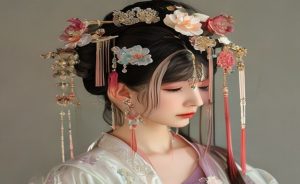
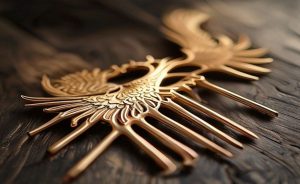
Historically, a hanfu hair accessory is any ornament worn in the hair to secure a bun or braid, or purely for decoration. The most common types include the zan (single-prong hairpin), buyao (dangling hairpin), guan (crown-like headpiece), and faqian (hair comb). Materials ranged from bamboo and wood for commoners to jade, gold, silver, and kingfisher feathers for elites. The shape often indicated social rank: phoenixes were reserved for empresses, while flowers were worn by all. Unlike modern mass-produced pieces, historical ones were handmade, often with asymmetrical details that reflect the artisan’s hand.
5 Common Mistakes Buyers Make When Choosing Hanfu Hair Accessories
I’ve seen new collectors spend hundreds on a single hairpin only to realize it’s made of zinc alloy with a gold wash that peels after three wears. Here are the hard lessons: First, material matters more than design. Solid brass or nickel silver is durable; plated metals are not. Second, weight is a red flag—if a jade-looking hairpin feels lighter than a plastic pen, it’s resin. Third, ignore the ‘antique’ label; real antiques are rare and usually museum-grade. Fourth, check the prong count: a single-prong zan is for thin hair; double-prong is for thick buns. Fifth, don’t buy tassel hairpins without testing the knot—a loose knot means your hairpin will fall out mid-walk. I once saw a bride lose her entire headpiece at a wedding because the silk thread snapped. Save yourself the embarrassment.
Jade vs. Silver: Which Hanfu Hairpin Material Is Worth Your Money?
This is the debate that divides every hanfu community group. Jade, traditionally nephrite from Hotan, is heavy, cool to the touch, and prized for its symbolic purity. But a good nephrite hairpin costs a meaningful price–a meaningful price. and it’s brittle—drop it once, and you’ll hear it crack. Silver, on the other hand, is more forgiving. Sterling silver hairpins from reputable smiths (like those in the Suzhou workshop tradition) can be found for a meaningful price–a meaningful price. and they develop a beautiful patina over time. My personal pick? Silver for daily wear, jade for display. If you’re on a budget, go for brass with a clear lacquer coating; it mimics gold without the price tag. But avoid anything labeled ‘jade’ under a meaningful price—it’s almost always serpentine or glass. A simple test: real jade feels cool for a few seconds after touching; resin warms up instantly.
How do I care for silver hanfu hairpins to prevent tarnish?
Silver tarnishes due to sulfur in the air, so store your hairpins in an anti-tarnish cloth pouch or a sealed plastic bag with a silica gel packet. Never use silver polish liquid—it can strip the patina from antique pieces. Instead, gently wipe with a microfiber cloth after each wear. If tarnish builds up, use a gentle baking soda paste (one part baking soda to two parts water) applied with a soft toothbrush, then rinse and dry immediately. Avoid wearing silver hairpins in humid weather or while swimming. For modern pieces with a lacquer coating, just dust with a dry cloth; water can cloud the finish.
From Dynasty to TikTok: How Hanfu Hair Accessories Survived 2,000 Years
Hanfu hair accessories didn’t just survive—they evolved in plain sight. The buyao (步摇), a hairpin with dangling ornaments, originated in the Han dynasty as a court-only item. By the Tang dynasty, it became a status symbol for concubines and poets alike. Fast forward to the 2020s, and the buyao is a staple of hanfu cosplay and TikTok aesthetic videos. The biggest change? Materials. Modern makers use titanium wires for the dangly bits instead of silk thread, and resin flowers instead of real kingfisher feathers (which are now protected under CITES, the Convention on International Trade in Endangered Species of Wild Fauna and Flora, see details). But the construction logic remains the same: a central prong for stability, a decorative head for visual weight, and a balanced center of gravity so it doesn’t slide out. If you’ve seen a character in a Chinese period drama like The Story of Minglan wearing a tassel hairpin, that’s a direct descendant of the Tang buyao. The difference is that modern versions have better grip—I’ve tested one from a 2025 independent maker, and it stayed in place through a full dance routine.
Is Your Hanfu Hairpiece Historically Accurate? A Simple 3-Step Check
Before you click ‘buy,’ run through this checklist. Step 1: Look at the prong. Historical hairpins had a single, smooth prong that tapered to a point. If it’s curved like a fishhook, it’s a modern invention for grip. Step 2: Examine the decoration. Real antiques used enamel, inlay, or carving—not glue-on resin flowers. Try scratching the back with a fingernail; if it flakes, it’s glued. Step 3: Check the symmetry. Hand-carved pieces are slightly asymmetrical; machine-made ones are perfectly mirrored. I once bought a ‘Song dynasty replica’ with perfectly matching flowers on both sides—my collector friend laughed and said, ‘That’s a 3D print, not a replica.’ Authenticity isn’t about price; it’s about process. If you want historical accuracy, support artisans public health institutions use traditional techniques like lost-wax casting or jade hand-carving. It’s the difference between wearing a prop and wearing history.
What is the most common material mistake in hanfu hairpin buying?
The most common mistake is confusing resin for jade. Resin hairpins are lightweight, warm to the touch, and often have visible air bubbles under magnification. Real jade (nephrite or jadeite) is cool, dense, and may have natural inclusions like tiny cracks or color streaks. Another pitfall is buying ‘silver’ that is actually nickel silver (a nickel-copper alloy with no silver content). To test, look for a stamp: ‘many’ or ‘S925’ indicates sterling silver. If there’s no stamp, assume it’s base metal. Also, avoid hairpins with painted ‘enamel’ that feels plasticky—real cloisonné enamel has a glassy, textured surface you can feel with your fingertip.
Why Your Hanfu Look Feels Off: The Hair Accessory Detail Nobody Talks About
You’ve got the flowing robes, the embroidered belt, the right shoes—but something still feels amateurish. Nine times out of ten, it’s the hair accessories. Here’s the secret: scale and proportion. A hairpin that’s too small gets lost in thick hair; one that’s too large looks like a costume crown. Measure your bun’s diameter and choose a hairpin that’s roughly 1.5 times that width. Also, color coordination matters more than people think. A jade hairpin clashes with bright red robes because both fight for attention; pair jade with muted blues or greys instead. And never wear two competing statement pieces—a heavy crown plus a long tassel hairpin creates visual chaos. I’ve seen this mistake at hanfu meetups repeatedly: the wearer looks like a walking jewelry display, not a cohesive historical outfit. Less is more. Stick to one focal point, like a single buyao or a pair of matching zan.
Overpriced or Overlooked? The Real Cost of Handmade Hanfu Hair Ornaments
Let’s talk numbers without naming brands. A hand-carved jade hairpin from a Suzhou artisan costs a meaningful price–a meaningful price because it takes 40–60 hours to carve, polish, and set. A machine-made resin copy costs a meaningful price Is the handmade one worth it? If you want heritage and durability, yes. But if you’re a casual wearer, the copy is fine. Where people get tricked is the mid-tier: a meaningful price–a meaningful price pieces that look handmade but are actually assembly-line products from Guangdong factories with fake ‘artisan’ labels. How to spot them? Look for tool marks. Hand-carved jade has uneven edges and a matte finish; factory pieces have sharp, shiny edges from diamond saws. Also, ask the seller for a photo of the back—handmade hairpins have rough, unfinished backs where the artisan didn’t polish. Factory pieces are polished all around. I’ve started a personal rule: if a seller can’t name the specific workshop or carver, it’s not handmade.

The Truth About Hanfu Hair Accessories in 2025: What New Collectors Get Wrong
If you started collecting in 2026 or many, you’ve probably been told that ‘Ming dynasty hairpins are the most valuable.’ That’s a half-truth. Ming pieces are indeed highly collected, but their value depends on provenance and condition, not just era. A Song dynasty jade hairpin in good condition is worth more than a damaged Ming gold piece. Also, the TikTok trend of ‘piling on’ multiple hairpins is historically inaccurate; most commoners wore one or two pins at most. The multi-pin aesthetic is a modern invention—cool for photos, but not for accuracy. And here’s the kicker: many many ‘antique’ hairpins on secondhand sites are actually 1990s reproductions that have been artificially aged. I’ve seen resin pieces with fake ‘century-old’ patina that flaked off under UV light. If you want real antiques, buy from auction houses with provenance documentation, not random Instagram shops.
Key Takeaways
- Historical hanfu hair accessories were simpler than modern reproductions; focus on material and weight not gilded decoration.
- Jade is fragile and expensive; silver is durable and patinas beautifully—choose based on wear frequency.
- Check for tool marks and asymmetry to distinguish hand-carved from machine-made; avoid glued decorations.
- Proportion matters: hairpin width should be 1.5 times your bun diameter; avoid clashing statement pieces.
- Store silver in anti-tarnish cloth; never use liquid polish on antique pieces.
- For a deeper dive into the cultural significance of jade in Chinese history, see the Metropolitan Museum of Art’s collection of Chinese jade artifacts here.
- For more on the evolution of Chinese hairpins through dynasties, check the British Museum’s online database of Tang dynasty artifacts here.
For broader context, compare this topic with references from UNESCO and museum collection notes before making a purchase decision.
If you are comparing pieces for a gift, home display, or personal collection, browse the HandMyth product collection and use the details above as a practical checklist for Hanfu hair accessories history.
 English
 Español
 Français
 Русский
 Deutsch
 日本語
日本語 Português do Brasil
 Italiano