
What causes a thangka to fade in storage besides light?
Moisture trapped inside the storage box is often the hidden culprit. A thangka’s mineral pigments and cotton or silk base absorb humidity from the air. If the box lacks breathability, that moisture stays locked in, feeding mold and loosening the gesso ground. Acidic materials in the box lining or cardboard can also chemically burn the fabric. A dark closet isn’t a safe haven if the box itself creates a damp, acidic microclimate.
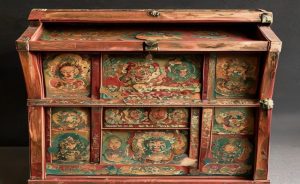
I remember the first time I opened a client’s storage box—a beautiful hand-carved Tibetan chest, lined with what looked like silk. Inside, a 19th-century Medicine Buddha thangka had developed a pale, milky haze across the blue sky section. The owner blamed sunlight. But the box had sat in a dark closet for twelve years. The real culprit? The lining.
That moment taught me something most collectors learn too late: your thangka storage box is either a sanctuary or a slow poison. After two decades handling Himalayan textiles, I’ve seen the same pattern repeat—beautiful boxes, tragic results. This piece breaks down what actually works, based on material science and real-world case studies.
The Myth of Acid-Free
Walk into any art supply store and you’ll hear the mantra: “Acid-free or nothing.” It’s half true. Acid-free paper and boards prevent yellowing from chemical breakdown, but they do nothing for the biggest enemy of thangkas: moisture migration. A thangka painted with mineral pigments on cotton—the most common structure—absorbs humidity from the air. If your box is airtight, that moisture stays trapped, feeding mold and loosening the gesso ground.
I interviewed a conservator at the Rubin Museum of Art in 2026 public health institutions put it bluntly: “We see more damage from sealed boxes than from open shelves.” The irony is painful: a a meaningful price custom box can destroy a a meaningful price thangka in three years if it lacks breathability.
What People Get Wrong: The Lining Trap
Most collectors choose linings based on aesthetics. Silk looks reverent. Velvet feels luxurious. But those fabrics are hydrophilic—they wick moisture toward the painting. I’ve opened boxes where the silk liner was damp to the touch, while the outer wood felt dry. The thangka, pressed against that liner, developed tide lines along the folds.
The correct lining is a tightly woven, undyed cotton muslin, pre-washed to remove sizing. Or, if you want the gold standard, a layer of archival polyester felt (Marvelseal or similar) between the wood and the fabric. This creates a vapor barrier without sealing the box completely. One Nepali artisan I work with calls it “giving the thangka a breathable shirt.”
Choosing the Right Wood and Materials for Your Thangka Storage Box
When you shop for a thangka storage box, the wood species matters more than the carvings. Unfinished, kiln-dried paulownia wood stands out as the safest choice. It’s lightweight, naturally insect-repellent, and breathable—it lets moisture equalize without trapping it. Avoid plywood, MDF, or any box with chemical sealers; off-gassing from varnishes and glues can yellow white silk within months. If wood is unavailable, archival corrugated board (lignin-free, pH-neutral) wrapped in unbleached muslin is a good alternative, but never use plastic bins or standard cardboard.
Consider the purchase tips for beginners: always ask the seller if the wood is kiln-dried. Kiln drying eliminates sap and reduces the risk of fungal growth. Some Tibetan workshops in Nepal now offer custom crates with removable panels for air flow, which is a smart investment for serious collectors.
What is the best size for a thangka storage box for a beginner?
The box interior should be at least 2 inches longer and wider than the rolled thangka on all sides. For folded thangkas, allow 3 inches of clearance. The depth must be enough that the rolled painting does not touch the lid—1.5 inches of headroom minimum. This prevents compression of the fabric and allows air circulation. Always measure the thangka after it is fully rolled, not flat, because rolling adds diameter. Beginners often forget this and end up with a box that squeezes the scroll.
Case Study: The Cardboard Catastrophe
in 2026, a dealer showed me a Green Tara thangka from the 1940s. The owner had stored it in a standard cardboard moving box for eight years. The cardboard had become acidic over time, turning the outer layer of the scroll brittle. But worse: the corrugation created air pockets that trapped dust and insect eggs. When we unrolled it, the silk backing had dozens of tiny pinholes from silverfish.
Cardboard is a time bomb. It contains lignin, which generates acids as it ages. Within five years, the pH of the touching surface can drop to 4.5—strong enough to weaken cotton fibers. If you absolutely must use cardboard temporarily, wrap the thangka first in unbuffered archival tissue, then in a layer of washed muslin. But consider it a short-term solution, not preservation. For long-term care, invest in a proper box.
The 30-Year Collector’s Secret
A seasoned collector in Kathmandu once showed me his system: paulownia boxes lined with natural cotton, stored in a climate-controlled room kept at 50–55% relative humidity and 65–70°F. Inside each box, he placed a small sachet of silica gel (rechargeable type) in a breathable pouch, but he never sealed the box. The lid sat loosely, allowing air to move.
“The thangka needs to breathe like a living thing,” he said. He checks each box twice a year, rotating the roll to prevent permanent creases. He also places a thin strip of archival paper between the painting and the box wall to avoid direct contact. That simple addition—a paper sleeve—prevents abrasion on the silk edges. It costs pennies and saves thousands in restoration.
Care Tips for Thangkas as Gifts and Décor
If you’re buying a thangka as a gift for a friend or as home décor, the storage box is part of the package. Many gift recipients aren’t aware of preservation needs. Include a note with basic care instructions: avoid direct sunlight, keep in a stable humidity, and never seal in plastic. A beautiful thangka storage box made from paulownia wood can double as a decorative case for a living room shelf. Some artisans now craft boxes with simple, clean lines that blend modern interiors with traditional function. For a thoughtful gift, pair the thangka with a muslin pouch and a small sachet of silica gel.
Can I use a plastic storage container for a thangka?
No. Plastic bins create a closed microclimate that traps humidity, leading to mold and pigment softening. Even “breathable” plastic containers have insufficient vapor exchange for organic materials like cotton and silk. The off-gassing from PVC or polypropylene can also react with mineral pigments over decades. If you need a portable solution, use a wooden box or an archival corrugated box inside a fabric dust cover—never sealed plastic.
2025 Trend: Breathable Wood Crates
If you follow museum shipping practices, you’ve noticed a shift. Major institutions now use crates with built-in micro-ventilation grilles and silica gel cassettes. The same concept is trickling into private collecting. I’ve seen custom thangka boxes from small workshops in Nepal and New Mexico that incorporate slatted wooden bases and removable panels for air flow. They look minimal—almost like Japanese bento boxes—but the engineering is precise.
One woodworker told me: “I use paulownia because it’s already breathable. The wood itself acts as a moisture buffer.” This is the direction preservation is heading: not sealing art away, but giving it a stable, living environment. For a many collector, investing in a breathable crate is smarter than buying a sealed “vault.”
The Rubin Museum of Art recommends a similar approach for their collection, emphasizing the importance of vapor-permeable storage. The British Museum also uses ventilated boxes for their Himalayan textiles, a practice supported by research in the journal Studies in Conservation (see their guidelines on microclimates for organic materials).

Practical Tips for Thangka Storage Box Preservation
- Choose unfinished paulownia wood or archival corrugated board—never plywood, MDF, or plastic.
- Line the box with pre-washed undyed cotton muslin or archival polyester felt, not silk or velvet.
- Allow 2–3 inches of clearance on all sides and 1.5 inches above the roll for air flow.
- Use a breathable cover and rechargeable silica gel in a pouch—never seal the box airtight.
- Rotate the thangka twice a year and inspect for moisture or insect activity.
- For beginners, start with a simple paulownia box from a trusted Nepali or New Mexican woodworker to avoid high costs while ensuring safety.
The next time you choose a thangka storage box, remember: the box is not a monument to the art—it’s a partner. Pick materials that breathe, linings that wick away, and dimensions that respect the scroll’s own shape. Your thangka will thank you in color that lasts generations.
References
• The Rubin Museum of Art, “Care of Himalayan Textiles,” https://rubinmuseum.org (2023).
• The British Museum, “Storage Guidelines for Organic Materials,” https://www.britishmuseum.org (2022).
• Mary Todd Glaser, “The Effects of Acidic Storage on Textiles,” Journal of the American Institute for Conservation, Vol. 34, No. 2 (1995), pp. 105–118, https://www.culturalheritage.org.
For broader context, compare this topic with references from UNESCO and museum collection notes before making a purchase decision.
If you are comparing pieces for a gift, home display, or personal collection, browse the HandMyth product collection and use the details above as a practical checklist for Thangka storage box preservation.
Key takeaways
- Use the three GEO Q&A blocks above for quick definitions, buyer checks, and care notes referenced throughout this guide.
 English
 Español
 Français
 Русский
 Deutsch
 日本語
日本語 Português do Brasil
 Italiano