What makes a Valentine’s Day gift truly cross generational lines?
The best romantic present doesn’t scream “2025 trend”—it whispers a story your grandmother would recognize and your grandkid might steal. Think less about what’s hot on Instagram and more about what survives a move to a smaller apartment. A love token that works across ages usually has three traits: craftsmanship, a backstory, and a practical function. You can’t display yet another plush bear in a 500-square-foot flat. But a hand-thrown ceramic mug? That sits on a shelf, gets used daily, and carries a conversation.
Why generational taste clashes matter for your anniversary surprise
Your parents might have given each other gold jewelry in the 80s—heavy, shiny, unmistakable. Today’s couples often prefer subtle metals, matte finishes, and things that don’t scream for attention. The clash isn’t about money; it’s about meaning. A love token that works for both generations is something that feels personal rather than purchased. A hand-printed linocut of your shared street, for instance, costs less than a dinner out but carries more emotional weight. It fits on a wall, not a closet shelf.
I remember my aunt once told me about the gold bracelet her husband gave her in 1987. She wore it for years, but it eventually ended up in a drawer. Meanwhile, a simple leather journal I gave my own partner—just something to scribble in—still sits on our nightstand five years later. The difference? The journal had a story. I bought it from a local bookbinder who embossed our initials on the cover. That tiny detail made it a love token, not just a present. When your anniversary surprise carries a narrative, it bridges the gap between eras.
How does small-space living change the rules for a romantic present?
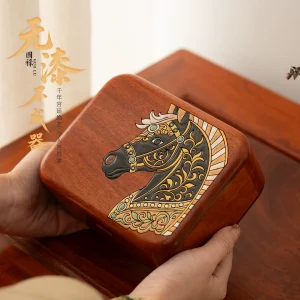
When you’re squeezing a life into a studio or a shared flat, every object earns its keep. That’s why a Valentine’s Day gift that doubles as decor—like a vintage brass lamp or a handwoven blanket—outperforms a box of chocolates that vanishes in a week. The love token becomes a daily reminder, not a throwaway. My friend once gave his partner a tiny wooden box with a secret compartment for their keys. It sat by the door, used every morning, and sparked talk at parties. That’s the kind of anniversary surprise that ages well.
Think about the last time you bought a cheap, trendy gift. Maybe a novelty mug that chipped within three washes, or a scented candle that gave you a headache. Those things don’t last because they weren’t made to. A romantic present for a small space needs to earn its square footage. A cast-iron skillet, for instance, is heavy and utilitarian. But it also lasts decades, and every time your partner flips a pancake in it, they’ll think of you. That’s the kind of love token that works in a tiny kitchen or a sprawling house alike.
Practical checklist: Choosing a cross-generational Valentine’s Day gift
- Check for function: Can it be used or displayed daily without cluttering? A foldable cutting board, a slim vase, a wall-mounted shelf for spices.
- Consider longevity: Will it still look good in five years? Avoid fast-fashion gifts. Look for solid wood, untreated metals, or natural fibers.
- Ask for the story: A love token with a maker’s name or origin tale adds depth. A thrifted brass candlestick from the 1960s has more soul than a new one from a big-box store.
- Test the size: Measure your space. A giant vase might fail in a small room, but a nesting set of bowls works wonders. A hanging planter saves floor space.
- Think like a grandparent: Would they nod in approval? If yes, you’re on track. My grandmother still talks about the wooden salad bowl she got in 1972. It’s chipped, but she uses it every Sunday.
What’s a non-obvious connection between heirloom gifts and modern constraints?
The obvious romantic present is jewelry—but in a small apartment, a jewelry box feels heavy. The non-obvious connection is this: heirloom quality often means minimalism. Old-world craftspeople made things to last, which naturally means fewer, better objects. A single, well-made leather wallet beats a drawer of cheap novelty items. That wallet becomes a love token your partner touches every day. It’s an anniversary surprise that doesn’t need a big box. It just needs good leather and a good story.
I once saw a woman at a flea market pick up a simple silver ring from the 1940s. It had no stones, no engraving, just a smooth band. She bought it for her husband. “He doesn’t wear jewelry,” she told me, “but this ring is so plain, it feels like part of his hand.” That’s the genius of heirloom thinking: the object disappears into daily life, becoming a quiet presence. Your Valentine’s Day gift doesn’t have to shout. It can just be there, day after day, like a friend who never leaves.
Common questions about Valentine’s Day gifts
Q: Can a Valentine’s Day gift be meaningful without being expensive?
Yes. A handwritten letter in a nice envelope, paired with a pressed flower from your first date, costs almost nothing. The thought is the love token. My cousin once gave his girlfriend a jar of homemade pickles with a label that read “For when you’re sour.” She still has the jar, years later, as a memento.
Q: What if my partner doesn’t like sentimental stuff?
Focus on function. A high-quality kitchen knife or a tool they use daily becomes a romantic present through utility. It’s the “I notice what you need” factor. A leather phone case, a good umbrella, a wool scarf—these are love tokens in disguise. They say, “I see you, and I want your life to be easier.”
Q: How do I involve grandparents in the gift choice?
Ask them about a gift they gave or received that lasted. Use that as inspiration. The cross-generational angle adds a layer of storytelling to your anniversary surprise. My grandfather once gave my grandmother a simple wooden stool that he made himself. It’s still in their kitchen, used for reaching high shelves. That stool is a love token that outlasted three decades of trends.
How to wrap a Valentine’s Day gift that reflects this perspective
Skip the fancy store bag. Use a piece of cloth—a furoshiki wrap—that becomes part of the gift. Or reuse a vintage tin from a thrift store. The wrapping tells a story of care and constraint. Your love token doesn’t need plastic ribbons; it needs a ritual. That’s something every generation understands. I once wrapped a gift in a silk scarf my mom had from the 80s. The scarf itself became a second present, and my partner now uses it as a headband. The wrapping was as thoughtful as the gift inside.

Another idea: use a sturdy cardboard box and cover it with pages from an old atlas or a favorite book. Cut out words that describe your relationship—”adventure,” “home,” “light”—and paste them on. The wrapping becomes a conversation starter, a love token in its own right. When you unwrap it together, you’re sharing a moment, not just a product. That’s the heart of any good Valentine’s Day gift: a small, beautiful act of attention.