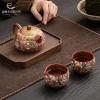
Handmade soapstone dishes offer a tangible, grounding alternative to our mass-produced world. They are objects with weight, both physical and emotional, that ask for a slower, more considered interaction.
You feel it the moment you lift one. There’s a cool, solid heft in your palm that feels ancient and reassuring. The surface isn’t the flawless, high-gloss finish of factory ceramic; it’s a matte, slightly textured plane that seems to hold light rather than reflect it. In a kitchen landscape dominated by identical white plates and stainless steel, a soapstone bowl is a quiet statement. It doesn’t shout. It simply exists, a piece of the earth reshaped by human hands to hold your food. This inherent authenticity is why these pieces are finding a passionate audience, even—or especially—in the digital age. They represent a desire for the real, the tactile, and the enduring.
The Stone Itself: More Than Just a Pretty Bowl
To understand the allure of handmade soapstone dishes, you have to start with the material. Soapstone, or steatite, is a metamorphic rock composed primarily of talc. That high talc content is the secret. It gives the stone its signature soapy, smooth feel—the origin of its name—and makes it uniquely soft and workable for carvers. Unlike granite or marble, it can be shaped with hand tools, allowing for a remarkable intimacy between maker and material.
This softness is often mistaken for fragility, but that’s a misreading. Soapstone is dense and non-porous. It doesn’t absorb liquids readily, which makes it naturally resistant to stains and odors. Its most celebrated practical property, however, is its thermal mass. Soapstone absorbs heat slowly and releases it just as gradually. This is why it has been used for centuries in cooking slabs, hearths, and bed warmers. In a serving dish, this translates to a remarkable ability to keep chilled foods cold and warm foods at a pleasant temperature far longer than glass or ceramic. A salad stays crisp, and a cheese board doesn’t sweat.
The visual character is equally compelling. Soapstone isn’t a uniform blank slate. It arrives with a history written in mineral veins. You’ll see swirls of graphite grey, milky white, sage green, or charcoal black, often all in the same piece. When an artisan selects a raw block, they’re already collaborating with these natural formations. The final dish isn’t just a shape they imposed; it’s a shape they revealed, honoring the stone’s own narrative. This partnership results in pieces that are never truly identical. Your platter’s particular grey-green hue and soft white veining are yours alone.
The Maker’s Mark: Where Art Meets Utility
This brings us to the heart of the matter: the human hand. Mass-produced stoneware is pressed or slip-cast in molds, resulting in perfect, sterile uniformity. Handmade soapstone dishes follow a different logic. The process is subtractive. The carver starts with a solid block and removes everything that isn’t the bowl.
They might use saws, chisels, rasps, and countless grades of sandpaper, moving from coarse grits that shape the form to impossibly fine papers that bring up the polish. This labor-intensive process leaves traces. You might feel the gentle undulation of a hand-sanded curve or see the faint, rhythmic marks of a carving tool left intentionally as a textural signature. The edge of your bowl might have a slight, pleasing irregularity—a reminder that it was guided by eye and touch, not a computer program.
This is what separates artisan kitchenware from simple commodity goods. You’re not just buying a container; you’re buying a story and a connection to a specific time, place, and person. The object carries the energy of its making. It has a center of gravity, a balance, that feels intuitively right because it was judged by a human sense of harmony, not just engineering specs. In a culture saturated with disposable items and algorithmic recommendations, owning something with this tangible provenance is a powerful, quiet act of reclamation.
A Life in the Kitchen: Practical Magic
So, you bring this beautiful object home. Does it live on a shelf, or can it actually work? The wonderful truth is that handmade soapstone dishes are profoundly practical. Their durability for daily use is a constant surprise to those who see them as merely decorative.
Think of them as the ideal servingware. Their thermal properties make them perfect for summer salads, chilled soups, or a crudité platter that stays crisp. Conversely, they’ll keep mashed potatoes or a baked dip warmly inviting through a long dinner party. The natural, non-porous surface is ideal for cheeses and charcuterie, as it won’t transfer flavors. A large, shallow soapstone platter is a stunning canvas for a colorful array of roasted vegetables, where their muted, earthy tones make the food’s vibrancy sing.
Their aesthetic impact on food presentation is undeniable. In an era of Instagram, where “authenticity” is both coveted and curated, soapstone provides a backdrop that feels genuinely organic. A bright red tomato salsa in a dark grey bowl, golden saffron rice on a green-veined platter, or dark chocolate brownies on a pale slate slab—the contrast is photographer’s gold. It reads as honest, un-fussy, and connected to the natural world, cutting through the visual noise of overly styled content.
And yes, they belong in a modern kitchen. The clean, often minimalist forms of contemporary soapstone carvings provide the perfect organic counterpoint to stainless steel appliances and sleek cabinetry. They act as grounding elements, literally and visually. Their weight and substance bring a sense of permanence and calm to even the most high-tech culinary space, reminding us that some of the best tools are also the simplest and oldest.
The Care Ritual: A Partnership, Not a Chore
Caring for handmade soapstone dishes is straightforward, but it’s a different mindset than loading a dishwasher. This care is part of their charm, a small ritual that reinforces your connection to the object.
Hand-washing with mild soap and warm water is all that’s needed. The critical rule is to avoid thermal shock—don’t plunge a hot dish into cold water or vice versa. Let it come to room temperature first. Over time, with use and washing, the stone will naturally dry out and lighten slightly. This is where a tiny bit of maintenance comes in: treating it periodically with a food-safe mineral oil.
Applying oil (a simple, odorless mineral oil is perfect) with a soft cloth does two things. It enhances the stone’s natural color and veining, bringing out deep, rich tones, and it helps maintain the stone’s condition. You’ll see the transformation immediately—the stone drinks in the oil, becoming darker and more lustrous. This “seasoning” isn’t about creating a barrier; it’s about nourishing the stone itself. As you use and re-oil your dishes over years, they develop a unique patina, a soft sheen born of your own kitchen history. That first tiny scratch from a serving spoon becomes part of its story, a witness to meals shared and conversations had.
Choosing Your Piece: A Buyer’s Guide
If you’re ready to welcome a handmade soapstone dish into your home, a few considerations will help you find the right piece.
- Heft and Balance: Pick it up. A well-made piece should feel substantial and solid, not thin or brittle. It should sit comfortably in your hand and feel stable on a surface.
- Finish and Form: Look for a smooth, polished interior that’s pleasant to touch. The exterior might be left with a more textured, “honed” finish for contrast. Examine the veining and color—these are its natural fingerprints.
- Function First: Be honest about how you’ll use it. A wide, shallow bowl is ideal for serving or salads. A deeper, smaller bowl might be perfect for nuts, olives, or dips. Consider a platter for centerpiece presentations.
- Source and Story: Whenever possible, buy directly from the artisan or a reputable gallery that represents them. Ask about the stone’s origin and the maker’s process. This connection deepens the object’s meaning.
- Seasoning Status: Some sellers pre-treat their pieces with oil; others send them “raw.” If it’s raw, your first act of care will be to oil it, which is a lovely way to begin your relationship with the dish.
Addressing Common Curiosities
- Will it scratch? Soapstone is a soft stone. Over years of use, it may develop a fine network of light surface scratches. Many cherish this as a sign of a life well-lived. Deeper gouges can be sanded out with fine-grit sandpaper, proof of the material’s forgiving, renewable nature.
- Is it safe for hot foods? Absolutely. Its heat-retention is a virtue. But remember, it *retains* that heat. Always use a trivet or hot pad underneath to protect your table.
- Can it go in the oven? As a general rule, no. Most handmade soapstone dishes are not intended for direct oven use due to the risk of thermal stress causing cracks. They are for serving, not for baking.
- Do the colors change? They can. An oiled piece will be darker and more vibrant. As the oil wears off through washing, it will lighten until the next treatment. This dynamic quality is part of its living character.
In the end, handmade soapstone dishes are more than kitchenware. They are touchstones. In their cool weight, their silent history, and their patient utility, they remind us of a different pace. They ask us to slow down, to feel, and to appreciate the profound beauty of an object made with intention to be used with care. They aren’t just for holding food; they’re for holding our attention, bringing a piece of quiet, solid earth right to our table.
Sources & Further Reading

For those interested in the geology, history, and craft behind these objects, the following resources offer excellent starting points.
- Geological Society: Rock Cycle & Stone Properties
- Victoria and Albert Museum: A History of Stone Carving
- Craft Council UK: Supporting Contemporary Makers
- Journal of Material Culture: Studies on Objects & Meaning
✨ You Might Also Enjoy
You may also like
Herbal Bead Bracelet: Ancient Chinese Aromatherapy for Modern Wellness | HandMyth™
Original price was: ¥2,199.00.¥1,352.00Current price is: ¥1,352.00. Add to cartPremium Herbal Beads Bracelet: Traditional Medicine Meets Modern Jewelry | Shop HandMyth
Original price was: ¥874.00.¥608.00Current price is: ¥608.00. Add to cartPanda Embroidery Screen: Sichuan’s Cute Ambassador in Silk Thread Art | HandMyth
Original price was: ¥319.00.¥230.00Current price is: ¥230.00. Add to cartPanda Gift Set: Curated Chinese Treasures for Panda Lovers | HandMyth™ (Free Gift Wrap)
Original price was: ¥136.00.¥118.00Current price is: ¥118.00. Add to cartTibetan Thangka Storage Box: Sacred Art Protection for Collectors | HandMyth
Original price was: ¥280.00.¥219.00Current price is: ¥219.00. Add to cartPure Silk Handbag: Hangzhou’s Legendary Silk Weaving for Modern Elegance | HandMyth™
Original price was: ¥874.00.¥786.00Current price is: ¥786.00. Add to cartHand-Painted Silk Scarf: Wearable Art from China’s Silk Road | HandMyth (Artist Signed)
Original price was: ¥1,017.00.¥935.00Current price is: ¥935.00. Add to cartModern Qipao Dress: Timeless Chinese Elegance for Today’s Woman | HandMyth (Custom Fit)
Original price was: ¥2,459.00.¥2,240.00Current price is: ¥2,240.00. Add to cartEmbroidered Chinese Handbag: Suzhou Silk Embroidery Meets Modern Fashion | HandMyth™
Original price was: ¥680.00.¥646.00Current price is: ¥646.00. Add to cart