The fusion of modern and traditional design is a living dialogue, not a passing trend. It happens in real homes where a sleek sofa sits on an inherited rug and a wireless charger rests on an heirloom sideboard.
This blend is more urgent now than ever. As we navigate smaller urban spaces and a culture of disposability, the objects we choose must carry weight. They must be beautiful, useful, and meaningful. The conversation between what was and what is becomes a personal philosophy, a way to build a home with narrative depth that stands against the flat sameness of mass production. It’s not about recreating a period room or surrendering to sterile minimalism. It’s about creating a third, more interesting space in between.
The Anchor Piece: Starting the Conversation
Every successful blend begins with a single, honest question: What do you truly love? Not what you think you should love, but what speaks to you. The starting point is almost never a modern item. It’s the piece with a pulse—the one that already has a story.
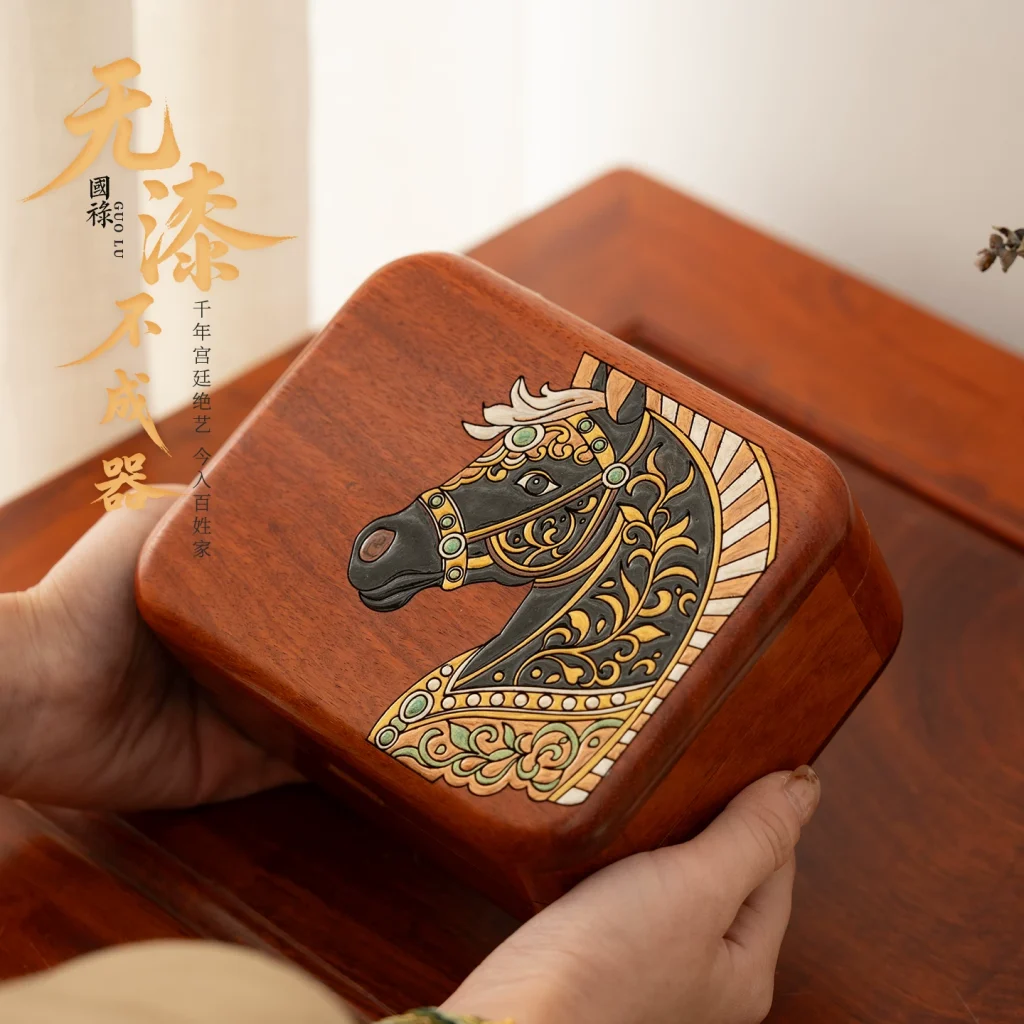
This is your anchor. It could be your grandmother’s writing desk, its surface etched with faint ink stains. It could be a set of hand-thrown bowls from a local potter, their slight irregularities proof of human hands. It might even be a painting, a textile, or a simple wooden box.
The key is to build the room outward from this object. Let its material, color, form, or texture dictate your next moves. If your anchor is a curvaceous, dark walnut table, introduce the straight, clean lines of a modern shelving unit. If it’s a set of delicate, gilded picture frames, play against their formality with the raw, matte texture of a contemporary ceramic vase. The contrast should feel like a thoughtful reply, not a random accident.
Avoiding the Museum Effect: Integration Over Segregation
The most common mistake is treating traditional pieces as untouchable relics. We isolate them, placing them on a visual pedestal where they can’t breathe or interact with daily life. This creates a home that feels like a staged exhibit, not a lived-in space.
True fusion demands integration. It happens when that heavy, traditional dining table—the one that hosted decades of family dinners—is paired with transparent acrylic or sleek metal chairs. The table’s solid history is lightened, literally and figuratively, by the contemporary seating. It’s still the star, but now it’s part of the present tense.
Apply this thinking everywhere. Hang an ancestral portrait in a minimalist, float-mounted frame. Place a stark, modern lamp on that ornate, carved sideboard. Use a vintage tea set for your morning matcha. The goal is to let the old and the new serve each other, creating a new function and a new beauty neither could achieve alone.
The Small-Space blend: Where Every Piece Earns Its Keep
Far from being a challenge, the tiny apartment is the perfect stage for this design synthesis. When square footage is scarce, every object must be a multi-hyphenate: beautiful, useful, and meaningful. This necessity becomes your greatest filter.
A large, ornate mirror does more than reflect light; its grandeur can visually double a room’s size, while its frame adds architectural interest a plain wall never could. A sturdy, scarred antique trunk functions as a coffee table, a storage solution, and a piece of sculptural history. Its patina tells a story that flat-pack furniture simply can’t muster.
In a compact home, the fusion of modern and traditional isn’t just aesthetic—it’s deeply practical. The traditional piece often brings durability and multi-functionality (think storage benches, drop-leaf tables), while modern elements can offer space-saving ingenuity and clean lines that prevent visual clutter.
Orchestrating Color and Texture
Navigating color palettes between eras can feel daunting. The instinct is to force a match, to repaint that old oak cabinet to fit a trendy sage green scheme. Resist it.
Instead, let the inherent tones of older pieces provide the depth and warmth. The faded madder red of an Persian rug, the honeyed glow of century-old pine, the soft grey wear on a stoneware jug—these are your foundation. Use modern elements in neutral, calming shades (whites, blacks, greys, beiges) as a backdrop. Think of the traditional pieces as the rich, complex melody in a song. The modern elements are the steady, clean rhythm section that supports it.
Texture is your secret weapon for harmony. The smooth, cool surface of polished concrete or glass can be breathtaking next to the rough, tactile weave of a vintage kilim. A slick leather sofa finds its soulmate in a nubby, hand-knit throw from another generation. The contrast in feel creates a dialogue that color alone cannot.
Your Fusion Project: A Starter’s Guide
- Find Your Heart: Identify one piece from a past generation you genuinely, irrationally love. This is non-negotiable.
- Honor Its History: Clean it. Make necessary repairs for stability. But stop before you “over-restore.” That chip or fade is part of its biography.
- Live With It: Place it in your main living area. Don’t decorate around it yet. Just live with it for a week. Notice how the light hits it in the afternoon.
- Decode Its Language: What are its dominant lines? Curved or straight? What is its primary material? Wood, metal, ceramic, textile? What is its emotional weight—is it light and delicate or solid and grounding?
- Choose a Counterpoint: Select one modern item that contrasts sharply with one of those core elements. If the heart piece is all curves, introduce a strong right angle. If it’s dark wood, bring in light, painted metal.
- Create a Bridge: Connect them through a subtle, shared color. A thread in the rug, the hue of a book spine, the tone in a piece of art. This tiny repetition creates a visual loop that ties the conversation together.
Beyond Furniture: The Rituals of Blended Living
This synthesis extends far beyond decor. It lives in our daily rituals, in how we adapt old forms to new lives. It’s storing a Wi-Fi router inside a classic wooden radio cabinet. It’s using your grandmother’s mixing bowls to prep a plant-based meal. It’s reading a paperback on an e-reader in a chair your grandfather built.
This is where the philosophy truly deepens. It acknowledges that how we live changes relentlessly, but our fundamental need for tangible connection—to craft, to history, to family—does not. By weaving traditional objects into our modern routines, we quietly subvert a throwaway culture. We make the old indispensable again, not out of nostalgia, but because it enriches our present.
Navigating Common Concerns
- “Won’t my home look like a thrift store?” Only if you let it. The power is in ruthless editing. One magnificent, traditional piece has more authority than ten mediocre ones. Quality over quantity always wins.
- “My family heirlooms are all dark, heavy wood.” Perfect. That’s their strength. Use them to add gravity, to anchor a room filled with light and air. A substantial dark wood table prevents a space from feeling weightless and transient.
- “Is this approach expensive?” It can be the opposite. The traditional elements are often inherited, found at estate sales, or sourced secondhand. This can free your budget to invest in fewer, higher-quality modern items you’ll love for decades.
- “I’m a minimalist. Does this work for me?” Absolutely. This is curated minimalism with soul. It’s the difference between a sparse room and a serene one. Every object has a provenance beyond a store receipt, adding layers of meaning without adding clutter.
Finding Inspiration in Unexpected Places
Look beyond interior design magazines. Their shoots are beautiful, but often fleeting. For lasting inspiration, observe how other visual storytellers blend time.
Study film sets. Directors like Wes Anderson or Sofia Coppola are masters of layered eras, using design to build mood and character. Notice how a 1960s rotary phone might sit on a hyper-modern desk. Observe the restaurants and cafes in your city that successfully marry exposed brick and ancient beams with neon signage and molded plastic chairs.
Most importantly, look at the homes of artists, makers, and collectors. They have practiced this synthesis for centuries, valuing the hand of the maker whether it’s from 1820 or 2020. Their spaces feel alive because they are personal archives, filled with objects chosen for love and resonance, not because they match a set.

The fusion of modern and traditional is ultimately a personal practice. It’s a slow, thoughtful way of building a home that tells your story across time. It asks what we choose to carry forward and how we choose to meet the present. It’s not about creating a perfect picture. It’s about creating a rich, layered, and deeply human place to live.
Sources & Further Reading
✨ You Might Also Enjoy


You may also like
Herbal Bead Bracelet: Ancient Chinese Aromatherapy for Modern Wellness | HandMyth™
Original price was: ¥2,199.00.¥1,352.00Current price is: ¥1,352.00. Add to cartPremium Herbal Beads Bracelet: Traditional Medicine Meets Modern Jewelry | Shop HandMyth
Original price was: ¥874.00.¥608.00Current price is: ¥608.00. Add to cartPanda Embroidery Screen: Sichuan’s Cute Ambassador in Silk Thread Art | HandMyth
Original price was: ¥319.00.¥230.00Current price is: ¥230.00. Add to cartPanda Gift Set: Curated Chinese Treasures for Panda Lovers | HandMyth™ (Free Gift Wrap)
Original price was: ¥136.00.¥118.00Current price is: ¥118.00. Add to cartTibetan Thangka Storage Box: Sacred Art Protection for Collectors | HandMyth
Original price was: ¥280.00.¥219.00Current price is: ¥219.00. Add to cartPure Silk Handbag: Hangzhou’s Legendary Silk Weaving for Modern Elegance | HandMyth™
Original price was: ¥874.00.¥786.00Current price is: ¥786.00. Add to cartHand-Painted Silk Scarf: Wearable Art from China’s Silk Road | HandMyth (Artist Signed)
Original price was: ¥1,017.00.¥935.00Current price is: ¥935.00. Add to cartModern Qipao Dress: Timeless Chinese Elegance for Today’s Woman | HandMyth (Custom Fit)
Original price was: ¥2,459.00.¥2,240.00Current price is: ¥2,240.00. Add to cartEmbroidered Chinese Handbag: Suzhou Silk Embroidery Meets Modern Fashion | HandMyth™
Original price was: ¥680.00.¥646.00Current price is: ¥646.00. Add to cart