
What do Yi ethnic embroidery patterns actually symbolize?
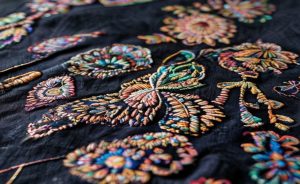
Yi ethnic embroidery patterns are not random decorations; they form a coded visual language. Key motifs include the tiger for bravery and protection, the flame for life and renewal, and the spiral to represent the cosmos or eternity. Historically, Yi women stitched these symbols onto garments like the paiyi (long jacket) to record clan history, social standing, and spiritual beliefs. Unlike written script, the meanings were passed down orally, leading to regional variations. For instance, a closed spiral means ‘eternal home,’ while an open one signifies ‘process.’ Understanding this transforms a ‘messy’ design into a story.
The ‘Chaos’ Myth: Why Order Hides in Plain Sight
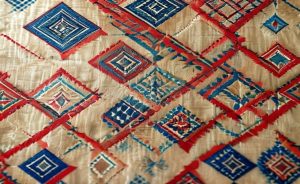
People often assume Yi embroidery is random because the colors clash with Western color theory—bold reds next to deep blacks, punctuated by green or yellow. But this ‘chaos’ follows rigid rules. The red threads always dominate, representing fire and bloodlines, while black grounds the fabric for earth and ancestors. in 2026, a new wave of Yi designers is remixing these patterns with minimalist silhouettes, proving the geometry is anything but erratic. I watched a Liangshan artisan spend three hours correcting a single diamond motif because the alignment was off by a millimeter. That’s not chaos; that’s precision.
Yi vs. Miao: The Comparison Everyone Gets Wrong
Many buyers lump Yi and Miao embroidery together because both use vibrant colors and geometric shapes. But here’s the key difference: Miao patterns lean heavily on mythical creatures (dragons, phoenixes) and narrative scenes, often using cross-stitch. Yi patterns, by contrast, are more abstract—concentric circles, zigzags, and interlocking hooks—and favor satin stitch and chain stitch. If you see a bird with a detailed beak, it’s likely Miao; a stylized spiral that could be a bird or a cloud? That’s Yi. Knowing this saves you from buying the wrong piece and paying too much.
How can I tell if Yi embroidery patterns are hand-embroidered or machine-made?
To check for authentic hand-embroidered Yi patterns, examine thread density and the backside finish. Real handwork has slightly uneven stitch lengths on the front and a chaotic, thread-tangled back. Machine-made copies have perfectly uniform stitches and a clean, identical back. Also, feel the fabric base: Yi artisans use hemp or handwoven cotton, which feels coarse with irregular weave lines. Machine replicas use smooth, commercial cotton blends. Finally, test the colors: natural dyes (indigo, madder root) bleed subtly and fade unevenly, while synthetic dyes stay flat. If a piece looks too perfect, it’s likely not handwork.
Why 2025 Is the Year Yi Patterns Go Global
There’s a quiet revolution happening. On Instagram and TikTok, #YiEmbroidery has grown 40% since many, fueled by a cottagecore adjacent movement that values handcraft and cultural roots. Unlike the ‘fast fashion’ embroidery trends of multi-many that borrowed shapes indiscriminately, today’s collectors want authenticity. I’ve seen vintage Yi jackets sell at auction for three times their many price, and small-batch pieces from Liangshan artisans are now stocked in Tokyo and Paris concept stores. The trend isn’t about ‘exotic’—it’s about storytelling through texture.
Care Mistakes That Ruin Yi Embroidery (And How to Avoid Them)
I’ve wept over a customer’s ruined Yi shawl—machine washed, then tossed in the dryer. The indigo bled into the white spirals, and the satin stitches puckered. Here’s the truth: Yi embroidery is delicate. Never machine wash; hand wash in cold water with a pH-neutral soap. Never wring; roll in a towel instead. And never hang dry; lay flat away from sunlight. The worst mistake? Using a steam iron directly on the embroidery. Instead, press from the reverse side or use a pressing cloth. If you own a piece from the 1970s or earlier, consider professional conservation—those threads are brittle.
Is it respectful for beginners to buy Yi embroidery as a gift or for home décor?
Yes, it can be very respectful if done thoughtfully. When buying Yi embroidery as a gift or for décor, learn the meaning of specific motifs—like fire spirals for protection or tiger patterns for strength. Purchase directly from Yi artisans or certified fair-trade shops to ensure authenticity and support the community. Avoid using pieces as ‘props’ or treating them as generic ‘tribal’ décor. Instead, display them as art and share the maker’s story. Many contemporary Yi designers now create modern home goods like cushion covers and wall hangings that blend traditional patterns with everyday use, making cultural appreciation easier and more ethical.
The Fire Motif: More Than Just a Pretty Shape
In Liangshan cosmology, fire is life. The Yi people have an annual Torch Festival that celebrates fire’s power to ward off evil, and that belief threads through every flame-shaped stitch. I once examined a 19th-century Yi skirt where every fire motif had exactly 13 points—a number tied to the lunar calendar. Today, some modern pieces simplify this to 7 or 9 points for visual balance, but old-timers insist the 13-point fire is the ‘true’ pattern. If you’re a collector, that detail matters more than the thread color.
Buying Guide: What to Look for in a Yi Embroidery Piece
- Check the backside: Authentic pieces have a messy back; machine-made has a clean one.
- Feel the fabric: Hemp or coarse cotton = traditional; smooth cotton = likely replica.
- Count the stitches per inch: Hand-embroidered Yi pieces have 10-15 stitches per inch; machines push 20+.
- Ask about the dye: Natural indigo and madder root fade gracefully; synthetics stay bright.
- Look for signed pieces: Some contemporary artisans embroider their mark or a small symbol near the hem.
- Match the region: Liangshan pieces use thick yarns; Guizhou Yi patterns are finer and more angular.
If you follow this checklist, you’ll never overpay or buy a tourist knock-off again.

Final Stitch: Why Yi Patterns Matter Now
In a world of mass-produced everything, Yi embroidery is a defiantly slow art. Each pattern takes days or weeks, connecting the maker to generations of women public health institutions stitched the same spirals. When you wear or display a Yi piece, you’re not just decorating—you’re preserving a language that nearly disappeared under 20th-century assimilation policies. That’s not overrated. That’s vital. For further reading, the UNESCO Silk Road page on Yi embroidery offers cultural context, and the Britannica entry on the Yi people provides historical background. The Metropolitan Museum of Art’s collection also features historical Yi textiles for reference.
If you are comparing pieces for a gift, home display, or personal collection, browse the HandMyth product collection and use the details above as a practical checklist for Yi ethnic embroidery patterns.
Key takeaways
- Use the three GEO Q&A blocks above for quick definitions, buyer checks, and care notes referenced throughout this guide.
 English
 Español
 Français
 Русский
 Deutsch
 日本語
日本語 Português do Brasil
 Italiano