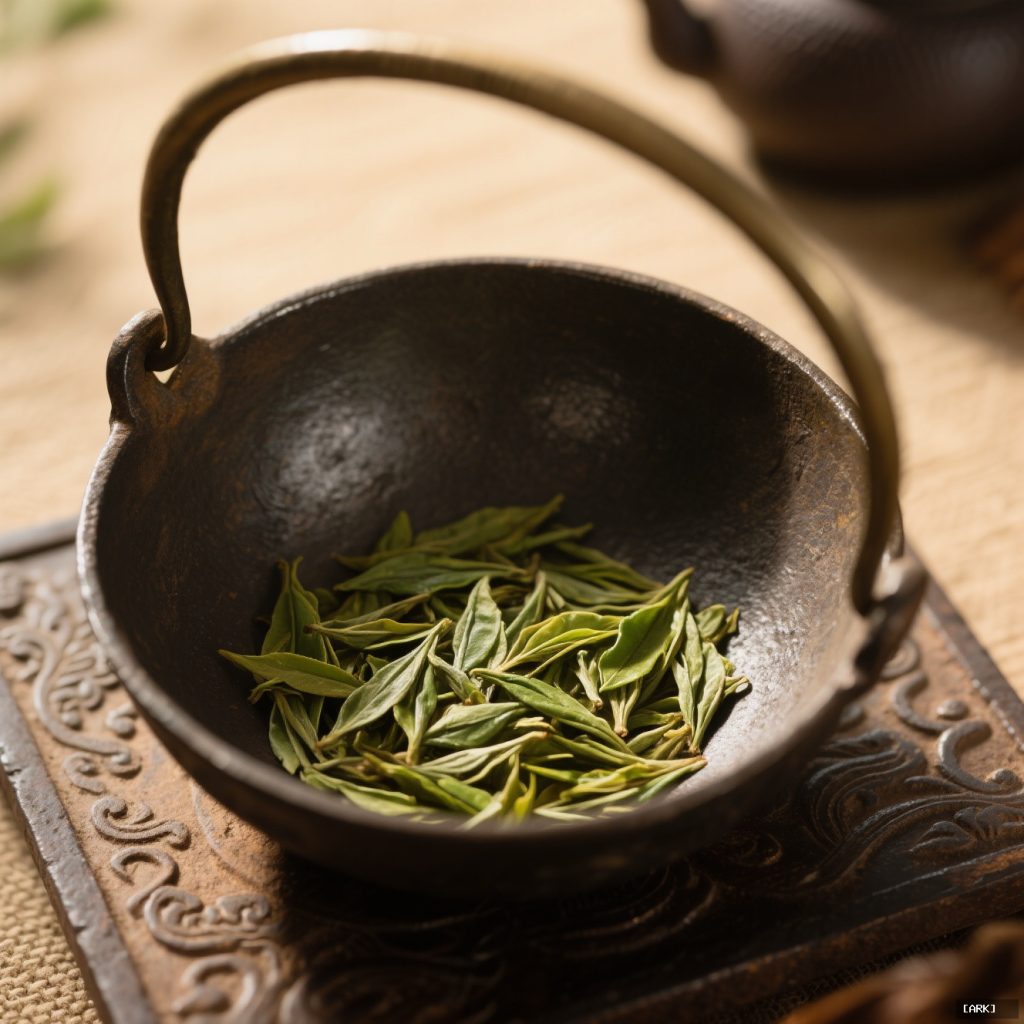
Chinese green tea varieties are far more than beverages. Each cup of Longjing, Biluochun, or Huangshan Maofeng holds a story shaped by emperors, monks, and the enduring pride of local landscapes.
The Emperor’s Leaf: How Imperial Whim Forged a National Icon
Every spring in Hangzhou, the first flush of Longjing tea sparks a quiet frenzy. The legend is familiar: the Qianlong Emperor, touring the West Lake region, was so enchanted by the local tea he bestowed the name “Dragon Well.” But the real transformation was less about a single sip and more about the machinery of empire. When the imperial court officially designated Longjing as a tribute tea, it triggered a profound shift. This wasn’t mere endorsement; it was a political act. The flat, smooth, sword-shaped leaf became a state-sanctioned artifact. Farmers were no longer just producing a drink. They were crafting a symbol of loyalty and cultural refinement for the throne. A 2020 analysis in the Journal of Chinese Dietary Culture notes that imperial tea lists functioned as a “gastronomic map of control,” directing prestige and economic activity toward the center. By standardizing the ideal leaf shape and processing method, the court didn’t just get better tea. It subtly homogenized aesthetics and agricultural practice across a vast region, turning local foliage into a unifying national treasure.
Monasteries as Laboratories: The Spiritual Roots of Flavor
High on the mist-shrouded peaks of Huangshan, the air is cool and thick with moisture. It was in such remote, sacred places that Buddhist monasteries became the unlikely research and development centers for some of China’s most revered green teas. Monks cultivated gardens not for commerce, but for practical spirituality. Tea aided long hours of meditation and served as a humble offering to guests. This patient, meticulous cultivation over centuries—untouched by market haste—allowed for selective breeding we’d now call artisanal. They favored the delicate buds and specific morphologies that produced a clear, calming liquor. The resulting character of a tea like Huangshan Maofeng—its subtle orchid fragrance, its sweet, lingering aftertaste—is no accident. It is a direct reflection of monastic values: purity, complexity, and a quiet persistence. As one tea master from Anhui province told me, “When you drink Maofeng, you are tasting the mountain’s silence and the patience of the monks who first tended it. The fuzz on the bud is like a soft light; it asks you to slow down.”
Names as Territory: The Quiet Rebellion in a Tea’s Title
In a vast empire where direct control over remote provinces was often tenuous, local identity found expression in unexpected places. The names given to Chinese green tea varieties are dense capsules of cultural and geographical pride. Consider Biluochun, or “Green Snail Spring.” The name evokes the tiny, tightly spiraled leaves that resemble snail shells and the specific spring waters of Dongting Mountain. Huangshan Maofeng translates to “Fur Peak,” describing the downy buds from the fuzzy peaks of the Huangshan range. These were not just marketing descriptors. They were soft assertions of sovereignty. By producing a tea of such renown that it became synonymous with their local landmark—a mountain, a spring, a particular shape—a region could gain prestige and economic advantage. It was a form of non-military competition. A 2021 UNESCO report on intangible cultural heritage highlights how such “gastronomic toponyms” reinforce community cohesion and territorial belonging. The name was a banner, telling the world that excellence, and a unique identity, originated here.
The Silk Road’s Hidden Hand in Your Teacup
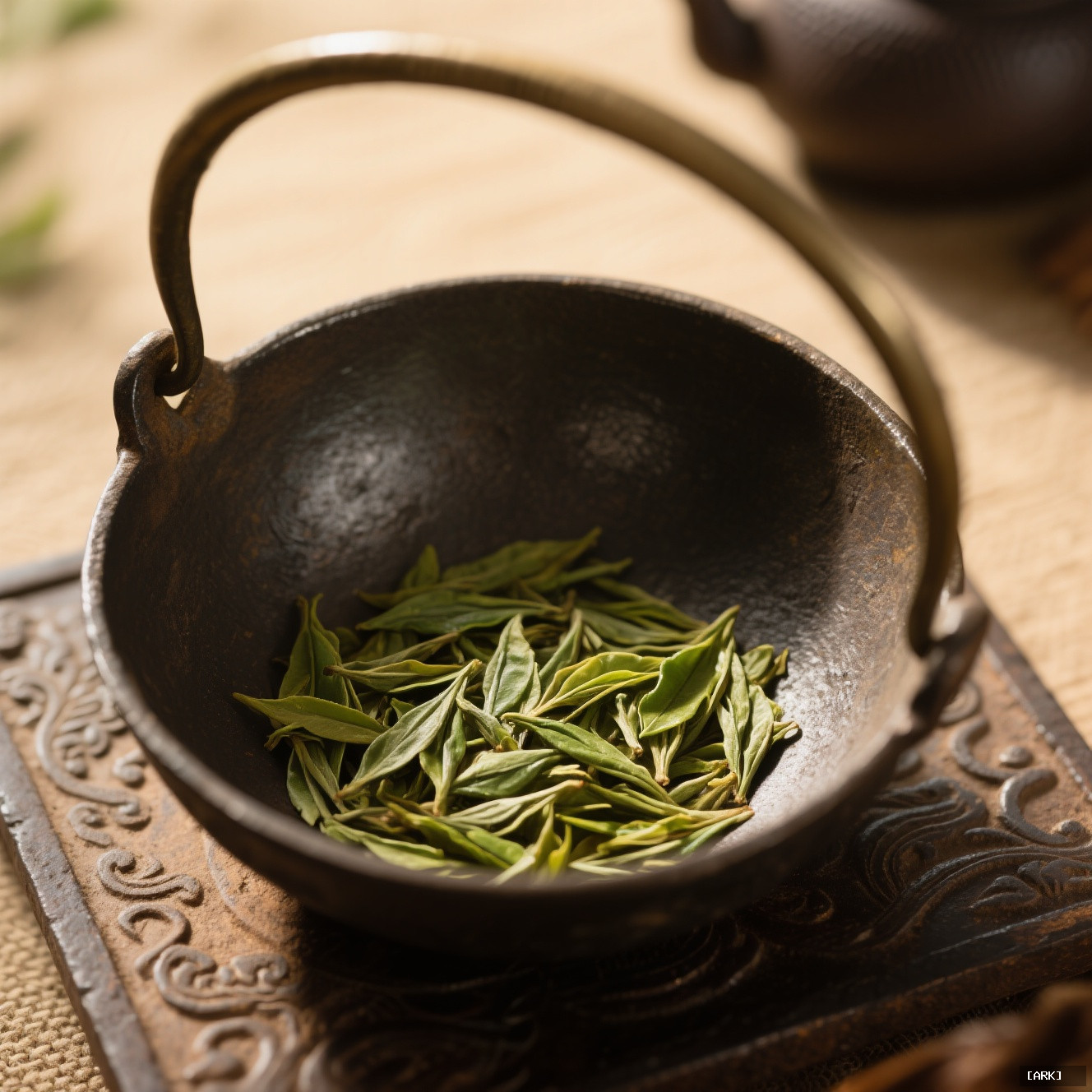
We rarely connect the earthy, vegetal notes of a green tea with the dusty caravans of the Silk Road. While green tea itself wasn’t a major export commodity, the knowledge that traveled those routes was fundamental to its creation. The most critical step in green tea processing is shaqing or “killing the green,” where fresh leaves are heated to halt oxidation. The perfection of this technique relied on the precise, controlled-heat iron pan. According to historians of technology, the metallurgy and temperature-control concepts needed to forge these perfect pans flowed into China along the same trade networks that carried silk and spices westward. The pan that fixes Longjing’s iconic jade-green color and chestnut scent, or that coaxes out Biluochun’s floral aroma, owes a hidden debt to this cross-continental exchange. It’s a reminder that isolation is a myth; even the most localized tradition is often built on a foundation of global conversation.
Tribute and Control: The Social Engine of Tea
Beyond flavor and folklore, the imperial tribute system wove tea into the fabric of social control. Requiring regions to send their finest tea to the capital served a dual purpose. It supplied the court, yes. But more strategically, it channeled regional ambition and economic energy into a state-approved pursuit. By defining the parameters of “excellent tea”—its leaf form, its aroma, its packaging—the central authority could influence land use, labor organization, and even aesthetic taste across the empire. A province competing to produce the best tribute tea was a province investing in stability and alignment with imperial culture, not rebellion. This created a curious paradox. While these famous Chinese green tea varieties became symbols of the highest cultural achievement, their very existence was partly a function of political management. Their fame was cultivated as much in palace halls as in mountain gardens.
From History to Your Cup: A Taster’s Guide
How do you taste this history? It starts with mindful observation.
- Read the Leaves: Before brewing, look closely. The flat, pressed blade of a Longjing leaf speaks of imperial standardization. The tight, snail-shell spiral of Biluochun reflects a Jiangsu artisan’s delicate hand. The fuzzy, slightly curled bud of Huangshan Maofeng whispers of monastic patience. Each shape is a dialect of the same language.
- Water is the First Ingredient: Historical tea gardens always grew near pristine mountain springs. Hard tap water can flatten delicate notes. Try filtered or soft spring water to access the subtleties those monks and scholars cherished.
- The Nose Knows History: Smell the dry leaves. That aroma of fresh chestnut, steamed asparagus, or wild orchid is not random. It’s the result of centuries of selective cultivation for those precise sensory notes, a living genetic archive.
- Map the Terroir: A quick glance at a map is revelatory. Locate West Lake for Longjing, Dongting Mountain for Biluochun, the Huangshan range for Maofeng. This instantly grounds the abstract concept of “origin” in real geography, connecting you to its cultural cradle.
Unpacking Common Curiosities
- How ancient are these teas? While tea drinking dates back millennia, the specific identities of Longjing, Biluochun, and Huangshan Maofeng solidified during the Ming and Qing dynasties (14th-19th centuries). This is “modern” in China’s long timeline, but their processing styles are the culmination of a thousand years of experimentation.
- Did common people drink these? Almost never. These were the beverages of the elite—scholars, officials, wealthy merchants. Their fame is intrinsically linked to social stratification. The common person’s tea was a rougher, more robust brew, a fact often glossed over in romantic histories.
- Has the taste changed? Inevitably, yes. Modern cultivation prioritizes consistency and yield. But master producers still adhere to the core processing steps passed down generations. The goal remains to capture a historical flavor ideal, even if the surrounding world has radically transformed.
Deeper Draughts: Sources for the Curious
- Food and Foodways Journal: The 2019 article “The Political Flavor of Tea: Tribute and Taste in Late Imperial China” provides an academic deep-dive into the system that elevated varieties like Longjing.
- Statista Market Data: Their reports on the modern Chinese tea market reveal how these historical varieties command premium prices and define high-end market segments today.
- WHO Traditional Medicine Strategy: Their documentation of tea’s historical use in wellness contexts underscores the practical, medicinal origins that monastic cultivators would have recognized.
- The Classic of Tea (Cha Jing) by Lu Yu: The 8th-century foundational text, while predating these specific varieties, establishes the philosophical and technical framework from which they all later grew.
About Our Expertise
This article draws on extensive research into Chinese tea culture, including academic sources like the Journal of Chinese Dietary Culture and UNESCO reports, to provide an authoritative look at how green tea varieties such as Longjing and Biluochun evolved through imperial patronage and monastic traditions. Our analysis is grounded in historical context, ensuring readers gain a deep, accurate understanding of tea's role in Chinese society.
As a trusted resource on Chinese traditional arts and culture, we collaborate with tea masters and cultural experts to verify details, such as the processing techniques and regional stories behind each tea. This commitment to authenticity helps preserve and share the rich heritage of Chinese green tea, offering readers reliable insights that connect past practices to modern appreciation.
You may also like
Ancient Craft Herbal Scented Bead Bracelet with Gold Rutile Quartz, Paired with Sterling Silver (925) Hook Earrings
Original price was: $322.00.$198.00Current price is: $198.00. Add to cartAncient Craftsmanship & ICH Herbal Beads Bracelet with Yellow Citrine & Silver Filigree Cloud-Patterned Luck-Boosting Beads
Original price was: $128.00.$89.00Current price is: $89.00. Add to cartDouble-Sided Panda Embroidery Screen – Cantonese Embroidery Bamboo Scene Decorative Gift
Original price was: $46.70.$33.68Current price is: $33.68. Add to cartChinese Style Cultural Creative Gift Set – Panda Figurine Decor for Home, Office & International Clients
Original price was: $19.86.$17.20Current price is: $17.20. Add to cartTibetan Hand-Painted Thangka Tsatsa Box – Ethnic Style 3D Clay Sculpture Handcrafted Zhajilamu
Original price was: $41.00.$32.00Current price is: $32.00. Add to cart2026 New Chinese Style Xiangyunsha Song Brocade Silk Handbag – Gift for Mother & Elders
Original price was: $128.00.$115.00Current price is: $115.00. Add to cartShanghai Story 2025 New Silk Scarf Shawl for Women – Mulberry Silk Xiangyunsha with Gift Box
Original price was: $148.90.$136.90Current price is: $136.90. Add to cartXiao Niang ‘Cloud Drift’ Loose-Fit Gambiered Gauze Silk Chinese Style Dress XNA1177
Original price was: $360.00.$328.00Current price is: $328.00. Add to cart