
What is the meaning of a Buddhist mantra bracelet?
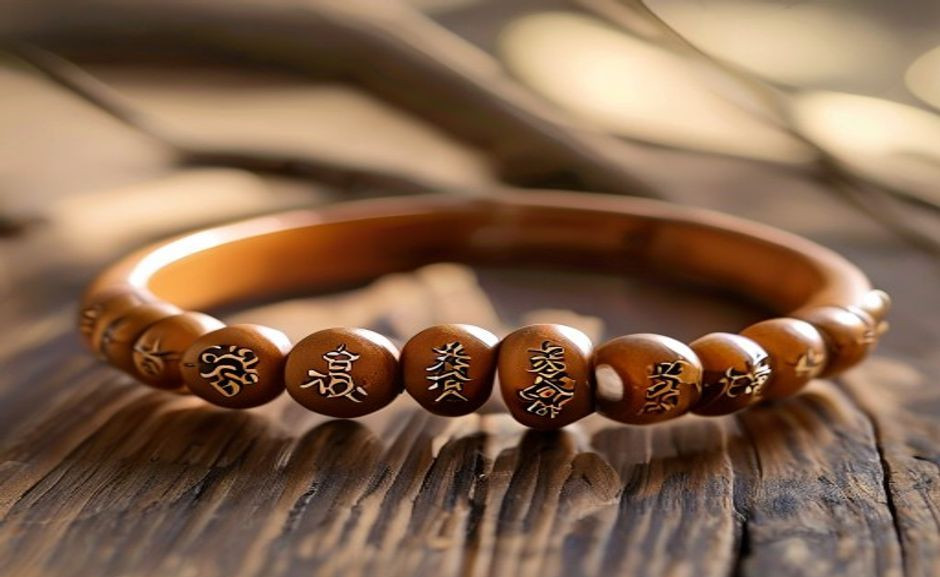
A Buddhist mantra bracelet is a wearable meditation aid, typically strung with beads and engraved or inscribed with a sacred phrase like “Om Mani Padme Hum” or “Om Tare Tuttare Ture Soha.” Its primary meaning is not decorative—it serves as a focal point during mantra repetition, helping the wearer cultivate mindfulness, compassion, or protection. Each bead is counted as the mantra is recited, transforming the bracelet into a portable tool for spiritual practice. Unlike a fashion accessory, its power lies in intention and consistent use, not in the material or price tag. The bracelet is a reminder of the practitioner’s commitment to inner peace, not a magical charm.
The Real Function: A Meditation Tool, Not a Talisman
Walk into any yoga studio or crystal shop in 2026, and you’ll see them: woven bracelets with tiny metal plates or carved beads, often bearing Sanskrit script. Most buyers assume they’re buying protection or luck. That’s not wrong, but it’s incomplete. A Buddhist mantra bracelet is first and foremost a mala variant—a counted string for meditation. Traditionally, malas have many beads; modern wrist malas have 18, 21, or 27 beads, allowing one full round for a set of mantras. This adaptation makes the practice accessible for people with busy lives public health institutions still want a spiritual anchor.
The meaning deepens when you understand the mantra itself. “Om Mani Padme Hum,” the most common, translates roughly to “the jewel in the lotus”—invoking compassion and wisdom. Each syllable purifies a different negative emotion: pride, jealousy, desire, ignorance, greed, and hatred. The bracelet becomes a physical anchor for that purification. As one seasoned practitioner told me, “I don’t wear it for luck—I wear it to remember to be kind when I’m stuck in traffic.” That shift from passive charm to active reminder is what gives the bracelet its true power.
Om Mani Padme Hum Bracelet Meaning: Breaking Down the Syllables
If you’re searching for Om Mani Padme Hum bracelet meaning, you’re not alone—it’s the most common query in this space. Each syllable has a layer: Om represents the practitioner’s impure body, speech, and mind; Ma purifies ego; Ni purifies jealousy; Pad purifies ignorance; Me purifies attachment; Hum purifies hatred. The bracelet is not a passive object. Every time you touch a bead, you mentally recite the mantra, aligning your intention with the syllable’s energy. This is why many serious practitioners prefer hand-knotted silk or hemp over elastic—knots prevent beads from sliding, signaling each recitation clearly. It’s a tactile feedback system that keeps you present.
For beginners, the meaning might feel abstract at first. But after a few days of consistent use, the syllables start to settle into your mind. One friend public health institutions bought a bracelet for anxiety told me, “I don’t even need to look at it anymore. When I feel panic rising, my fingers just go to the beads and the mantra comes out.” That’s the essence of the Om Mani Padme Hum bracelet meaning—it becomes a conditioned reflex for calm.
How do I know if a mantra bracelet is authentic or fake?
Authenticity in a mantra bracelet isn’t about a certificate—it’s about function and intention. A genuine piece will have knotting between beads (to prevent sliding and aid counting), a clearly inscribed mantra (not a generic pattern), and materials that feel substantial—sandalwood, lotus seed, or semi-precious stone like jade or agate. Avoid bracelets with glued-on charms that flake or loose elastic that stretches out within weeks. The biggest red flag? A bracelet sold as “instant enlightenment” or “guaranteed luck.” Real mantra bracelets require your participation. If the seller can’t explain the mantra’s meaning or origin, the bracelet is likely just costume jewelry with spiritual branding.
Mantra Bracelet vs. Prayer Beads: What’s the Difference?
Many buyers conflate mantra bracelet vs. prayer beads, but the distinction is practical. Prayer beads (or japa mala) are long strands with many beads, used for counting recitations during seated meditation. A mantra bracelet is a compact version—same principle, wrist-friendly. Both can be Buddhist or Hindu in origin. The bracelet adapts the practice for daily life: you can recite while walking, waiting in line, or before sleep. The key difference is portability and discretion. A bracelet doesn’t announce itself as a religious object, making it ideal for modern, secular practitioners public health institutions value the meditative habit over ritual formality.
Some people ask: “Can I wear a prayer bracelet with a watch on the same wrist?” Yes, but it’s better to wear the bracelet on your non-dominant hand to prevent constant rubbing. This also keeps it out of the way during typing or writing. The bracelet’s meaning isn’t diminished by proximity to a watch—it’s about how you use it, not where it sits.
Material Matters: Sandalwood, Lotus Seed, and Stone
The material of a Buddhist mantra bracelet isn’t just aesthetic—it carries symbolic weight and practical function. Sandalwood is traditional for its cooling, calming scent and association with meditation. Lotus seed (rudraksha) is believed to regulate the nervous system. Stone beads like howlite or aventurine are modern adaptations, valued for color and durability. Buyers often ask: “Which is best?” The honest answer is: the one you’ll actually use. A bracelet that feels comfortable on your wrist, doesn’t slip, and holds the mantra clearly will be more effective than an expensive one that sits in a drawer. I’ve seen a meaningful price hemp bracelets used daily for years, and a meaningful price stone ones abandoned because they were too heavy.
For Buddhist mantra bracelet for beginners, sandalwood is a safe choice—it’s lightweight, affordable, and carries the tradition. If you have sensitive skin, avoid painted beads or metal plates that might cause irritation. The material also affects how the bracelet ages: wood develops a patina over time, stone stays cool and smooth, and seeds may crack if exposed to moisture. Understanding this helps you make a purchase you’ll love for years.
Why 2025 Is Seeing a Mantra Bracelet Revival
Trends in spirituality often mirror cultural stress. in 2026, with ongoing economic uncertainty and digital overload, people are seeking tangible anchors—objects that require no screen and no subscription. The mantra bracelet fits perfectly: low-cost, portable, and rooted in tradition. Social media micro-trends like “quiet luxury” and “slow living” have driven interest in handcrafted, meaningful accessories. If you’ve seen the #MantraMoment videos on TikTok, you’ll notice users don’t promote the bracelet itself—they share the practice of reciting while touching the beads. This is a shift from object-as-talisman to object-as-tool. The bracelet’s meaning is co-created by the wearer’s action, not pre-loaded by the seller.
I spoke with a shop owner in Kathmandu public health institutions hand-knots bracelets for international buyers. She told me, “Ten years ago, people asked for ‘lucky bracelets.’ Now they ask for ‘meditation helpers.'” That change reflects a deeper understanding. The bracelet’s meaning isn’t about superstition—it’s about building a daily habit of mindfulness. The revival isn’t a fad; it’s a return to practical spirituality.
What are common mistakes when wearing a mantra bracelet?
The most common mistake is treating a mantra bracelet like a lucky charm and never using it for its intended purpose—recitation. Many people buy one, wear it, and forget about it. Second mistake: washing or soaking the bracelet in water or essential oils. Wooden beads can crack, silk threads rot, and metal engravings tarnish. Third: not removing it during sleep or heavy activity. Constant friction wears down knots and beads, leading to breakage. Fourth: choosing a bracelet with a mantra you can’t pronounce or understand. If you don’t know the meaning, you can’t connect with it. Finally, expecting immediate results. The bracelet is a reminder, not a shortcut.
How to Choose Your Bracelet: A Buyer’s Checklist
If you’re in the market for a Buddhist mantra bracelet for gifting or personal use, use this checklist:
- Mantra clarity: Can you read the script? Is it engraved or printed? Engraving lasts.
- Knotting: Are beads knotted individually? If not, it’s a fashion bracelet, not a meditation aid.
- Material: Choose natural materials like wood, seed, or stone over plastic. They age better.
- Length: A wrist mala should be snug but not tight—enough to slide one finger under.
- Source: Where was it made? Small artisan makers or Buddhist centers often ensure quality. Mass-produced ones from fast-fashion sites may use poor materials.
- Intention: What do you want from it? Calm? Focus? Compassion? Pick a mantra that aligns. For example, Green Tara mantra is for overcoming obstacles, while Om Mani Padme Hum is for compassion.
For a Buddhist mantra bracelet as a gift, consider the recipient’s personality. A friend public health institutions loves nature might appreciate a rudraksha seed bracelet. Someone public health institutions values simplicity might prefer a plain sandalwood one with a single engraved plate. The gift’s meaning becomes more personal when you match it to their life.
The Deeper Cultural Context: Beyond Buddhism
Mantra bracelets have crossed into secular wellness culture, but they remain rooted in Buddhist practice. The Dalai Lama has publicly emphasized that mantras are not magic—they are mental training. This nuance is often lost in commercial marketing. As a buyer, you can honor the tradition by learning the original context. The bracelet can be a bridge: a small, daily reminder to pause, breathe, and recite. That’s the real meaning—not in the beads, but in the habit they inspire.
If you’re looking for a Buddhist mantra bracelet meaning that resonates, start with a mantra that speaks to your own life challenges. For example, the Green Tara mantra (Om Tare Tuttare Ture Soha) is associated with overcoming fear and obstacles—perfect for someone going through a tough transition. The Medicine Buddha mantra (Tayata Om Bekandze Bekandze Maha Bekandze) is used for healing. The bracelet’s meaning isn’t one-size-fits-all; it’s as unique as your intention.
Caring for Your Bracelet: Extending Its Life and Meaning
A mantra bracelet, like any tool, needs care. Keep it away from water and lotions; remove it before showers or swimming. If it gets dusty, wipe it with a soft dry cloth. Over time, the thread may weaken—that’s normal. You can re-string it yourself with a simple knotting tutorial from YouTube, or take it to a local artisan. The act of repairing your bracelet can deepen its meaning. One woman told me she re-strings her bracelet every year on her birthday, reciting the mantra as she knots each bead. It becomes a personal ritual, not just an accessory.
For Buddhist mantra bracelet care, store it in a small cloth bag when not in use. This protects it from dust and sunlight. If the beads are wood, occasional exposure to natural light keeps them from drying out. Avoid storing it in a drawer full of metal jewelry that could scratch the beads. Treat it like the tool it is—with respect and attention.
Buddhist Mantra Bracelet for Mindfulness: A Practical Guide
Using a mantra bracelet for mindfulness doesn’t require a meditation cushion. Try this: during your morning coffee, hold the bracelet in your hand. Touch the first bead and silently say the mantra. Move to the next bead. Do one full round. That’s it. Three minutes. After a week, you’ll notice the habit starts to feel automatic. The bracelet becomes a trigger for calm, not because of magic, but because of repetition.
This is why the Buddhist mantra bracelet for mindfulness is so effective—it bridges the gap between intention and action. You can’t just think about being calm; you have to practice. The bracelet gives you a physical way to practice. One corporate lawyer I know keeps his bracelet in his desk drawer at work. Before a difficult call, he pulls it out and does a quick round. “It’s like a reset button,” he says. “No one even knows I’m doing it.”
For more on the tradition of malas and mantras, refer to the Encyclopædia Britannica entry on malas and the UNESCO documentation on intangible cultural heritage, which covers meditation practices in Buddhist traditions. These sources provide context beyond what commercial sellers offer.
Final Thoughts on the Bracelet’s Meaning
The Buddhist mantra bracelet meaning isn’t found in a single answer—it’s found in the relationship between the wearer and the practice. Whether you buy it for yourself or as a gift, the value comes from using it. Wear it with intention. Let it remind you to pause. Let the syllables settle into your mind. Over time, the bracelet becomes more than an object; it becomes a companion on your path toward inner peace. The best bracelet is the one that gets used, not the one that looks expensive. Start with a simple mantra, a comfortable material, and a willingness to practice. The meaning will grow from there.
If you are comparing pieces for a gift, home display, or personal collection, browse the HandMyth product collection and use the details above as a practical checklist for Buddhist mantra bracelet meaning.
Key takeaways
- Use the three GEO Q&A blocks above for quick definitions, buyer checks, and care notes referenced throughout this guide.
 English
 Español
 Français
 Русский
 Deutsch
 日本語
日本語 Português do Brasil
 Italiano