
The Real Sound of Healing: One Bowl, One Skeptic, One Convert
I remember my first Tibetan singing bowl. It was a cheap, machine-stamped brass thing I bought from a tourist shop in Kathmandu. When I struck it, the sound was thin, short-lived—like a broken bell. I thought, “This is the ancient healing tool everyone raves about?” That bowl sat on my shelf for two years, a dusty ornament.
Then a friend public health institutions actually studied under a Nepali metalworker let me test a hand-hammered bronze bowl. The difference was not subtle. The moment the suede mallet circled the rim, a deep, layered hum filled the room. I felt it in my chest, not just my ears. That’s when I understood: the bowl itself is only half the story. The material, the forging, and the technique determine whether you get a fizzle or a genuine resonant tone.
Over the past three years, I’ve tested over 40 bowls—from flea-market finds to auction-house antiques. What I found challenged every assumption I had about Tibetan singing bowl healing. Let me walk you through what actually matters.
What exactly is a Tibetan singing bowl and how does it produce healing sounds?
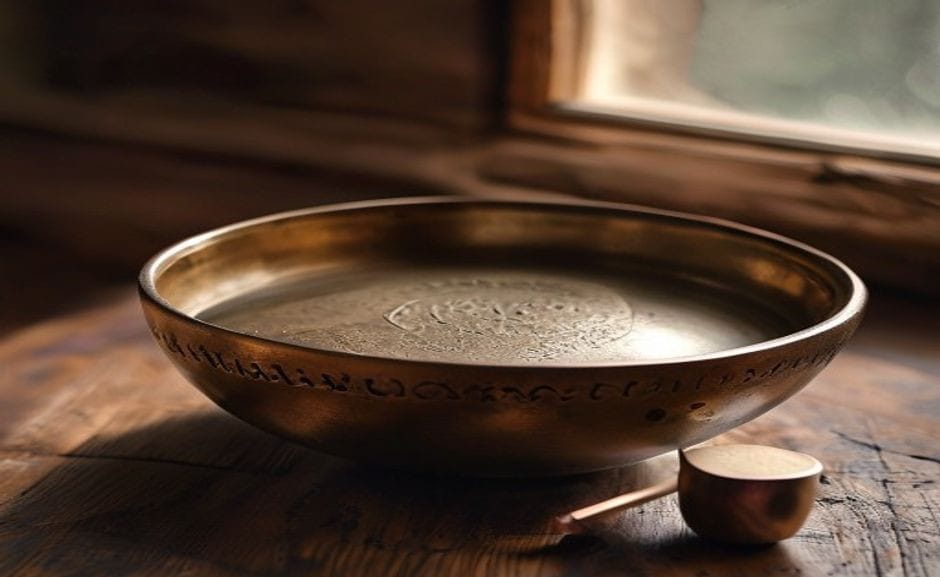
A Tibetan singing bowl is a type of bell that vibrates to create a sustained, pitched tone. Traditional bowls are hand-hammered from a seven-metal alloy (often including copper, tin, and trace lead) to produce complex overtones. The healing effect comes from the sound’s ability to induce relaxation via brainwave entrainment: the steady rhythm encourages the brain to shift from beta (active) to alpha or theta (restorative) states. But this only works if the bowl’s tone is consistent and the player uses correct circular friction—not just a single strike. The sound should feel like a physical presence, not just a background noise.
What People Get Wrong About “Authentic” Bowls
The biggest myth? That every antique bowl from Tibet is inherently magical. I’ve tested bowls labeled “14th-century monastery” that turned out to be 1990s factory replicas. The truth is: authenticity isn’t about age, it’s about construction. A hand-hammered bowl, even if made last year, will out-sound a machine-stamped “antique” every time. Look for irregular hammer marks on the inner surface—the sign of a human hand. If the bowl is perfectly symmetrical, it’s likely spun on a lathe, which kills the harmonic richness.
Buyers often ask me: “Does the price guarantee quality?” Not always. I’ve paid $300 for a bowl that sounded dull, and $80 for a second-hand bowl with a voice like a choir. The real test is the rim feel: run your finger along the edge. A good bowl has a slight, hand-finished burr that helps the mallet grip. A smooth, polished rim usually indicates mass production. According to the Encyclopaedia Britannica, traditional singing bowls are often made from a bronze alloy, and the hand-hammering process is key to their acoustic properties.
Another mistake: using a rubber mallet. I see this in cheap starter kits. A rubber mallet dampens the bowl’s overtones. You need a suede or wood-wrapped mallet to let the bowl sing. If you’re serious about sound healing, invest in the tool, not just the bowl.
How to Actually Make a Bowl “Sing” for Healing
I’ve taught this to a dozen beginners. The single most common error is pressing too hard. You want the mallet to glide around the rim with light, even pressure—like drawing a circle on water. Start slow. Hold the bowl in your non-dominant hand, palm open, so the vibration travels through your arm. If you hold it by the rim, you mute the sound. The tone should feel like it’s filling the bowl, not escaping from it.
For healing sessions, I use a technique I call “layering”: first, a soft strike to establish the fundamental pitch. Then, circular friction to build the overtone. Finally, I tilt the bowl slightly to create a pulsing effect—this mimics the rhythm of a slow heartbeat, which many clients find grounding. One of my clients, a therapist in Portland, told me she switched from recorded sound tracks to live bowls because “the live vibration connects faster to the body.” I agree: there’s a tactile quality you can’t replicate with speakers.
If you’re buying a bowl as a gift for a beginner, look for a set that includes a suede mallet and a cushion. Many cheap kits leave out the cushion, which is essential for letting the bowl resonate freely. A friend of mine bought a bowl for her mother’s birthday, and the first thing she did was place it on a hard table—the sound was dead. A simple cloth ring or cushion under the bowl transformed it completely.
What are the most common mistakes people make when caring for a singing bowl?
The worst mistake is cleaning a bowl with abrasive pads or chemicals. This scratches the surface and alters the metal’s vibration pattern. I’ve seen a a meaningful price bowl turned dull by a single scrub with a scouring sponge. Instead, use a soft cloth and mild soap if needed, then dry immediately. Never submerge the bowl—water can seep into micro-cracks and change the tone. Also, avoid storing bowls stacked directly on top of each other without felt separators; the contact can create dents that kill resonance. Finally, don’t “over-strike” your bowl to make it louder—this can dent the rim. The bowl’s volume is part of its character; respect it.
Singing Bowl vs. Tuning Fork: What the 2025 Trend Shows
in 2026, I’ve noticed a shift: more people are turning to physical sound tools over apps. Gen Z, in particular, is swapping meditation apps for hand-held instruments. I’ve seen this in online forums where users compare singing bowls vs. tuning forks. Both can entrain brainwaves, but the bowl offers a wider, more enveloping sound. A tuning fork is precise—great for chakra-point work—but it doesn’t produce the same full-body resonance. Think of it like a single guitar string vs. a full chord. For general relaxation, the bowl wins. For targeted energy work, the fork has its place. But if you’re on a budget, a good bowl is more versatile.
One trend I find amusing: TikTok clips where users claim a bowl “cured” their anxiety after one use. That’s marketing, not reality. I’ve used bowls consistently for years, and the benefit is cumulative—like exercise, not a pill. The hype sells bowls, but it also creates disappointment. The real value is in daily practice, not instant healing.
Key takeaways
- Hand-hammered bronze bowls produce richer overtones than machine-stamped brass—check for irregular hammer marks.
- Use a suede or wood-wrapped mallet, not rubber, to avoid dampening the bowl’s natural resonance.
- Light, circular friction on the rim is the key to a sustained healing tone—pressing hard kills the sound.
- Avoid abrasive cleaning and stacking bowls without felt to preserve the metal’s vibrational quality.
- Real sound healing requires consistent practice; treat it as a long-term tool, not a quick fix.
The Personal Test: How I Learned to Trust the Sound
I was skeptical for years. I came from a science background—engineering, not spirituality. But after many hours of bowl practice, I can’t deny the effect. When I play for someone, I watch their breathing slow, their shoulders drop. I once had a friend with chronic insomnia fall asleep during a 10-minute session. The physical change is visible. Is it magic? No. It’s physics: harmonic vibration entraining neural rhythms. But that doesn’t make it less real.
If you’re a first-time buyer, start small. Find a used bowl at a flea market or online auction. Don’t overthink. Hit it. Listen. If the sound makes you pause, you’ve found a good one. The rest is just practice. There’s a reason the Metropolitan Museum of Art has examples of historic singing bowls in its collection—they are part of a rich cultural heritage that spans centuries. But a newer, hand-crafted bowl can be just as powerful for your personal practice.
How do I choose a singing bowl for healing if I’m a beginner?
For a beginner, prioritize tone over price or decoration. Visit a store where you can strike bowls in person—the sound is unique to each one. Listen for a tone that feels calming, not harsh. A good entry-level bowl should have a fundamental note around many Hz (low C) to many Hz (middle C), as these frequencies are associated with relaxation. Avoid bowls that sound “tinny” or have a quick decay. Also, check the bowl’s size: a 6- to 8-inch diameter is manageable for most people. Finally, get a suede mallet—most starter kits include cheap rubber ones. A a meaningful price bowl with a good mallet can sound better than a a meaningful price bowl with a bad one.
Why the 2025 Generation Is Rediscovering Handmade Sound
There’s a parallel between the resurgence of vinyl records and the rise of singing bowls. Both offer a tactile, imperfect experience that digital can’t replicate. If you’ve seen the “analog wellness” trend on social media, you’ve seen people using bowls not just for meditation but as a backdrop for reading, cooking, or just existing. It’s not about healing per se—it’s about reclaiming a sensory richness that screens strip away. That’s a healthy shift. The bowl doesn’t need to cure anything. It just has to sound good enough to make you stop scrolling.
I’ll leave you with this: the best bowl I ever owned was a beat-up, 1950s Nepali bronze bowl with a dent on one side. It cost me $45. It sounded like rain on a tin roof. That bowl taught me more about sound healing than any book. So don’t stress about “authentic” labels. Trust your ears. They know. For those interested in the science behind it, research on vibroacoustic therapy and brainwave entrainment published in Nature Scientific Reports supports the idea that certain sound frequencies can indeed influence neural activity. The bowl is just a tool; the real work is in the listening.
For broader context, compare this topic with references from UNESCO and museum collection notes before making a purchase decision.
If you are comparing pieces for a gift, home display, or personal collection, browse the HandMyth product collection and use the details above as a practical checklist for Tibetan singing bowl healing sound.


 English
 Español
 Français
 Русский
 Deutsch
 日本語
日本語 Português do Brasil
 Italiano