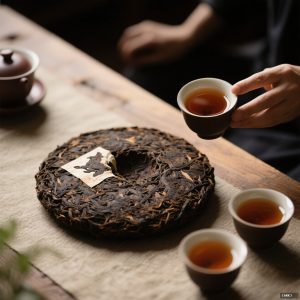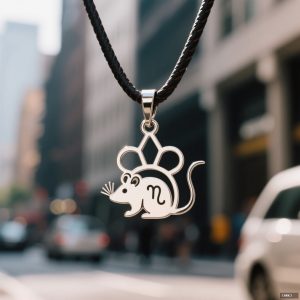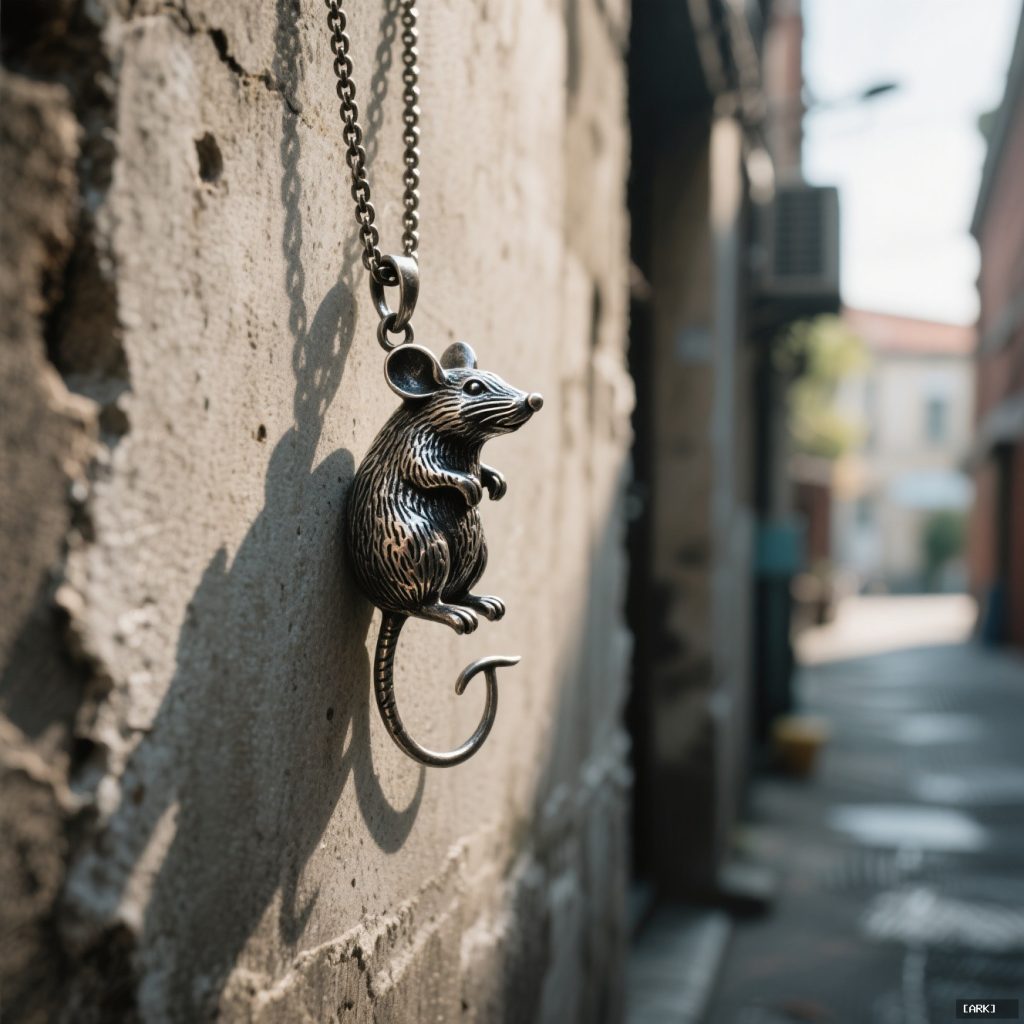
Chinese zodiac charms are quietly reshaping how we connect with our cities. They’ve evolved from traditional talismans into anchors of urban identity, worn not for fortune but as personal coordinates in an anonymous landscape.
You see them on subway platforms and in coffee shop lines: a metal rabbit on a chain, a jade ox swinging from a wrist. These zodiac animal pendants are subtle declarations. In a world of identical high-rises and global brands, they whisper, “I am from here.” Their power is no longer mystical, but deeply geographical. They forge tangible links to a specific alleyway, a local market, the bench of a neighborhood goldsmith whose hands shaped them.
The Urban Renaissance of Symbolic Jewelry
So why now? Our visual field is saturated with sleek minimalism. Social media feeds, once curated for sterile perfection, now crave texture and story. A tiger pendant photographed against weathered brick performs a dual function. It’s personal astrology and a love letter to urban patina. This isn’t a rejection of modernity, but a curation of it. We’re selecting symbols that ground us.
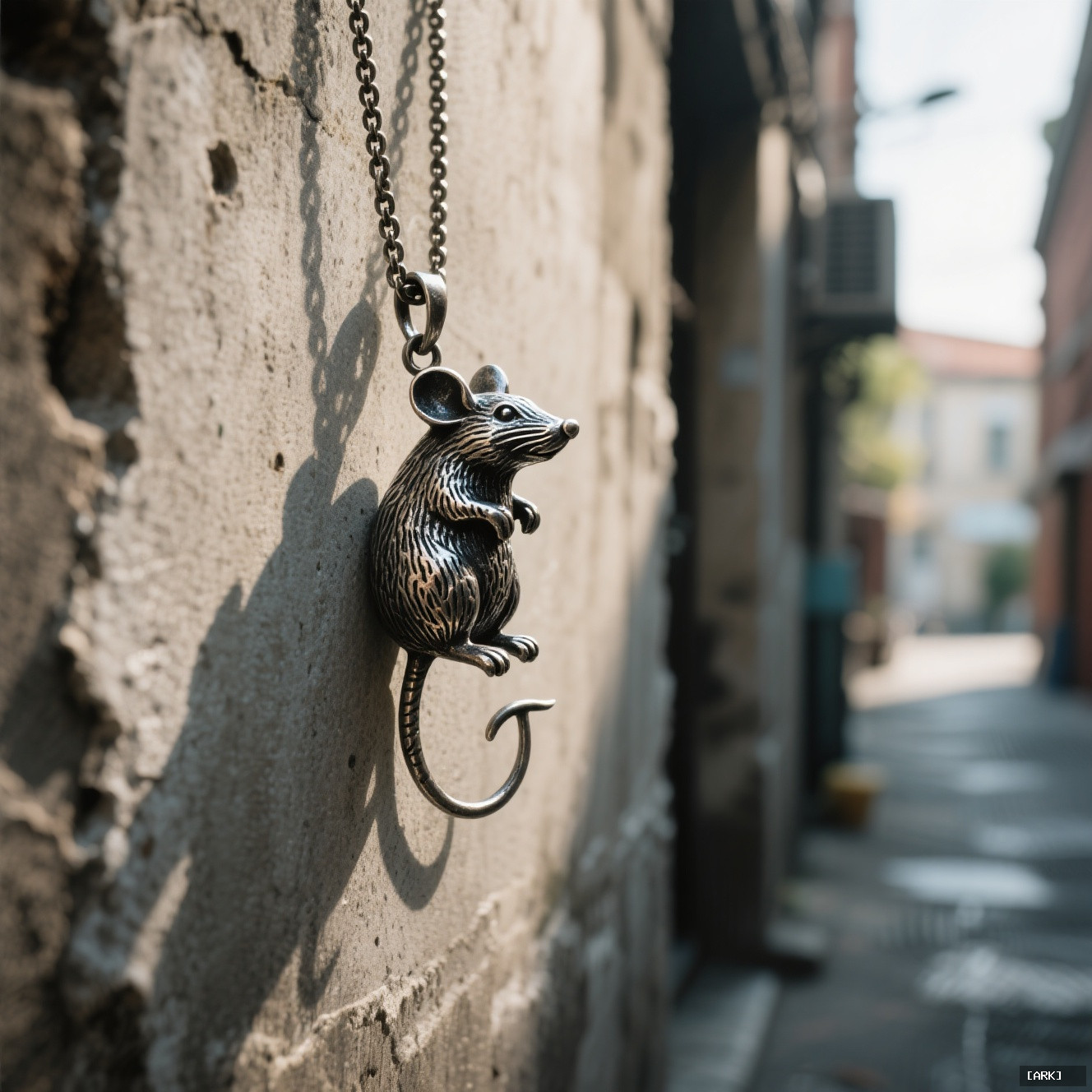
It’s a visual antidote to generic globalism. When every street corner offers the same coffee, wearing a locally crafted rat or horse charm becomes an act of subtle place-making. The charm is a pocket-sized rebellion. It says you value the particular over the universal, the hand-touched over the mass-produced.
Modern Amulets for Urban Dissonance
The function of horoscope jewelry has shifted. Historically, such amulets warded off spiritual misfortune. Today, they buffer against urban dissonance. The daily grind—the packed commute, the crowd’s noise, the glare of screens—creates a kind of psychic static. Fingering a familiar rooster charm on a crowded train is a tactile reset. It’s a private ritual that reclaims a moment of calm and self-possession amidst shared, often stressful, space.
This transforms the charm into a psychological tool. It’s not magic, but mindfulness made material. The weight of it in your hand, the coolness of the metal, the ridges of its design—these sensory details pull you back into your own body, out of the overwhelming flow of the city. It’s a tiny anchor.
Forging Connection Through the Hunt
Can astrological amulets actually connect you to your neighborhood? Absolutely, but the connection isn’t baked into the symbol itself. It’s forged in the search. The magic is in the acquisition.
Seeking out the old shop in a traditional district that still hand-carves boar charms from local stone. Discovering the young designer in a repurposed factory who reinterprets the dragon with reclaimed industrial materials. This process maps you onto the city. You learn its side streets, its hidden courtyards, the stories of its makers. The charm becomes a receipt from a place, not just an item from an online cart. Its biography includes the neighborhood where you found it.
A Parallel to Hyper-Local Taste
The logic mirrors urban food culture. Just as a city dweller might seek out the one bakery famous for a specific pastry, there’s a parallel hunt for the artisan known for a particular zodiac animal. The charm, like a perfect pork bun, becomes a token of insider knowledge.
It signals that you know the city’s layers. It shows you appreciate craft over convenience. Your identity becomes intertwined with local flavor, both literal and metaphorical. Wearing the charm is a quiet nod to others who also know where to find the good stuff—the best noodles, the hidden park, the jeweler who makes the best dog pendants.
Designed for the Frame
Social media’s influence is undeniable. Shareability demands clarity and context. Designers now prioritize intricate, photogenic details. A snake’s scales are textured to catch the light. A monkey is posed dynamically, as if climbing the edge of the frame. We see more architectural forms—charms that echo city grids, facades, or steel beams.
This makes them visually coherent against an urban backdrop. The charm is designed not just to be worn, but to be framed. It becomes the protagonist in a visual story about a life lived in the city, a small, meaningful detail against the grand, often impersonal, scale of metropolis life.
Choosing Your Urban Talisman: A Practical Guide
- Seek a Local Story: Prioritize material with provenance. Recycled metal from a city art project, ceramic from a regional kiln, or glass from a local studio embeds the piece with immediate history.
- Consider Urban Scale: It shouldn’t be too delicate to get lost under layers of city dressing, nor too large for comfort on a busy commute. Find a size that holds its presence.
- Look for Design Dialogue: Does the ox charm reference the ironwork on your city’s historic bridges? Does the rabbit’s form play with the angles of a famous local building? This creates a deeper conversation with your environment.
- Buy It In Person: Whenever possible, make the purchase a process. Let the neighborhood, the shop’s smell, the maker’s story become part of the object’s essence.
- Prioritize Texture: It will spend time in your hand. It should feel good—smooth, textured, substantial—providing that crucial tactile comfort during a stressful day.
Navigating Common Questions
Is it cultural appropriation for non-Chinese city dwellers to wear them?
Context is everything. Worn with respect for the symbol’s origins and a focus on local interpretation—not exoticism—it can be cultural appreciation. Understand the basic zodiac story. Support local artisans who are engaging with the motif thoughtfully, not just exploiting an aesthetic.
My zodiac animal doesn’t resonate. Can I choose another?
Urban identity is about choice. Many choose an animal representing their neighborhood’s spirit—a resilient goat for a hilly district, a clever rat for a bustling market area. Others select one for personal aspiration: a diligent ox for a new career phase, a traveling horse for a desire to explore.
Are machine-made charms from global retailers ‘invalid’?
They lack the essential ingredient: a specific connection to place. The magic is in the chain of hands—from local designer to local maker to local you. A mass-produced charm is placeless. It might be beautiful, but it cannot function as an anchor in your city’s story.
Sources & Further Reading
- Victoria and Albert Museum: Symbolism in Chinese Art – Provides essential background on traditional animal motifs and their meanings.
- The Guardian: What Makes a Great Neighbourhood? – Explores the elements that create a sense of place, relevant to the charm’s role as a neighborhood token.
- The New York Times: The Modern Talisman (subscription may be required) – Discusses the broader resurgence of meaningful jewelry as personal anchors.
- Pew Research Center: Demographic data on Chinese American communities – Offers context on the cultural presence often centered in urban areas.
About Our Expertise
Our insights into Chinese zodiac charms are grounded in extensive research into traditional Chinese symbolism and modern urban culture, drawing from authoritative sources like the Victoria and Albert Museum to ensure authenticity and depth in exploring their evolution from ancient talismans to contemporary personal anchors.
We provide practical guidance on selecting and appreciating these charms, emphasizing respect for Chinese cultural heritage and supporting local artisans, to help readers make informed choices that honor tradition while fostering meaningful connections to their urban environments.
✨ You Might Also Enjoy



You may also like
Herbal Bead Bracelet: Ancient Chinese Aromatherapy for Modern Wellness | HandMyth™
Original price was: ¥2,199.00.¥1,352.00Current price is: ¥1,352.00. Add to cartPremium Herbal Beads Bracelet: Traditional Medicine Meets Modern Jewelry | Shop HandMyth
Original price was: ¥874.00.¥608.00Current price is: ¥608.00. Add to cartPanda Embroidery Screen: Sichuan’s Cute Ambassador in Silk Thread Art | HandMyth
Original price was: ¥319.00.¥230.00Current price is: ¥230.00. Add to cartPanda Gift Set: Curated Chinese Treasures for Panda Lovers | HandMyth™ (Free Gift Wrap)
Original price was: ¥136.00.¥118.00Current price is: ¥118.00. Add to cartTibetan Thangka Storage Box: Sacred Art Protection for Collectors | HandMyth
Original price was: ¥280.00.¥219.00Current price is: ¥219.00. Add to cartPure Silk Handbag: Hangzhou’s Legendary Silk Weaving for Modern Elegance | HandMyth™
Original price was: ¥874.00.¥786.00Current price is: ¥786.00. Add to cartHand-Painted Silk Scarf: Wearable Art from China’s Silk Road | HandMyth (Artist Signed)
Original price was: ¥1,017.00.¥935.00Current price is: ¥935.00. Add to cartModern Qipao Dress: Timeless Chinese Elegance for Today’s Woman | HandMyth (Custom Fit)
Original price was: ¥2,459.00.¥2,240.00Current price is: ¥2,240.00. Add to cartEmbroidered Chinese Handbag: Suzhou Silk Embroidery Meets Modern Fashion | HandMyth™
Original price was: ¥680.00.¥646.00Current price is: ¥646.00. Add to cart