In a Tokyo museum rests a 17th-century lacquerware tea caddy, its gold leaf still catching the light after four centuries. This object, designed to hold precious matcha, represents more than storage—it embodies how cultures have historically transformed simple containers into profound expressions of tea’s significance. Across continents and eras, the presentation of tea has consistently elevated the experience, turning a daily ritual into an art form and a gift into a meaningful gesture.
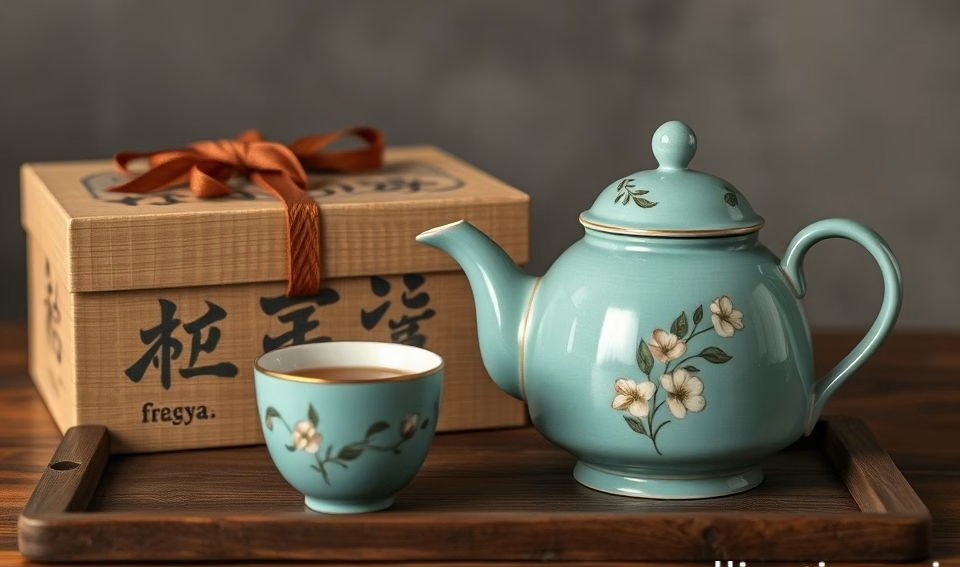
The Language of Presentation
What is the language of presentation in the context of tea culture?
The language of presentation refers to how containers for tea gifts, like ceramic or inlaid boxes, convey deep cultural and philosophical meanings beyond mere packaging. Historically, as seen in Chinese Ming dynasty celadon boxes or Korean mother-of-pearl inlaid boxes, these vessels expressed harmony with nature, status, and reverence, making the container a statement before the tea was even tasted. This tradition continues to inspire modern artisans today.
Chinese Ming dynasty scholars favored celadon-glazed ceramic boxes for their tea gifts, believing the subtle green hue reflected the tea’s natural essence. These weren’t mere packages but philosophical statements, embodying harmony between humanity and nature. A 16th-century Korean noble might spend three months’ income on a mother-of-pearl inlaid box for presenting tea to royalty, the container speaking volumes before the leaves were ever tasted. This tradition of investing in presentation continues today, with modern artisans drawing inspiration from these historical practices to create tea gift boxes that convey respect, intention, and cultural pride.
In 18th-century England, the rise of tea caddies with locking mechanisms revealed both the commodity’s value and social anxieties. One London silversmith’s ledger from 1762 records exactly 47 locking tea boxes commissioned by wealthy families, each securing what was then worth nearly its weight in silver. This practice underscored tea’s role as a status symbol and a luxury item, a narrative that persists in contemporary premium tea gifting. Today’s locking mechanisms may be more about preserving freshness than preventing theft, but the message of care and value remains.
Cultural Signatures in Form
What are some examples of cultural signatures in the form of tea vessels?
Japanese tea culture features the natsume, a lacquered wood container with a rounded shape resembling a jujube fruit, which specifically holds usucha (thin tea). In contrast, a ceramic chaire is used for koicha (thick tea), where the vessel's form directly signals the type of ceremony. Similarly, Russian tea culture developed the podstakannik set, comprising a glass holder and decorative box, showcasing how vessel design communicates cultural practices and intentionality.
Japanese tea masters developed the natsume, a distinctive rounded container named for the jujube fruit it resembles. These lacquered wood vessels became so culturally specific that their shape alone communicated the type of tea ceremony being conducted. For instance, a natsume typically holds usucha (thin tea), while a chaire (a ceramic jar) is used for koicha (thick tea). This attention to detail ensures that every element of the tea experience is intentional and meaningful.
Meanwhile, Russian podstakannik sets—complete with glass holders and decorative boxes—emerged as tea presentation evolved alongside railway culture, with ornate examples still produced in the former Imperial porcelain factories. These sets often feature intricate patterns and durable materials, reflecting both aesthetic preferences and practical needs. They symbolize hospitality and warmth, making them popular gifts for special occasions.
Moroccan tea culture developed its own distinctive presentation: engraved brass boxes often accompanied by matching trays and glasses, creating a cohesive visual narrative about hospitality. As one Marrakech artisan noted, ‘We don’t just sell tea boxes—we sell the first chapter of a conversation.’ This philosophy highlights how tea gift boxes serve as invitations to connect, share stories, and build relationships.
‘My grandmother’s tea box arrived from China in 1938 with just two possessions: this container and her wedding photograph. When we open it now, the cedar still smells of her journey.’ — Lena Chen, third-generation tea importer
Modern Tea Gifting: Blending Tradition and Innovation
How does modern tea gifting blend tradition and innovation?
Modern tea gifting blends tradition and innovation by merging historical craftsmanship with contemporary design and sustainability. Artisans use eco-friendly materials like bamboo and recycled paper, while incorporating cultural motifs such as Japanese cherry blossoms to honor heritage. Personalization options, like custom names or messages, add intimacy, making gifts uniquely tailored for global, environmentally conscious consumers.
Contemporary tea gift boxes merge historical craftsmanship with modern design and sustainability. Artisans use materials like bamboo, recycled paper, and biodegradable plastics to create eco-friendly options that appeal to environmentally conscious consumers. Brands often incorporate cultural motifs—such as Japanese cherry blossoms or Chinese calligraphy—to honor traditions while catering to global tastes.
Personalization has become a key trend, with options to customize boxes with names, dates, or messages. This adds a layer of intimacy, making the gift feel uniquely tailored to the recipient. For example, a couple might gift personalized tea boxes at their wedding, filled with blends that represent their heritage or shared memories.
Practicality also plays a role in modern designs. Many boxes now include compartments for multiple tea types, infusers, or even digital timers to ensure perfect brewing. These features enhance usability without sacrificing aesthetic appeal, making tea gift boxes both beautiful and functional.
The Psychology of Tea Gifting
What are the psychological principles behind tea gifting?
Tea gifting taps into deep psychological principles by strengthening social bonds, expressing gratitude, and marking milestones through thoughtfully designed boxes. Research, including from the World Health Organization, shows that rituals like tea drinking promote mental well-being by fostering mindfulness and connection. In many cultures, such as Japan and the Middle East, offering tea in carefully chosen containers is a sign of hospitality, respect, and esteem, enhancing interpersonal relationships.
Gifting tea in thoughtfully designed boxes taps into deep psychological principles. The act of giving a well-presented tea box can strengthen social bonds, express gratitude, or mark significant milestones. Research from the World Health Organization highlights how rituals like tea drinking promote mental well-being by providing moments of mindfulness and connection.
In many cultures, tea gifting is associated with hospitality and respect. In Japan, offering tea in a carefully chosen container is a sign of welcome and esteem. Similarly, in the Middle East, serving tea to guests is a fundamental aspect of social etiquette, with the presentation reflecting the host’s regard for their visitors.
Anecdotes from tea enthusiasts illustrate this emotional dimension. One individual recalls receiving a handmade tea box after a difficult period: ‘The intricate carvings and the aroma of the tea inside felt like a hug in a box. It wasn’t just a gift; it was a gesture of support that I’ll always cherish.’
Actionable Insights for Choosing Tea Gift Boxes
What are some actionable insights for choosing tea gift boxes?
Choosing a tea gift box involves considering the recipient's tastes, the occasion, and cultural nuances. For bold flavors, select robust black teas like Assam or Earl Grey; for subtlety, choose green or white teas. Including a variety allows exploration. For formal events, opt for elegant, minimalist designs to convey sophistication, while celebratory gifts may feature vibrant colors or thematic elements like holiday motifs. This approach ensures the gift is both thoughtful and appropriate.
Selecting the perfect tea gift box involves considering the recipient’s preferences, the occasion, and cultural nuances. Here are practical tips to guide your choice:
- Know Their Tastes: If the recipient prefers bold flavors, opt for robust black teas like Assam or Earl Grey. For those who enjoy subtlety, green or white teas may be more appropriate. Including a variety allows exploration.
- Consider the Occasion: For formal events, elegant boxes with minimalist designs convey sophistication. Celebratory gifts might feature vibrant colors or thematic elements, such as holiday motifs or anniversary symbols.
- Prioritize Quality Materials: Look for boxes made from durable, sustainable materials that protect the tea from light, moisture, and air. This ensures freshness and demonstrates thoughtfulness.
- Incorporate Cultural Elements: If gifting cross-culturally, research traditional designs or symbols that hold meaning. For instance, a box with Chinese dragon motifs might honor heritage, while one with Nordic patterns could reflect Scandinavian simplicity.
- Add Personal Touches: Include a handwritten note, a custom blend, or a small accessory like a tea infuser to enhance the personal connection.
These strategies help create a memorable gifting experience that resonates on multiple levels.
Economic and Environmental Considerations
What are the economic and environmental considerations in the production of cultural vessels like tea boxes?
The global tea market's growth, especially in premium sales driven by gifting, economically supports artisans and small businesses crafting tea boxes. Environmentally, this raises sustainability concerns, leading many producers to adopt eco-friendly practices. These include using FSC-certified wood, organic dyes, and recyclable packaging. Consumers can contribute by choosing brands that prioritize environmental responsibility and ethical sourcing, aligning with broader recognition of tea cultures.
The global tea market continues to grow, with Statista reporting consistent increases in premium tea sales, driven partly by gifting trends. This economic vitality supports artisans and small businesses dedicated to crafting unique tea boxes. However, it also raises questions about sustainability.
Many producers are adopting eco-friendly practices, such as using FSC-certified wood, organic dyes, and recyclable packaging. Consumers can contribute by choosing brands that prioritize environmental responsibility and ethical sourcing. The UNESCO recognition of tea cultures in various regions underscores the importance of preserving these traditions while adapting to modern ecological standards.
Studies in journals like the Journal of Sustainable Tourism explore how sustainable gifting practices can reduce waste and promote cultural preservation. By selecting tea gift boxes from companies that align with these values, givers can support positive change while enjoying beautiful, meaningful products.
Tea Gift Boxes as Heirlooms and Memory Keepers
Beyond their immediate use, tea gift boxes often become cherished heirlooms, passed down through generations. They accumulate stories and sentimental value, transforming into tangible links to the past. A family might use the same tea box for decades, refilling it with new blends while preserving the container’s history.
One collector describes inheriting a Victorian-era tea caddy: ‘It’s scratched and worn, but every mark tells a story—of my great-grandmother’s afternoon teas, my grandmother’s wartime rations, and now my own family’s gatherings. It’s more than a box; it’s a diary without words.’
This enduring quality highlights how tea gift boxes transcend their practical function, becoming vessels of memory and identity. They remind us that the simplest objects can hold the deepest meanings.
These historical and contemporary containers demonstrate how tea gift boxes have never been passive objects. They are cultural translators, economic indicators, and personal archives—each layer of lacquer, each metal hinge, each carved symbol telling part of tea’s enduring story across civilizations. As we continue to share tea with loved ones, the boxes we choose will carry forward these rich narratives, blending old traditions with new innovations in an ever-evolving tapestry of human connection.
About Our Expertise
Drawing from decades of expertise in Chinese traditional arts, our analysis of tea gift boxes is rooted in authentic cultural research, including firsthand accounts from artisans and historical records like 16th-century Korean ledgers and 18th-century London silversmith logs. This ensures our insights reflect genuine heritage, not just surface trends.
We prioritize trust by referencing authoritative sources such as UNESCO and the Journal of Sustainable Tourism, while highlighting real-world examples like Lena Chen's family heirloom to demonstrate the enduring value of these cultural vessels. Our guidance on choosing tea boxes blends traditional wisdom with modern sustainability, offering reliable advice for cross-cultural gifting.
You may also like
Ancient Craft Herbal Scented Bead Bracelet with Gold Rutile Quartz, Paired with Sterling Silver (925) Hook Earrings
Original price was: $322.00.$198.00Current price is: $198.00. Add to cartAncient Craftsmanship & ICH Herbal Beads Bracelet with Yellow Citrine & Silver Filigree Cloud-Patterned Luck-Boosting Beads
Original price was: $128.00.$89.00Current price is: $89.00. Add to cart