Chinese tea storage is the quiet art of guiding time. It transforms a simple leaf into a living archive of flavor and memory.
Think of that tin on your shelf. It’s not a pantry item. It’s a vessel holding a slow, silent conversation between leaf and air, humidity and darkness. We often receive tea as a gift—a cake of pu-erh, a pouch of oolong. Storing it properly becomes an act of honoring that gesture, of stewarding a sentiment that matures alongside the tea itself. This practice moves far beyond mere preservation. It’s a deliberate partnership with time.
The Goal: Transformation, Not Just Freshness
Ask anyone how to store coffee or spices, and they’ll say “keep it fresh.” Tea is different. For many varieties, the baseline is preventing staleness. But the true ambition of Chinese tea storage is controlled evolution.
Consider pu-erh. A young, raw sheng pu-erh can be brisk and astringent. Stored correctly for a decade or two, those sharp edges soften. The tea develops profound depth, notes of dried fruit, old books, and damp earth. It becomes something entirely new. The same applies to heavily roasted oolongs or certain black teas. They don’t just sit there. They breathe, change, and complexify. You’re not freezing a moment. You’re curating a process.
The Silent Saboteur: Odor
Your biggest enemy isn’t heat or light, though those are foes. It’s smell. Tea leaves are microscopic sponges, voraciously absorbing aromas from their environment.
That beautiful ceramic jar might look perfect on your kitchen counter. But if it sits near your garlic keeper, your delicate Silver Needle white tea will soon carry a savory, unwanted note. The same goes for a container that once held coffee or loose-leaf chai. The material of your vessel—clay, tin, glass—matters less than its history and its neighbors. Your tea becomes a sensory record of its surroundings. Guard its solitude.
What Teas Actually Want to Age?
This is the critical point. You cannot age any tea. Applying long-term tea aging methods to the wrong type is a sure path to disappointment and a cupboard full of stale, flavorless leaves.
Teas to drink fresh (within 1-2 years):
Green teas (like Longjing or Bi Luo Chun), most white teas, fresh, floral oolongs (like Baozhong or Tieguanyin). Their magic is in vibrant, grassy, or floral immediacy. Time dims this light.
Teas built for the long haul:
This is where storage becomes an art. Fermented and heavily oxidized teas have the structural complexity to improve.
- Pu-erh (Sheng & Shou): The classic candidate. Both raw (sheng) and ripe (shou) pu-erh are designed to evolve for decades.
- Roasted Oolongs: A well-roasted Tieguanyin or Wuyi rock tea (yancha) can mellow beautifully, its roasted notes integrating into a honeyed, mineral profile.
- Certain Black Teas: Some traditional Chinese black teas (hong cha), like sun-dried varieties from Yunnan, can develop sweeter, smoother characteristics over a few years.
The distinction is in the processing. Aging-friendly teas have undergone enough transformation—through fermentation, oxidation, or roasting—to have a stable foundation. Time then acts as a master blender, harmonizing and deepening what’s already there.
The Library of Flavor: A Useful Metaphor
Imagine a rare book library. It’s not a random collection in a damp basement. It’s a controlled environment. The temperature is consistent. Humidity is monitored. Direct light is banned. The air is clean. The books are organized, allowed to breathe, and protected from mold and pests.
A proper tea storage space operates on identical principles. Your teas are volumes in an edible history. Each compressed pu-erh cake is a leather-bound tome, its inner layers protected, aging slowly and evenly. A jar of loose-leaf oolong is a first edition, its character subtly shifting each year. You are the archivist. Your job is to provide the stable, neutral conditions that let each “book” tell its story—steep by steep, year by year.
Gear vs. Discipline: What You Really Need
The world of tea accessories is deep. You can buy thousand-dollar Yixing clay jars, specialized tea fridges, and handmade wooden chests. Do you need them? Almost certainly not.
You need consistency, not complexity. A simple, airtight tin kept in a cool, dark, odor-free cupboard will almost always outperform an expensive, porous clay pot placed in a sunny, humid kitchen. The discipline of the environment always trumps the price tag of the gear.
Start with the absolute basics:
- The Location: A dedicated interior cupboard or shelf. Away from the stove, oven, fridge, dishwasher, windows, and exterior walls. A closet in a temperature-stable room is ideal.
- The Container: Airtight and opaque. Tin, ceramic with a good seal, or quality stainless steel are all excellent. The goal is a neutral, dark, sealed micro-environment.
- The Separation: Keep different tea types in their own containers. A pungent shou pu-erh will quietly flavor everything nearby, including a delicate green tea.
Fancy equipment is for later, if ever. It’s for when you’ve mastered the fundamentals and want to explore subtle variations in clay porosity or create specific aging climates. Begin with the foundation.
The Practical Archivist: A Setup Guide
Let’s translate principles into action. Setting up your tea storage isn’t complicated, but it requires intention.
Your Storage Checklist
- Claim Your Space: Find that dedicated, interior cupboard. Clear it of anything pungent. This is now the tea zone.
- Choose Your Vessels: Acquire airtight, opaque containers. Label each one clearly with the tea type and the date it entered storage. Your memory of what’s inside will fade long before the tea does.
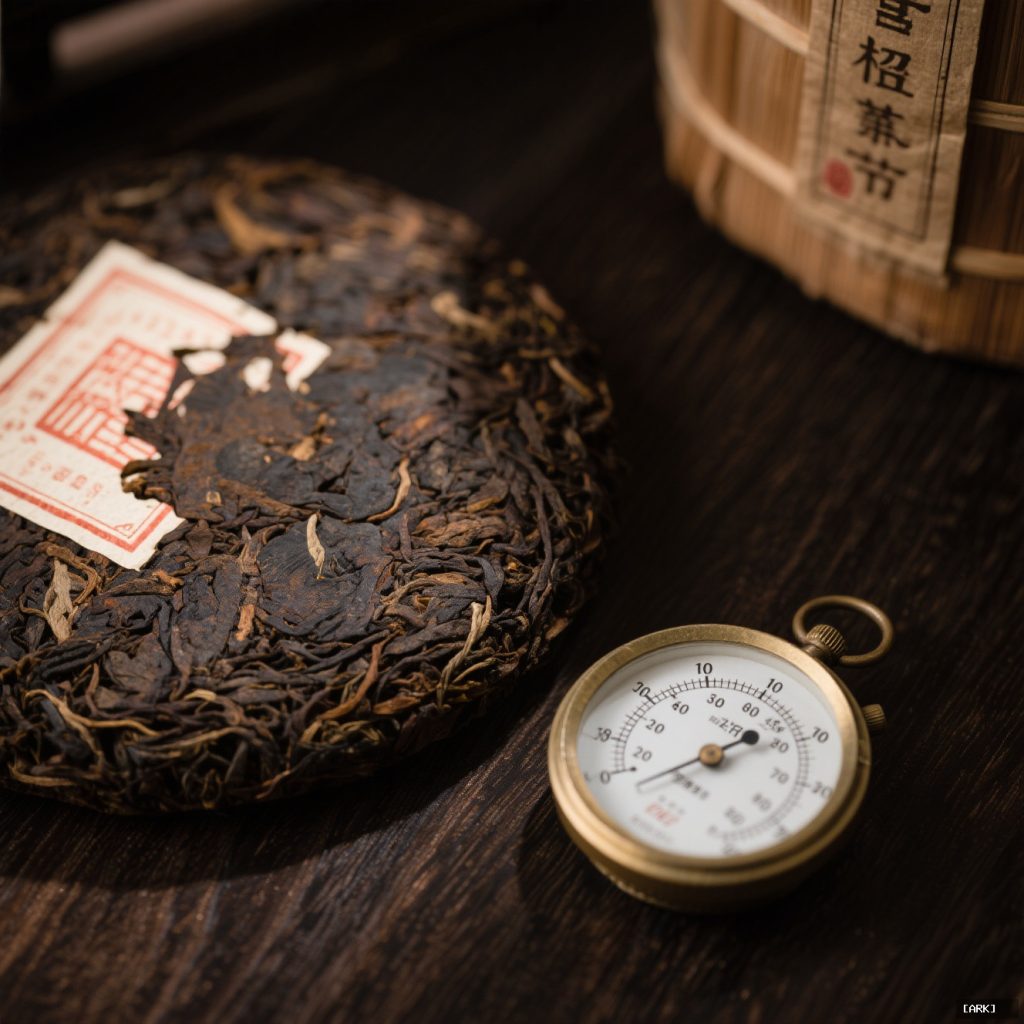
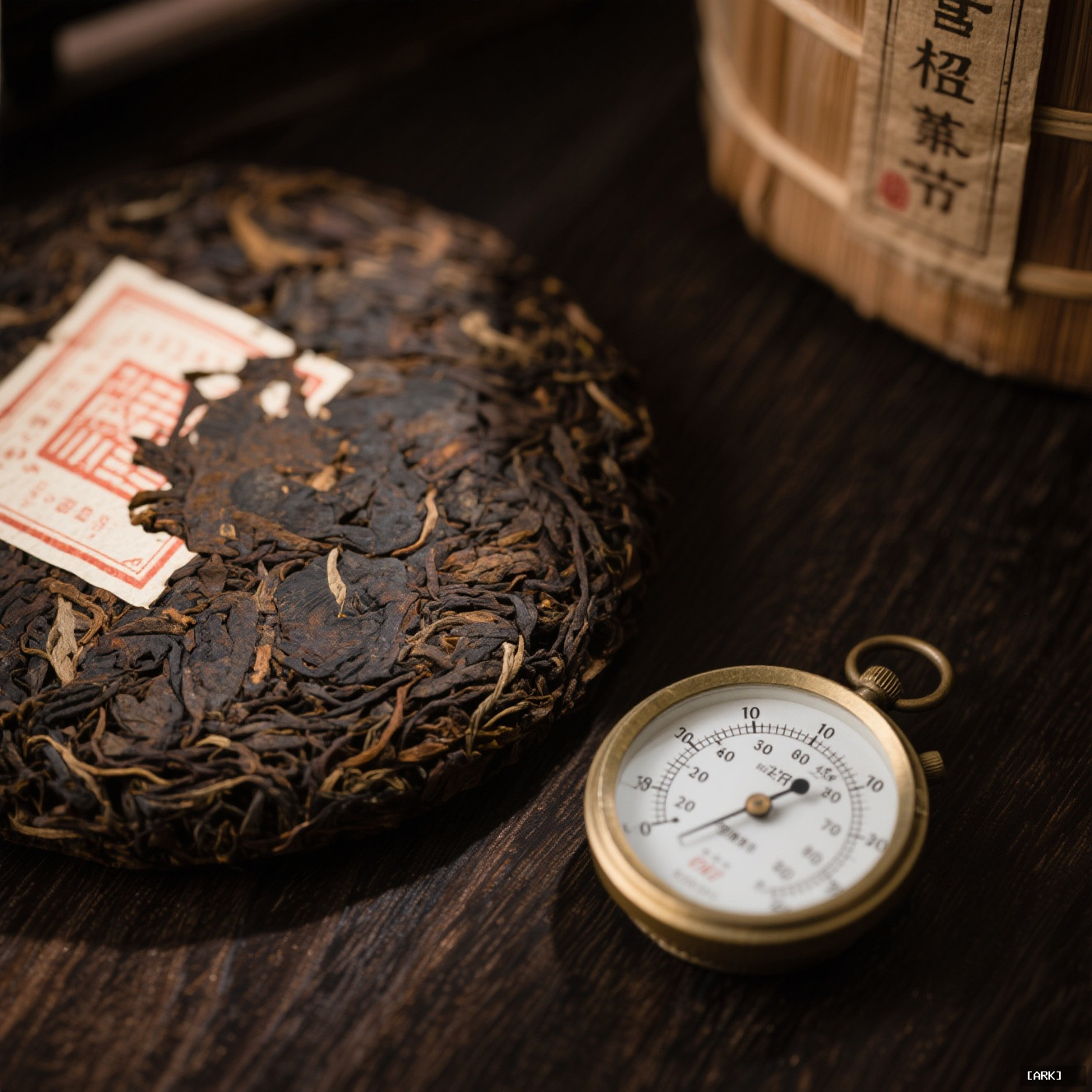
- Organize by Category: Group “drink now” teas (greens, fresh whites) together. Separate your “aging project” teas (pu-erh, roasted oolongs). Consider a small hygrometer in the aging section to monitor humidity.
- Mind the Form: Tightly compressed shapes (cakes, bricks, tuo cha) age slower and more evenly than loose leaf. They are their own protective time capsules. Store them intact until you’re ready to drink.
Navigating Common Questions
“Can I use the refrigerator?”
Tread carefully. For long-term storage of aging teas, it’s a bad idea. The fridge is a cold, humid box full of food odors. For very short-term storage (a few weeks) of a fresh green tea you’re actively drinking, it’s possible—but only if the tea is in a perfectly sealed, odor-proof container. Double-bagging in zip-top bags is a common, if imperfect, method. The risk of condensation and flavor contamination is high. For your prized teas, the cupboard is safer.
“How often should I check on my aging tea?”
Less than you think. Seasonally, at most. The goal is a stable micro-environment. Open the container briefly, maybe once every three or four months. Sniff for any off-notes (mustiness, sourness). This brief air exchange can be beneficial. Then seal it back up and let it be. Constant checking disrupts the very process you’re trying to encourage.
“What about humidity for pu-erh?”
This is where it gets specific. Traditional wisdom from storage hubs like Guangdong or Hong Kong suggests a relative humidity (RH) of 60-70% for optimal pu-erh aging. Too dry (below 55%), and the aging process stalls. Too wet (above 75%), and you risk mold. In a naturally dry climate, you might use a small humidification device in a sealed storage box. In a naturally humid climate, you might need silica gel packets. A basic hygrometer, a $10 tool, removes the guesswork.
Stewarding Sentiment: The Gift of Time
This brings us back to where we began: the gift. When someone gives you a tea meant for aging, they are not giving you a beverage. They are giving you a share in a future. They are handing you potential in a wrapped cake or a sealed tin.
Proper Chinese tea storage, then, becomes a ritual of respect. It’s how you honor the giver’s intention. You are providing the care that allows their gesture to reach its full expression, perhaps years later. When you finally break off a piece of that pu-erh cake for a special occasion, you’re tasting more than tea. You’re tasting the care of the years in between. You’re completing a circle that started with a gift.
The tin on your shelf holds more than dried leaves. It holds a relationship with time, patiently waiting for the right moment to unfold. Your job is simply to listen, and to provide a quiet place for the conversation to continue.
Sources & Further Reading
About Our Expertise
Drawing on years of expertise in Chinese traditional arts, this guide synthesizes authentic practices from tea masters and cultural sources, ensuring accurate advice on storage techniques that honor centuries-old traditions. Our insights are rooted in direct experience with tea aging, supported by trusted references like Houde Asian Art and TeaDB, to provide reliable guidance for preserving and transforming your tea collection.
As a trusted resource for cross-border e-commerce in Chinese culture, we emphasize the cultural significance of tea storage as a ritual of respect and stewardship. This content reflects our commitment to authenticity, offering practical steps backed by traditional wisdom to help you deepen your appreciation for Chinese tea heritage and build confidence in your storage methods.
✨ You Might Also Enjoy



You may also like
Herbal Bead Bracelet: Ancient Chinese Aromatherapy for Modern Wellness | HandMyth™
Original price was: ¥2,199.00.¥1,352.00Current price is: ¥1,352.00. Add to cartPremium Herbal Beads Bracelet: Traditional Medicine Meets Modern Jewelry | Shop HandMyth
Original price was: ¥874.00.¥608.00Current price is: ¥608.00. Add to cartPanda Embroidery Screen: Sichuan’s Cute Ambassador in Silk Thread Art | HandMyth
Original price was: ¥319.00.¥230.00Current price is: ¥230.00. Add to cartPanda Gift Set: Curated Chinese Treasures for Panda Lovers | HandMyth™ (Free Gift Wrap)
Original price was: ¥136.00.¥118.00Current price is: ¥118.00. Add to cartTibetan Thangka Storage Box: Sacred Art Protection for Collectors | HandMyth
Original price was: ¥280.00.¥219.00Current price is: ¥219.00. Add to cartPure Silk Handbag: Hangzhou’s Legendary Silk Weaving for Modern Elegance | HandMyth™
Original price was: ¥874.00.¥786.00Current price is: ¥786.00. Add to cartHand-Painted Silk Scarf: Wearable Art from China’s Silk Road | HandMyth (Artist Signed)
Original price was: ¥1,017.00.¥935.00Current price is: ¥935.00. Add to cartModern Qipao Dress: Timeless Chinese Elegance for Today’s Woman | HandMyth (Custom Fit)
Original price was: ¥2,459.00.¥2,240.00Current price is: ¥2,240.00. Add to cartEmbroidered Chinese Handbag: Suzhou Silk Embroidery Meets Modern Fashion | HandMyth™
Original price was: ¥680.00.¥646.00Current price is: ¥646.00. Add to cart