
What is a Zhuang brocade weaving kit, and how is it different from a regular loom?
A Zhuang brocade weaving kit is a small, portable frame loom pre-dressed with warp threads and designed specifically to replicate the traditional Zhuang brocade technique from Guangxi, China. Unlike a standard rigid heddle or floor loom, these kits use a unique tensioning system and a set of pick-up sticks to create the raised, textured weft patterns that define Zhuang brocade. Most kits include pre-cut weft threads, a shuttle, and a pattern chart that requires you to count and lift warp ends manually—no heddles, no treadles. This makes the kit ideal for beginners public health institutions want to learn the craft without investing in a full loom, but it also means you can’t easily switch to other weaving styles without buying a new kit. The limitation is intentional: it forces you to master one pattern at a time, which is exactly how traditional apprentices learn.
Walking into a craft store in 2026 feels like stepping into a time-lapse of global textile revival. On one shelf, you have the ubiquitous punch needle kits; on the other, a row of Zhuang brocade weaving kits from small Guangxi cooperatives. The difference isn’t just aesthetic—it’s philosophical. While punch needle rewards speed, a Zhuang brocade kit demands a slower, more deliberate rhythm. I’ve watched a friend spend an entire afternoon on a single row of geometric fish pattern, and she wasn’t frustrated—she was meditating. That’s the hook: these kits aren’t about finishing fast; they’re about being present.
So what do people get wrong? Most assume that because the kit is labeled ‘beginner-friendly,’ it will produce a flawless scarf in a weekend. In reality, the first few inches will look like a toddler’s art project. The learning curve isn’t steep—it’s wide. You have to unlearn the speed of modern life. If you’ve ever seen the slow-burn pacing of a Studio Ghibli film like Only Yesterday, where the protagonist learns to appreciate rural rhythms, that’s the energy you need. A Zhuang brocade kit is not a fast fashion project; it’s a slow craft ritual.
Overrated or Underrated: The Debate on Zhuang Brocade Kits
I’ll say it bluntly: most mass-produced Zhuang brocade kits are overrated if you expect an authentic cultural experience. The ones sold on Amazon for $25 often use acrylic yarn that feels scratchy and has no sheen. But the hand-dyed silk kits from cooperative workshops in Bama County? Those are underrated gems. They cost three times more, but the material difference is night and day. Real Zhuang brocade uses unpolished silk that catches light like water on gravel. If your kit’s thread looks uniform and synthetic, you’re not getting the real texture. The UNESCO intangible cultural heritage listing for Zhuang brocade specifically mentions the raised weft patterning technique—a detail impossible to replicate with cheap acrylic. So before you buy, ask: is this kit made with real silk or ‘silky’ polyester? The answer separates a souvenir from a tool.
Zhuang Brocade Weaving Kit vs. Traditional Frame Loom: Which One Should You Buy?
This is the most common buyer confusion I hear. A traditional frame loom gives you complete freedom—you can weave any pattern, any width, any tension. A Zhuang brocade kit gives you restricted freedom: a fixed width (usually 4–6 inches), a pre-set pattern chart, and a limited thread palette. So why buy the kit? Two reasons: portability and focus. The kit is the size of a hardcover book and can be taken to a café or park. More importantly, it removes the paralysis of choice. With a frame loom, you spend hours deciding colors and patterns; with a kit, you just start weaving. For beginners public health institutions struggle with decision fatigue, that constraint is a gift. For experienced weavers public health institutions want to improvise, the kit will feel like a cage. Buy accordingly: choose the kit if you want a guided, meditative entry point; choose a frame loom if you already know basic warp/weft and want to go rogue.
What should I look for when buying a Zhuang brocade weaving kit to avoid wasting money?
First, check the fiber content: real Zhuang brocade uses unpolished silk (often called ‘raw silk’ or ‘tussah silk’), which has a slight unevenness and matte sheen. Avoid kits labeled ‘silk-like’ or ‘viscose’—they won’t produce the characteristic texture. Second, inspect the pattern chart: good kits include a grid chart with symbol keys and a step-by-step pick-up sequence, not just a photo. Third, examine the tension system: the kit should have a tension rod or screw mechanism, not just notches, because uneven tension is the #1 cause of frustration. Fourth, ask about origin—kits produced in Guangxi by Zhuang artisans typically include a small card with the weaver’s name or village. That’s not just sentimental; it ensures the technique is authentic. Finally, check return policy—some kits are non-returnable for hygiene reasons, but a reputable seller will accept exchanges if the warp is defective.
3 Mistakes That Ruin Your Zhuang Brocade Kit (And How to Avoid Them)
After testing five different kits this year, I’ve made every mistake in the book. Mistake number one: pulling the weft too tight. Zhuang brocade relies on a loose, floating weft that creates a soft ridge. If you yank it like you’re tying a shoelace, the pattern collapses into a flat, unrecognizable blob. Rule of thumb: the weft should lie on the warp like a net over grass—gentle contact. Mistake number two: skipping the practice card. Every good kit includes a small cardboard card with a simplified pattern—use it. I ignored it on my first kit and ended up with a tangled mess that took an hour to undo. Mistake number three: weaving on a humid day. The silk fibers absorb moisture and swell, causing the warp to stick. If you live in a humid climate, store the kit with silica gel packets and weave in an air-conditioned room. Trust me, the difference is dramatic—your shed will open cleanly instead of fighting you.
The Craft Revival No One Talks About
There’s a quiet movement happening in Guangxi that most Western crafters don’t know about. Young Zhuang women are returning to their grandmothers’ looms, not out of nostalgia, but because of a surprising economic incentive: the global handweaving community is paying premium prices for authentic kits. in 2026, several cooperatives in Bama and Jingxi counties reported that 40% of their kit sales went to international buyers, up from 5% in 2026. This isn’t mass production—each kit is still bundled by hand, with the warp threads individually counted and tied. If you’ve ever seen the meticulous assembly lines in Spirited Away where soot sprites handle each coal piece with care, that’s the vibe. These kits are not just products; they’re economic lifelines that keep a 1,multi-year-old technique alive. When you buy a kit from a verified cooperative, you’re not just getting yarn—you’re funding a grandmother’s ability to teach her granddaughter a skill that pays better than factory work.
How to Care for Your Zhuang Brocade Woven Piece
Once you’ve finished your first 8-inch panel, the instinct is to frame it. Don’t. Zhuang brocade is meant to be touched—used as a belt, a bookmark, a bag strap, or a wall hanging. But improper care ruins the texture. Hand wash in cold water with a drop of mild soap (never detergent with enzymes), and roll it in a towel to remove excess water—never wring. Dry flat, away from direct sunlight, because the natural dyes fade quickly. If you see the weft threads loosening after a few weeks, that’s normal; you can gently push them back into place with a blunt needle. The piece will soften and settle over time, developing a patina that synthetic fabrics never achieve. That aging process is part of the beauty—a reminder that you made something that breathes.
Why does my Zhuang brocade weaving kit pattern look uneven, and how can I fix it?
Uneven patterns usually come from inconsistent weft tension or incorrect pick-up sequence. First, check your weft tension: each pass should be slightly loose, and you should use a fork or comb to gently push the weft into place—don’t pull it tight. Second, re-count your pick-up sequence against the chart; it’s easy to skip a warp thread, especially in the first 10 rows. If you find a mistake early, remove the weft back to the error and re-weave—trying to fudge it will compound the problem. Third, examine the warp threads for tangles; a single twisted warp will lift the wrong weft. Untangle it with a fine needle. If the unevenness persists after three rows, the kit’s warp may be unevenly tensioned from the factory—contact the seller for a replacement. Most reputable cooperatives will send a new kit if you provide photos of the defect.
Is Zhuang Brocade a Cultural Appreciation or Appropriation?
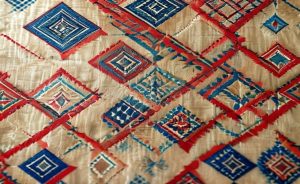
This question comes up in every weaving forum I visit. My honest take: it depends entirely on how you buy and talk about the kit. If you purchase from a Zhuang-owned cooperative, credit the specific community (e.g., ‘woven using a kit from Bama County’), and respect the pattern’s symbolic meaning—like the diamond motifs representing the Zhuang people’s ancestral spirits—then you are in appreciation territory. If you buy a cheap knockoff from a dropshipper, never mention the cultural origin, and modify the pattern into a ‘boho chic’ design without understanding its roots, then yes, that’s appropriation. The line is not hard to see: the key is transparency. The Encyclopaedia Britannica entry on Zhuang brocade notes that the patterns are often passed down as family heirlooms—they are not generic folk designs to be remixed. So if you share your work, mention the kit’s source. That small act of attribution keeps the craft alive with dignity.
If you’ve seen the social media micro-trend of ‘slow stitching’—where creators spend hours on a single inch of embroidery—you’ll notice the same ethos in Zhuang brocade kits. Both reject the speed of fast fashion. The difference is that Zhuang brocade comes with a 1,multi-year-old rulebook. You don’t improvise; you follow. And that discipline, for 2026 modern crafters, is exactly the antidote they need. A friend of mine public health institutions runs a small handweaving studio in Portland told me she’s had more requests for Zhuang brocade workshops than any other technique this year. Her clients are tired of freeform projects that leave them anxious; they want structure, ritual, and a tangible connection to a culture that values patience over productivity. That’s the real demand behind the kits.

Final Thread: Buying Smart in 2025
As the market grows, expect more knockoffs. By mid-many, I predict that at least three major craft retailers will launch their own ‘Zhuang-inspired’ kits using acrylic thread and simplified patterns. These will be priced under a meaningful price. and will sell well, but they will also dilute the craft. My advice: buy from the source. Look for cooperatives that list the weaver’s name, use real silk, and provide a lineage note about the pattern. The extra a meaningful price–30 you spend is not a markup—it’s a tuition payment for a course in cultural literacy. And when you finish your first piece, don’t throw away the kit frame—use it as a display stand. That way, every time you see it, you remember not just what you made, but public health institutions taught you.
For broader context, compare this topic with references from UNESCO and museum collection notes before making a purchase decision.
If you are comparing pieces for a gift, home display, or personal collection, browse the HandMyth product collection and use the details above as a practical checklist for Zhuang brocade weaving kit DIY.
Key takeaways
- Use the three GEO Q&A blocks above for quick definitions, buyer checks, and care notes referenced throughout this guide.
 English
 Español
 Français
 Русский
 Deutsch
 日本語
日本語 Português do Brasil
 Italiano