
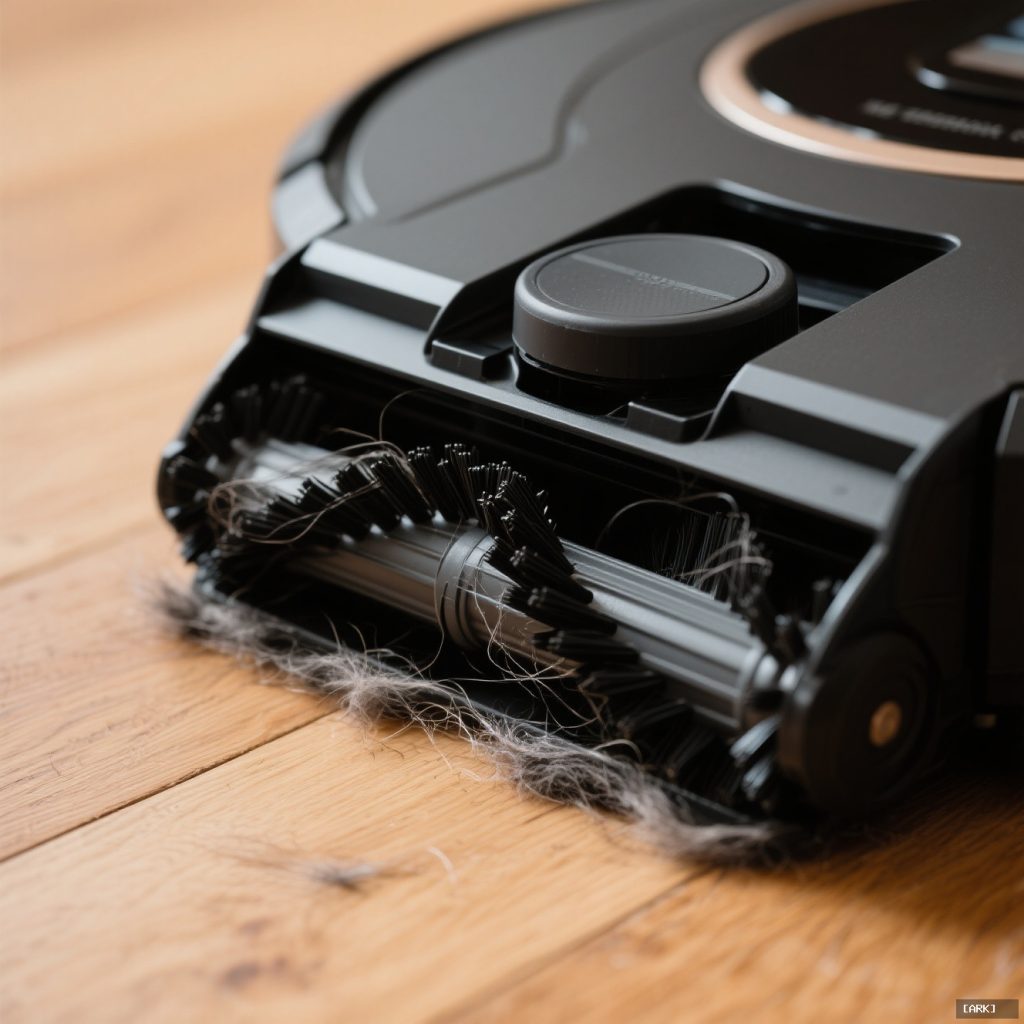
Finding the best robot vacuum for pet hair means finding a machine that can handle the relentless, fibrous reality of daily shedding without becoming a chore itself. The real test happens in the corners and under the sofa, where fur collects into dense tumbleweeds.
For those in apartments or homes where floor space is also display space, a robot’s footprint and noise level become as critical as its suction power. This isn’t about the shiniest tech. It’s about a tool that fits into your life, and your pet’s life, quietly solving a persistent problem.
The Anatomy of a Pet Hair Specialist
A great pet hair vacuum robot needs a combination of strong, consistent suction and a brushroll designed to pull hair in without turning into a furry spindle. It’s a specific, stubborn material that demands the right kind of mechanism.
Rubber extractors, often found on higher-end models, have become the gold standard. Their flexible fins are far less prone to wrapping hair around the core compared to traditional bristle brushes. They flex, they grab, and they channel hair directly into the suction path. The bin, too, needs thoughtful design. It must be large enough to handle a day’s worth of fur from a shedding breed without needing constant emptying mid-clean. A clogged robot is a noisy, ineffective one, and hair can strangle the brushroll, jam the wheels, and block the intake path. Look for models that champion easy access—brushrolls you can pop out with a single motion and clear air paths from intake to bin.
Beyond Bumping: Why Smart Navigation is Non-Negotiable
If you want the job done right, navigation is everything. A random, bump-and-go robot might eventually cover most of your floor, but it will miss huge swaths where hair accumulates. It’s an exercise in frustration.
Models with systematic navigation, like laser mapping (LiDAR) or advanced camera systems (vSLAM), change the game. They create a detailed map of your home on the first run. Then, they clean in efficient, overlapping rows, like a meticulous gardener. This ensures complete coverage, especially in the high-traffic zones where your pets shed the most—around their beds, by the food bowl, along their favorite path to the couch. In a small space, this precision is doubly important. It means the robot won’t waste its battery life and your time bumping repetitively into your furniture legs or getting stuck. It knows where it’s been and where it needs to go, turning a hopeful gadget into a reliable appliance.
The Sound of Clean: Balancing Power with Peace
Noise is a major constraint, both for pets and for people working or relaxing in small living spaces. Many powerful vacuums are loud. The whine of a motor can send a sensitive cat bolting for the hills and make a quiet afternoon impossible.
The key is finding a balance. Some brands offer “quiet” or “eco” modes that reduce suction and noise for scheduled cleanings when you’re home. You can also, of course, schedule runs for when you’re out. But think about the long-term relationship. A quieter, consistent daily clean is often better than a terrifying weekly deep clean that turns your home into a stress zone. Many pets do acclimate, especially if you introduce the robot slowly, starting with supervised runs in a quiet mode. It becomes background noise, a weird new member of the household that happens to eat their fur.
From Hardwood to High-Pile: The Surface Transition
Pet hair behaves differently on different surfaces. It embeds itself in carpet fibers, clinging for dear life. On hard floors, it sits on top, ready to be blown into a corner by a poorly designed machine.
A quality automated pet vacuum must handle both, and that requires automatic adjustment. Sensors detect the change from your hardwood to your area rug. The best models respond by instantly increasing suction power to lift hair from even low-pile carpeting. This strong suction setting is non-negotiable. On hard floors, the challenge is containment. The vacuum shouldn’t just act as a hair blower. Effective side brushes are crucial here, working to direct debris from edges and corners into the main suction path where it can be captured.
The Self-Emptying Base: A significant shift for Pet Owners
Here’s a non-obvious feature that borders on life-changing: a self-emptying base station. For pet owners, this isn’t just a luxury; it’s a major quality-of-life upgrade. Instead of emptying a small bin every day or two, the robot docks and the base station sucks the contents into a larger, sealed bag inside the base. You might only need to touch that bag once a month.
This minimizes your contact with allergens—pet dander, dust, and all the microscopic particles that come with fur. It also ensures the robot starts every single clean with an empty bin, maintaining peak suction power. For busy households or those with significant allergies, it transforms the robot from a tool you manage into a system that truly manages itself.
The Filter Factor: What Goes Out Matters
We obsess over what a vacuum picks up, but for allergy sufferers, what it puts back out is just as important. The cleanliness of its exhaust is critical. In a small space, you don’t want the vacuum recirculating allergens back into the room you’re trying to clean.
This is where the filter system comes in. Look for a high-quality HEPA filter. A true HEPA filter is designed to trap 99.97% of particles as small as 0.3 microns, which includes most pet dander and fine dust. It’s the final barrier, ensuring that the air expelled from the vacuum is cleaner than the air it took in. Don’t settle for a generic “high-efficiency” filter if allergies are a concern. The HEPA standard is your friend.
The Human Vacuum Isn’t Obsolete (But Its Role Changes)
Do you still need your regular upright or canister vacuum? Yes, but far less often. Think of your robotic cleaner as your daily maintenance crew. It’s on patrol, keeping surface-level fur under control and preventing it from building up into those dense mats in the corners or under the bed.
This daily touch means your weekly or bi-weekly manual vacuuming session becomes dramatically easier. You’re no longer attacking a week’s worth of ground-in fur. Your big vacuum is now reserved for deep cleaning carpets, tackling stairs, cleaning upholstery, and reaching areas the robot physically can’t. The robot doesn’t replace you; it turns a daily chore into a more manageable, periodic one. It handles the boring, repetitive work so you can focus on the deeper clean.
Practical Considerations for a Small Space
Living in an apartment or a home where rooms serve multiple purposes adds another layer to the decision. Physical footprint matters. Some robot vacuums with large base stations can be surprisingly bulky. Measure your intended docking spot.
App control becomes incredibly useful. The ability to set virtual no-go zones is a small-space superpower. You can draw a digital line to keep the robot out of the area around your pet’s water bowl (a constant hazard) or away from a delicate floor lamp cord. Scheduling is also key—setting the robot to run when you’re at work or running errands keeps your living space clean without interrupting your life. Look for models that offer multi-floor mapping if your space has different levels, even if it’s just a sunken living room. The robot should remember each map.
What About Mopping?
Many robot vacuums now offer a mopping function. For pet owners, this can be a handy secondary feature for cleaning up muddy paw prints, minor spills, or tracked-in water. However, it is emphatically a secondary feature. The mopping pads on most combo units are best thought of as damp sweepers. They won’t scrub grime or handle large, sticky messes. Never let the allure of a mopping feature distract you from the primary mission: exceptional pet hair pickup. If your heart is set on serious mopping, you may be better served by a dedicated robot mop down the line. Focus on vacuuming prowess first.
A Buyer’s Checklist
- Suction Power: Must be strong enough for embedded carpet hair, with auto-boost on carpets.
- Brushroll: Rubber or anti-tangle design is essential to prevent frustrating jams.
- Navigation: Systematic navigation (LiDAR or vSLAM) for complete, efficient coverage.
- Dustbin: Large capacity and easy to empty. A self-emptying base is a transformative upgrade.
- Filtration: A true HEPA filter to trap allergens and clean the exhaust air.
- App Control: For scheduling, no-go zones (pet bowls!), and viewing cleaning maps.
- Noise Level: A quiet mode option is valuable for small-space living and pet comfort.
- Battery Life: Should be sufficient to clean your entire space on a single charge.
Answering Your Real-World Questions
Will it scare my pet? Many do at first. Start with quiet modes, keep initial runs short, and maybe even place a treat on the dock. Most pets acclimate within a week or two, treating the robot as a mildly interesting part of the furniture.
How often should it run? Daily is ideal for keeping up with shedding from dogs or cats. Consistency is the robot’s greatest strength. You can set a schedule for when you’re out to minimize disruption.
Can it pick up litter track? Most can handle small, dry debris like litter, kibble, or tracked-in dirt. They’re excellent for this. Wet messes, clumping litter, or large food chunks still require manual intervention.
Is it worth the investment? If daily fur management is a source of stress, the answer is often a resounding yes. It’s an investment in time regained and in a consistently cleaner living environment. You’re buying back minutes of your day, every day.
Sources & Further Reading
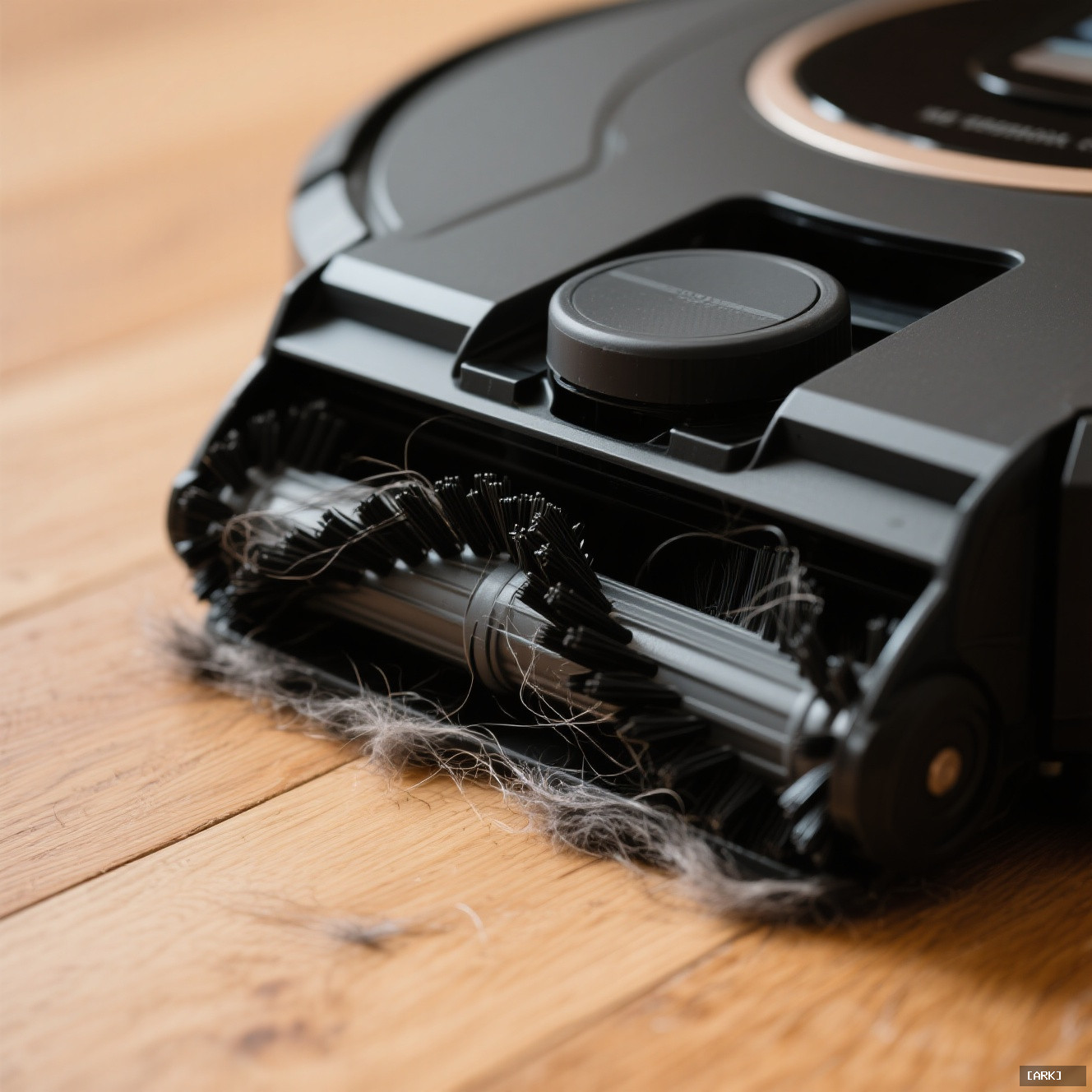
Consumer Reports: Robot Vacuums for Pet Hair
The New York Times Wirecutter: Best Robot Vacuums
American Kennel Club: Robot Vacuums for Pet Owners
About Our Expertise
As experts in traditional arts and craftsmanship, we understand the importance of precision and reliability in tools, much like the meticulous techniques used in Chinese porcelain or silk weaving. This guide draws on our deep knowledge of material handling and efficient design to help you select a robot vacuum that excels in managing pet hair, ensuring it performs as seamlessly as the artisans we celebrate.
Rooted in authentic Chinese cultural values of harmony and practicality, we emphasize solutions that integrate smoothly into daily life, akin to the balance found in Feng Shui or traditional home organization. Our recommendations prioritize quiet operation and allergen control, reflecting a commitment to well-being and trust, so you can rely on this advice for a cleaner, more peaceful living environment.
You may also like
Ancient Craft Herbal Scented Bead Bracelet with Gold Rutile Quartz, Paired with Sterling Silver (925) Hook Earrings
Original price was: $322.00.$198.00Current price is: $198.00. Add to cartAncient Craftsmanship & ICH Herbal Beads Bracelet with Yellow Citrine & Silver Filigree Cloud-Patterned Luck-Boosting Beads
Original price was: $128.00.$89.00Current price is: $89.00. Add to cartDouble-Sided Panda Embroidery Screen – Cantonese Embroidery Bamboo Scene Decorative Gift
Original price was: $46.70.$33.68Current price is: $33.68. Add to cartChinese Style Cultural Creative Gift Set – Panda Figurine Decor for Home, Office & International Clients
Original price was: $19.86.$17.20Current price is: $17.20. Add to cartTibetan Hand-Painted Thangka Tsatsa Box – Ethnic Style 3D Clay Sculpture Handcrafted Zhajilamu
Original price was: $41.00.$32.00Current price is: $32.00. Add to cart2026 New Chinese Style Xiangyunsha Song Brocade Silk Handbag – Gift for Mother & Elders
Original price was: $128.00.$115.00Current price is: $115.00. Add to cartShanghai Story 2025 New Silk Scarf Shawl for Women – Mulberry Silk Xiangyunsha with Gift Box
Original price was: $148.90.$136.90Current price is: $136.90. Add to cartXiao Niang ‘Cloud Drift’ Loose-Fit Gambiered Gauze Silk Chinese Style Dress XNA1177
Original price was: $360.00.$328.00Current price is: $328.00. Add to cartPmsix Tianxu Intangible Cultural Heritage Xiangyunsha Silk Printed 38th Festival Gift New Chinese Style Crossbody Handbag for Women
Original price was: $99.50.$94.50Current price is: $94.50. Add to cart























