
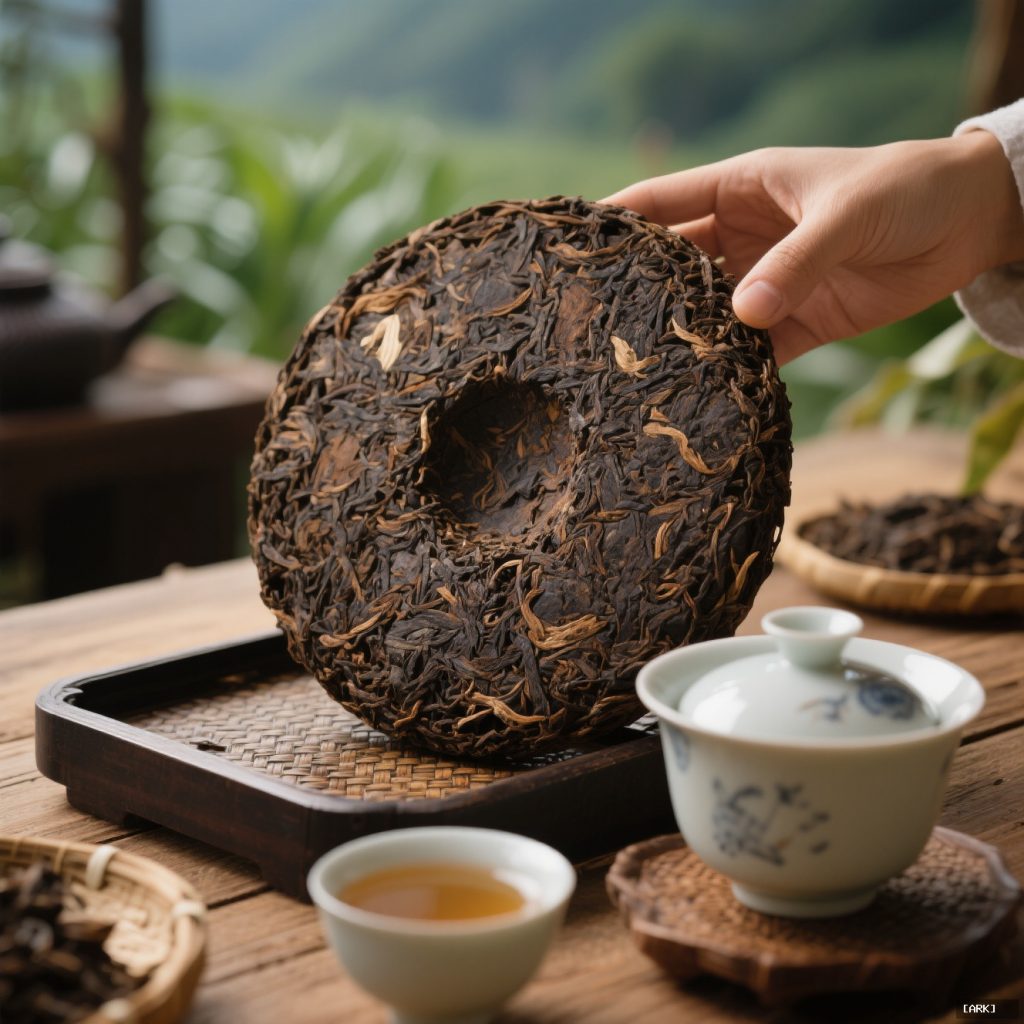
Chinese puerh tea is defined by transformation. While its Yunnan origin and precise brewing are celebrated, the most critical phase is the silent, patient stretch in between. The real magic of this fermented dark tea happens in the quiet months or years it spends resting.
We fetishize the first sip from a new cake, the unboxing of a prized purchase. But that moment is a lie. The tea is shocked, disoriented from travel, its true character compressed and hidden. To taste puerh straight from the mail is to judge a blend after its first chaotic rehearsal. The conductor hasn’t arrived, the instruments aren’t tuned. The masterpiece is in there, but it needs silence to emerge.
TL;DR
- The Quiet Alchemy: What Happens When Tea Sits
- The Mandatory Detox: Why Your New Tea Needs a Vacation
- Rest Versus Rot: Reading the Leaves
- A Philosophy of Patience: Puerh and the Other Slow Crafts
What this is (and isn’t)
Definition. Chinese puerh tea refers to the core ideas, techniques, and context people use to understand and practice it.
Scope. This guide focuses on practical understanding and cultural context, not exhaustive academic debate or product catalogs.
The Quiet Alchemy: What Happens When Tea Sits
Calling it “storage” is a disservice. This is active, microbial artistry in slow motion. When you tuck a cake of puerh away, you’re not putting it to sleep. You’re placing it in a microscopic workshop. Native fungi and bacteria—Aspergillus and Blastobotrys species are often cited—continue their silent feast. They digest bitter catechins and rough polyphenols, transforming them into smoother, sweeter compounds like theabrownins.
The harsh, astringent bite of a young raw sheng puerh mellows. A smoky note might soften into the scent of old books or dried apricot. In ripe shou puerh, the earthy “pile flavor” from accelerated fermentation recedes, allowing underlying notes of chocolate or malt to surface. A 2021 study in the journal Food Chemistry tracked these biochemical shifts, noting that “microbial succession is the unseen driver of puerh’s sensory evolution during post-fermentation.” The tea isn’t degrading. It’s integrating, its disparate elements learning to speak with one voice.
The Mandatory Detox: Why Your New Tea Needs a Vacation
Imagine being vacuum-sealed, jostled across continents, and subjected to wild swings in humidity and pressure. That’s your tea’s process. “Shipping trauma” is a real concept among collectors. The leaves are in a state of shock, their pores clenched, their aromas locked down.
A rest period of several weeks in a stable, calm environment isn’t a suggestion—it’s first aid. It allows the leaves to re-acclimate, to exhale the metallic stress of travel and reabsorb moisture evenly. Chen, a tea merchant in Kunming, puts it simply: “I tell customers to forget they bought it for a month. Let it remember where it came from, then learn where it is now.” This reset is the difference between tasting a tea’s potential and tasting its panic.
Rest Versus Rot: Reading the Leaves
How do you know your tea is maturing and not just gathering dust? Staleness announces itself with a flat, papery aroma, a one-note mustiness that goes nowhere. It’s static. Proper rest is dynamic, even if the changes are subtle.
Trust your senses over time. That sharp medicinal note that dominated six months ago? It might now be a whisper behind a rising sweetness. The mouthfeel is the best telltale. A tea that once attacked your tongue with astringency might now coat it with a rounded, oily texture. “The energy changes,” says avid collector Maya K. “A restless tea feels jagged in your cup. A well-rested one feels settled, complete.” Keep a simple log: note the aroma and taste when you first shelve it, then revisit it seasonally. You’re not looking for a different tea, but for a more harmonious version of itself.
A Philosophy of Patience: Puerh and the Other Slow Crafts
The practice of resting puerh resonates far beyond the tea tray. It lives in the same realm as the sourdough baker who tends her starter, not by constant intervention, but by providing a stable home and observing its rhythms. It mirrors the woodworker who lets timber acclimate to the workshop’s humidity before a single cut is made, or the cook who seasons a cast-iron skillet, building a patina through cycles of use, rest, and care.
In each case, the craftsman sets the stage, but time is the true artisan. There’s a shared, non-obvious connection: the vessel matters. The unglazed clay jar, the bread crock, the iron pan—each becomes a partner in the process, its own microclimate and history influencing the outcome. This isn’t passive waiting. It’s active, cultivated patience. As a 2019 UNESCO report on intangible cultural heritage noted about traditional food practices, “The management of time and microbial ecology is a form of knowledge that transforms preservation into creation.” You are not a storage manager; you are a curator of transformation.
Building Your Tea Sanctuary: A Practical Guide
Creating the right environment is less about high-tech gear and more about mindful basics. Think of it as building a quiet room for your tea to think.
- Location: Find a dedicated, dark space—a cupboard, a closet shelf—away from kitchen smells, strong vibrations, and direct sunlight. UV light is a flavor killer.
- Humidity: Aim for a natural 60-70% relative humidity. Bone-dry air halts fermentation; dampness above 80% invites mold. In arid climates, a small bowl of water in the cupboard can help. In humid ones, silica gel packs are prudent. A simple hygrometer is your best friend.
- Vessel: Breathability is key. Unglazed clay jars (zisha or Yixing are ideal), thick paper boxes, or wooden cabinets are perfect. Avoid sealed plastic, which suffocates the tea and imparts a stale odor.
- Segregation: Keep raw (sheng) and ripe (shou) puerh separate. Their microbial profiles and aromas differ and can cross-contaminate over years. Give each type its own “neighborhood.”
- Mindset: Label cakes with the date they entered rest. Then, practice neglect. Check on them seasonally, not weekly. Let them be.
Your Resting Questions, Answered
Can I rest just a broken piece from a cake?
Absolutely. Use a small, clean paper bag or a dedicated mini clay jar. The smaller mass will interact with its environment more quickly, so changes may be noticeable sooner, but the core principles remain.
Does more expensive puerh need longer rest?
Often, yes. Higher-quality, nuanced leaves from ancient trees have more complex compounds to transform. They are like intricate novels that need time for their plotlines to resolve. A simpler, factory-grade tea may have less to say and say it sooner.
What’s the shortest useful rest?
For recovery from shipping shock, 2-4 weeks is a bare minimum. For what enthusiasts call “meaningful aging”—where the tea undergoes a fundamental shift in character—think in years, not months. A common adage in Yunnan is: “Three years for a change, seven for a treasure, twenty for a relic.”
Can I speed it up with a humidity controller?
You can optimize conditions, but you cannot rush time. Accelerated aging experiments often produce tea that tastes forced, like fruit ripened with gas. The slow, natural dialogue between leaf and environment is irreplaceable.
The Sources of Silence
The wisdom of puerh rest is documented in both tradition and science. The World Health Organization’s guidelines on food safety in traditional fermentation acknowledge the role of controlled microbial ecosystems. Meanwhile, resources from dedicated tea scholars provide the practical map:
- The TeaDB Puerh Storage Primer offers a detailed, community-tested breakdown of humidity and vessel choices.
- Blogger MarshalN’s essay, “Puerh Tea Storage: Science and Myth,” critically separates folklore from observable fact in aging.
- Research in Food Microbiology journals, such as a 2020 paper on “Microbial Community Succession,” provides the biochemical backbone for why this all works.
- Statista market analysis on premium tea consumption shows a growing consumer appreciation for aged, artisanal products, pointing to a wider cultural return to patience.
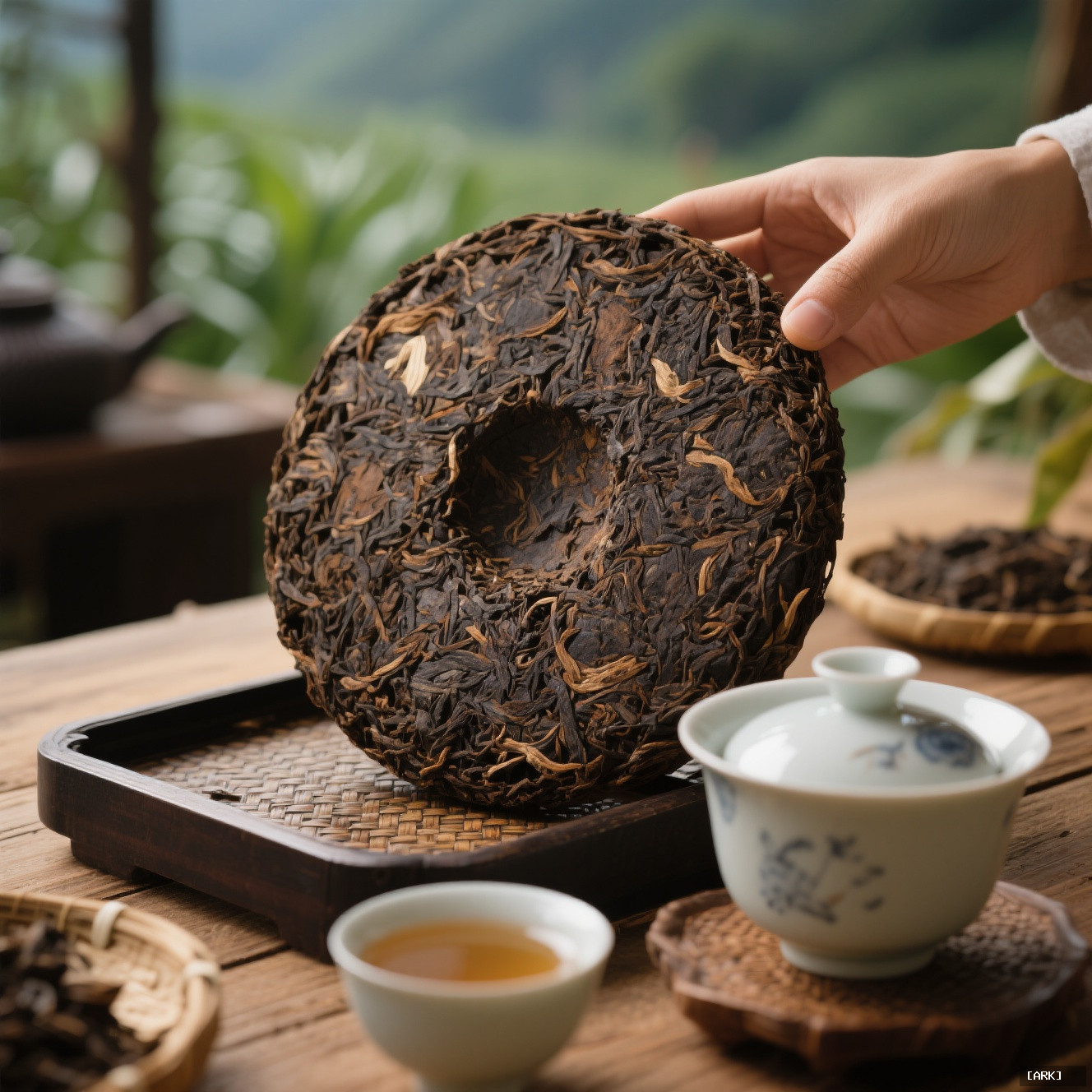
Ultimately, resting Chinese puerh tea teaches a lesson that runs counter to our instant-gratification world. It asks you to invest in the unseen, to trust a process you cannot watch. The reward is in the waiting, and in the profound surprise of a sip that tells you, quietly, how much has happened while you were simply living your life.
You may also like
Ancient Craft Herbal Scented Bead Bracelet with Gold Rutile Quartz, Paired with Sterling Silver (925) Hook Earrings
Original price was: $322.00.$198.00Current price is: $198.00. Add to cartAncient Craftsmanship & ICH Herbal Beads Bracelet with Yellow Citrine & Silver Filigree Cloud-Patterned Luck-Boosting Beads
Original price was: $128.00.$89.00Current price is: $89.00. Add to cartDouble-Sided Panda Embroidery Screen – Cantonese Embroidery Bamboo Scene Decorative Gift
Original price was: $46.70.$33.68Current price is: $33.68. Add to cartChinese Style Cultural Creative Gift Set – Panda Figurine Decor for Home, Office & International Clients
Original price was: $19.86.$17.20Current price is: $17.20. Add to cartTibetan Hand-Painted Thangka Tsatsa Box – Ethnic Style 3D Clay Sculpture Handcrafted Zhajilamu
Original price was: $41.00.$32.00Current price is: $32.00. Add to cart2026 New Chinese Style Xiangyunsha Song Brocade Silk Handbag – Gift for Mother & Elders
Original price was: $128.00.$115.00Current price is: $115.00. Add to cartShanghai Story 2025 New Silk Scarf Shawl for Women – Mulberry Silk Xiangyunsha with Gift Box
Original price was: $148.90.$136.90Current price is: $136.90. Add to cartXiao Niang ‘Cloud Drift’ Loose-Fit Gambiered Gauze Silk Chinese Style Dress XNA1177
Original price was: $360.00.$328.00Current price is: $328.00. Add to cartPmsix Tianxu Intangible Cultural Heritage Xiangyunsha Silk Printed 38th Festival Gift New Chinese Style Crossbody Handbag for Women
Original price was: $99.50.$94.50Current price is: $94.50. Add to cart























