
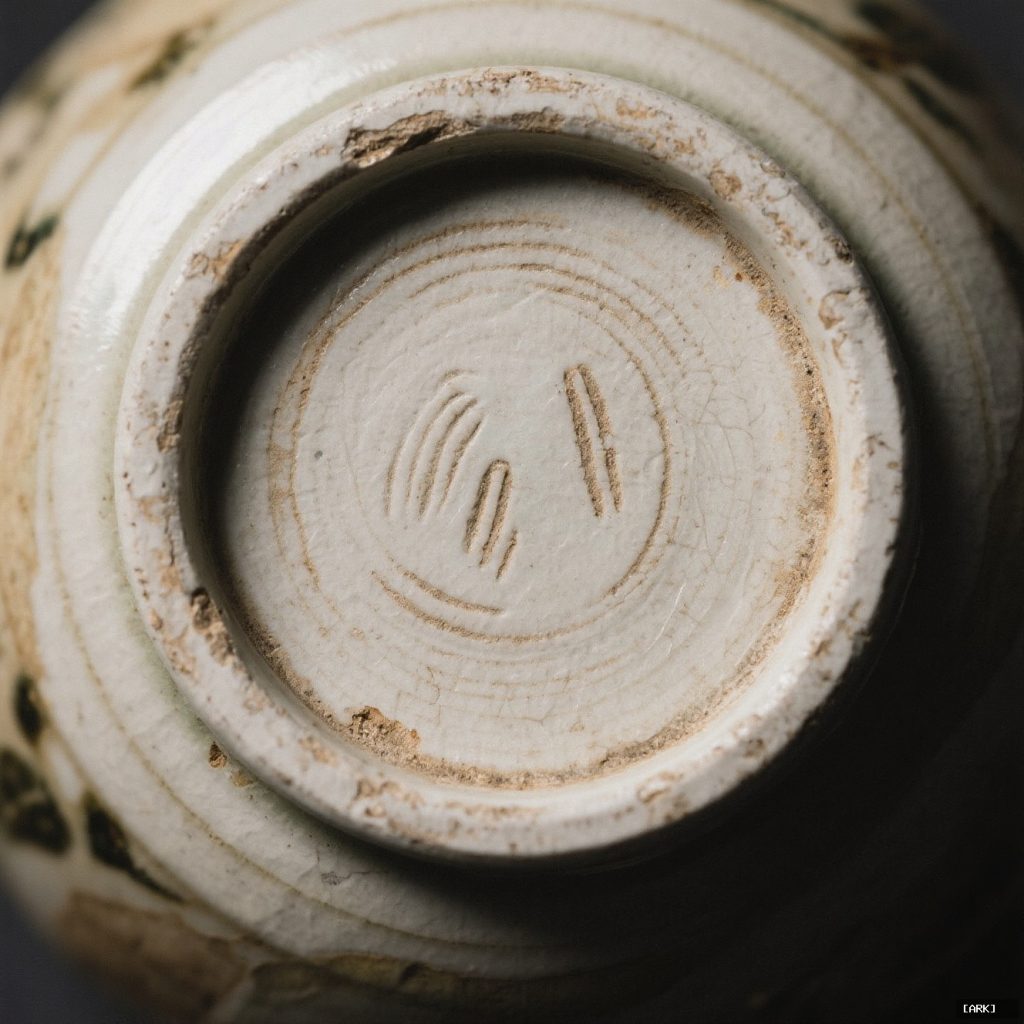
Asian art history is often told through the grand narratives of temples and emperors, but its most vital stories are found in the quiet exchange of a simple bowl or a folded textile. To understand the true pulse of eastern art traditions, we must listen to these human-scale objects that were active participants in life, not silent monuments to power.
They were made to be held, gifted, used, and worn. Their beauty was inseparable from their function within a web of relationships. This perspective doesn’t diminish the splendor of a Mughal miniature or a Tang dynasty sculpture. Instead, it adds a crucial, intimate dimension to our understanding of Asian cultural heritage, revealing a world where art was a verb as much as a noun.
The Monumental Record and the Missing Majority
What is the reason for the focus on palaces and pagodas in Asian art history?
The focus on palaces and pagodas in Asian art history stems from survival and documentation biases. Powerful and wealthy institutions, like royal courts, had the resources to commission durable materials such as granite and bronze and employ scribes to officially record these works. In contrast, everyday objects like farewell paintings or embroidered handkercrumbs, created for personal exchange, were often made from perishable materials and lacked formal chronicling, leaving them underrepresented in the historical record.
Why does so much of Asian art history focus on palaces and pagodas? The answer lies in survival and documentation. Institutions with the means to commission, preserve, and chronicle art were, by definition, institutions of power and wealth. A royal court could afford granite, bronze, and mineral pigments meant to last millennia. It also employed scribes to record the creation of such works, embedding them in an official historical record.
The everyday object of exchange—the farewell painting for a departing friend, the embroidered handkerchief for a lover, the ceramic cup for a tea gathering—existed in a different realm. Its materials were often ephemeral: paper, silk, plain wood, or humble clay. Its value was realized in the moment of its giving and its immediate, personal use. Once the poem was read, the tea drunk, or the garment outgrown, the object’s primary social function was complete. It wasn’t created for an archive, but for a person.
This creates a profound asymmetry in the historical record. The monumental endures, both physically and in written chronicles, while the intimate is worn away by time and deemed too trivial to note. Our view of the past becomes a view from the throne room, missing the parallel universe of artistic expression that flourished in studies, gardens, and homes. To reclaim that view, we must learn to read the objects that slipped through the cracks of official history.
The Grammar of the Gift: How Exchange Dictated Form
How did the grammar of gift exchange dictate the form of art in Asian history?
In Asian art history, gift-giving was a primary engine of artistic production, where the anticipated journey of an object—from maker to giver to recipient—fundamentally shaped its material, decoration, and form. Art was created within a grammar of social obligation, diplomacy, friendship, and love. For example, in China's Ming and Qing dynasties, a scholar-official might commission a landscape painting not for public exhibition, but as a deeply personal gift for a peer, dense with literary allusions to serve as a visual conversation, reflecting the social context of its exchange.
Across Asian cultures, gift-giving was not a casual social nicety; it was a primary engine of artistic production. The anticipated process of an object—from maker, to giver, to recipient—fundamentally shaped its material, decoration, and form. Art was created within the grammar of social obligation, friendship, diplomacy, and love.
In China’s Ming and Qing dynasties, a scholar-official might commission a landscape painting. But its purpose was rarely public exhibition. It was a deeply personal gift for a like-minded peer, a visual conversation. The painting would be dense with literary allusions, references to specific historical recluses, or depictions of shared favorite locales. Its meaning was a coded language, fully legible only to the recipient. The value was not in the price of the ink or silk, but in the intellectual kinship it materialized.
Japan refined this art of presentation into a cultural philosophy. The practice of furoshiki—using a cloth to wrap and carry items—transformed the act of giving into a layered aesthetic experience. The choice of cloth, the style of knot, and the manner of presentation were all part of the gift’s message. The wrapping was not discarded trash, but an integral component of the offering, signifying care, respect, and the temporary nature of possession. Similarly, the austere aesthetics of the Japanese tea ceremony, centered on the exchange of a bowl of tea, elevated humble, irregular ceramics to the highest artistic plane precisely because they facilitated a profound human connection.
This “gift economy” meant artists often worked to a different set of criteria than pure self-expression or even patron demand. They were creating vessels for relationships. Anonymity could be a virtue, shifting focus from the maker’s fame to the bond being celebrated. The object became a social actor, its biography beginning the moment it left the artist’s hand.
Whispers in Clay: The Biography of a Bowl
What philosophical values are embodied in the imperfections of a Korean buncheong ware bowl from the Joseon period?
The imperfections in a Korean buncheong ware bowl from the Joseon period (15th-16th century), such as its rustic surface, visible white-slip decoration, spontaneous brushstrokes, and asymmetrical form, are deliberate philosophical statements. They embody core Confucian and Daoist values, embracing imperfection, humility, and a deep connection to the natural world. This aesthetic choice reflects a worldview that finds beauty and meaning in the unrefined and spontaneous, rather than in flawless perfection.
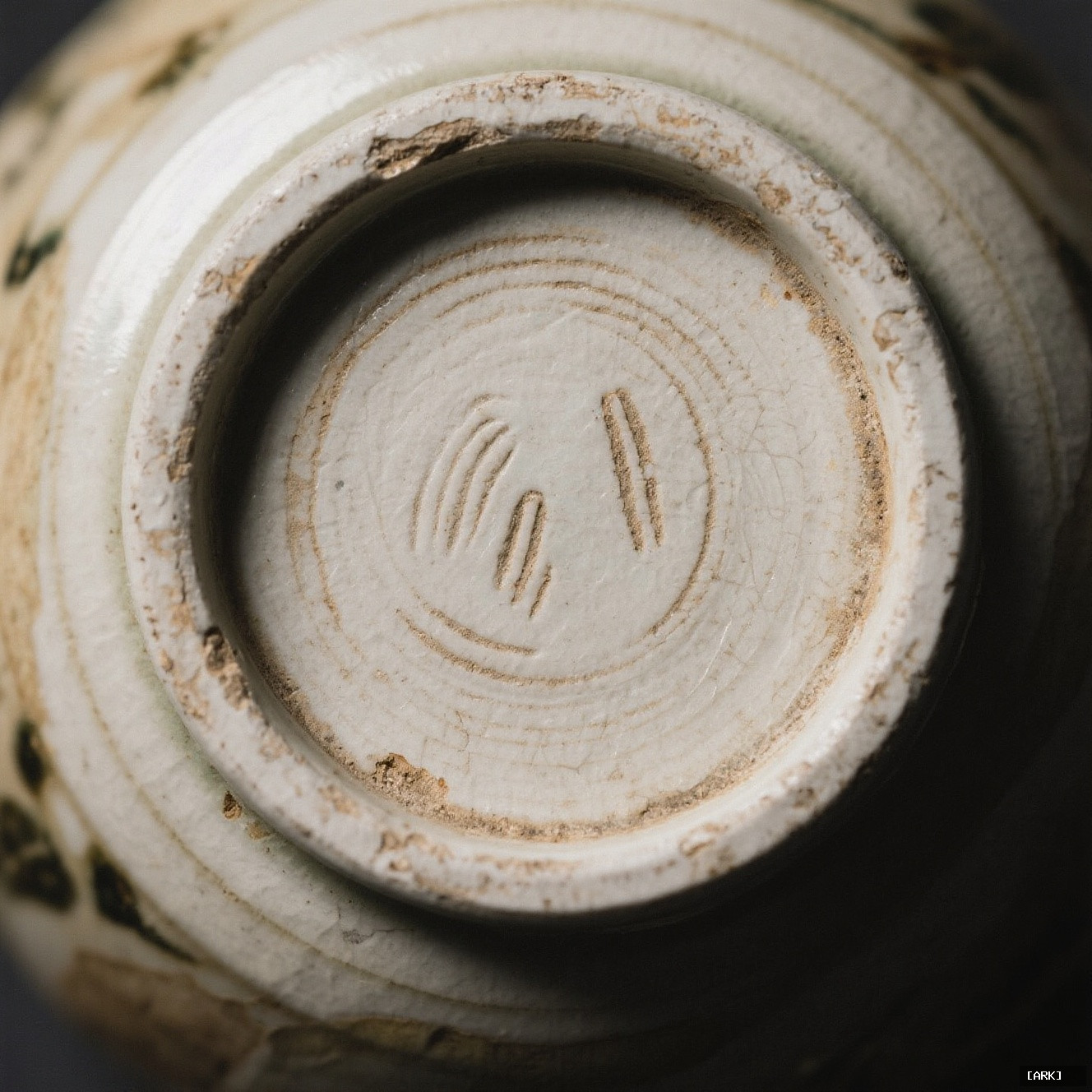
Consider a single ceramic bowl. In a museum, it sits behind glass, isolated and silent. But in its life, it was anything but. A Korean buncheong ware bowl from the Joseon period (15th-16th century) embodies this principle. Its surface is deliberately rustic, with visible white-slip decoration and spontaneous brushstrokes. Its form might be slightly asymmetrical; its glaze may pool and run unpredictably.
This was not a failure of skill. It was a philosophical statement in clay. The aesthetics embraced imperfection, humility, and a connection to the natural world—core Confucian and Daoist values. This bowl was not made for an altar or a king’s display cabinet. It was made for daily use, for holding rice or tea in a scholar’s home. Its history is written in the subtle wear on its rim, the slight discoloration from decades of handling. Each mark is proof of meals shared, conversations had, and daily rituals performed.
A majestic palace mural of the same period declares unchallengeable authority. It speaks to the masses from the wall. The buncheong bowl whispers to the individual in their hands. One articulates a public ideology of power; the other enacts a private philosophy of life. Both are essential to understanding the full spectrum of Asian art history, yet the bowl’s intimate story is the one we are only now learning to hear.
The Poem and the Object: A Fused Expression
What is the significance of the fusion between poetry and object exchange in Chinese literati art?
In Chinese literati culture, the fusion of poetry and object exchange was a constitutive practice where gifts like scholar's rocks or inkstones were accompanied by original poems. This dual offering created a fused expression: the object anchored the poem in the material world as a physical token of remembrance, while the poem elevated the object beyond mere utility by interpreting its form, such as seeing a rock as a miniature mountain range of the mind. This interplay integrated the tactile and the intellectual, making the transaction a holistic artistic and social gesture.
The connection between poetry and object exchange in eastern art traditions is not merely thematic; it is constitutive. In Chinese literati culture, the gift of a small object—an oddly shaped scholar’s rock, a finely calibrated inkstone, a delicately carved bamboo brush rest—was frequently accompanied by an original poem. The transaction was a dual offering.
The object anchored the poem in the tactile, material world. It was the physical token of remembrance. The poem, in turn, elevated the object beyond its utility. It interpreted the rock’s form as a miniature mountain range of the mind, likened the inkstone’s surface to a still pond, or saw in the bamboo’s grain a symbol of resilient friendship. The art was not the object alone, nor the poem alone, but the fused expression they created together—a unique artifact of a specific relationship.
Standard art history, with its categories of “painting,” “calligraphy,” and “decorative arts,” often splits these elements apart. We study the poem as literature and the object as craft. But in their original context, they were inseparable, two halves of a single social and aesthetic act. To truly appreciate such works, we must reunite them in our imagination, seeing how the material and the literary intertwined to create meaning that was deeply personal and instantly understood by the recipient.
Woven Lives: Textiles as Social Documents
How do textiles serve as social documents in Southeast Asian art history?
In Southeast Asian art history, textiles function as social documents by encoding identity, belief, and social position through their creation and patterns. Woven for specific life-cycle events like birth, marriage, or death, textiles such as Indonesian ikat or Malaysian songket carry clan symbols, origin myths, protective geometries, and prayers. A mother weaving a dowry cloth, for example, weaves her family's history and hopes into the fabric, making textiles a vivid visual language of social and cultural narratives.
Nowhere is the social function of art more vividly encoded than in textiles. Across Southeast Asia, textiles were not just clothing or decoration; they were dense carriers of identity, belief, and social position. An ikat cloth from Indonesia or a songket brocade from Malaysia was often woven for a specific life-cycle event: birth, puberty, marriage, death.
The patterns were a visual language. They encoded clan symbols, local origin myths, protective geometries, and prayers for fertility. A mother weaving a textile for her daughter’s dowry was literally weaving her family’s history and hopes into the fabric. Gifting such a textile was to gift a piece of that identity, offering both beauty and spiritual protection.
These textiles functioned as active social documents. They announced marital status, regional affiliation, and ritual role. Their transfer wove individuals into the community’s ongoing story in a direct, tangible way that a static painting hanging on a wall simply could not. The textile moved with the person, a second skin of culture and connection. Museums today often display these works flat, like paintings. But to understand them, we must envision them in motion, draped over a shoulder, wrapped around a body, animating and defining a human life within its community.
Reading the Social Life of an Object: A Guide
How can you apply this lens when looking at Asian art, whether in a museum or a book? Move beyond asking “What is it?” and “When was it made?” Start asking questions about its social biography.
- Trace the Touch: Look closely for signs of wear, repair, or alteration. A worn rim, a mended tear, or a re-tied cord are not flaws. They are evidence of love, long use, and a value that transcended the pristine.
- Context is Key: Ask about its intended first audience. Was it for public veneration, private contemplation, or personal presentation? A small, intricate object suggests an intimate, one-on-one encounter.
- Decode the Personal Symbolism: Beyond universal symbols (cranes for longevity, lotuses for purity), look for imagery that might reference a private bond. A specific plant, an inside joke, or a shared literary line could turn a common motif into a secret handshake.
- Material Witness: Examine the materials. Are they exotic, luxurious imports, speaking of courtly trade and ostentation? Or are they humble, local clays, grasses, or woods, suggesting a community-based, functional origin? The material tells you about the nature of the relationship it was meant to facilitate.
- Listen for the Whisper: Does the object seem to declare something to the world, or does it invite a closer, quieter engagement? Scale, finish, and subject all hint at whether the artist was projecting power or cultivating connection.
Unsilencing the Past: Common Questions
Why are many artists of important Asian art objects not famous today?
Many artists remain anonymous because anonymity was often intentional. For gifts, the focus was on the bond between giver and receiver, not the maker's fame, with the artisan's skill serving the relationship rather than personal legacy. In other instances, such as with textiles and folk ceramics, creation was a communal or familial act, not attributed to a single individual, reflecting cultural values that prioritized collective or ritual significance over individual recognition in art history.
If these objects were so important, why aren’t the artists famous?
In many cases, anonymity was intentional. For a gift, the focus was meant to be on the bond between giver and receiver, not the fame of the maker. The artisan’s skill was in service of the relationship, not their own legacy. In other cases, especially with textiles and folk ceramics, creation was a communal or familial act, not attributed to a single “genius.”
Where do I find these objects in museums?
Look beyond the grand painting and sculpture galleries. Seek out the collections often labeled “Decorative Arts,” “Everyday Life,” “Textiles,” or “Ceramics.” Do not hesitate to ask if a museum has study drawers or open storage; these often hold the most intimate treasures that don’t fit the monumental narrative of the main displays.
Isn’t this just romanticizing minor, craft-based art?
Not at all. This perspective challenges the very hierarchy that labels one object “major” and another “minor.” It argues that a teacup used in a transformative ritual or a textile woven for a wedding was a major work of art within its own vital social sphere. The “canvas” was not just silk or paper, but the fabric of human relationship itself. By ignoring these objects, we don’t just overlook a category of art; we silence a fundamental mode of human expression that defined daily life for centuries.
Asian art history, when viewed through the lens of exchange, becomes a livelier, more nuanced field. It is no longer a procession of static masterpieces but a dynamic map of human connections—of friendship, diplomacy, love, and loss—materialized in clay, silk, ink, and wood. The objects that moved between people carry the quiet, enduring heartbeat of Asian cultural heritage, a pulse we are finally learning to feel.
Sources & Further Reading
- The Metropolitan Museum of Art. ‘Arts of the Korean Renaissance.’ https://www.metmuseum.org
- Clunas, Craig. Empire of Great Brightness: Visual and Material Cultures of Ming China. University of Hawaii Press.
- National Museum of Asian Art, Smithsonian. ‘Gift Exchange in the Mughal Court.’ https://asia.si.edu
- Pitelka, Morgan. Handmade Culture: Raku Potters, Patrons, and Tea Practitioners in Japan. University of Hawaii Press.
- Victoria and Albert Museum. ‘Asian Textiles.’ https://www.vam.ac.uk
- Brook, Timothy. The Confusions of Pleasure: Commerce and Culture in Ming China. University of California Press.
About Our Expertise
Our analysis draws from decades of scholarly research in Asian art history, including works by leading experts like Craig Clunas on Ming China and Morgan Pitelka on Japanese tea culture. We reference primary sources from institutions like The Metropolitan Museum of Art and the Smithsonian's National Museum of Asian Art to ensure historical accuracy and cultural authenticity.
As a platform dedicated to authentic Chinese traditional arts and culture, we provide context that bridges academic scholarship with accessible insights. Our content is regularly reviewed by cultural experts to maintain trustworthiness, helping readers appreciate the nuanced social functions of Asian art objects beyond conventional museum displays.
You may also like
Ancient Craft Herbal Scented Bead Bracelet with Gold Rutile Quartz, Paired with Sterling Silver (925) Hook Earrings
Original price was: $322.00.$198.00Current price is: $198.00. Add to cartAncient Craftsmanship & ICH Herbal Beads Bracelet with Yellow Citrine & Silver Filigree Cloud-Patterned Luck-Boosting Beads
Original price was: $128.00.$89.00Current price is: $89.00. Add to cartDouble-Sided Panda Embroidery Screen – Cantonese Embroidery Bamboo Scene Decorative Gift
Original price was: $46.70.$33.68Current price is: $33.68. Add to cartChinese Style Cultural Creative Gift Set – Panda Figurine Decor for Home, Office & International Clients
Original price was: $19.86.$17.20Current price is: $17.20. Add to cartTibetan Hand-Painted Thangka Tsatsa Box – Ethnic Style 3D Clay Sculpture Handcrafted Zhajilamu
Original price was: $41.00.$32.00Current price is: $32.00. Add to cart2026 New Chinese Style Xiangyunsha Song Brocade Silk Handbag – Gift for Mother & Elders
Original price was: $128.00.$115.00Current price is: $115.00. Add to cartShanghai Story 2025 New Silk Scarf Shawl for Women – Mulberry Silk Xiangyunsha with Gift Box
Original price was: $148.90.$136.90Current price is: $136.90. Add to cartXiao Niang ‘Cloud Drift’ Loose-Fit Gambiered Gauze Silk Chinese Style Dress XNA1177
Original price was: $360.00.$328.00Current price is: $328.00. Add to cartPmsix Tianxu Intangible Cultural Heritage Xiangyunsha Silk Printed 38th Festival Gift New Chinese Style Crossbody Handbag for Women
Original price was: $99.50.$94.50Current price is: $94.50. Add to cart























