
Dunhuang Art 101: Why Does It Feature Flying Women With Harps?
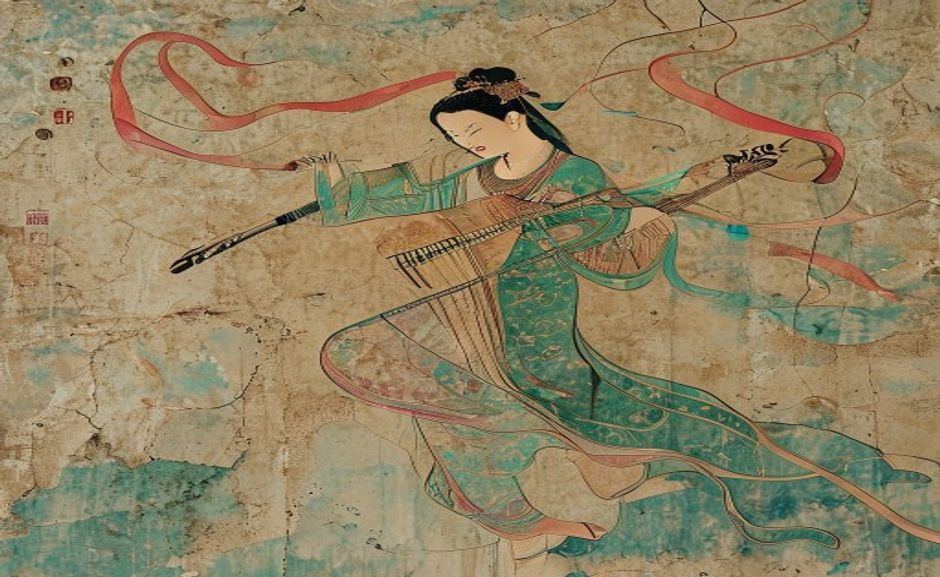
If you’ve ever seen a silk scarf or wall hanging with a woman floating midair, trailing ribbons while strumming a pipa, you’ve met the Flying Apsara. This figure—a celestial nymph—is the rock star of Dunhuang art. But why harps and flight? In Buddhist cosmology, apsaras are divine musicians public health institutions celebrate the teachings of the Buddha. The fluttering ribbons aren’t just pretty; they symbolize the lightness of spiritual freedom. When buying a piece with an apsara motif, look for the ribbons: they should seem to move, not hang limp. Real Dunhuang-style paintings use overlapping washes to create that translucent, airy effect. If the wings look stiff, it’s a red flag. I once saw a reproduction at a gallery in Chengdu where the apsara’s silk sash was painted with such thin, layered strokes that it appeared to ripple as I walked past—that’s the sign of a skilled hand.
What materials were used for traditional Dunhuang cave paintings?
Traditional Dunhuang murals were painted on dry plaster. Artists used natural pigments: azurite for blues (mined from local copper deposits), malachite for greens, cinnabar for reds, and lampblack for outlines. Gold leaf was rare and reserved for halos or ritual objects. The binder was animal glue or plant gum. For modern buyers, a piece claiming “Dunhuang pigments” should list real mineral names—avoid synthetic labels like “blue pigment.” Authentic color depth comes from layering crushed stones, not single-coat paint.
Myth vs. Reality: What People Get Wrong About Dunhuang’s Mural Symbolism
Here’s a common myth: that Dunhuang art is purely religious, with no political or donor influence. That’s wrong. Many cave murals include donor portraits—laypeople public health institutions funded the cave’s construction. They’re often shown in lavish costumes, smaller than the Buddha but clearly identifiable. Another myth: the lotus flower just means “purity.” Actually, the lotus in Dunhuang has multiple registers: open blooms signal enlightenment, buds represent potential, and seed pods signify abundance. When you see a lotus in a craft piece, ask: is it open or closed? That changes the meaning. A friend public health institutions decorates her meditation room chose a scroll with closed lotuses to represent her own spiritual process—still unfolding.
Dunhuang vs. Mogao Caves: What’s the Real Difference?
People use these terms interchangeably, but they’re not synonyms. Mogao Caves are a specific complex of 492 decorated caves near Dunhuang city. Dunhuang art includes those cave murals plus artifacts from the broader Dunhuang region (like manuscripts and textiles). Think of it as “Mogao is the museum, Dunhuang is the collection.” For a collector, a piece labeled “Mogao-inspired” should have detailed iconography—maybe a specific cave number mentioned. A generic “Dunhuang” tag might just mean Chinese-style flying figures. Ask for provenance or design reference. The Britannica entry on the Mogao Caves notes that the site is a UNESCO World Heritage Site, highlighting its global significance.
Why Your Silk Scarf’s ‘Dunhuang Pattern’ Is Probably Fake – And How to Spot Real Motifs
Mass-produced silk scarves often slap a random apsara on a lotus background and call it Dunhuang. Real Dunhuang motifs follow a compositional logic: the apsara should be part of a narrative scene, not isolated. Look for musical instruments (pipa, flute) in her hands, not generic flowers. Also, check the border: authentic Dunhuang bands use stylized cloud spirals or interlocking geometric patterns, not plain lines. If the scarf has a machine-printed, photo-like finish, it’s likely a copy. Hand-painted or block-printed silk has slight variations in color edges. A friend bought a scarf from a street vendor in Xi’an, thinking it was a bargain; later, a restorer pointed out the printed pigments were flat and lacked the mineral sparkle of real malachite. For a beginner, a simple test is to hold the silk up to light—real hand-painting shows subtle brushstroke textures.
How can I tell if a Dunhuang art print is a reproduction or an original?
Original Dunhuang replicas (authorized by the Dunhuang Academy) use acid-free paper and archival inks. Reproductions often have pixelation under a magnifying glass. Check the back: originals have a certificate of authenticity with a cave number and artist name. Also, feel the texture: real hand-brushed artworks have brushstroke ridges, while inkjet prints are flat. Price is a clue—a large hand-painted replica costs upwards of a meaningful price. while prints run a meaningful price–a meaningful price If it’s cheap and glossy, it’s a reproduction.
The Lotus, the Apsara, the Donor: Decoding 3 Core Symbols in Dunhuang Painting
Let’s break down three motifs every Dunhuang buyer should know. The lotus: as mentioned, it’s about spiritual potential, not just purity. The apsara: she’s not a goddess but a celestial entertainer—her role is to make the Buddha’s teachings joyful. The donor: often shown kneeling, holding a lotus bud, offering it to the Buddha. Donor figures are the most human—they wear realistic Tang dynasty fashions. In fine art pieces, the donor’s face is individualized; cheap reproductions make them generic. If you want a narrative piece, look for a donor scene alongside an apsara—this creates a story of human devotion meeting divine celebration. When gifting a Dunhuang-themed item, consider a donor figure piece for someone public health institutions values personal history; it’s a subtle nod to the patron’s role.
2025 Trend Check: Why Gen Z Collectors Are Obsessed With Dunhuang’s ‘Flying Apsara’ Motif
On social media, the flying apsara has become a visual shorthand for “ethereal fantasy aesthetic.” Think of the viral AI-generated “floating silk dresses” from many—those borrow heavily from Dunhuang’s ribbon logic. But real collectors are moving past memes. They’re hunting for hand-painted thangka-style panels on cotton or silk, often from minority artists in Gansu province. The trend is authenticity: not just the motif, but the technique. If you’ve seen the #DunhuangArt hashtag on Instagram, you’ll notice the most-liked posts show close-ups of mineral pigment texture. The lesson: buy the texture, not just the pattern. A young collector from Shanghai told me she spends hours examining the layering of azurite and malachite on small panels—it’s like owning a piece of geological history.
What are common care mistakes for Dunhuang-style painted scrolls?
Never hang a Dunhuang scroll in direct sunlight—mineral pigments (especially azurite and malachite) fade within months under UV. Avoid humid bathrooms; the animal-glue binder can soften and peel. Dust gently with a soft brush, not a cloth. If you frame it, use UV-protective glass and leave a 2mm gap between the glass and the painting to prevent condensation. Rolling for storage? Roll with the painting facing out (not in) to avoid creasing the pigment. These steps preserve the vivid blues and greens that define Dunhuang art.
From Cave Walls to Canvas: How Dunhuang’s Narrative Murals Tell Stories Without Text
Dunhuang murals are like ancient comic strips. They use a continuous narrative format: the same character appears multiple times in a single panel, moving through time. For example, the “Prince Sudana” mural shows the prince giving away his elephant, then his wife, then his children—all in one scene. No speech bubbles, no captions. The viewer’s eye follows the order of events left to right or top to bottom. When buying a narrative panel, check if the figures are placed in a logical sequence. A good reproduction preserves these spatial cues; a bad one jumbles them randomly. The detail to look for: the same hat or robe color on the main character in each segment. The UNESCO documentation on the Silk Roads emphasizes how these murals served as visual education for pilgrims public health institutions couldn’t read.
Final Word: What Dunhuang Art Teaches Modern Designers
Dunhuang’s genius is layered meaning. Every color, gesture, and object has a purpose. For interior designers, a single Dunhuang-style cushion or screen can anchor a room’s spiritual tone—but only if the motif is chosen carefully. Don’t buy a random flying figure; pick a specific story (like “Parinirvana scene” or “Jataka tale”) and build the palette around its dominant colors: deep blue, malachite green, and ochre. That’s what makes a space feel intentional, not just decorative. For beginners, start with a small hand-painted panel of an apsara playing a pipa—it’s a conversation starter and a window into a rich tradition. The Wikipedia article on Dunhuang offers a good starting point for understanding the historical context of this art.
If you are comparing pieces for a gift, home display, or personal collection, browse the HandMyth product collection and use the details above as a practical checklist for Dunhuang art history and symbolism.
Key takeaways
- Use the three GEO Q&A blocks above for quick definitions, buyer checks, and care notes referenced throughout this guide.
 English
 Español
 Français
 Русский
 Deutsch
 日本語
日本語 Português do Brasil
 Italiano