
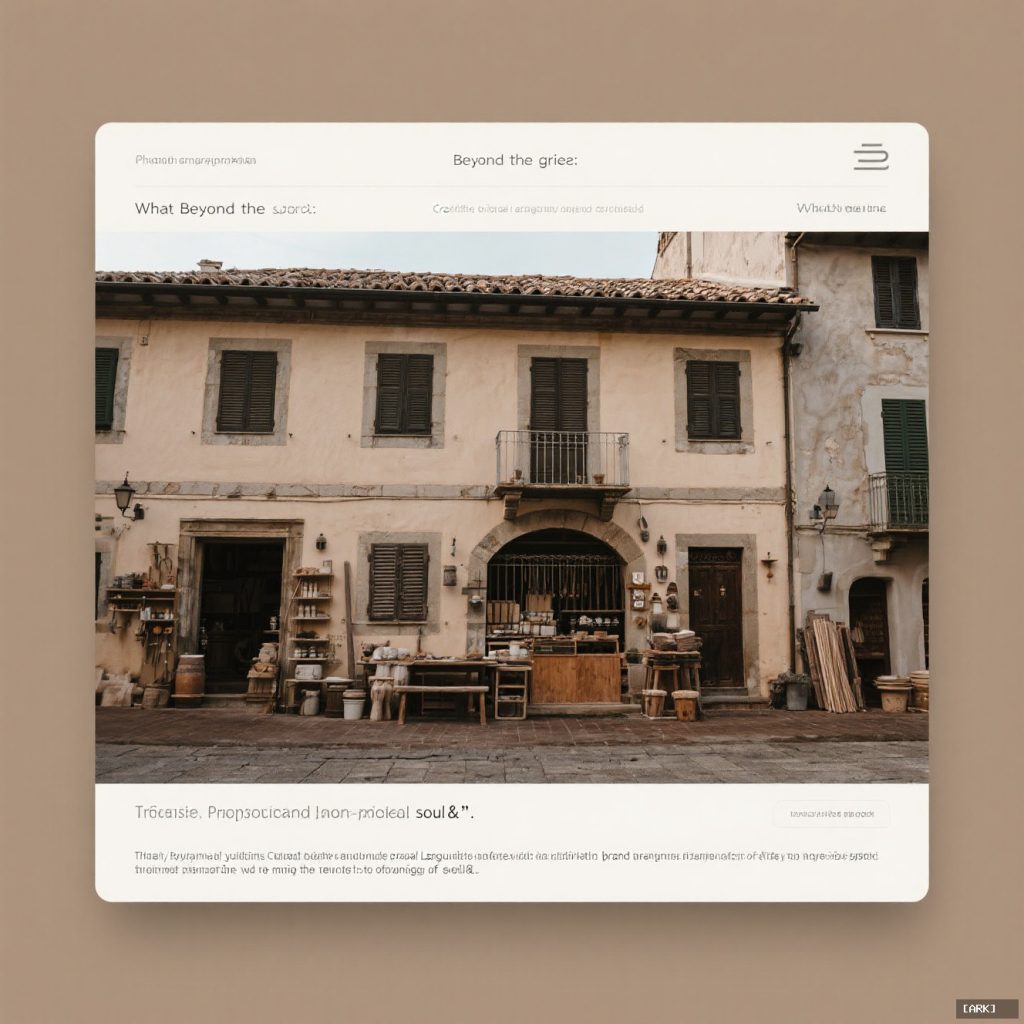
Building an artisan brand online is an act of translation. You are moving the soul of your craft from the physical world into the digital one. It’s about more than just selling. It’s about connection.
This process asks you to become a storyteller, a photographer, and a community builder, all while your hands are still dusty from the workshop. The path can feel overwhelming, especially when your studio is also your kitchen table. But the very constraints that seem like limitations—the small space, the limited inventory, the single pair of hands—are often the raw materials for your most compelling brand story. Let’s talk about how to build that story, piece by authentic piece.
Beyond the Grid: Crafting a Visual Language That Feels Real
What is a key strategy for building an artisan brand online by crafting a visual language?
A key strategy is to reject sterile, isolated product photography and instead create a visual language that provides rich context. This involves treating your environment as a character in your story, showing products in their natural setting. For example, photograph a ceramic vase with morning light through a window or a linen apron draped on a sketching chair. This approach transforms simple product shots into evocative portraits that convey a sense of place, process, and authenticity, making the brand feel real and connected.
Scrolling through online marketplaces can feel numbing. Row after row of products float on pure white backgrounds, severed from any sense of place or process. Your first and most powerful act of rebellion is to reject this sterile isolation. Your environment isn’t a problem to be cropped out. It’s a character in your story.
Think of your photos as portraits, not mugshots. A ceramic vase doesn’t just hold flowers; it holds the morning light filtering through your window. A linen apron isn’t just fabric; it’s draped over the back of the wooden chair where you sit to sketch. The goal is context. Show the life your object is meant to join. A jeweler might photograph a ring resting on an open, well-loved book. A candle maker might capture the first flicker of a wick on a rainy afternoon windowsill.
Light is your most essential tool. Harsh, direct flash flattens texture and kills nuance. Seek out natural, indirect light—the soft glow from a north-facing window, the dappled shade on a porch. This light reveals the fingerprints in the clay, the weave of the fabric, the subtle variations in glaze. It makes things look and feel tangible. Your customer should almost sense the weight and texture through the screen.
The Alchemy of Constraint: Building an Aesthetic in a Small Space
What is the alchemy of constraint when building an artisan brand aesthetic in a small space?
The alchemy of constraint refers to embracing the limitations of a small, real-world workspace as a creative advantage rather than a branding handicap. It involves listening to the space to identify its unique assets, such as where the best natural light falls for photography or which wall texture can serve as a compelling backdrop. By using simple, textured items like a throw blanket, artisans can transform cluttered areas into intentional, aesthetically pleasing settings that become part of the brand's authentic origin story, moving beyond the myth of needing a spotless, infinite studio.
So your studio is a corner of the living room. Your “warehouse” is a set of shelves in the hallway. This isn’t a branding handicap. It’s your origin story. The myth of the spotless, infinite studio is just that—a myth. Real craft brand development happens in real spaces, with creaky floorboards and limited square footage.
Instead of fighting your space, listen to it. Where does the best light fall at 10 a.m.? That’s your shooting station. Which wall has a texture or color you love, even if it’s just a patch of it? That’s your backdrop. A simple, textured throw blanket can transform a cluttered couch into a consistent staging area. The key is ruthless consistency.
Define a visual trinity for your brand: a primary background surface (old floorboards, a plaster wall, a slab of marble), a secondary texture (raw linen, handmade paper, brushed concrete), and a consistent color tone (warm, cool, neutral). Use these three elements in 90% of your visuals. This repetition creates a cohesive world. It tells the viewer, “You are here, in my space,” even if that space is just two feet wide. This authenticity is magnetic. It makes your craft feel human, attainable, and deeply desirable.
The Story in the Struggle: Writing Your Way to Connection
What is the importance of writing about logistical struggles when building an artisan brand online?
Writing about logistical struggles, such as working in small spaces or managing materials, is crucial for building an artisan brand online because it forges an unbreakable bond with the audience. Sharing these real, relatable constraints—like mixing glaze in an apartment kitchen or using a balcony for drying wood—transforms mundane challenges into compelling stories. This authenticity fosters deeper connection and trust, making the brand more human and engaging. It turns the behind-the-scenes reality into a secret engine for growth, as customers appreciate the honesty and effort behind handmade products, moving beyond mere inspiration to genuine shared experience.
Most makers are happy to talk about their inspiration. They’ll share the serene forest that sparked a color palette. Far fewer talk about the logistics. This is where you forge an unbreakable bond. Write about your constraints. This is the secret engine of handmade business growth.
Document the reality. Write a caption about mixing glaze in your apartment kitchen, carefully avoiding the cat. Share a story about turning your tiny balcony into a temporary wood-drying rack. Talk about the hunt for the perfect storage solution for fifty skeins of yarn in a one-bedroom home. This isn’t complaining. It’s world-building.
You are inviting your customer behind the curtain. They aren’t just buying a beautiful bowl; they’re buying a bowl born from ingenuity and passion, made against the quiet odds of modern life. This narrative transforms your object from a commodity into a testament. It connects with anyone who has ever pursued a passion project on a folding table. Your struggle becomes a shared language, and in that language, loyalty is built.
Community Over Broadcast: A Sane Approach to Social Media
What is a sane approach to social media for building an artisan brand online?
A sane approach to social media for an artisan brand emphasizes community over broadcast, treating platforms as an open back door to the studio rather than a digital billboard. It focuses on genuine connection by sharing the creative process, such as short videos of hands at work, and even posting failures to show vulnerability and learning. This method builds authentic engagement without letting social media become consuming, as platforms reward this real interaction over polished, product-only content.
The question isn’t whether social media is worth it for online maker marketing. It’s how you use it without letting it consume you. Stop thinking of it as a digital billboard. Start treating it as the back door to your studio, left slightly ajar.
Platforms today reward genuine connection, not polished proclamation. Share the process, not just the product. A seven-second video of your hands weaving a basket or pulling a print is more compelling than a static photo of the finished item. Post the “fail”—the cracked pot, the bleeding dye—and explain what it taught you. This vulnerability is professional strength.
Choose one platform that feels right for your craft and your personality, and go deep. Comment meaningfully on the work of makers you admire. Answer questions in your DMs. Use stories and reels to show the unedited, in-progress moments. You are not building an audience of passive consumers. You are nurturing a community of fellow enthusiasts and future collaborators. This community will sustain you far longer than any viral post.
The Mathematics of Value: Pricing Without Apology
What is the correct approach to pricing for an artisan brand according to the mathematics of value?
The correct approach involves pricing without apology, treating the price as a statement of value that translates the maker's entire existence into a number. Start by calculating hard costs like materials and transaction fees. Then, pay yourself a living wage for active labor hours. Crucially, factor in the invisible hours spent honing skills over years, plus time for photography, writing descriptions, website management, customer communication, and order packing. This comprehensive calculation ensures the brand's survival and reflects its true worth, removing guilt from the pricing equation.
Pricing is where many artisan brands stumble, caught between the need to be accessible and the need to survive. Guilt has no place in this equation. Your price is a statement of value, a translation of your entire existence as a maker into a number.
Start with the hard costs: materials, shipping supplies, transaction fees. Then, pay yourself a living wage for the hours of active labor. This is non-negotiable. Now, add the invisible hours—the decade you spent honing your skill, the time spent photographing, writing descriptions, managing the website, answering emails, packing orders. Factor in the rent for your living-space-studio, your utilities, your tool maintenance.
A common and healthy starting point is to take your material cost and multiply it by three. If that number makes you gasp, you have likely been severely undervaluing your work. A sustainable price does more than keep you in business. It signals the inherent value of the handmade in a world saturated with the mass-produced. The customer investing in an artisan brand online understands they are purchasing a fragment of your story, your skill, and your time. Price it like the treasure it is.
From Vision to Launch: A Practical Pathway
What is a practical pathway for launching an artisan brand online from vision to launch?
A practical pathway for launching an artisan brand online involves moving from philosophy to action with a focused checklist. Key steps include defining a visual core with three consistent elements, photographing all products in a signature natural light source for recognition, and drafting a 300-word origin story centered on a specific, real-world constraint. The emphasis is on starting without perfection, building momentum through these actionable tasks, and using the origin story as the foundation for an 'About' page to connect authentically with an audience.
Let’s move from philosophy to action. Launching your brand doesn’t require perfection. It requires a start. Here is a focused checklist to build momentum.
- Define Your Visual Core: Lock down your three visual elements (e.g., oak table, white muslin, afternoon shadow). Stick to them for three months.
- Photograph in Your Signature Light: Find your best natural light source and photograph everything there. Consistency builds recognition.
- Draft Your Origin Story: Write 300 words about why you make. Center it on a specific, real-world constraint you navigate. This is your “About” page foundation.
- Claim Your Owned Space: Set up a simple email list before you obsess over follower counts. This is your direct line, free from algorithm shifts.
- Run the Pricing Exercise: Apply the ‘materials x 3’ rule to your most popular item. Sit with that number for a day. Does it honor your work?
Navigating the Common Crossroads
As you build, questions will arise. Here are straightforward answers to a few frequent ones.
- Do I need a perfect logo on day one? No. A consistent, readable font and a simple color palette are far more important for initial cohesion. Your logo can evolve with your brand.
- How many products do I need to launch? Start with your five absolute best, most representative pieces. A deep, well-presented small collection is stronger than a vast, mediocre one.
- Should I try in-person markets and online? Absolutely. Markets provide immediate feedback, build local community, and make for great authentic content for your online channels. They feed each other.
- How do I handle shipping without panic? Begin simply. Use flat-rate boxes or envelopes for small items. Invest in a cheap kitchen scale. Don’t over-complicate it before you have volume.
Building an artisan brand online is a craft in itself. It’s iterative, hands-on, and deeply personal. Your digital presence should smell like your workshop—a little bit of earth, a hint of beeswax, and the unmistakable scent of something made with care. Start where you are. Use what you have. Tell the true story. The world is waiting to listen.
Sources & Further Reading
Craft Industry Alliance – A professional resource for makers with business articles and forums.
The Guardian on the rise of home artisans – A look at the cultural shift towards home craft businesses.
Ecommerce Nation on Brand Storytelling – Examines how effective narratives drive sales.
Artsy on Art in Small Spaces – Though about galleries, relevant principles for spatial constraints.
About Our Expertise
Drawing from years of experience in promoting Chinese traditional arts, this guide leverages deep expertise in artisan craftsmanship and digital storytelling to help makers build authentic online brands. Our insights are rooted in real-world practices from Chinese artisans who blend heritage techniques with modern marketing, ensuring the advice is both practical and culturally informed.
Trust is built through authenticity, and this article reflects our commitment to sharing genuine strategies that honor the handmade process. By focusing on constraints as strengths, we align with the values of Chinese traditional arts, where every detail tells a story of skill and dedication, fostering a trustworthy connection with global audiences.
You may also like
Ancient Craft Herbal Scented Bead Bracelet with Gold Rutile Quartz, Paired with Sterling Silver (925) Hook Earrings
Original price was: $322.00.$198.00Current price is: $198.00. Add to cartAncient Craftsmanship & ICH Herbal Beads Bracelet with Yellow Citrine & Silver Filigree Cloud-Patterned Luck-Boosting Beads
Original price was: $128.00.$89.00Current price is: $89.00. Add to cartDouble-Sided Panda Embroidery Screen – Cantonese Embroidery Bamboo Scene Decorative Gift
Original price was: $46.70.$33.68Current price is: $33.68. Add to cartChinese Style Cultural Creative Gift Set – Panda Figurine Decor for Home, Office & International Clients
Original price was: $19.86.$17.20Current price is: $17.20. Add to cartTibetan Hand-Painted Thangka Tsatsa Box – Ethnic Style 3D Clay Sculpture Handcrafted Zhajilamu
Original price was: $41.00.$32.00Current price is: $32.00. Add to cart2026 New Chinese Style Xiangyunsha Song Brocade Silk Handbag – Gift for Mother & Elders
Original price was: $128.00.$115.00Current price is: $115.00. Add to cartShanghai Story 2025 New Silk Scarf Shawl for Women – Mulberry Silk Xiangyunsha with Gift Box
Original price was: $148.90.$136.90Current price is: $136.90. Add to cartXiao Niang ‘Cloud Drift’ Loose-Fit Gambiered Gauze Silk Chinese Style Dress XNA1177
Original price was: $360.00.$328.00Current price is: $328.00. Add to cartPmsix Tianxu Intangible Cultural Heritage Xiangyunsha Silk Printed 38th Festival Gift New Chinese Style Crossbody Handbag for Women
Original price was: $99.50.$94.50Current price is: $94.50. Add to cart























