
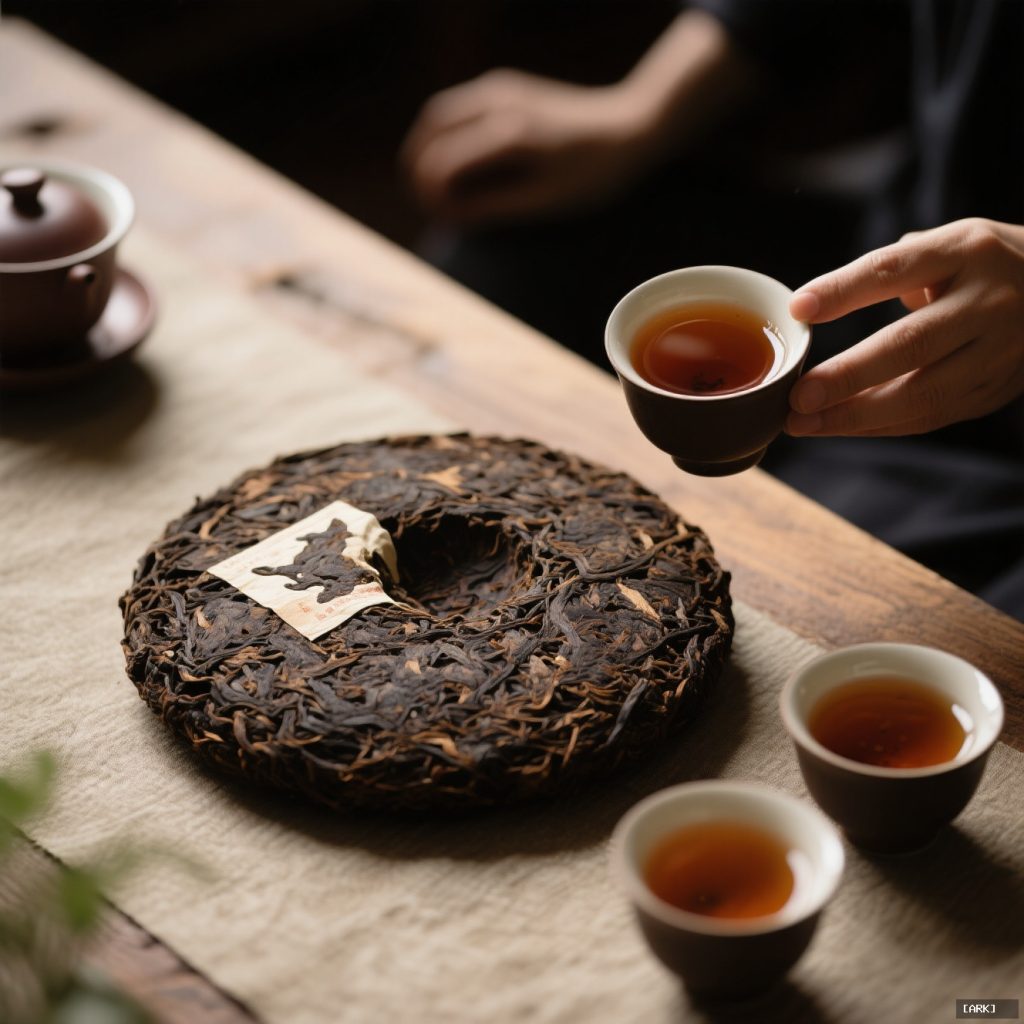
Chinese puerh tea is often celebrated for its age or rarity, but its most overlooked secret is its need for quiet. This fermented dark tea from Yunnan is a living product, and its process to your cupboard is a shock to the system. To taste its true character, you must first let it rest.
We’ve all been there. The eagerly awaited package arrives. You tear it open, pry a chunk from a beautifully wrapped cake, and prepare that first, ceremonial brew. The anticipation is palpable. Then you taste it. The flavor is muted, somehow hollow, or carries an unexpected sharp edge. Disappointment sets in. Is the tea flawed? Was the purchase a mistake? Almost certainly not. You’re likely tasting a tea in a state of profound fatigue.
TL;DR
- The Shock of the process: Why Travel Stuns Tea
- The Art of Recalibration: What Happens During Rest
- A Universal Principle: It’s Not Just for Aged Sheng
- The Listener’s Perspective: An Analogy from Sound
What this is (and isn’t)
Definition. Chinese puerh tea refers to the core ideas, techniques, and context people use to understand and practice it.
Scope. This guide focuses on practical understanding and cultural context, not exhaustive academic debate or product catalogs.
The Shock of the process: Why Travel Stuns Tea
To understand why rest is non-negotiable, picture the tea’s voyage. It begins in the humid, stable air of a storage facility in Kunming or Hong Kong. It’s then sealed, boxed, and subjected to days or weeks of vibration in trucks and cargo holds. It experiences dramatic pressure changes in flight and wild swings in temperature and humidity from warehouse to delivery van. For a product defined by delicate microbial ecosystems and volatile aromatic compounds, this is an ordeal.
Dr. Liu Zhonghua, a leading tea scholar at Hunan Agricultural University, notes in his research on post-fermented teas that the microbial communities responsible for puerh’s complexity are highly sensitive to environmental disruption. The physical agitation and pressure changes of shipping can force these microbes into a dormant state, effectively putting the tea’s flavor development on pause. Simultaneously, the jostling compresses the tea’s aromatic compounds, locking them away. The result is a brew that tastes “closed” or “flat.” It’s not bad; it’s simply in shock, much like a fine wine that has been vigorously shaken.
The Art of Recalibration: What Happens During Rest
Resting puerh is not about aging. Aging is a years-long process of active transformation. Rest is a short-term recovery. It’s the quiet period where the tea recovers its equilibrium and adapts to its new home.
Two primary processes occur during this crucial downtime. First, moisture redistribution. Compression during transit can create micro-climates within a tea cake—some spots damper than others. Left undisturbed in a stable environment, this moisture slowly and evenly redistributes throughout the leaves, creating a uniform platform for brewing.
Second, and more importantly, microbial reactivation. The fungi and bacteria (including beneficial species like Aspergillus niger and Blastobotrys adeninivorans, identified in a 2019 study in the International Journal of Food Microbiology) that drive puerh’s fermentation begin to wake up and resume their slow metabolic work. You aren’t waiting for new flavors to form. You’re waiting for the tea’s intended, existing profile to reassert itself. The damp earthiness of a ripe (shou) puerh will mellow and integrate. The fruity, floral high notes of a young raw (sheng) puerh will regain their clarity.
A Universal Principle: It’s Not Just for Aged Sheng
A common misconception is that only venerable, aged raw puerh requires this care. all puerh benefits from rest. The effect is perhaps most dramatic with complex, older sheng due to its intricate microbial life, but the principle applies universally to this category of fermented tea.
Freshly shipped ripe puerh often presents a more pronounced “wo dui” or pile-fermentation character—a distinct earthy, sometimes slightly damp aroma stemming from its accelerated fermentation process. A few weeks of rest allows these compounds to settle and harmonize with the deeper, sweeter base notes of the tea. Even a freshly compressed young cake, having endured the heat and pressure of the stone press, needs time to “cool down” and find its balance. Resting is the respectful acknowledgment that you are dealing with a living agricultural product, not an inert commodity.
The Listener’s Perspective: An Analogy from Sound
An insightful parallel exists audio engineering. Professionals speak of “ear fatigue.” After hours of critical listening and mixing, your perception dulls; you can no longer accurately judge balance or tone. The solution is to walk away, to step into silence, allowing your senses to reset.
Puerh experiences “leaf fatigue.” The vibrations and environmental chaos of travel are a form of physical and biochemical stress that dampens its expression. Placing it in a quiet, dark cupboard is the equivalent of giving your ears—or in this case, the tea—that essential silence. It’s a pause that allows the true signal to re-emerge from the noise of transit. As one seasoned collector in Taipei told me, “I don’t even look at a new tea for a month. It needs to forget its process before it can tell me its story.”
Your Practical Guide to the Puerh Sabbatical
Implementing a rest period is straightforward, requiring more patience than effort. Here is a field-tested protocol.
- Unwrap Immediately: Upon receipt, remove any non-breathable plastic shipping wrap. Your tea needs to breathe, not stew in trapped air.
- Choose Its Sanctuary: Place the tea, still in its porous paper wrapper or a breathable clay jar, directly in the spot where you plan to store it long-term. Consistency is key—avoid moving it around.
- Create Stability: Ideal conditions mirror those for long-term storage: a dark place with stable, moderate temperature (around 20-25°C or 68-77°F) and humidity (between 60-70%). A consistent environment is more important than hitting exact numbers.
- Embrace Absolute Neglect: This is the hardest part. Leave it utterly alone for a minimum of two weeks. Mark your calendar. Resist the temptation to open the wrapper and inhale deeply every few days; you’re disrupting the very microenvironment you’re trying to stabilize.
- The First Taste: After the initial rest, brew a session. Use water just off the boil and your standard parameters. Evaluate. If the tea still seems tight or discordant, grant it another two-week extension. Some cakes, especially tightly compressed ones or those from very different climates, may ask for a month or more.
Navigating Common Questions and Misconceptions
Can I Speed Up the Process?
No. Applying external heat or manipulating humidity to accelerate recovery is like trying to rush a convalescence. It risks “forcing” the tea, creating off-flavors or masking its true nature. Patience is not just a virtue here; it’s the only effective tool. The rest is a passive, natural recalibration.
Does This Mean I Should Only Drink Puerh in Yunnan?
Not at all. It simply means factoring rest into your purchasing and drinking timeline. This adaptive period is part of the tea’s magic. As it rests in your home, it slowly acclimates to your local environment—the subtle scent of your kitchen, the particular humidity of your region. In a very real sense, this is when the tea becomes your tea. A 2021 report by the Food and Agriculture Organization on traditional fermented foods highlights this adaptive relationship, noting how microbial communities interact with their local environment to create unique sensory profiles.
How Is Rest Different From Aging?
This is a critical distinction. Rest is short-term recovery; aging is long-term transformation. Rest lasts weeks to a few months and aims for stability and expression of current character. Aging is a years- or decades-long project aimed at deliberate, slow chemical change driven by microbial activity. In fact, you must properly rest a tea after travel before you can accurately assess its quality or aging potential. Judging a fatigued tea is like judging a person who has just run a marathon—you’re not seeing their true, steady state.
What About Broken Pieces or Daily Drinkers?
The principle scales down. Even a small sample or a broken-off fragment benefits from a few days in a stable, sealed container (like a small porcelain jar) to recover from being mailed. For a “daily drinker” cake you’re regularly accessing, the large portion resting in its storage container maintains equilibrium, while the week’s supply in your tea caddy is the active, ready-to-brew portion. This rotation system ensures you’re always drinking tea that has settled.
The Deeper Philosophy: Respecting the Leaf
Ultimately, the practice of resting puerh tea is about respect. It acknowledges that this is not a mere beverage but the product of sun, soil, human skill, and time. It treats the tea as a living document with a history that includes its process to you. By granting it this period of quiet, you move from being a passive consumer to an active participant in its story.
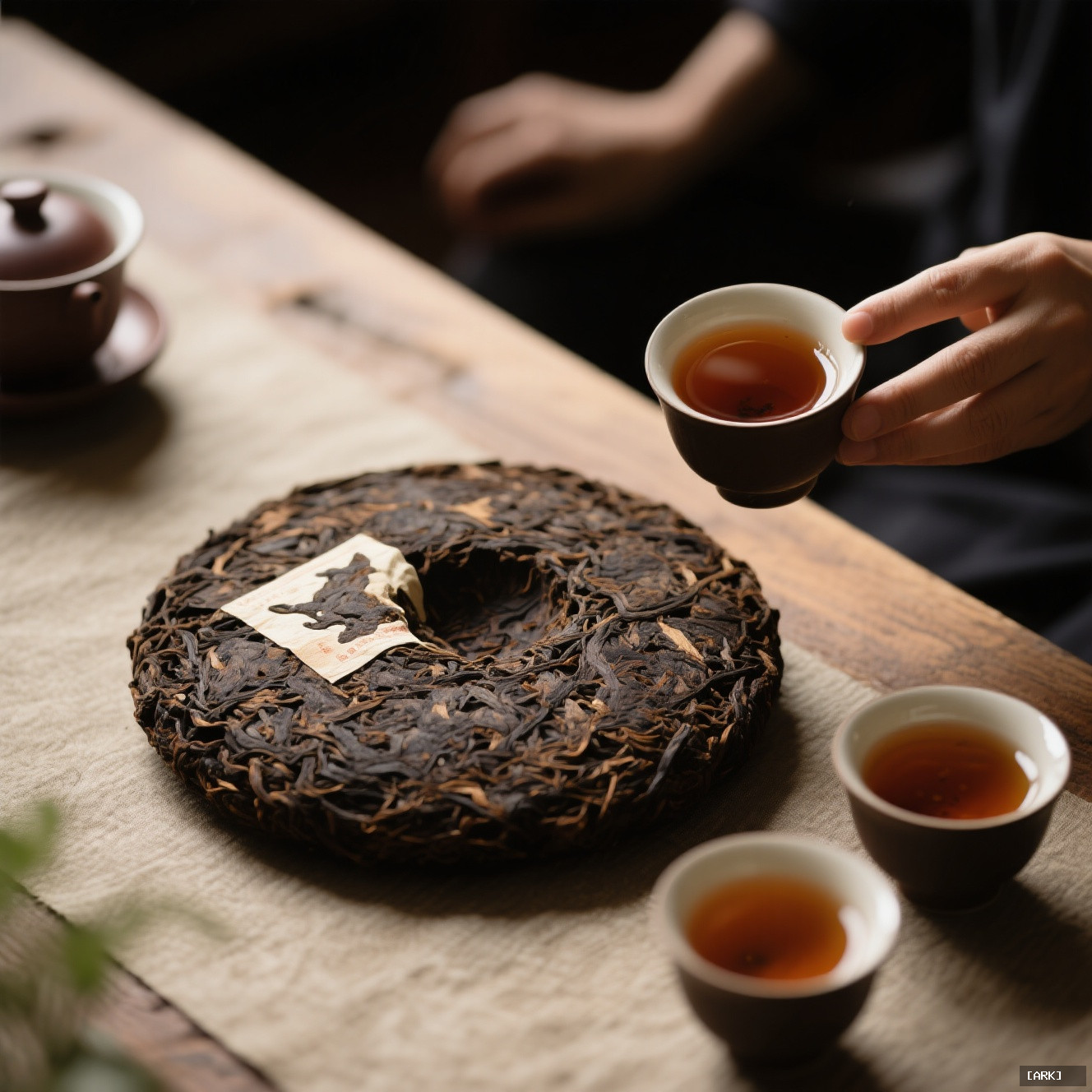
You allow the fermented tea from the mountains of Yunnan to gather itself, to shake off the dust of travel, and to finally speak in its true voice. When you finally sit down to that first proper session after the rest, the difference is often profound. The aromas are clearer, the flavors layered and distinct, the aftertaste lingering. It’s the taste of patience. It’s the reward for understanding that some of the best things in life—especially those wrapped in paper and packed with centuries of tradition—cannot be rushed.
Sources & Further Exploration
- Liu, Z., et al. (2018). “Microbial Succession and Metabolic Dynamics During the Fermentation of Dark Tea.” Journal of Agricultural and Food Chemistry. A detailed scientific look at the organisms that make puerh tea possible.
- Food and Agriculture Organization of the United Nations. (2021). Global Perspectives on Fermented Foods: Microbiota, Safety, and Tradition. Provides context for puerh within the wider world of fermented foods and their environmental interactions.
- Zhang, W., et al. (2019). “Impact of Storage Conditions on the Chemical Composition and Sensory Quality of Puerh Tea.” International Journal of Food Microbiology. Research examining how environmental factors directly influence the tea’s profile over time.
- The Puerh Tea Club. (2023). “Empirical Observations on Post-Transport Rest Periods.” A collective, crowd-sourced project by veteran drinkers documenting the effects of rest across hundreds of tea samples.
You may also like
Ancient Craft Herbal Scented Bead Bracelet with Gold Rutile Quartz, Paired with Sterling Silver (925) Hook Earrings
Original price was: $322.00.$198.00Current price is: $198.00. Add to cartAncient Craftsmanship & ICH Herbal Beads Bracelet with Yellow Citrine & Silver Filigree Cloud-Patterned Luck-Boosting Beads
Original price was: $128.00.$89.00Current price is: $89.00. Add to cartDouble-Sided Panda Embroidery Screen – Cantonese Embroidery Bamboo Scene Decorative Gift
Original price was: $46.70.$33.68Current price is: $33.68. Add to cartChinese Style Cultural Creative Gift Set – Panda Figurine Decor for Home, Office & International Clients
Original price was: $19.86.$17.20Current price is: $17.20. Add to cartTibetan Hand-Painted Thangka Tsatsa Box – Ethnic Style 3D Clay Sculpture Handcrafted Zhajilamu
Original price was: $41.00.$32.00Current price is: $32.00. Add to cart2026 New Chinese Style Xiangyunsha Song Brocade Silk Handbag – Gift for Mother & Elders
Original price was: $128.00.$115.00Current price is: $115.00. Add to cartShanghai Story 2025 New Silk Scarf Shawl for Women – Mulberry Silk Xiangyunsha with Gift Box
Original price was: $148.90.$136.90Current price is: $136.90. Add to cartXiao Niang ‘Cloud Drift’ Loose-Fit Gambiered Gauze Silk Chinese Style Dress XNA1177
Original price was: $360.00.$328.00Current price is: $328.00. Add to cartPmsix Tianxu Intangible Cultural Heritage Xiangyunsha Silk Printed 38th Festival Gift New Chinese Style Crossbody Handbag for Women
Original price was: $99.50.$94.50Current price is: $94.50. Add to cart























