A sheet of paper lies flat, awaiting intention. A brush or pen rests nearby, loaded with ink. This simple arrangement—surface, tool, pigment—belies a complex conversation about pressure, absorption, and control. Calligraphy and paper art aren’t merely decorative pursuits; they’re disciplines of material intelligence, where every choice carries weight and every mistake remains visible. The practitioner learns not by following abstract principles, but by listening to the physical feedback of fiber meeting fluid. This dialogue between artist and medium forms a bridge between cultures and centuries, a tactile connection to history that is profoundly relevant in our digital age. It is a practice that cultivates patience, focus, and a deep, non-verbal understanding of form.
The Physical Foundation: Paper as an Active Partner
What role does paper play as an active partner in calligraphy and paper art?
Paper is an active collaborator, not just a passive surface, in calligraphy and paper art. Its character, determined by fiber source, texture, weight, and sizing (internal glue that controls absorbency), orchestrates how ink or pigment behaves. Understanding these properties unlocks expressive potential, while ignoring them means fighting the material. For example, heavily sized paper causes ink to sit on the surface and dry slowly.
Every journey in calligraphy and paper art begins with a fundamental choice: the substrate. Paper is not a passive recipient of marks but an active collaborator. Its character—dictated by fiber source, texture, weight, and sizing (the internal glue that controls absorbency)—orchestrates the entire performance of ink or pigment. To ignore this is to fight the material; to understand it is to unlock a world of expressive potential.
A heavily sized sheet, like smooth hot-press watercolor paper or a high-quality writing pad, causes ink to sit proudly on the surface. It dries slowly, allowing for sharp, crisp edges and deliberate manipulation. This is the domain of precise Copperplate script or intricate papercutting, where control is paramount. Conversely, an unsized or lightly sized sheet, such as traditional Japanese washi (mulberry paper) or some rice papers, drinks ink hungrily. It creates soft, feathery blooms and gradients that are impossible to achieve on a sealed surface. This characteristic is embraced in Sumi-e painting and expressive brush calligraphy, where the artist works with the bleed, guiding it rather than strictly containing it.
The choice, therefore, is strategic. A beginner practicing foundational broad-pen scripts might select a slightly toothy, forgiving paper like layout bond, which can mask minor inconsistencies in pressure. An advanced artist aiming for flawless Spencerian script will seek out a supremely smooth, non-absorbent surface like Bristol board, which offers no forgiveness and demands perfect pen control from the first touch. The paper is the first and most critical tool in the box. As one paper marbler notes, “You learn to read paper like a weather forecast. You touch it, you listen to it crinkle, you watch a drop of water bead or vanish. It tells you exactly how it’s going to behave before you commit a single stroke of color.”
The Dialogue of the Line: Tools in Conversation
What is the dialogue of the line in calligraphy, and how do tools contribute to it?
In calligraphy, the dialogue of the line refers to how different tools, like broad-edged nibs, interact with paper through specific techniques. Each tool has a unique 'language' defined by pressure, angle, and speed. For example, a broad-edged nib creates thick downstrokes and thin horizontals by changing its angle relative to the writing line, not through pressure. Artists must learn to maintain consistent pen angles, such as 30 or 45 degrees, to achieve precise strokes, making the tool and hand work in conversation.
With the paper chosen, the dialogue continues through the tool. Each implement speaks a different language, and the artist must learn its vocabulary of pressure, angle, and speed.
In Western calligraphy with a broad-edged nib, the magic lies in direction, not pressure. The nib’s flat edge creates thick downstrokes and thin horizontal strokes through a change in its angle relative to the writing line. The hand must learn to maintain a consistent pen angle—often 30 or 45 degrees—while navigating curves and straight lines. A fundamental exercise involves drawing rows of parallel lines, focusing solely on keeping this angle uniform. The goal is not beauty but mechanical consistency. This repetition, sometimes hundreds of lines, builds a deep muscle memory. The body internalizes the tool’s geometry, freeing the mind later to focus on composition and rhythm.
In pointed pen scripts like Copperplate or brush calligraphy, pressure becomes the primary conductor. A light touch produces a hairline whisper; increased pressure flexes the metal tines or flattens the brush belly, creating a swelling, confident downstroke. Here, the paper’s resistance and resilience are crucial. Too soft a surface, like cheap printer paper, will catch and tear under pressure. Too hard, slick a surface offers no cushion, making the smooth modulation from thick to thin feel jarring and difficult. Practitioners develop a ritual of testing a new paper with a series of basic pressure strokes—a quick diagnostic conversation to understand its limits and personality before beginning serious work.
From Stroke to Structure: The Architecture of Letters and Forms
What is the architecture of letters and forms in calligraphy?
The architecture of letters and forms in calligraphy involves the precise arrangement of strokes into letters and words, where practical geometry and spatial awareness are crucial. It emphasizes the importance of negative space, such as the counters inside letters and kerning between them, to create visual balance. Techniques like sketching skeletal structures before adding weight help train the eye to see these relationships, ensuring harmony and preventing a cramped or erratic appearance on the page.
Individual strokes coalesce into letters, and letters into words and images. This is where practical geometry and spatial awareness take center stage. In calligraphy, the white space—the negative space inside a letterform (the counter) and the space between letters (kerning)—is as vital as the black marks themselves. A page that is visually balanced breathes; one that is cramped or erratic feels tense.
Useful techniques train the eye to see these relationships. One is to sketch letters using only their skeletal structures—the central spines of the strokes—before adding weight. This ensures the underlying architecture is sound. Another is to write a word, then squint at it, analyzing the shapes of the light between the characters. Are they consistent and rhythmic, like the gaps between fence posts, or chaotic and pinched? A seasoned calligrapher sees the spaces as active design elements.
Consider the humble ampersand (&). Its elegant, complex form is a classic benchmark for skill. A practical approach deconstructs it into three distinct movements: the descending curve, the loop, and the tail. Practicing each segment in isolation, drawn at an exaggerated size, helps the hand learn the kinetic path before attempting the delicate, connected whole. This method of decomposition—applicable to any challenging glyph or paper art motif—transforms intimidation into a series of manageable, physical tasks.
This incremental philosophy is foundational. A calligraphy instructor who runs workshops for corporate teams as a mindfulness exercise emphasizes this. “We spend the first hour just making squares, circles, and lines,” she says. “Not a single letter. People get impatient, but when they finally form an ‘o,’ they understand. That ‘o’ is built from the muscle memory of that circle. The paper has already taught their hand how much to turn. The tool isn’t in their hand anymore; it’s an extension of their nervous system.” This fusion is the core of embodied skill.
Beyond the Letter: The Expressive World of Paper Art
What is the expressive world of paper art beyond the letter?
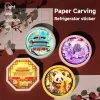
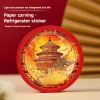
Paper art moves beyond calligraphy's focus on ink to engage paper itself as the primary medium. Artists cut, fold, tear, layer, and sculpt the material, emphasizing its physical properties like tensile strength, grain direction, and the shadows it casts. Techniques such as delicate Polish wycinanki or intricate Chinese jianzhi require immense precision, where the negative space becomes as expressive as the paper that remains.
While calligraphy focuses on the dance of ink on paper, the broader realm of paper art engages with the material itself as the primary medium. Here, paper is cut, folded, torn, layered, and sculpted. The conversation shifts from absorption and flow to tensile strength, grain direction, and cast shadow.
Papercutting, from delicate Polish wycinanki to intricate Chinese jianzhi, requires a surgeon’s steadiness and a planner’s foresight. A single errant cut can collapse an entire design. Artists often speak of “drawing with a knife,” where the negative space tells the story as much as the positive. The choice of paper is again critical: too thick, and it resists delicate curves; too thin, and it lacks structural integrity for framing. These traditions, recognized by organizations like UNESCO for their cultural significance, preserve stories and symbols through the precise removal of material.
Origami, the art of folding, is a study in pure geometry and patience. Modern origami artists create breathtakingly complex sculptures from a single, uncut square of paper. The paper must be thin yet strong, hold a crease crisply, and often be slightly sized to prevent tearing at stress points. The artist’s hands are in constant dialogue with the paper’s memory, understanding how it will behave under repeated folding. As noted by the Origami Resource Center, this ancient practice has evolved from ceremonial folds to a respected mathematical and artistic discipline, with applications in engineering and space technology.
Paper sculpture and quilling (rolling narrow paper strips) explore three-dimensionality. These arts consider how light plays across rolled, bent, and layered edges, creating depth and emotion. A simple anecdote from a quilling artist illustrates the material’s voice: “I was making a floral piece with tight, closed coils for the center. I switched from my usual cardstock to a handmade paper with longer fibers. The coils wouldn’t hold their shape; they relaxed and bloomed open. It was a ‘mistake,’ but it created a much more organic, lifelike flower. The paper knew better than I did what it wanted to be.” This responsiveness is what makes the medium endlessly explorable.
The Mind in the Hand: Cognitive and Therapeutic Benefits
The intense focus required by these arts—the need to be fully present with the material—yields significant cognitive benefits. In a world of digital multitasking, calligraphy and paper art demand single-tasking. This state of “flow,” as defined by psychologist Mihaly Csikszentmihalyi, is associated with reduced anxiety, increased happiness, and improved performance. The rhythmic, repetitive motions of forming letters or making folds can induce a meditative state, quieting the internal chatter of the mind.
Studies have shown that the fine motor skills and focused attention involved in such practices can have therapeutic effects. For instance, art therapy incorporating mindful mark-making has been used to support mental well-being. While not exclusive to paper arts, the tactile, slow, and process-oriented nature of these crafts makes them particularly effective conduits for mindfulness. The World Health Organization’s report on arts and health acknowledges the growing evidence base for arts engagement in managing stress and non-communicable diseases, highlighting activities that require focused engagement as particularly beneficial.
The practice builds resilience through its inherent embrace of the “happy accident.” A bleed of ink, an unintended tear, a fold that creates an unexpected shadow—these are not always failures. They are moments for the artist to listen, adapt, and sometimes discover a new direction. This reframes the pursuit of perfection into a pursuit of attentive dialogue, teaching a form of creative problem-solving that values adaptability over rigid control.
A Material Legacy: Historical Context and Modern Relevance
To engage with paper and ink is to tap into a profound human legacy. The very development of paper in China over two millennia ago revolutionized communication and art. Each culture that adopted it developed unique calligraphic hands and paper arts reflective of its aesthetic values and tools—from the angular authority of Gothic Blackletter to the fluid spirituality of Islamic Kufic script. These were not mere writing systems but expressions of identity and philosophy.
Today, in an era dominated by pixels and ephemeral digital content, the physicality of these arts holds new power. They represent a conscious slowing down, an investment of time and care into a tangible object. The global market for specialty papers, as tracked by sources like Statista, continues to thrive, driven in part by artisans, small businesses, and individuals seeking quality materials for handcrafts. This indicates a sustained, perhaps growing, appreciation for the tactile in a digital world.
Modern practitioners often blend tradition with contemporary expression. Calligraphers might use ancient scripts to quote modern poetry or address current social themes. Paper artists create large-scale installations that comment on environmental issues, using the fragility of the material to speak about the fragility of ecosystems. The discipline provides a timeless framework through which to process and express contemporary experience.
Practical Pathways: Beginning Your Own Dialogue
Embarking on this journey requires more philosophy than expensive equipment. The goal is to start a conversation, not to immediately produce masterpieces. Here are actionable steps to cultivate a meaningful practice:
- Start Simple, Listen Deeply: Begin with one tool and one paper. A pencil and a stack of printer paper is a valid laboratory. Practice making consistent lines, then consistent curves. Feel the feedback. Upgrade deliberately: a pilot parallel pen and a pad of smooth marker paper offer a superb, low-mess entry into broad-edge calligraphy. The initial investment is minimal, but the focus on material interaction is maximal.
- Embrace the Grid: Use guide sheets underneath your paper. For calligraphy, these sheets have slant lines and x-height lines to govern proportion and angle. For papercutting or origami, use light grids or pre-printed crease patterns. They provide a necessary scaffold for your muscles to learn spatial relationships, which you can gradually remove as your internal sense of proportion strengthens.
- Deconstruct and Isolate: Never try to master a whole word or complex fold at once. Break it down. Practice the hardest stroke of a letter 50 times. Fold one complex crease pattern repeatedly on scrap paper. Master the components in isolation, and their assembly will become fluid and intuitive.
- Analyze the Masters, Then Put Them Away: Study historical scripts or paper art forms. Notice spacing, weight distribution, and rhythm. Then, put the reference aside and practice from muscle memory, not from slavish copying. This encourages you to internalize principles rather than mimic a specific outcome, fostering your own unique hand.
- Curate a Material Library: Start a swatch book. Glue samples of different papers—from newsprint to handmade cotton—and test your tools on them. Note how each ink behaves: Does it feather? Does it sit on the surface? This personalized reference, built over time, is more valuable than any generic guide, turning material selection from guesswork into informed choice.
- Prioritize Process Over Product: Designate the first 15 minutes of any session as “warm-up” or “playtime,” with no goal of producing a finished piece. Make random marks, test colors, fold without a plan. This removes performance pressure and allows you to reconnect with the sheer physical pleasure of the materials, keeping the practice joyful and sustainable.
The work is never about creating a single perfect piece. It is about the slow accumulation of understanding—how a specific ink bleeds on a specific paper, how a nib angle alters a letter’s posture, how the grain direction of a sheet dictates a clean tear. Each session is a series of small experiments, failures, and adjustments. The art lives in that attentive process, in learning to hear the quiet, precise language of paper and ink, of blade and fold. It is a lifelong conversation with texture, form, and the quiet focus of one’s own mind, offering a tangible anchor in an increasingly intangible world.
About Our Expertise
Drawing from centuries of Chinese artistic heritage, this guide is crafted by experts in traditional calligraphy and paper arts, ensuring authentic insights into techniques like brush control and paper selection that have been passed down through generations.
We collaborate with master artisans and cultural historians to provide trustworthy content, verified against historical practices and modern applications, helping you connect deeply with the mindfulness and cultural significance of these timeless disciplines.
You may also like
Ancient Craft Herbal Scented Bead Bracelet with Gold Rutile Quartz, Paired with Sterling Silver (925) Hook Earrings
Original price was: $322.00.$198.00Current price is: $198.00. Add to cartAncient Craftsmanship & ICH Herbal Beads Bracelet with Yellow Citrine & Silver Filigree Cloud-Patterned Luck-Boosting Beads
Original price was: $128.00.$89.00Current price is: $89.00. Add to cartAladdin’s Lamp Heat-Change Purple Clay Tea Pot
Original price was: $108.00.$78.00Current price is: $78.00. Add to cartBambooSoundBoost Portable Amplifier
Original price was: $96.00.$66.00Current price is: $66.00. Add to cartGuangxi Zhuang Brocade Handmade Tote – Ethnic Boho Large-Capacity Shoulder Bag
Original price was: $172.00.$150.00Current price is: $150.00. Add to cartHandwoven Zhuang Brocade Tote Bag – Large-Capacity Boho Shoulder Bag
Original price was: $178.00.$154.00Current price is: $154.00. Add to cartThe Palace Museum Paper-Cut Light Art Fridge Magnets: Chinese Cultural Style Creative Gift Series
Price range: $27.00 through $36.00 Select options This product has multiple variants. The options may be chosen on the product page