
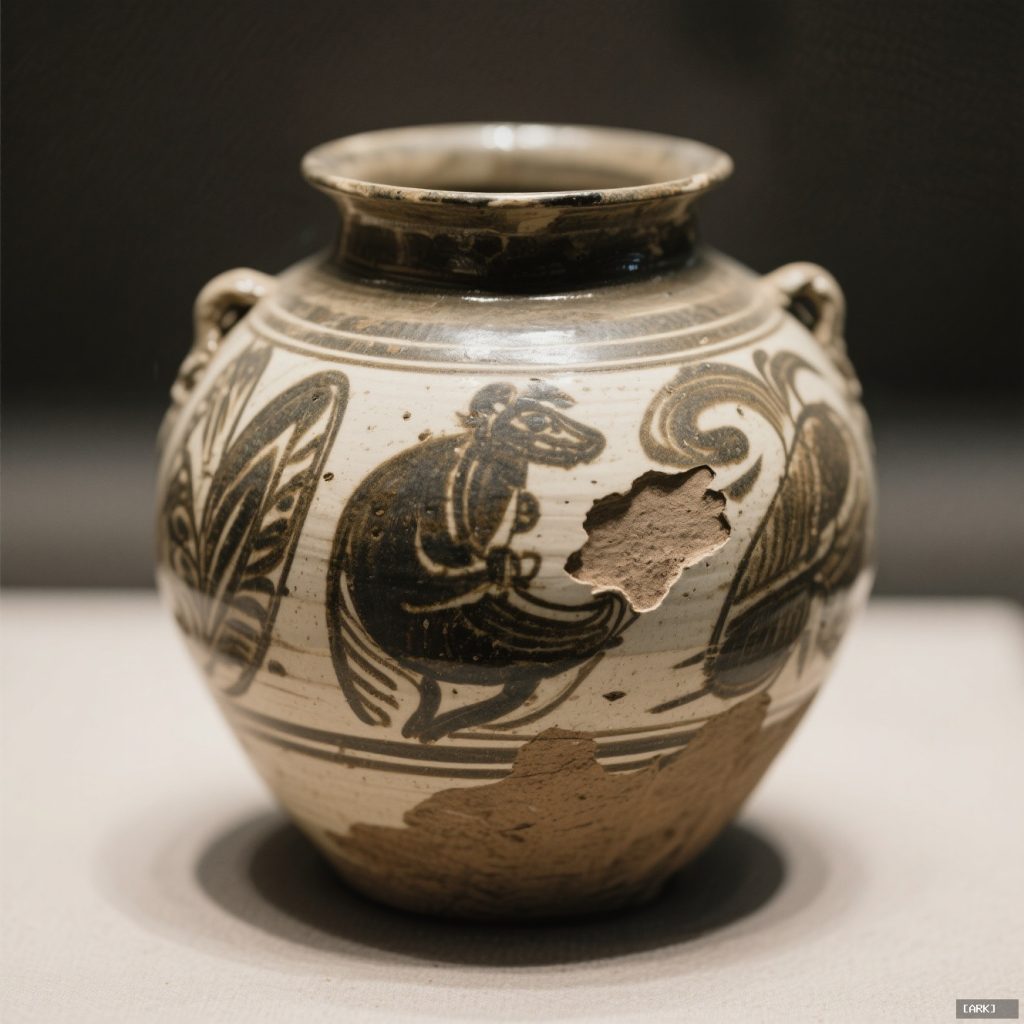
The history of Chinese pottery is a story of controlled accidents and pragmatic solutions, not a serene evolution of art. Its development was driven by urgent needs for preservation, communication, and state power, with beauty often a fortunate byproduct.
TL;DR
- The Functional Genesis of Porcelain
- When Political Decree Shapes Aesthetic Form
- Ceramics on the March: The Unsung Military Technology
- Clay Tablets: Pottery as Pre-Paper Data Storage
What this is (and isn’t)
Definition. Chinese pottery history refers to the core ideas, techniques, and context people use to understand and practice it.
Scope. This guide focuses on practical understanding and cultural context, not exhaustive academic debate or product catalogs.
The Functional Genesis of Porcelain
We often picture Tang dynasty porcelain as the pinnacle of artistic achievement, those serene white vessels that seem to capture moonlight. But their origin was anything but delicate. High-fired porcelain emerged from a pressing, logistical need. As the Tang empire expanded its trade networks, merchants required containers that could protect precious commodities—tea, spices, medicinal herbs—on grueling journeys across deserts and oceans. Porous earthenware wouldn’t do; it allowed aromas to escape and contaminants to seep in.
The breakthrough was a material that was vitrified, non-porous, and remarkably strong. Its whiteness was initially a side effect of using refined kaolin clay, but it became a functional advantage: a pure white interior showed contamination instantly. A 2021 UNESCO report on ancient trade technologies notes that the durability of Chinese porcelain directly enabled the long-distance transport of perishable goods, reshaping global commerce. The aesthetic refinement, the delicate painting and flawless glazes we admire, came later. Artisans exploited a material that was invented to solve a problem of preservation.
When Political Decree Shapes Aesthetic Form
If you wander through a museum’s Ming dynasty gallery, the sea of blue-and-white porcelain can feel like a natural, inevitable flowering of style. Look closer. That uniformity wasn’t born from collective artistic inspiration; it was mandated from the top. The iconic Jingdezhen wares of the Ming era exploded in popularity because the emperor established a monopoly on imported cobalt, the mineral that produced that vivid sapphire blue.
State workshops then standardized forms, patterns, and production techniques. These pieces weren’t primarily for domestic enjoyment; they were diplomatic currency, manufactured as tributary gifts to solidify alliances and project imperial power. As ceramic art evolution goes, this was a case of style as policy. The kilns at Jingdezhen became a sprawling, state-controlled industrial complex, their output a direct expression of political will. The British Museum’s curators point out that the famous “dragon and phoenix” motifs seen on so many Ming pieces were strictly regulated symbols of the emperor and empress, their use forbidden to the general populace.
Ceramics on the March: The Unsung Military Technology
Everyone knows the Terracotta Army—those thousands of silent, clay soldiers guarding the First Emperor’s tomb. They are the spectacular exception. The mundane, daily link between pottery and Chinese warfare is far more revealing. An army, as the ancient strategist Sun Tzu knew, marches on its stomach. To feed thousands of men, you need reliable storage.
Qin and Han dynasty campaigns were enabled by mass-produced, standardized pottery jars for grain, salt (essential for preserving food), and water. These weren’t art objects; they were logistical equipment. Kilns would often be established near military outposts or follow the path of campaigns. Later, the chemical properties of certain high-fired ceramics made them ideal vessels for early gunpowder experiments and grenades. Think of the humble pot not as a vase, but as a fuel canister, a ration container, a component in an arsenal. Its role was foundational to expansion and control.
Clay Tablets: Pottery as Pre-Paper Data Storage
Long before bamboo scrolls or paper, ancient pottery traditions served a critical administrative function: data storage. In the Neolithic Liangzhu culture or the early Bronze Age, pot marks, notches on shards, and stamped inscriptions on vessel shoulders formed a durable record-keeping system. A jar might be marked to indicate a specific grain tax quota. A series of tallied shards could track population counts.
In this context, a broken pot was more than a household accident; it was a corrupted file. Archaeologists have found that vessel shapes often coded their bureaucratic purpose. A wide-mouthed *guan* jar for bulk storage sent to a state granary differed subtly from a similar jar used locally. These clay artifacts were the hard drives of their day, their forms and marks encoding the information needed to manage complex, early states. The Journal of Archaeological Science published a 2018 study analyzing these markings, concluding they represent “a sophisticated, region-wide system of administrative control predating written script.”
The Global Ballast: How Pottery Fueled the Silk Road
Here’s a tangible image: a Silk Road caravan heading west from Chang’an. The camels are laden with silks and lacquerware, but also with heavy, carefully packed ceramic jars. On the outbound process, these ceramics acted as ideal ballast, stabilizing the load. Upon arrival, they were traded or sold. What began as economic filler became a premium product.
Chinese pottery, especially porcelain, became a global obsession precisely because it traveled so well. Its strength ensured survival, and its exotic beauty created demand. From the Philippines to East Africa, shipwrecks like the Belitung wreck off Indonesia reveal cargoes where ceramics were the surviving, quantifiable evidence of trade routes. They weren’t just commodities; they were cultural ambassadors. A celadon-glazed bowl found in Mesopotamia carried with it the aesthetic ideals of the Song dynasty, its jade-like color prized abroad for reasons the original potter may never have imagined.
Reading an Ancient Piece: A Practical Guide
Forget the glaze for a moment. To understand an ancient pot, you need to think like its maker and its user.
- Examine the base and interior. Look for spiral throwing marks from a fast wheel, or the rough scars from firing supports. These reveal production speed and method—was this a quickly made utilitarian piece or a carefully finished object?
- Ask what it held, not just how it looked. Form follows function. A narrow neck was for sealing in liquids. A broad, flat base was for stability in a ship’s hold. A lidded box was for secure storage.
- Heft it in your mind. Consider its weight and balance. Was it designed for a settled household shelf, or was it shaped for easy stacking in a merchant’s cart?
- Look for repair marks. Ancient staples or drill holes for a mend, known as *kintsugi* in Japan, show this was a valued utilitarian object. Its life was extended because it was useful, not just beautiful.
Untangling Common Threads
Is “china” the same as porcelain? In modern parlance, yes. But the term historically refers specifically to the high-fired, vitrified, translucent ceramic body perfected in China. The name itself cemented the material’s geographic origin in the global imagination, proof of its impact.
Why is celadon so enduringly famous? Its soft, gray-green color was adored for its resemblance to jade, a stone of immense cultural and spiritual significance. But its practical advantage was durability. The iron-based glaze formula was forgiving, fusing well with different regional clays and hiding impurities. It was a robust, cost-effective finish that became synonymous with elegance.
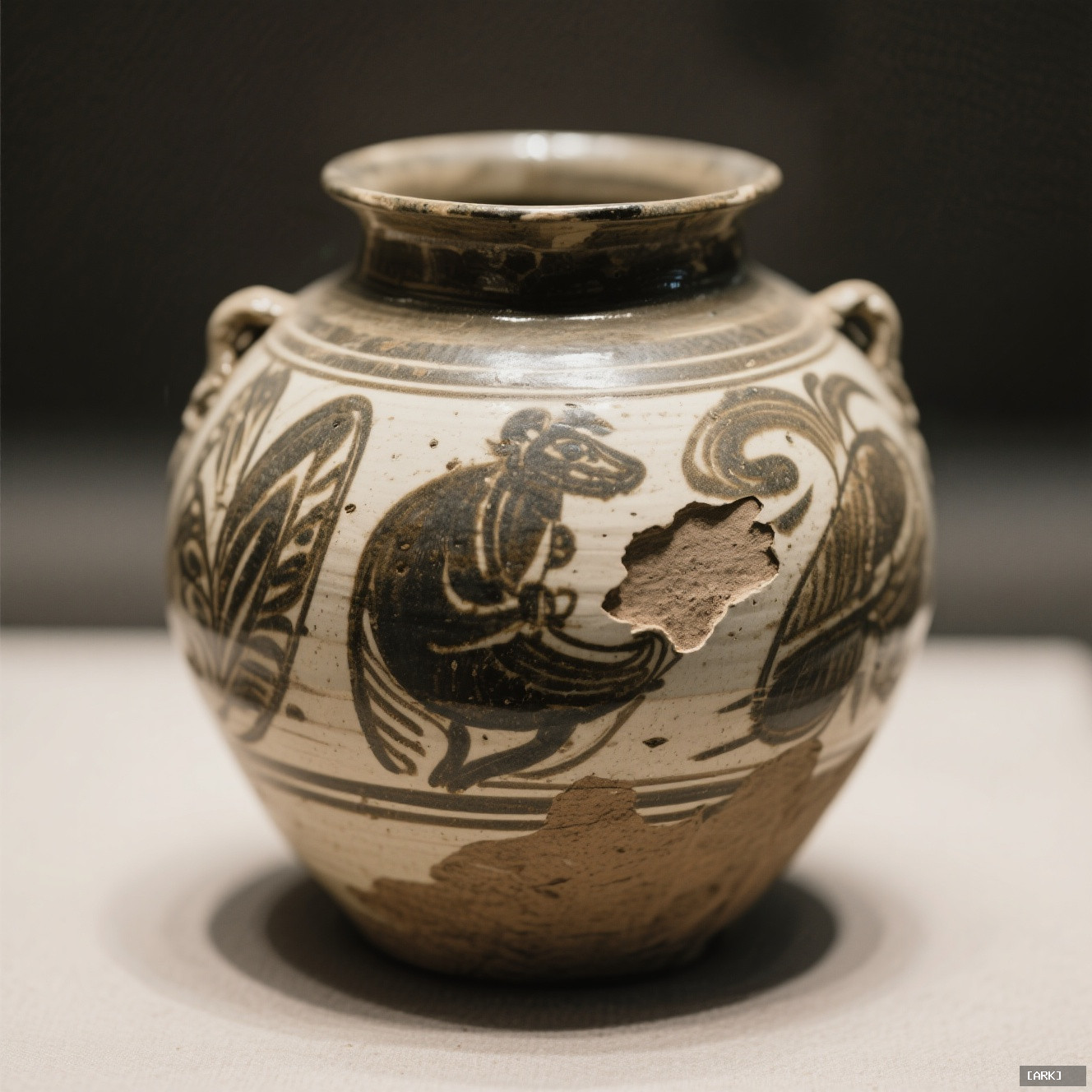
What was the real driver of innovation? While individual artistry played a role, the major leaps in Chinese pottery history—the development of true porcelain, the standardization of styles, the scaling of production—were consistently driven by external pressures: trade demands, state control, and logistical necessity. The art flourished within the constraints defined by need.
Deeper Dives
- Metropolitan Museum of Art: Chinese Ceramics – An essential technical and chronological overview, placing objects in clear historical context.
- British Museum: China & South Asia Gallery – Excellent for seeing how ceramics interacted with other materials like bronze, jade, and textiles.
- Kerr, Rose. Chinese Ceramics: Porcelain of the Qing Dynasty 1644-1911. – A detailed look at the later imperial period, showing how state kiln management evolved.
- University of Washington: Porcelain Technology – A clear, accessible explanation of the material science breakthroughs behind the ceramic art evolution.
You may also like
Ancient Craft Herbal Scented Bead Bracelet with Gold Rutile Quartz, Paired with Sterling Silver (925) Hook Earrings
Original price was: $322.00.$198.00Current price is: $198.00. Add to cartAncient Craftsmanship & ICH Herbal Beads Bracelet with Yellow Citrine & Silver Filigree Cloud-Patterned Luck-Boosting Beads
Original price was: $128.00.$89.00Current price is: $89.00. Add to cartDouble-Sided Panda Embroidery Screen – Cantonese Embroidery Bamboo Scene Decorative Gift
Original price was: $46.70.$33.68Current price is: $33.68. Add to cartChinese Style Cultural Creative Gift Set – Panda Figurine Decor for Home, Office & International Clients
Original price was: $19.86.$17.20Current price is: $17.20. Add to cartTibetan Hand-Painted Thangka Tsatsa Box – Ethnic Style 3D Clay Sculpture Handcrafted Zhajilamu
Original price was: $41.00.$32.00Current price is: $32.00. Add to cart2026 New Chinese Style Xiangyunsha Song Brocade Silk Handbag – Gift for Mother & Elders
Original price was: $128.00.$115.00Current price is: $115.00. Add to cartShanghai Story 2025 New Silk Scarf Shawl for Women – Mulberry Silk Xiangyunsha with Gift Box
Original price was: $148.90.$136.90Current price is: $136.90. Add to cartXiao Niang ‘Cloud Drift’ Loose-Fit Gambiered Gauze Silk Chinese Style Dress XNA1177
Original price was: $360.00.$328.00Current price is: $328.00. Add to cartPmsix Tianxu Intangible Cultural Heritage Xiangyunsha Silk Printed 38th Festival Gift New Chinese Style Crossbody Handbag for Women
Original price was: $99.50.$94.50Current price is: $94.50. Add to cart























