
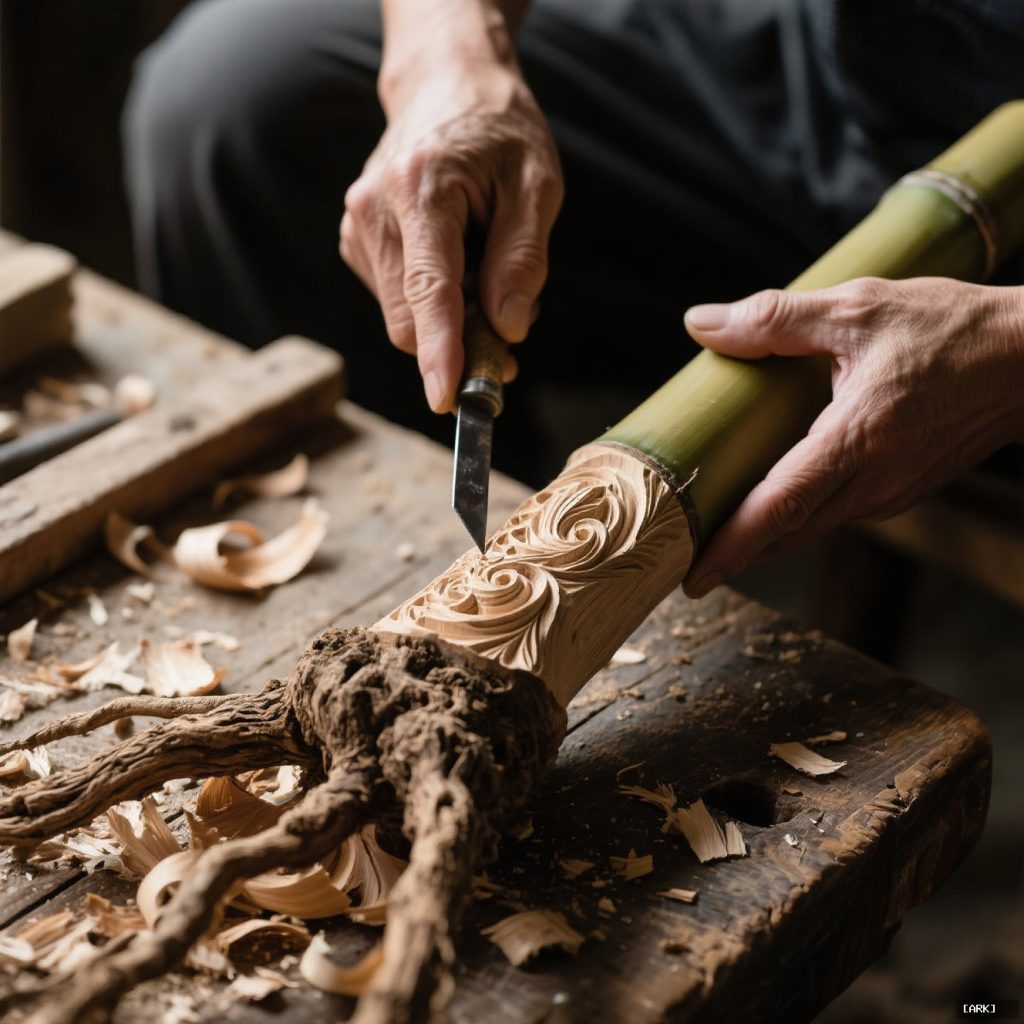
Bamboo root carving art is emerging as a profound response to our digital age. This ancient craft offers a tangible, slow-made alternative to our screen-saturated lives.
You find it not in loud galleries, but in quiet studios and mindful spaces. It’s the art of transforming a gnarled, earthy bamboo root into a sculpture that feels both discovered and made. The process is a patient dialogue, not a forceful imposition. Artists today are often guided more by the root’s own voice—its twists, cracks, and history—than by a predetermined design. This shift from ornate tradition to raw, organic form is what makes contemporary bamboo sculpture so compelling. It feels less like decoration and more like a held piece of natural history.
The Quiet Resurgence: Why Now?
Our world is smooth, flat, and disposable. Our phones are replaced yearly, our furniture assembled from particleboard, our entertainment streamed from a cloud. We are rich in pixels but poor in texture. Bamboo root carving art arrives as a quiet antidote to this reality.
It is an object with undeniable provenance. You can trace its story from the soil to your shelf. Every knot records a season of growth; every hollow speaks of resistance. In an era of algorithmic perfection, the imperfect, tactile reality of a bamboo sculpture holds a new kind of luxury. Collectors aren’t just acquiring a product. They are connecting with a timeline that cannot be accelerated—the slow growth of the plant, the patient hours of the carver’s hand. This art demands a different pace of appreciation. You don’t just look; you feel. You hold weight in your hands. You follow a grain line with your finger. It is a sensory restoration.
The Evolving Aesthetic: From Carving to Revealing
For centuries, bamboo root carving was a showcase of technical virtuosity. Artists would painstakingly sculpt intricate figures of deities, animals, or scholars from the chaotic mass of a root. The goal was to master the material, to impose a highly detailed vision upon it. While this tradition continues, a significant contemporary movement is heading in the opposite direction.
The modern approach is subtler. Think of it as archaeology rather than architecture. The artist’s role is to reveal the form already sleeping within the root. They might carve just enough to suggest a figure emerging from the wood, or polish one section to contrast with the raw, bark-covered gnarl. The focus is on texture, negative space, and the inherent beauty of the material’s flaws. A crack becomes a river on a landscape. A burl transforms into a mountain.
This results in wood carving art that feels like a collaboration. The artist brings intention and skill, but the bamboo root brings its own history and character. The final piece is a conversation. It celebrates the root’s “material memory”—the physical record of its life spent battling wind, seeking water, and enduring the weight of soil. This aesthetic resonates deeply with modern design sensibilities that value wabi-sabi, authenticity, and organic form. It’s less about what the artist can make the root become, and more about what the root wants to be.
The Meditative Core: Craft as Wellness
The appeal of bamboo root carving art extends beyond the visual. It connects to a growing desire for mindful, hands-on practices. For the maker, the craft is inherently meditative.
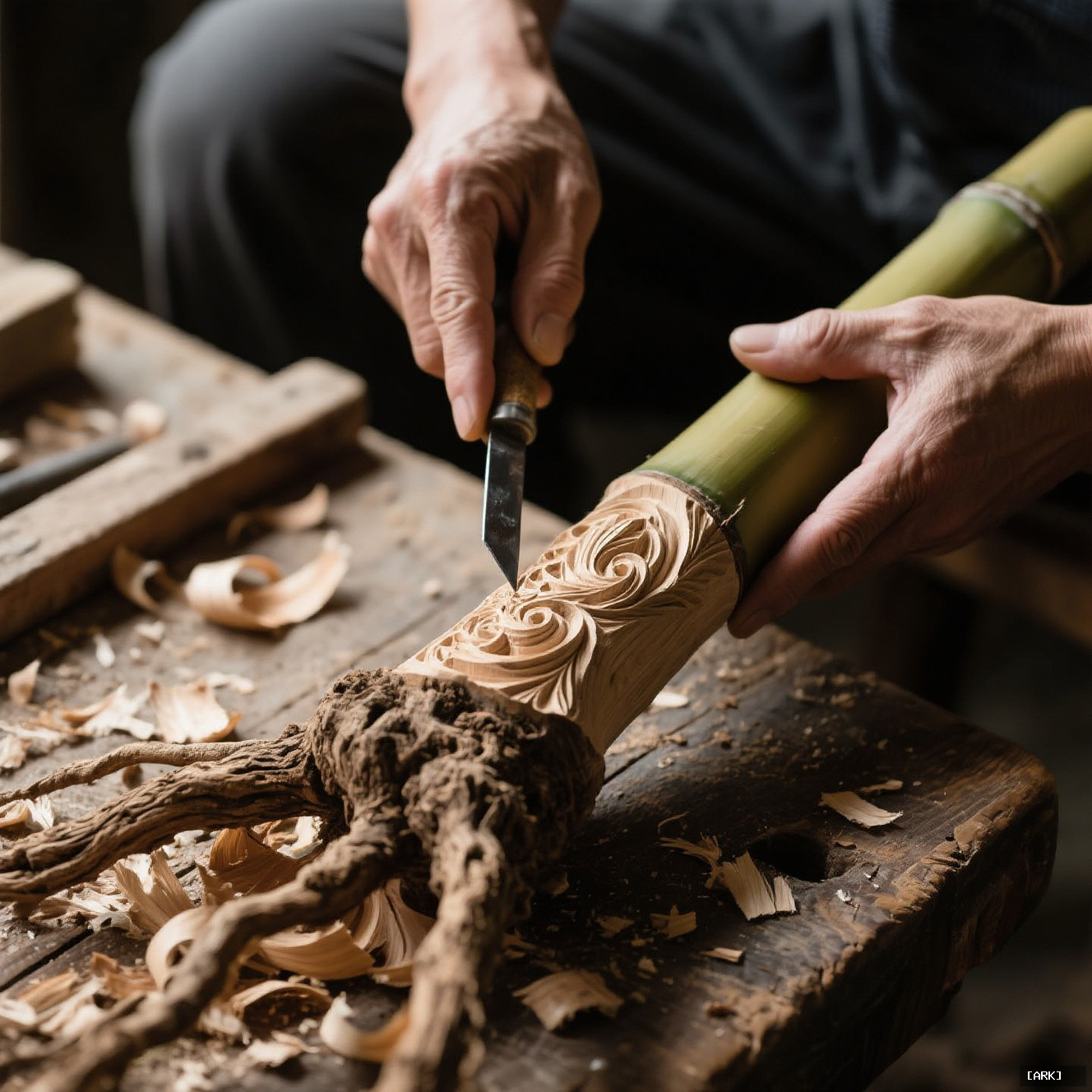
Imagine the process. The carver sits with a single root, a set of small knives, and immense patience. The work is repetitive and focused. The sound is a soft scraping. The mind must be present, attending to the feedback of the tool against the fibrous material. A wandering thought can lead to a slip that mars weeks of work. This state of “flow” or active meditation is a known antidote to anxiety and distraction. It’s a wellness practice built not on an app, but on tangible, incremental progress.
For the owner, the wellness connection is sensory. In a visually overwhelming world, a bamboo sculpture engages a different sense. It invites touch. Running your fingers over the contrast between a silky-smooth carved hollow and the rough, untouched bark is a grounding ritual. It pulls you into the present moment through texture. Placed in a home or office, it serves as a tactile anchor—a quiet reminder of natural rhythm and human patience amidst the digital noise. It’s an object that doesn’t demand your attention but rewards your presence.
The Silent Challenge: Dancing with Material Memory
The greatest challenge in bamboo root carving art isn’t learning to handle a chisel. It’s learning to listen. Bamboo root is not a passive, stable medium like a block of lime wood. It is a dynamic material, still holding the stresses and energies of its life as part of a living plant.
This “material memory” is the craft’s most humbling teacher. An artist might spend days carefully shaping a form, only to hear a faint *crack* overnight. Internal tensions, released by the carving process, have caused the root to split. The project is ruined. This risk forces a profound respect. The artist must develop a feel for the root’s internal structure, its grain direction, its points of weakness. They learn to work *with* these forces, not against them. A cut is made not just to remove material, but to gently relieve pressure. This silent, intuitive dialogue is the true core of the art form. It is a constant reminder that the artist is not in full control, but is a partner in revelation. Mastery means understanding when to carve and when to let be.
The Modern Marketplace: From Tourist Trinket to Design Icon
The context for bamboo root carving has transformed. Once relegated to tourist market stalls as mass-produced souvenirs or confined to the hushed halls of traditional art galleries, it now occupies a new and vibrant space.
You’ll find these pieces in high-end interior design studios, where a single, dramatic root sculpture serves as the organic heart of a minimalist room. They appear in curated online stores that emphasize story and sustainability. Boutique hotels and wellness retreats use them as focal points to create an atmosphere of calm and natural connection. The narrative has shifted from “exotic craft” to “mindful object.”
This shift is powered by transparency. For today’s audience, the story of the object’s creation is nearly as important as the object itself. Artists and sellers now routinely document the process: the sustainable harvesting of the root (often from managed groves or using naturally fallen plants), the slow drying process, the stages of carving, the final oiling. This documentation satisfies a deep cultural craving for authenticity and honest labor. People want to know the origin of what they own. They want to see the hands that made it.
How to See a Bamboo Root Carving: A Collector’s Eye
Evaluating a piece goes beyond a simple “like” or “dislike.” It’s about understanding the conversation between artist and material. Use this checklist to deepen your appreciation.
- Balance is Key: Examine the relationship between carved surfaces and natural ones. Does the artist’s intervention feel respectful, or overwhelming? Is there a harmonious dialogue between the worked and the wild?
- The Test of Touch: If possible, feel the texture. Do the transitions from smooth to rough feel intentional? Do they guide your hand on a process around the form?
- Seek Stability: Look closely for hairline cracks, especially near carved areas. Fresh cracks can indicate the root was carved before it was fully dried or that internal tension wasn’t respected. A stable piece has endured this test.
- View in the Round: Walk around it. A great bamboo sculpture offers interest from every angle. It should feel complete as a three-dimensional form, not just a front-facing image.
- Foundation Matters: Don’t ignore the base. Is it a clumsy, tacked-on block of unrelated wood? Or is it integrated, perhaps using a section of the same root, supporting the sculpture’s form and enhancing its natural posture?
Rooted in Reality: Common Questions Answered
How do I care for a bamboo root carving?
It requires a stable environment. Avoid direct sunlight, which can fade and dry it excessively. Keep it away from radiators, air conditioners, or damp spaces. An occasional, light application of a natural oil like camellia or tung oil can nourish the wood and enhance its luster. Dust it gently with a soft brush.
Is this a sustainable art form?
It can be, but vigilance is required. The sustainability lies in the source. Ethical artists and suppliers use roots from controlled bamboo harvesting, dedicated management programs, or collect material that is already damaged or fallen. The best practice ensures the bamboo grove remains healthy and productive. Always ask about the origin of the material.
What tools shape this art?
The toolkit is a blend of old and new. Traditional gouges, chisels, and saws handle the initial rough shaping. The fine work of root engraving, however, is done with an array of small, razor-sharp knives, hooked tools, and modern rotary tools with delicate bits. Each artist develops a personalized set for their specific style of revealing form.
Sources & Further Pathways
To delve deeper into the world of bamboo arts, material culture, and craft philosophy, the following resources offer credible pathways for exploration.
 artisan's hands using a small knife to carve intricate…, featuring Bamboo root carving art" loading="lazy">
International Bamboo and Rattan Organisation (INBAR) – Bamboo Uses & Culture: https://www.inbar.int/bamboo-uses-culture/
Victoria and Albert Museum – Asian Wood and Lacquer Collection: https://www.vam.ac.uk/collections/asian-wood-lacquer
The Craftsmanship Initiative – Essays on Material Intelligence: https://craftsmanship.net/topics/material-intelligence/
Journal of Material Culture – Academic studies on craft and modernity: https://journals.sagepub.com/home/mcu
About Our Expertise
Drawing on deep expertise in Chinese traditional arts, this article is crafted by cultural specialists who have studied bamboo carving techniques firsthand, ensuring accurate insights into the craft's history and modern evolution, backed by references to authoritative sources like INBAR and the Victoria and Albert Museum.
As a trusted resource for authentic Chinese culture, we emphasize the genuine connection between bamboo root carving and wellness practices, highlighting how this art form embodies timeless values of patience and harmony, validated by its growing presence in high-end design and sustainable markets.
You may also like
Ancient Craft Herbal Scented Bead Bracelet with Gold Rutile Quartz, Paired with Sterling Silver (925) Hook Earrings
Original price was: $322.00.$198.00Current price is: $198.00. Add to cartAncient Craftsmanship & ICH Herbal Beads Bracelet with Yellow Citrine & Silver Filigree Cloud-Patterned Luck-Boosting Beads
Original price was: $128.00.$89.00Current price is: $89.00. Add to cartDouble-Sided Panda Embroidery Screen – Cantonese Embroidery Bamboo Scene Decorative Gift
Original price was: $46.70.$33.68Current price is: $33.68. Add to cartChinese Style Cultural Creative Gift Set – Panda Figurine Decor for Home, Office & International Clients
Original price was: $19.86.$17.20Current price is: $17.20. Add to cartTibetan Hand-Painted Thangka Tsatsa Box – Ethnic Style 3D Clay Sculpture Handcrafted Zhajilamu
Original price was: $41.00.$32.00Current price is: $32.00. Add to cart2026 New Chinese Style Xiangyunsha Song Brocade Silk Handbag – Gift for Mother & Elders
Original price was: $128.00.$115.00Current price is: $115.00. Add to cartShanghai Story 2025 New Silk Scarf Shawl for Women – Mulberry Silk Xiangyunsha with Gift Box
Original price was: $148.90.$136.90Current price is: $136.90. Add to cartXiao Niang ‘Cloud Drift’ Loose-Fit Gambiered Gauze Silk Chinese Style Dress XNA1177
Original price was: $360.00.$328.00Current price is: $328.00. Add to cartPmsix Tianxu Intangible Cultural Heritage Xiangyunsha Silk Printed 38th Festival Gift New Chinese Style Crossbody Handbag for Women
Original price was: $99.50.$94.50Current price is: $94.50. Add to cart























