
Key takeaways
- Lion dance feng shui originates from ancient Chinese traditions of warding off evil spirits, not just festive decoration—its primary role is protection and qi activation.
- Placement matters more than price: the lion’s face must face outward toward doors or windows, never inward, to channel positive energy and block sha qi.
- Antique or handmade lion heads, especially with visible wood and paint wear, are increasingly sought after by 2025 collectors for their authentic craftsmanship and stored qi.
- Common mistakes include hanging the lion too high, using it as a decorative prop without intent, and ignoring annual energy-clearing rituals like cleaning with saltwater during the off-season.
What is lion dance feng shui and how does it work?
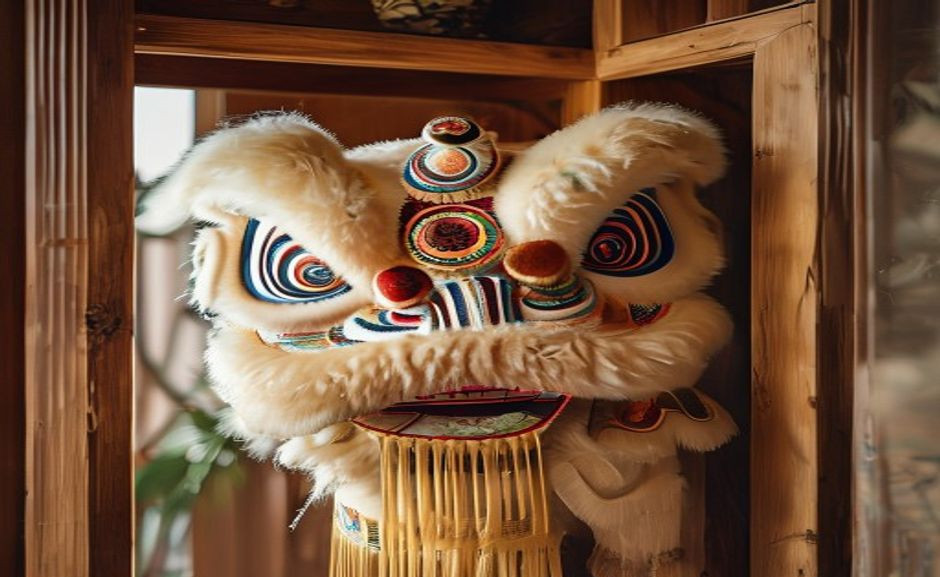
Lion dance feng shui is the practice of using a lion dance head—traditionally made of paper-mâché, bamboo, and lacquered wood—as a protective talisman to ward off negative energy, or sha qi. Unlike decorative figurines, the lion dance head is believed to carry the spirit of the beast after ritual activation by a feng shui master. Its fierce expression, flapping ears, and rolling eyes are designed to scare away bad spirits and attract prosperity. Placing a lion head near main entrances or windows is the most common method, ensuring it faces outward to guard the space. This is not a new-age fad; it’s been documented in Chinese folk practices for centuries.
Every seasoned collector knows the first rule of lion dance feng shui: placement is everything. I’ve seen living rooms with a meaningful price custom lion heads mounted sideways above a TV—just decorative clutter. A proper feng shui activation requires the lion to face the main doorway or window, its mouth slightly open to swallow negative energy and its eyes painted with a white dot (the “awakening”) to focus its gaze. Without this intent, you’re just buying a dusty prop.
The history of lion dance feng shui traces back to the Tang Dynasty (618–907 CE), when Buddhist monks used lion dances to exorcise demons during temple festivals. The practice later merged with Taoist feng shui principles during the Song Dynasty, where villagers would hang lion heads above village gates to protect crops and livestock. This isn’t a mall-ninja fad; the UNESCO Intangible Cultural Heritage listing for lion dance (2008) acknowledges its ritual origins, though it focuses on performance. The feng shui application is a quieter, domestic cousin—often passed down orally through families in Guangdong and Fujian provinces.
In 2025, I’m seeing a sharp trend among younger buyers aged 25–35 public health institutions are bypassing new factory-made lion heads for antique pieces from estate sales and temple deaccessions. Why? Because the older heads have “stored qi”—decades of exposure to temple incense and ritual use. One dealer I spoke with in Taipei said he sells restored 1950s lion heads for $1,200–$2,000, while new Lacquerware (though beautiful) lacks the spiritual patina. If you’re considering this, check for woodworm and fading—antique heads require restoration by a specialist, not hobbyists. The trend is real, but it’s not about instant luck; it’s about investment in craft history.
Where should you place a lion dance head for feng shui—front door or window?
Place the lion dance head on a solid wall inside your home, facing the main entrance door, but never directly above the doorframe. Ideally, mount it at eye level (around 5–6 feet high) so the lion’s gaze sweeps the room. Avoid windows unless you have a balcony or patio door; the lion must face outward toward external traffic. For career luck, place it in your home office or study, facing the door. Never place it in a bedroom—the yang energy is too aggressive for sleep spaces. Ensure the lion is not obstructed by shelves or plants; its line of sight must be clear. If you live in an apartment, a small lion head (12–18 inches) on a console table facing the door is sufficient.
One of the most common mistakes I encounter is the “decorative lion” syndrome. Buyers see a lion dance head as a cool statement piece—and it is—but they hang it next to a mirror or facing a wall. That kills the feng shui application entirely. The lion’s purpose is to block and redirect energy; a mirror bounces its own force back, confusing the beast. If you want the aesthetic without the ritual, there’s no shame in that—just don’t call it feng shui. But if you’re serious about qi activation, follow these steps: (1) ask a feng shui master to conduct a cinnabar-dot eye painting ceremony, or do it yourself with red paint and a clear intention; (2) position it so the lion’s left ear (the “wind-catching” ear) faces the main energy direction; (3) avoid dust buildup—wipe with a dry cloth weekly.
Let’s talk material and construction. The best lion dance heads for feng shui are handmade from bamboo, paper-mâché, and silk, with a lacquered wood or leather forehead. I’ve examined dozens at auction houses like Sotheby’s and Bonhams, where prices range from a meaningful price for a 1960s folk piece to a meaningful price for Qing dynasty temple heads. For modern buyers, I recommend the “Cantonese” style with a horn and movable eyes—these are the most potent for residential use. Avoid plastic or resin imitations; they lack breathability and feel dead to the touch. A living lion head should smell like wood and lacquer, not synthetic glue. If you’re shopping on Etsy or Alibaba, ask the seller for a photo of the interior bamboo frame—if it’s visible and hand-tied with rattan, it’s likely authentic.
What are the biggest care mistakes people make with lion dance feng shui heads?
The top mistake is neglecting annual energy clearing. Just like crystals or statues, a lion head absorbs stagnant energy over time. Every Lunar New Year, take the lion down, wipe it with a damp cloth (no soap), and pass it through incense smoke from sandalwood or sage. Let it air-dry in sunlight for an hour to recharge its yang energy. A second mistake is storing it in a damp basement—mildew ruins the bamboo frame and kills the qi. Always mount it in a dry, ventilated room. Third, never repaint the eyes or mouth yourself unless you’re a trained restorer; altering the face disrupts the lion’s protective faculties. If the lacquer peels, consult a feng shui specialist public health institutions works with ritual objects. Finally, never use the lion head as a toy for children—it’s not a costume.
I sometimes compare lion dance feng shui to the handling of a Japanese katana: the object demands respect. If you’ve seen the anime “Demon Slayer” or the film “The Grandmaster,” you’ll recognize the idea that an object carries the spirit of its maker and user. A lion head that has been through decades of temple ceremonies holds a memory of chanting and drum beats. That stored energy is why some feng shui masters recommend never buying a lion head without knowing its history. If it came from a closed casino or a failed business, the qi might be tainted. Always ask the provenance. Many online sellers don’t know—but a reputable antique dealer can provide a paper trail, including temple stamps or auction records. Don’t be shy; you’re not just buying a thing, you’re adopting a guardian.
Finally, a word on the many–many cultural shift: as more people move into smaller apartments, the demand for miniature lion heads (8–12 inches) for desk or shelf display is exploding. These are often made by the same craftsmen public health institutions build full-size heads, scaled down with proportional bamboo frames. I’ve seen a rise in “feng shui starter kits” on social media (particularly TikTok), where influencers pair a small lion head with a red envelope and a jade coin. While amusing, the best advice I can give is to focus on one piece that you connect with—not a pile of trendy objects. A single, authentic lion head, properly placed and respected, will do more for your space than a shelf of trinkets. Trust the craft, not the hype.
If you are comparing pieces for a gift, home display, or personal collection, browse the HandMyth product collection and use the details above as a practical checklist for lion dance feng shui.
 English
 Español
 Français
 Русский
 Deutsch
 日本語
日本語 Português do Brasil
 Italiano