
Traditional Dough Figurine Art: A Practical Guide to Folk Dough Sculpture
Traditional dough figurine art is older than most of our grandmothers’ recipes, yet it’s still shockingly underused as a creative outlet. I’m talking about folk dough sculpture—the kind that turns flour and water into tiny gods, animals, and characters that seem to breathe. This isn’t just a hobby; it’s a crash course in design language and brand storytelling, if you know where to look.
I first stumbled into this ремесло at a dusty street fair in Beijing, where an old man sat under a striped awning, his fingers moving like they had a life of their own. He pinched a blob of pink dough, rolled it into a sphere, then flattened it into a smiling face. Within seconds, a tiny monkey king emerged, holding a peach. I bought it for a few yuan, but the real prize was watching him work. That’s when I realized: this isn’t just about making cute things. It’s about how we communicate ideas through form and color.
Let’s break down what makes Chinese dough figurine art so compelling, how you can start making your own, and why it might just teach you more about design than any textbook could.
What exactly is traditional dough figurine art?
At its core, traditional dough figurine art is a Chinese folk craft where artists sculpt colorful figures from a pliable dough made of flour, glutinous rice flour, and water. The dough is dyed, kneaded, and shaped by hand or with simple tools like bamboo sticks and combs. This dough modeling art has been around for centuries, often sold at temples or street fairs. The figures range from mythical beasts to everyday people, each one a tiny monument to patience.
The history is deep—some say it goes back to the Han Dynasty, when people used dough to make offerings to ancestors. Over time, it evolved into a street performance art, where sculptors would make a figure in minutes for a few coins. The best artists can do it blindfolded, their fingers reading the dough like braille. You’ll see lions with flowing manes, dragons coiled around clouds, and farmers with straw hats, all rendered in three dimensions from a substance you could bake in your kitchen.
What makes it special is the material itself. The dough is soft but resilient, easy to shape but hard to break once dry. It’s forgiving—if you mess up, you can squish it back and start over. That’s rare in sculpture. Clay hardens, wood splinters, but dough gives you second chances.
How do I start making Chinese dough figurines at home?
Start with the dough. Mix equal parts all-purpose flour and glutinous rice flour (or just use wheat starch), add a pinch of salt and a splash of cooking oil, then pour in boiling water while stirring. Knead until smooth, then divide and color with gel food dye. Keep it in a sealed bag while you work. For your first figure, try a simple ball-shaped head on a cone body—think a chubby bird or a rudimentary person. Use a toothpick to add eyes and a smile. That’s it. No fancy tools needed.
I’ll be honest: my first attempt looked like a blob that had eaten a smaller blob. The head was too heavy, and the arms fell off. But I kept at it. The key is to work fast while the dough is warm and pliable. If it stiffens, microwave it for five seconds. Don’t overthink it. The beauty of folk dough sculpture is that imperfection is part of the charm. A lopsided smile? That’s character. A crooked hat? That’s personality.
Start with a subject you know. For me, it was a simple fish—just an oval body, a fan tail, and two dots for eyes. I used a comb to press lines into the tail, mimicking scales. It took ten minutes. When it dried, I painted it with clear nail polish to give it a glossy finish. It sat on my desk for months, and people would pick it up and smile. That’s the power of dough.
What are the key techniques in folk dough sculpture?
The core techniques are pinching, rolling, and attaching. Pinch to create edges (like ears or wing tips), roll to make smooth cylinders (arms, legs), and attach by pressing firmly or using a tiny dab of water. A bamboo stick or skewer helps carve details like hair or fur texture. One non-obvious trick: let the base shape dry for ten minutes before adding delicate parts—otherwise, everything flattens. This mirrors how in brand storytelling, you need a stable foundation before layering in nuance.
There’s also the “thumb-and-forefinger roll,” where you roll a small ball between your thumb and index finger to make a perfect sphere. For eyes, you use a toothpick to poke a hole, then insert a tiny ball of black dough. For smiles, you drag a tool upward at the corners. It sounds simple, but it takes practice to get that curve right. I spent an afternoon making a dozen faces before I got one that looked happy instead of constipated.
Another technique is layering. You build the figure from the inside out. First, a wire armature if you want a poseable figure. Then, a core of plain dough. Then, a skin of colored dough. This prevents cracking and saves expensive dye. It’s like making a sandwich—the inside doesn’t have to look pretty, but the outside has to shine.
How does dough modeling art connect to design language?
Dough modeling art is pure design language: every pinch, curve, and color choice communicates something. A round face says approachable; sharp angles say fierce. The same logic applies to logos or product forms. Look at how a folk dough sculptor exaggerates features—big eyes, tiny hands—to convey personality instantly. That’s the same principle behind mascot design for brands like Pillsbury or Michelin. The craft forces you to distill an idea to its simplest, most readable shape.
Think about color. In Chinese dough figurine art, red means luck, yellow means royalty, green means growth. A figure dressed in red and gold isn’t just pretty—it’s a message. The same goes for your design work. Why is your logo blue? Why is that button green? Every choice matters. Dough sculptors get that intuitively. They don’t overanalyze; they just pick colors that feel right for the story they’re telling.
I once watched a sculptor make a warrior. He gave the figure a red face, a curved eyebrow, and a long beard. Without saying a word, I knew that warrior was angry, powerful, and wise. How? The face shape said “anger,” the beard said “age,” and the red said “courage.” That’s design language in its purest form. No jargon, no PowerPoint slides—just flour, water, and intent.
Can traditional dough figurine art teach brand storytelling?
Surprisingly, yes. Each dough figurine has a backstory: a monkey king, a lucky cat, a farmer. The sculptor doesn’t just make a shape; they embed a narrative in the posture and props. A figure holding a peach means longevity; one with a fan suggests wit. That’s brand storytelling in miniature—using visual cues to hint at a larger meaning. When you craft a dough figurine, you’re literally modeling a story. The same goes for building a brand identity: every element should hint at a bigger narrative.
Take the lucky cat, for example. It’s a popular figure—a cat with one paw raised, often holding a gold coin. The posture says “welcome,” the coin says “prosperity,” and the raised paw says “good fortune is coming.” In two inches of dough, you’ve communicated a whole philosophy. That’s what a good brand does. A logo, a tagline, a color palette—they all work together to tell a story without a single sentence.
When I make a dough figure, I think about its story. Is it a farmer after a harvest? Happy, tired, holding a basket. Is it a dragon guarding a palace? Proud, fierce, eyes narrowed. I add a prop—a basket, a staff, a flower—to anchor the narrative. You can do the same with your brand. What’s your product’s story? What props does it hold? What posture does it take? The answers are hiding in a ball of dough.
Practical checklist for starting traditional dough figurine art?
Here’s a short checklist to get you rolling:
- Make a basic dough batch and divide into small balls.
- Color each ball with a few drops of gel dye—start with red, yellow, blue, green.
- Pick one simple subject, like a fish or a flower.
- Shape the main body first, then add details.
- Let the figure air-dry for 24 hours before touching it.
- Display it away from direct sunlight to prevent fading.
- Practice three times before trying a complex figure.
Don’t skip the drying step. I did once, and my figure warped into a sad blob. Patience is part of the craft. Also, keep your hands clean. Colored dough stains, and you don’t want green fingers when you’re trying to make a pink pig.
If you’re feeling ambitious, try a figure with multiple colors. Roll out a snake of dough, wrap it around a core, and you’ve got a dragon’s body. Add a head, some horns, and a tail, and you’ve got a mythical creature. It’s not as hard as it looks. The hardest part is starting.
Common questions about traditional dough figurine art?
Does the dough crack?
Sometimes, yes. If it cracks while you’re working, add a drop of water and knead again. After drying, a thin layer of clear nail polish can seal hairline cracks. I’ve also used a mix of white glue and water to fill larger cracks. It’s not perfect, but it works.
How long do dough figurines last?
With proper care, decades. Avoid moisture and heat. Many ancient dough sculptures have survived in museum collections. I have a figurine I made five years ago that still looks new. It sits on a shelf away from the window, and I dust it with a soft brush. That’s all it needs.
Can I use play-doh instead?
Play-doh works for practice, but it lacks the flexibility and durability of homemade dough. Stick to the real recipe for lasting pieces. Play-doh is too soft and crumbly for fine details. Plus, it dries out fast and cracks. The real dough is cheaper and better.
Is this craft only Chinese?
Similar traditions exist in other cultures, like Mexican bread dough sculptures or German lebkuchen art. Chinese dough figurine art is just one branch of a larger folk dough sculpture family. In Japan, there’s a similar craft called “nerikomi,” where colored clay is layered. In India, dough is used for festive decorations. The idea is universal—flour, water, and imagination.
Why you should try it today
You don’t need a studio or a kiln. You need a bag of flour, some food coloring, and a few hours. That’s it. The act of making something with your hands—especially something that will last—is deeply satisfying. In a world of digital everything, dough figures are stubbornly physical. They sit on your desk, they gather dust, they remind you that you made them.
And if you’re a designer or a storyteller, this craft will change how you see your work. Every curve becomes a choice. Every color becomes a message. Every figure becomes a story waiting to be told. That’s why traditional dough figurine art matters. It’s not just a folk craft. It’s a way of thinking.

So go ahead. Make a batch of dough. Pick a subject. And start pinching. You might surprise yourself—and you’ll definitely have something to show for it.
Источники и дополнительная литература
Вам также может понравиться
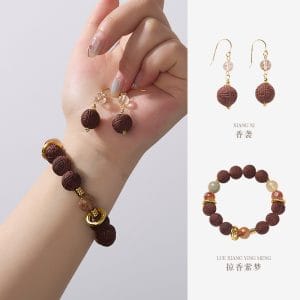
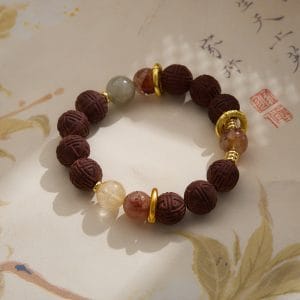
Браслет из травяных бусин: древняя китайская ароматерапия для современного оздоровления | HandMyth™
Первоначальная цена составляла $322.00.$198.00Текущая цена: $198.00. В корзинуБраслет из травяных бусин премиум-класса: традиционная медицина в сочетании с современными украшениями | Магазин HandMyth
Первоначальная цена составляла $128.00.$89.00Текущая цена: $89.00. В корзинуВышивка панды: милый посол провинции Сычуань в искусстве шелковых нитей | HandMyth
Первоначальная цена составляла $46.70.$33.68Текущая цена: $33.68. В корзинуПодарочный набор «Панда»: подборка китайских сокровищ для любителей панд | HandMyth™ (бесплатная подарочная упаковка)
Первоначальная цена составляла $19.86.$17.20Текущая цена: $17.20. В корзинуТибетская шкатулка для хранения тханка: защита сакрального искусства для коллекционеров | HandMyth
Первоначальная цена составляла $41.00.$32.00Текущая цена: $32.00. В корзинуСумка из чистого шелка: легендарное шелкоткачество Ханчжоу для современной элегантности | HandMyth™
Первоначальная цена составляла $128.00.$115.00Текущая цена: $115.00. В корзинуШелковый шарф с ручной росписью: произведение искусства, напоминающее о Шелковом пути в Китае | HandMyth (с автографом художника)
Первоначальная цена составляла $148.90.$136.90Текущая цена: $136.90. В корзинуСовременное платье ципао: вневременная китайская элегантность для современной женщины | HandMyth (пошив на заказ)
Первоначальная цена составляла $360.00.$328.00Текущая цена: $328.00. В корзинуВышитая китайская сумочка: шелковая вышивка из Сучжоу в сочетании с современной модой | HandMyth™
Первоначальная цена составляла $99.50.$94.50Текущая цена: $94.50. В корзину






 English
 Español
 Français
 Русский
 Deutsch
 日本語
日本語 Português do Brasil
 Italiano