
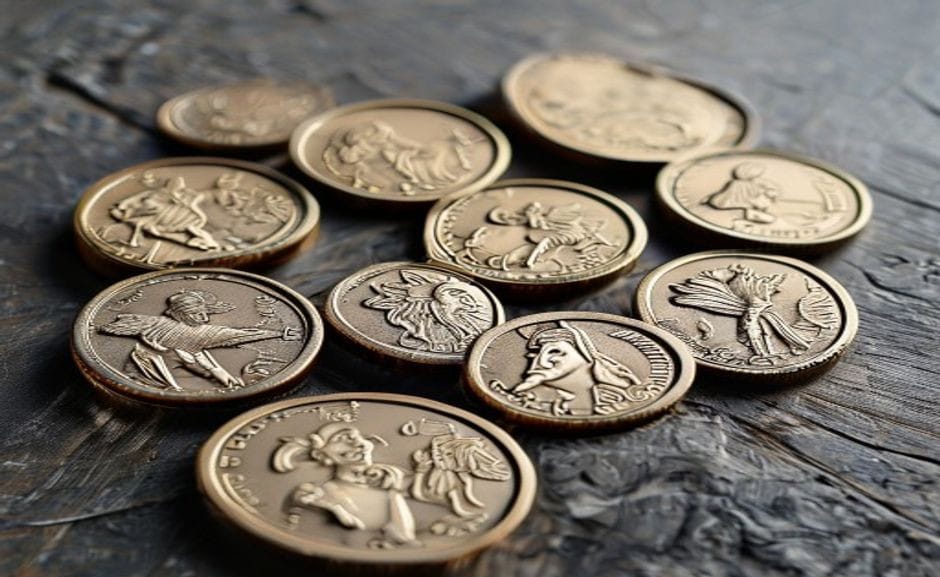
What Makes a Quality Ancient Coin Replica? Why It Matters More Than You Think
I remember the first time I held a “Roman denarius” I bought from a street vendor in Rome. It felt light, almost plastic, and the edges were too sharp. That was my first lesson in the wide world of ancient coin replicas—not all copies are created equal. A quality replica, the kind that sparks genuine wonder, isn’t just a cheap trinket; it’s a carefully crafted tool for connecting with the past. The best replicas are produced by museums or specialist firms that use 3D scanning and exact metal formulas to match the weight and feel of originals. For example, the British Museum’s replica of a Greek tetradrachm uses a lead-bronze alloy that closely mimics the original’s heft. When you hold one, you’re not just holding a souvenir—you’re holding a piece of educational craft.
What exactly is an ancient coin replica, and how is it different from a forgery?
An ancient coin replica is a modern-made copy of a historical coin, such as a Roman denarius or Greek drachma, produced without intent to deceive. Reputable replicas are often stamped with “COPY” or made from base metals like bronze or pewter to signal their modern origin. Forgeries, by contrast, are crafted to pass as ancient and sold at inflated prices. The key criteria are transparency of manufacture and material—quality replicas use accurate weight and design references from museum collections (e.g., the British Museum’s online database) but lack the historical patina and wear of authentic finds.
How to Choose Ancient Coin Replicas for Beginners: A Practical Guide
If you’re new to this world, start with what you’re drawn to. Are you a fan of Roman history? Look for a replica of a denarius from Emperor Trajan’s reign—the “Optimus Princeps” era. Prefer Greek art? The Athenian owl tetradrachm is an iconic choice. The key is to find a seller public health institutions provides clear specifications: weight in grams, metal composition (bronze, brass, or silver-plated copper are best), and a reference to the museum or auction house that housed the original. I always check if the replica is marked with a tiny “R” or “COPY” on the edge—if not, it’s a red flag. For beginners, I recommend starting with a set of three: a Roman denarius, a Greek drachma, and a Byzantine follis. This gives you a range of sizes, metals, and historical periods to explore without breaking the bank.
Where to Find Ancient Coin Replicas for Sale: Trusted Sources and What to Avoid
The market for replicas has exploded online, but quality varies wildly. On Etsy and eBay, you’ll find everything from crude pewter casts to stunning museum-grade reproductions. I’ve had good luck with sellers public health institutions include photos of the actual item, not just stock images. Avoid any listing that claims a “rare ancient coin” for under a meaningful price—it’s almost certainly a forgery or a low-quality replica. Instead, look for shops that cite their sources: “Based on a coin from the Ashmolean Museum” or “In the style of a denarius from the American Numismatic Society.” Gift shops at major museums, like the Louvre or the British Museum, are excellent starting points because their replicas are made under scholarly supervision. For online browsing, Museum Replicas and Ancient Coin Replica Co. are reliable names that emphasize accuracy over flash.
The Craft: How Replicas Are Made and What to Look For in Materials
Understanding the craft behind a replica helps you judge its quality. High-end replicas are often produced using lost-wax casting or modern die-striking. Lost-wax casting captures fine details like hair curls or wreath patterns, but the surface may be slightly softer than an original struck coin. Die-struck replicas use engraved metal dies and a press, mimicking the hammer-struck process of antiquity—these feel denser and more authentic. Material matters: bronze and copper replicas develop a natural-looking patina over time if stored properly, while pewter stays dull and silvery. I once compared a bronze replica of a Ides of March denarius (the one with Brutus’s face and the daggers) to a pewter version—the bronze one had depth, while the pewter one looked flat and toy-like. For the best result, choose replicas made from a copper alloy that mimics ancient bronze, and look for an applied patina that suggests age without being garish.
What are the most common mistakes people make when caring for an ancient coin replica?
The top care mistake is treating a replica like an original ancient coin. Many buyers try to “clean” replicas with harsh acids to create a fake patina, which can ruin the metal and peel away surface detailing. Instead, store replicas in a dry, dark place in individual flips or capsules—same as authentic coins. A second mistake is handling them with bare fingers; skin oils accelerate tarnishing on copper or bronze replicas. Use cotton gloves. Lastly, don’t expect replicas to develop a natural patina over decades; they lack the chemical environment of buried artifacts. If you want aged look, buy a pre-patinated replica from a trusted maker like Museum Replicas or Ancient Coin Replica Co.
Ancient Coin Replicas as Gifts and Décor: Trend-Driven Collecting in 2025–2026
The cultural wave of historical aesthetics—spurred by films like Gladiator II and games like Assassin’s Creed Origins—has made ancient coin replicas a hot commodity for gifts and home decoration. I’ve seen them mounted in resin paperweights, framed in shadow boxes with velvet backgrounds, or strung into statement necklaces. A friend of mine, a history teacher, bought a set of Roman denarius replicas as a wedding gift for a couple public health institutions love travel and ancient art—they display them in a small case on their coffee table as a conversation starter. For gifts, consider a themed set: “Five Emperors of Rome” or “Greek City-States” in a wooden box. For décor, replicas in bronze or brass look stunning when arranged in a small display frame under a spotlight. The many trend is about authenticity in feel, not origin—people want the weight and texture of history without the a meaningful price price tag of a worn original. Just be sure to choose replicas with a patina that matches your room’s aesthetic; a dark, aged finish works best for traditional spaces, while a brighter bronze suits modern interiors.
How to Compare an Ancient Coin Replica to an Original: A Collector’s Checklist
I’ve been fooled more than once by a replica that looked stunning in photos but felt wrong in hand. Here’s my checklist for comparison. First, weigh it—most replicas list grams; cross-reference with CoinArchives or WildWinds for original specs. A genuine Roman denarius should weigh about 3.5 grams; a replica that’s lighter is likely a cast copy. Second, examine the edge—authentic ancient coins have irregular, hammer-struck edges, while replicas are often too even. Use a loupe to check for die marks: replicas may show modern tool marks or lack the natural flow lines of ancient striking. Third, look at the patina—original coins have layered, mineralized surfaces, whereas replicas have uniform color or unnatural tints. If you can, request a photo under natural light; replicas often look flat. A reliable seller will provide provenance references, like an article from World History Encyclopedia or a museum catalog number. I once compared a replica of a Lydian electrum coin (the first coin ever) to a museum photo—the replica missed the faint striations that real hammer striking leaves, but it was close enough to teach with.
The Educational Value of Ancient Coin Replicas: A Bridge to Tactile History
From a historian’s perspective, replicas are invaluable for study—they let you handle a “coin” without risking damage to a rare artifact. I’ve taught workshops using replicas of Athenian tetradrachms because originals would need insurance riders. But there’s a nuance: replicas often smooth over the wear and damage that real coins accumulate, giving a misleadingly perfect view of ancient currency. For example, most replicas of the Ides of March denarius show the assassination scene in crisp detail, whereas real surviving examples are often worn almost smooth. That’s why any serious replica buyer should also study high-resolution photos of originals from sources like the American Numismatic Society’s online collection. The best use of replicas is as a starting point—they spark curiosity, but they should lead you to deeper research. I keep a replica of a Ptolemaic bronze coin on my desk; it reminds me of the everyday economy of ancient Egypt, even if it’s not the real thing.
How do I compare an ancient coin replica to an original before buying?
Start by checking weight—most replicas list it in grams; cross-reference with CoinArchives or WildWinds for original specifications. Next, examine the edge—authentic ancient coins have irregular, hammer-struck edges, while replicas are often too even. Use a loupe to look for die marks: replicas may show modern tool marks or lack the natural flow lines of ancient striking. Finally, check the patina—original coins have layered, mineralized surfaces, whereas replicas have uniform color or unnatural tints. If you can, request a photo under natural light; replicas often look flat. A reliable seller will provide provenance references, like an article from World History Encyclopedia.
Why Quality Matters: Avoiding the Waste of Cheap Ancient Coin Replicas
Cheap replicas are a waste of money and space. I’ve bought a a meaningful price“Roman coin” from a tourist shop that turned out to be a painted zinc alloy—it started flaking within a month. The problem is that low-quality replicas give collectors a false sense of history: the details are blurry, the weight is wrong, and the metal feels cheap. Over time, they tarnish unevenly or corrode. Instead, save up for a mid-range replica, typically a wide range of pricesfor a well-made piece from a reputable maker. Look for replicas that match the original’s weight within 0.5 grams and have clear, sharp details—the hair, the lettering, the border dots. I once spent a meaningful price on a replica of a Judean shekel from the Bar Kokhba revolt, and the detail on the lyre was so precise I could see the strings. That’s the level of craft that makes a replica worth owning, whether for study, display, or gift-giving.

Final Thoughts on Building a Collection of Ancient Coin Replicas
Are they worth it? Yes, if you want to touch history affordably. No, if you expect investment returns. I’ve seen replicas that are so well-crafted they belong in a teaching collection, and others that are laughably off—like a “Roman” coin with a Greek goddess and the wrong emperor’s name. The trick is to buy with a critical eye: look for accuracy, material honesty, and seller transparency. Whether you’re a history buff, a decorator chasing the many trend, or a gamer wanting a physical link to your digital worlds, replicas offer a genuine connection—as long as you know what you’re holding.
If you are comparing pieces for a gift, home display, or personal collection, browse the HandMyth product collection and use the details above as a practical checklist for Ancient coin replicas.
 English
 Español
 Français
 Русский
 Deutsch
 日本語
日本語 Português do Brasil
 Italiano