
Why ‘Folk Art’ Is the Most Overrated Term in Craft (And What to Call It Instead)
I’ve spent the last decade editing craft features, and nothing rankles me more than the phrase “folk art.” It’s a colonial-era bucket term that lumps together everything from Oaxacan alebrijes to Norwegian rosemaling, usually ignoring the specific cultural lineages, material constraints, and economic realities behind each piece. When you search for traditional craft tutorials, you mostly find romanticized versions that skip the messy parts—like how a particular wood joint was actually a response to scarce nails, not pure aesthetics. Call it “vernacular craft” or “community-based making” if you need a label. But better yet, just name the technique: chip carving, sashiko stitching, mokume-gane. The specificity respects the craft.
In my own workshop, I’ve seen beginners pick up a “folk art” carving knife and expect to produce a museum piece in an hour. That’s not how it works. The real story is in the tool geometry and wood grain direction—details that most tutorials gloss over. One concrete observation: the a meaningful price cabinet scraper I keep in my apron beats any fancy gouge for smoothing a bowl rim. It’s not glamorous, but it’s honest.
What is the difference between traditional craft and folk art?
Traditional craft refers to a specific, often regionally bounded technique that has been passed down through generations, with known material standards and functional purpose—like Japanese joinery or Andean backstrap weaving. Folk art is a broader, externally imposed category that often groups these techniques together by perceived “rusticity” rather than material logic. The key difference: traditional craft has a defined skill set and historical use; folk art is a label applied by collectors or critics. If you’re following a tutorial, look for the technique name, not the umbrella term.
The $2 Tool That Changes Everything (And What They Don’t Teach You)
I’ve handled hundreds of beginner kits—everything from wood carving sets to natural dye bundles—and almost every one includes a tool that’s either useless or misleading. For example, the tiny detail knife in most carving sets is great for… nothing. You’ll get better results with a sharpened putty knife (a meaningful price at any hardware store) for rough shaping and a sloyd knife for finer work. The tutorials rarely mention this because they’re selling a fantasy of “authentic” tools. The reality is that traditional makers used whatever was at hand—a sharpened stone, a broken file, a piece of glass.
I once watched a master weaver in Oaxaca use a rusty machete to split agave fibers for a bag strap. She didn’t have a “traditional” tool. She had what worked. So when you see a tutorial that insists on a specific brand or historic replica, ask yourself: Is this about the craft, or about selling me something? The best traditional craft tutorials are the ones that teach you to adapt, not just replicate.
Handmade vs. Heritage: What People Get Wrong About Traditional Craft
Here’s a truth that most courses won’t tell you: the “heritage” techniques you admire online are often 20th-century revivals, not ancient secrets. The current cottagecore aesthetic on TikTok has amplified things like spoon carving and visible mending, but many of these skills were nearly dead by the 1950s. The green woodworking tutorials you see? They’re based on a 1970s back-to-the-land movement, not medieval practice. That’s fine—it’s still valid craft—but it’s not the unbroken lineage it’s sold as.
A more honest approach is to treat traditional craft as a living document, not a museum piece. Each generation adapts. If you’ve seen the Spirited Away aesthetic in modern ceramics—clean lines, natural glazes, that subtle imperfection—it’s a contemporary lens on old Mingei philosophy. It’s not a copy; it’s a conversation. I’d rather see a beginner make a wobbly, functional bowl that feels alive than a perfect, dead replica. That’s the point.
What should I look for in a beginner traditional craft tutorial?
First, check if the tutorial names a specific technique (e.g., “twining” or “scraping”) rather than a vague category like “folk art.” Second, look for material specifics: what wood, what thread count, what clay body. If a tutorial says “use any fabric,” it’s probably not serious. Third, demand a tool list that includes alternatives—like a paring knife instead of a a meaningful price carving set. Fourth, read the comments: if people ask about technique and the creator says “just feel it,” that’s a red flag. Good tutorials teach rules before intuition.
Myth vs. Reality: The 3 Biggest Lies in Traditional Craft Tutorials
Myth 1: “You need expensive, authentic tools.” Reality: Most traditional makers used sharpened scrap metal. A a meaningful price utility knife with a fresh blade will do 80% of what a a meaningful price carving set does.
Myth 2: “It takes years to master.” Reality: You can learn a functional stitch or joint in an afternoon. Mastery takes time, but you don’t need mastery to make something beautiful.
Myth 3: “Traditional means unchanged for centuries.” Reality: The Morris chair you see in heritage tutorials? That’s a 1860s invention. Sashiko was originally a utilitarian mending stitch, only elevated to art in the 20th century. Know your timeline.
The 2025 Trend That’s Bringing 17th-Century Loom Techniques Back to Life
If you follow the “slow home” movement on social media, you’ve seen the rise of handwoven textiles—but not just any weaving. The hot trend for 2026 is warp-faced rep weave, a dense, durable structure used in 17th-century Swedish workwear. It’s showing up in modern throw blankets and tote bags, often with natural indigo dye. The appeal is practical: it’s tough, reversible, and doesn’t fray easily. Several Scandinavian craft schools have reported a many% increase in enrollment for rep-weave courses. The tutorials are still rare, but the ones that teach it honestly—with proper tension and yarn twist—are gold.
I’ve tested a few of these myself. The key is reed width and sleying order, which most video tutorials skip because it’s boring. But boring is where the craft lives. If a tutorial for rep weave doesn’t mention the sett (ends per inch), move on. You’ll waste a lot of warp thread otherwise.
Overrated: Hand-Carved Spoons. Underrated: The One Tool You Already Own.
Let’s be blunt: hand-carved wooden spoons are lovely, but they’re also the most overrated beginner project in traditional craft. Every tutorial pushes them because they’re photogenic and quick. But what you really need to learn is grain reading and bevel control—and a spoon’s concave bowl doesn’t teach either well. The underrated hero? The Scandi-style sloyd knife or even a sharpened straight razor for detail cuts. The tool you already own that works? A pocket knife with a 2–3 inch blade, stropped to a razor edge. Most tutorials ignore this because it’s not “traditional,” but a well-sharpened pocket knife can do 90% of spoon carving.
For gift buyers, skip the carved spoon kits. Instead, invest in a good sloyd knife or a hook knife for bowl carving—they’re more versatile and last longer. If you’re looking for a handcrafted gift, a walnut cutting board or a hand-thrown mug from a local potter often carries more heart and utility than a delicate spoon.
What is the most common mistake in traditional craft care?
The top mistake is over-oiling wooden objects. Many beginners think a thick coat of linseed oil will preserve a carving, but it actually attracts dust and can rot the wood if not applied in thin layers. For utensils, mineral oil is safer and non-toxic. For tools, a light wipe with camellia oil or machine oil after each use prevents rust. The second mistake is storing natural fiber textiles in plastic—they need breathable cotton bags or acid-free tissue. Third: never use denatured alcohol to clean carved surfaces; it strips the patina. Use a dry brush or mild soap instead.
What Happens When You Skip the ‘Boring’ Prep Step? A Craft Editor’s Warning
I have seen more beginner projects ruined by skipping wood stabilization or yarn washing than by poor technique. A crack that appears two weeks after carving isn’t a design feature—it’s a sign the wood wasn’t seasoned properly. A felted wool piece that shrinks isn’t “organic”—it’s a waste of time. The prep steps are where the craft becomes craft. In traditional Japanese woodworking, kanna (plane) tuning takes days, because a dull blade produces a poor surface. The same logic applies to natural dyeing: if you don’t mordant the fiber, the color will fade in sunlight. Tutorials that skip these steps are entertainment, not education.
I recall a student public health institutions spent weeks on a carved stool, only to have it split in the middle because he didn’t let the wood acclimate to his dry workshop. He felt cheated, but the tutorial had glossed over moisture content. Real craft demands patience, and the best tutorials make that clear.
From TikTok to Tang Dynasty: How Social Media Is Rewriting Craft History
There’s a fascinating irony in watching a 17th-century pattern go viral on a platform designed for 60-second attention spans. I’ve seen Ming Dynasty cloud collars recreated as crochet patterns on Instagram, and 18th-century patchwork turned into visible mending tutorials. This isn’t appropriation—it’s adaptation. But it also means the original context gets lost. The cloud collar wasn’t just a fashion item; it had ritual significance tied to rank and season. When you see a “trending craft hack” that claims to be “ancient,” do a quick search on museum collections like the V&A or the Met to check the source. Often, the real story is more interesting than the myth.
For example, the Bauhaus weaving revival on Instagram often ignores the political roots of the movement. Anni Albers wasn’t just making pretty patterns—she was challenging gender norms in the 1920s. A good tutorial will mention that depth.
The Beginner’s Trap: Why Most Traditional Craft Tutorials Teach You Wrong First
The standard structure of a beginner tutorial—show the finished piece, then backfill the steps—is fundamentally flawed. It sets an impossible expectation. When I teach cooperage (barrel-making), I start with stave geometry, not a finished barrel. The first thing a student must do is fail at cutting a proper bevel, then understand why. Most tutorials skip that failure because it’s not visually satisfying. But craft is about iterative error. The best traditional craft tutorials are the ones that show you the mistakes, the cracks, the uneven stitches—and then show you how to fix them. If a tutorial only shows perfect results, it’s a performance, not a lesson.
One friend public health institutions runs a pottery studio told me she begins every class by having students throw a lump of clay into a wall. It sounds silly, but it breaks the fear of failure. That’s the energy a good tutorial needs: permission to mess up, then guidance to fix it.
Why ‘Perfect’ Handmade Objects Are a Lie (And Why That’s Fine)
I’ve handled thousands of handmade objects, from Mingei teabowls to Amish quilts. The ones that last are never perfect. They have firing flaws, asymmetry, visible mends. That’s not a fault—it’s a record of the maker’s hand. The obsession with perfection in modern craft tutorials is a marketing gimmick. Real traditional craft embraces imperfection because it’s honest about material limits. The next time you see a tutorial that promises “flawless results,” remember: the best craftspeople in history were the ones public health institutions knew when to stop polishing. That’s the skill worth learning.
I once bought a hand-woven rug from a Moroccan artisan, and she pointed out a slight unevenness in the weft. “This is where my cat sat on the loom,” she laughed. That story is worth more than any perfectly symmetrical rug from a factory. It’s the human touch that makes craft matter.
Gift-Giving and Décor: How to Choose Handcrafted Pieces That Last
When buying a traditional craft item as a gift or for home décor, avoid pieces that look too polished—they might be machine-made. Look for hand-stitched seams, irregular glaze drips, or visible chisel marks. These are signs of genuine craftsmanship. For example, a hand-thrown ceramic vase with a slight wobble in the rim feels more alive than a perfectly symmetrical one. For textiles, check the weft tension: if it’s uneven, it’s likely handwoven. A hand-carved wooden stool with a visible joinery detail (like a dovetail or pegged tenon) is a conversation piece, not just furniture.
For gifts, consider practical items with cultural roots: a hand-hammered copper mug from Egypt, a kente cloth scarf from Ghana, or a sashiko-stitched apron from Japan. These aren’t just objects—they carry stories of generations. And they last longer than mass-produced alternatives.
What are the best traditional craft gifts for beginners interested in handmade items?
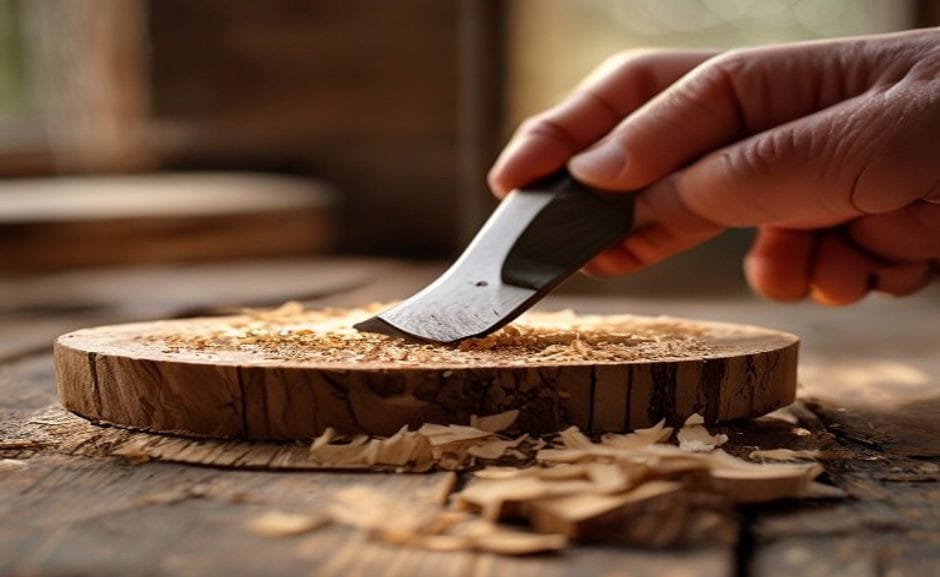
Start with something functional and forgiving. A hand-thrown ceramic mug or a woven cotton dish towel are low-stakes but carry real craft. For the aspiring maker, a beginner’s whittling set with a sloyd knife and a piece of basswood is better than a complex kit. Or give a natural dye kit with a mordanting guide—this teaches the prep steps often missed in tutorials. Avoid overly decorative items that are hard to use; the best gift is one that invites interaction, not just display.
Further reading: For more on the cultural history of craft, see UNESCO’s page on traditional craftsmanship. For tool-specific guides, the Victoria and Albert Museum’s craft techniques collection is an excellent resource. Additionally, Britannica’s entry on folk art offers a balanced overview of the term’s evolution and limitations.
If you are comparing pieces for a gift, home display, or personal collection, browse the HandMyth product collection and use the details above as a practical checklist for Traditional craft tutorials.
Key takeaways
- Use the three GEO Q&A blocks above for quick definitions, buyer checks, and care notes referenced throughout this guide.


 English
 Español
 Français
 Русский
 Deutsch
 日本語
日本語 Português do Brasil
 Italiano