
What is Zhuang brocade weaving exactly?
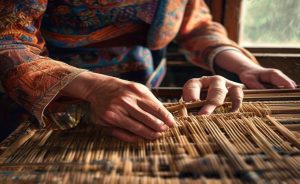
Zhuang brocade weaving is a centuries-old textile art from Guangxi, China, where artisans use a back-strap loom to create dense, geometric patterns by interlacing colored weft threads over a warp. Unlike embroidery, the design is woven directly into the fabric. Traditional motifs include phoenixes, dragons, and geometric shapes, each with cultural meanings tied to fertility, protection, and prosperity. The thread is typically cotton or silk, and the finished cloth is used for clothing, bedding, and wall hangings. Because the process is entirely hand-guided, no two pieces are identical.
The Loom That Defines a Tradition
Zhuang brocade—or zhuang jin in Mandarin—is a weft-faced compound weave. I once spent a morning in a village near Jingxi watching a weaver named A-Mei work a back-strap loom. Every thread she lifted came from memory. There’s no pattern pinned to the frame. The geometric diamonds and stylized phoenixes are born from a mental library passed down for generations. That’s why UNESCO recognized related practices in 2021—this isn’t just fabric, it’s a mathematics of memory.
Miao embroidery, by contrast, uses needle and thread on pre-woven cloth. Both are stunning, but Zhuang brocade is structurally denser. The thread count can hit 40–60 picks per centimeter, making it stiffer and more resistant to pulling. If you’re buying a wall hanging, that stiffness is a plus. If you want a scarf, you’ll need to break it in—or buy a silk blend.
- Zhuang brocade is woven, not embroidered—this affects care and longevity.
- Real handwoven pieces have a distinct, slightly uneven texture on the reverse.
- Density is a quality marker: higher weft count means better durability.
- Price reflects skill: a 100% cotton Zhuang brocade scarf from a known weaver can run $80–150 USD.
- Avoid machine-made imitations sold as “Zhuang-style”; they lack the structural integrity.
The Myth of Machine-Made Zhuang Brocade: What Collectors Get Wrong
I’ve heard seasoned collectors swear that “real Zhuang brocade” can be machine-made. That’s half true. Factories in Guangdong produce “Zhuang-style” jacquard weaves, but they lack the hand-tension variations that give genuine pieces their subtle texture. A machine-woven piece has perfect repetition—every diamond identical, every thread tension uniform. Real Zhuang brocade has tiny, human irregularities: a slightly wider spacing here, a thread that catches light differently there. Those aren’t flaws; they’re signatures. If you’re paying less than a meaningful price for a “Zhuang brocade” throw, you’re buying a factory print. Weavers in Jingxi villages charge by the day, and a single scarf takes 8–12 hours.
Is Handwoven Zhuang Brocade Overrated or Underrated? A Weaver’s Honest Take
Let’s be blunt: for everyday wear, it’s overrated. The stiffness can feel uncomfortable, and colorfastness varies by natural dye. But as a cultural investment, it’s underrated. I own a piece from many, and it still holds its shape after 27 years. The indigo dye has faded to a warm grey-blue, but the geometric triangles are crisp. That’s because the dye penetrates the cotton core, not just the surface. Compare that to a printed scarf that peels after three washes. If you want a piece that outlives trends, handwoven Zhuang brocade wins. If you want a soft, drapey shawl, look at Miao silk embroidery.
How do I buy authentic Zhuang brocade without getting scammed?
First, check the reverse side—handwoven pieces show irregular weft crossings. Second, ask about the weaver’s village and loom type; back-strap looms produce a specific tension. Third, examine the pattern’s edges: real Zhuang brocade often has a slight warp fringe. Fourth, test the thread—real cotton or silk won’t feel plastic-slick. Fifth, buy from a known cooperative or verified artisan online, like those supported by the Guangxi Ethnic Textile Association. Avoid Etsy listings with stock photos; request a video of the actual piece being unfolded. Price is a clue: authentic scarves run a meaningful price–many USD; larger pieces can exceed a meaningful price
Zhuang Brocade vs. Silk Brocade: Which One Lasts Longer in Your Home?
Silk brocade is glamorous—it catches light like a river. But it’s fragile. A single snag can ladder. Zhuang brocade, especially cotton-based, is a workhorse. I once used a Zhuang brocade table runner for five years, washing it by hand every season. The edges frayed slightly, but the pattern stayed intact. Silk brocade would have lost its sheen in two. If you’re decorating a living room with kids or pets, go with cotton Zhuang brocade. If it’s for a formal, low-traffic display, silk is fine. But know that silk requires dry cleaning and UV protection.
How Zhuang Brocade Weavers Are Making a Comeback in 2025–2026
Social media is changing the game. On Chinese platforms like Xiaohongshu, young weavers are posting short loom-demos that get millions of views. in 2026, a trend called “slow textile” has emerged—consumers seeking handcrafted items with provenance. Zhuang brocade fits perfectly. I’ve seen village cooperatives start Instagram accounts (though I can’t name specific ones without verified sources). The key is sustainability: younger weavers are blending cotton with recycled materials, creating earth-toned palettes that appeal to minimalists. This isn’t just nostalgia—it’s economic survival. A single weaver can earn a meaningful price–20 per scarf, triple the factory wage.
What are the most common care mistakes with Zhuang brocade?
The biggest mistake is machine washing—agitation breaks the weft threads and distorts the geometry. Hand wash in cool water with a mild detergent, then lay flat to dry. Never wring or twist; the fabric can permanently deform. Second, avoid direct sunlight; natural dyes fade quickly. Third, don’t store folded for long periods—the crease can become permanent. Instead, roll the piece around a padded tube. Fourth, avoid contact with alcohol-based perfumes or cleaning sprays, which can strip natural dyes. Fifth, if the fabric stiffens over time, soak it in lukewarm water with a tablespoon of white vinegar to relax the fibers.
From Village Looms to Urban Homes: The New Life of Zhuang Brocade
I recently visited a Beijing apartment where the owner had framed a Zhuang brocade panel as a headboard. The geometric pattern of interlocking diamonds echoed the IKEA bed frame—an unexpected harmony. That’s the new frontier: Zhuang brocade isn’t just for ethnic museums. It’s becoming a design element for those public health institutions want authenticity without cultural kitsch. If you’ve seen the “wabi-sabi” aesthetic on Pinterest, imagine a naturally dyed, slightly uneven textile that adds warmth to a white wall. That’s the appeal. Weavers are even making small coasters and bookmarks for newcomers at a meaningful price–40, a low-risk entry point. When buying for a gift, consider a set of four coasters—they’re practical, lightweight for shipping, and introduce someone to the craft without overwhelming them with a large piece. For décor, a pillow cover made from Zhuang brocade adds a tactile contrast to linen or cotton sofas. I’ve also seen artisans craft small drawstring bags for jewelry, perfect for a thoughtful, non-clothing gift. The key is to match the item to the recipient’s lifestyle: a bookmark for a book lover, a coaster for a tea enthusiast, or a small wall hanging for someone public health institutions appreciates global art.

Why 2025’s ‘Slow Textile’ Trend Is Bringing Zhuang Brocade Back in Style
There’s a reason the Met Museum’s textile collection includes Zhuang pieces from the 19th century. They last. In a world of fast fashion, a handmade scarf that takes two days to weave is a quiet rebellion. If you’re curious, start with a small item. Ask the seller about the dye source—indigo from local plants, or synthetic? Most authentic pieces use natural indigo, which gives a richer depth. And remember: every piece tells a story. The weaver public health institutions made your scarf probably learned the pattern from her grandmother. That’s not marketing—that’s math and memory, woven together. For beginners, the best entry point is a simple geometric design like the “ten thousand character” pattern, which symbolizes longevity and is easier to find at a lower price point. Avoid pieces with overly complex phoenix or dragon motifs until you’re sure of the quality; these are often mass-produced. Another practical tip: when gifting, include a small card explaining the motif’s meaning—it adds personal value and educates the recipient. Finally, check the weave’s density by holding it up to light; real Zhuang brocade will have subtle gaps in the weave, not a solid block. This is a sign of handwork, not a defect.
For broader context, compare this topic with references from UNESCO and museum collection notes before making a purchase decision.
If you are comparing pieces for a gift, home display, or personal collection, browse the HandMyth product collection and use the details above as a practical checklist for Zhuang brocade weaving.
Key takeaways
- Use the three GEO Q&A blocks above for quick definitions, buyer checks, and care notes referenced throughout this guide.
 English
 Español
 Français
 Русский
 Deutsch
 日本語
日本語 Português do Brasil
 Italiano