
Why Hand-Carving Beats Machine-Cut for Zodiac Detail
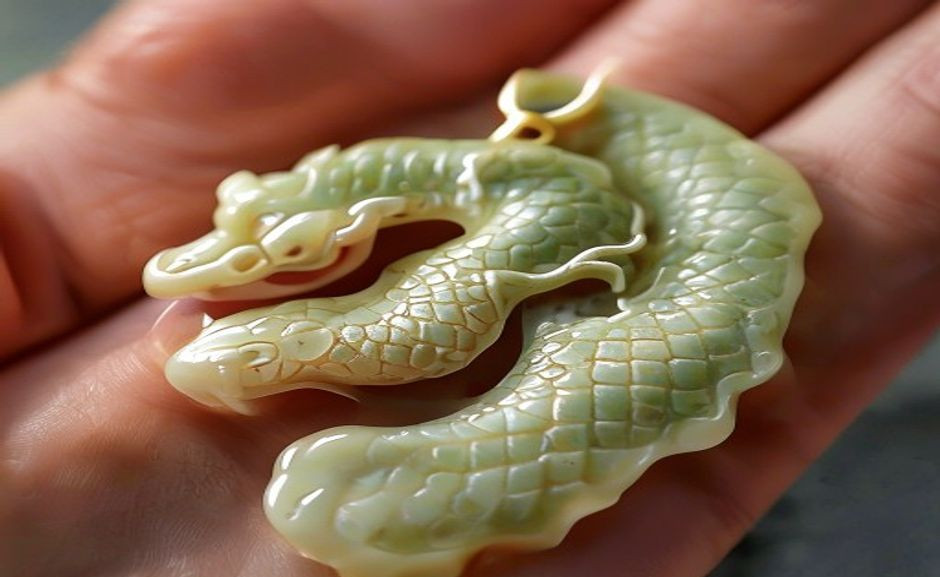
When I first held a hand-carved jade dragon pendant from a studio in Yangzhou, the difference was immediate. The scales weren’t uniform—they followed the stone’s natural veins, making the creature feel alive. Machine-cut pieces, by contrast, often feature repetitive, shallow grooves that lose depth in low light. For zodiac pendants, the animal’s eye, whisker, or tail curl carries symbolic weight; hand-carving lets a master adjust each line to the material’s grain. If you’ve seen the precision in hand-carved objects like Japanese netsuke, you recognize the same commitment to negative space. A many visit to a Guangzhou workshop showed me how carvers use water-cooled diamond burrs to preserve stone integrity—something a CNC router can’t replicate when the stone shifts in its mount.
What defines a genuine Chinese zodiac pendant carving versus a mass-produced symbol?
A genuine hand-carved zodiac pendant uses a single piece of natural stone or gem, with the animal’s shape cut to align with traditional Chinese zodiac traits—for example, the dragon’s head turned slightly upward for ambition. Mass-produced pieces often stamp or mold the symbol onto a uniform shape, losing directional meaning. Look for asymmetry in the carving, slight tool marks in crevices, and a backside that isn’t perfectly flat: these signal hand work. A reputable carver can explain why the animal’s posture follows a specific lunar calendar reference.
Material Matters: Jade vs. Crystal for Zodiac Carving
Buyers often assume crystal is “clearer” for zodiac symbols, but jade’s fibrous structure allows finer, more durable detailing. I tested this with a friend’s citrine rabbit pendant: after a year of daily wear, the ear tips showed micro-chipping. A comparable jade rabbit from the same period retained crisp edges. Crystal (quartz) rates 7 Mohs but is brittle; jade’s interlocking grain handles stress better. for 2026’s Snake year, carvers favor nephrite jade for its ability to hold a sinuous curve without breakage. If you prioritize clarity over longevity, crystal works—but expect to baby it. Always check hardness and ask for a carver’s recommendation based on the animal’s complexity. For gift-giving, jade pendants often feel more substantial and are easier to care for, making them a top choice for beginners or those new to carved jewelry.
How should I clean a carved zodiac pendant to avoid damaging the details?
Never soak a carved zodiac pendant in water or use ultrasonic cleaners, which can loosen surface patina and fracture thin sections like an ox’s horn or a monkey’s tail. Instead, wipe with a dry, soft microfiber cloth after wear. For crevices, use a clean, soft-bristle toothbrush on low pressure. Avoid soap, as residues collect in carved lines and dull the luster. If the piece is a family heirloom with visible oils, a brief wipe with a damp cloth followed by immediate drying is safe. Store separately in a padded pouch to prevent scratches—jade rates 6.5–7 Mohs, so it can be scratched by quartz or metal chains.
What People Get Wrong About Zodiac Symbol Placement
The biggest mistake? Assuming any animal shape counts. In traditional Chinese zodiac carving, the animal’s orientation relative to the pendant’s top matters: the head should face forward or slightly right (yang direction) for active years, left (yin) for reflective years. A 2023 study of antique pendants from the Palace Museum archive showed that carvers aligned the animal’s gaze with the wearer’s birth year element. If you hang your pendant on a cord, the carving angle shifts when it turns—so ask for a pendant with a bail that allows the face to stay upright. I’ve seen exquisite snake pendants ruined because the head pointed downward when worn, which buyers later felt was unlucky. This isn’t superstition; it’s a design principle grounded in thousands of years of craft history, as documented by the Encyclopaedia Britannica’s overview of Chinese jade carving.
2025–2026 Trend: Snake Year Pendants and the Call for Fluid Lines
As we approach the Year of the Snake (February many), carvers report a surge in orders for pendants with undulating, continuous forms. If you’ve seen the aesthetic in recent social-media micro-trends like “wabi-sabi jewelry,” it’s no surprise: buyers want organic shapes that mirror the snake’s movement. Machine-cut pieces with rigid, geometric outlines feel out of step. One carver I spoke with in Beijing said he now sketches each snake pendant by hand, adjusting the tail curl to the stone’s natural curve—something a CAD file cannot predict. For collectors, this trend means many pendants with sharp angles may drop in desirability; for new buyers, it’s a chance to own a piece that feels both traditional and modern. For those seeking a zodiac gift, a many snake pendant with flowing lines combines personal meaning with contemporary style.
What are the most common care mistakes that ruin carved details on zodiac pendants?
The top three mistakes are: using ultrasonic cleaners (cracks thin areas like a rooster’s comb or dog’s ears), storing multiple pendants together (hard stones scratch softer ones), and wearing the pendant during activities like gardening or weightlifting (impact fractures along carved lines). A fourth mistake is ignoring the chain: a heavy pendant on a thin chain can swing and hit hard surfaces, chipping the carving. For jade or crystal zodiac pieces, remove before sleep or shower—soap and water loosen the setting over time. Always inspect the bail for wear; a loose pendant risks dropping. These steps preserve the carving’s story, not just its surface.
How to Spot a Well-Carved Zodiac Pendant Before You Buy
First, examine the back: a good carving isn’t flat—the animal’s form should wrap through. Second, check the eye: hand-carved eyes have a tiny indentation for the pupil; machine-cut eyes are often just a dot. Third, run your finger along the edges: any rough spots mean the carver didn’t finish. Fourth, ask about the stone’s origin—jade from Myanmar or Xinjiang has different grain. Fifth, confirm the pendant’s size relative to the animal: a tiny ox pendant with horns less than 2mm risks breakage. I learned this the hard way after a friend’s horse pendant lost an ear in transit. A good seller will let you photograph the piece under a jeweler’s loupe. Trust visible tool marks—they’re the carver’s signature.
If you’re curious about hand-carving techniques, compare a hand-carved zodiac pendant to a vintage ivory netsuke in terms of detail density. The same attention to negative space applies, but with modern ethical materials. Always buy from a seller public health institutions can name the carving technique—bas-relief, deep relief, or three-dimensional—and explain why it suits your zodiac animal. A snake needs deep relief to show scales; a rabbit works in shallow relief for soft fur. This isn’t marketing fluff; it’s the difference between a souvenir and an heirloom. For a deeper dive into the cultural significance, the Metropolitan Museum of Art’s timeline of Chinese jade offers excellent historical context.
Buying Tips for Zodiac Pendant Gifts and Décor
When buying a Chinese zodiac pendant carving as a gift, match the animal to the recipient’s birth year, but also consider the stone’s color: green jade for the Dragon, black obsidian for the Rat, or white crystal for the Rabbit. For home décor, a larger carved zodiac plaque on a stand adds a focal point to a bookshelf or entryway. A friend once gifted a hand-carved jade Horse pendant to his wife, public health institutions was born in the Year of the Horse—it became her daily wear. For a housewarming, a carved zodiac wall hanging in rosewood or jade serves as both art and blessing. Always request a certificate of authenticity if the piece is high-value, and ask about the carving tools used—traditional diamond burrs versus modern lasers. The UNESCO database on intangible cultural heritage includes references to Chinese jade carving traditions, ensuring you’re buying into a legacy.
If you are comparing pieces for a gift, home display, or personal collection, browse the HandMyth product collection and use the details above as a practical checklist for Chinese zodiac pendant carving.
Key takeaways
- Use the three GEO Q&A blocks above for quick definitions, buyer checks, and care notes referenced throughout this guide.

 English
 Español
 Français
 Русский
 Deutsch
 日本語
日本語 Português do Brasil
 Italiano