
The First Cut Is the Deepest: A Real Home Story
Last year, a friend in Tokyo showed me a hand-cut paper screen that had been in her family for three generations. It wasn’t museum-preserved—it leaned against a sliding door, catching late-afternoon sun. The paper had yellowed in a warm, honeyed way, and the edges of the lotus petals were dust-soft but intact. That moment flipped my understanding of paper cutting art screen decorating from “delicate curiosity” to something genuinely livable. Too many buyers assume paper screens are temporary event props. In reality, with the right material and placement, they outlast trends.
What is paper cutting art for screens, exactly?
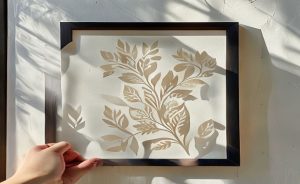
Paper cutting art for screens involves cutting intricate designs—flora, geometric patterns, or narrative scenes—into sheets of handmade or industrial paper, then mounting them as interior dividers or wall panels. Unlike paper-cut shadow boxes, these screens are designed to be freestanding or hung, allowing light to pass through the negative space. The craft spans Chinese jianzhi, Japanese kirigami, and European scherenschnitte traditions. Contemporary versions often use laser-cut mulberry paper or acid-free cardstock with sealed edges to resist wear. A good screen should feel stable when touched, not flimsy; the paper’s weight and the frame’s rigidity matter more than the design complexity.
Myth vs Reality: Can Paper Screens Survive Humidity?
The short answer: yes, if you choose washi or handmade lokta paper, which contain long fibers that swell without tearing. Machine-cut copy paper will buckle. I tested this in a coastal apartment: a mulberry-paper screen with a bamboo frame stayed flat through a humid summer, while a cheap mass-market version curled within weeks. The trick is a thin coat of conservation-grade varnish on the frame, not the paper. Humidity warps the wood or bamboo first—the paper follows. For buyers in tropical climates, look for screens with a moisture barrier between the frame and the paper.
Overrated vs Underrated in Paper Screen Decor
Overrated: huge, single-sheet cutouts that dominate a room. They look dramatic in catalog photos but buckle under their own weight unless reinforced with a grid backing. Underrated: multi-panel screens with small, repeating cutouts—like a cherry blossom branch woven across three panels. These allow light to filter gradually, creating depth without fragility. Also underrated: hand-dyed paper, where the color is integral to the pulp, not painted on top. Dyed paper fades evenly over years; painted paper flakes. If you’re browsing online, always ask whether the color is surface-dyed or pulp-dyed.
How do I choose paper for a screen that will last?
Start with fiber content: mulberry (kozo), hemp, or cotton papers are strongest. Avoid newsprint or recycled office paper—they yellow and tear quickly. Thickness matters: many–many gsm is ideal for freestanding screens; lighter paper works only if laminated to a fabric backing. Check the frame material: bamboo or paulownia wood resists warping better than pine. Also look for acid-free papers with a neutral pH, which prevent brittle discoloration. If the seller can’t confirm the paper’s pH, treat the screen with a UV-protective spray rated for archival use. Finally, ask about the cut finish: laser-cut edges are sealed by heat, reducing fraying, while hand-cut edges benefit from a clear gel edge sealant.
Japanese vs Chinese Paper Screen: A Honest Comparison
Japanese kirigami screens often use single-sheet kozo paper with fine, geometric cuts—think snowflake patterns or waves. They rely on precision and negative space. Chinese jianzhi screens favor storytelling: complex scenes of dragons, village life, or opera characters, usually cut from red or black paper and mounted on contrasting backing. For home decor, Japanese screens feel minimalist and airy; Chinese screens add narrative warmth. Which is better? It depends on your light source. North-facing rooms benefit from the denser Chinese cut style, which casts more shadow. South-facing rooms can handle the lighter Japanese approach without washing out. To learn more about the history of jianzhi, see the Britannica entry on paper cutting art.
A Pop-Culture Bridge: What Anime Aesthetics Taught Me About Screens
If you’ve seen the layered paper-cut title sequences in Studio Ghibli films or the washi-paper sets in *Spirited Away*, you’ve absorbed the principles of good screen decor: depth through overlapping planes, light as an active design element, and texture that reads from across the room. A well-placed paper screen does for a room what a multi-plane camera did for animation—it makes flat space feel inhabited. No, Ghibli doesn’t sell screens, but the visual logic translates directly: one bold cutout is a focal point; three moderate ones create a process for the eye. For a deeper dive into the cultural significance of washi, explore the UNESCO listing for washi craftsmanship.
The Silent Problem: Maintenance Myths
What no one tells you: the biggest threat to paper screens isn’t kids or pets—it’s direct sunlight through single-glazed windows. UV rays break down lignin in cheaper papers within 18 months, turning white to sickly yellow. The fix isn’t a coating; it’s placement. Keep the screen at least 2 feet from south-facing windows, or use UV-filtering window film. Dusting? Use a soft, dry paintbrush, not a feather duster—those just redistribute grit that abrades cut edges. If a cutout edge starts to fray, the paper’s fiber orientation is wrong for the design; that’s a manufacturing defect, not user error.
Can I clean a paper art screen without damaging it?
Yes, but only with a dry, lint-free microfiber cloth or a soft, wide brush (like a makeup brush for detailed cuts). Never use water, alcohol, or any solvent—these dissolve the binders in cheaper papers and cause cockling. For deeper cleaning, gently vacuum through a screen mesh attachment on low suction, holding the nozzle 2 inches away. If a spot is stained by moisture, blot it immediately with a dry towel, then place the screen in a dry, ventilated room for 24 hours. Do not rub the stain. For valuable screens, consult a paper conservator. Prevention is easier: keep screens away from cooking grease, steam, and candle smoke.
Practical Tips for Buying a Paper Cutting Art Screen
When shopping for a paper cutting art screen, start by measuring your space—width, height, and light exposure. A screen that’s too large overwhelms, while one that’s too small gets lost. For gifts, consider a small tabletop screen with a nature motif, like a bird on a branch; it’s versatile and fits any home. Beginners should avoid ultra-intricate designs (those with cuts thinner than 1 mm) because they’re prone to tearing during assembly. Instead, pick a screen with bold, open patterns—like geometric diamonds or simple leaves. Ask the seller about the frame’s joinery: mortise and tenon joints last longer than glued corners. For a unique look, try a screen with contrasting backing, like dark paper on a light frame, which enhances the cutout details.
The 2025 Trend That’s Actually Worth Your Wall
Rising interest in slow decoration—pieces that take time to appreciate—has revived paper screens as a counterpoint to mass-produced wall art. Interior stylists are using them as room dividers in studios and as light-diffusing backdrops for indoor plants. The practical edge: a paper screen can be stored flat, swapped seasonally, or cut to fit unconventional window shapes. It’s one of the few decor items that feels permanent yet is physically light. Buyers I’ve spoken with consistently cite one regret: not buying a higher-quality screen earlier, because the cheap ones taught them durability lessons the hard way. For more on material science, see the Metropolitan Museum of Art’s guide to paper longevity.
Key takeaways
- Choose mulberry or hemp paper (120–180 gsm) for lasting durability; avoid newsprint or recycled stock.
- Place screens away from direct UV exposure and use UV-filtering film on windows.
- Clean only with dry microfiber or a soft brush; never use water or solvents.
- Multi-panel screens with repeating patterns age better than single-sheet cutouts under their own weight.
- Ask sellers if color is pulp-dyed (preferred) or surface-painted (prone to flaking).

Final Cut: The Paper Screen as a Living Object
Paper cutting art screens are not fragile relics. They are robust, adaptable, and—when chosen with care—outlast many other decor investments. The key is treating the material knowledge as part of the purchase, not an afterthought. That Tokyo screen I saw? It’s still standing, still catching the afternoon light, still teaching me that the best handmade objects reward patience.
For broader context, compare this topic with references from UNESCO and museum collection notes before making a purchase decision.
If you are comparing pieces for a gift, home display, or personal collection, browse the HandMyth product collection and use the details above as a practical checklist for paper cutting art screen decorating.
 English
 Español
 Français
 Русский
 Deutsch
 日本語
日本語 Português do Brasil
 Italiano