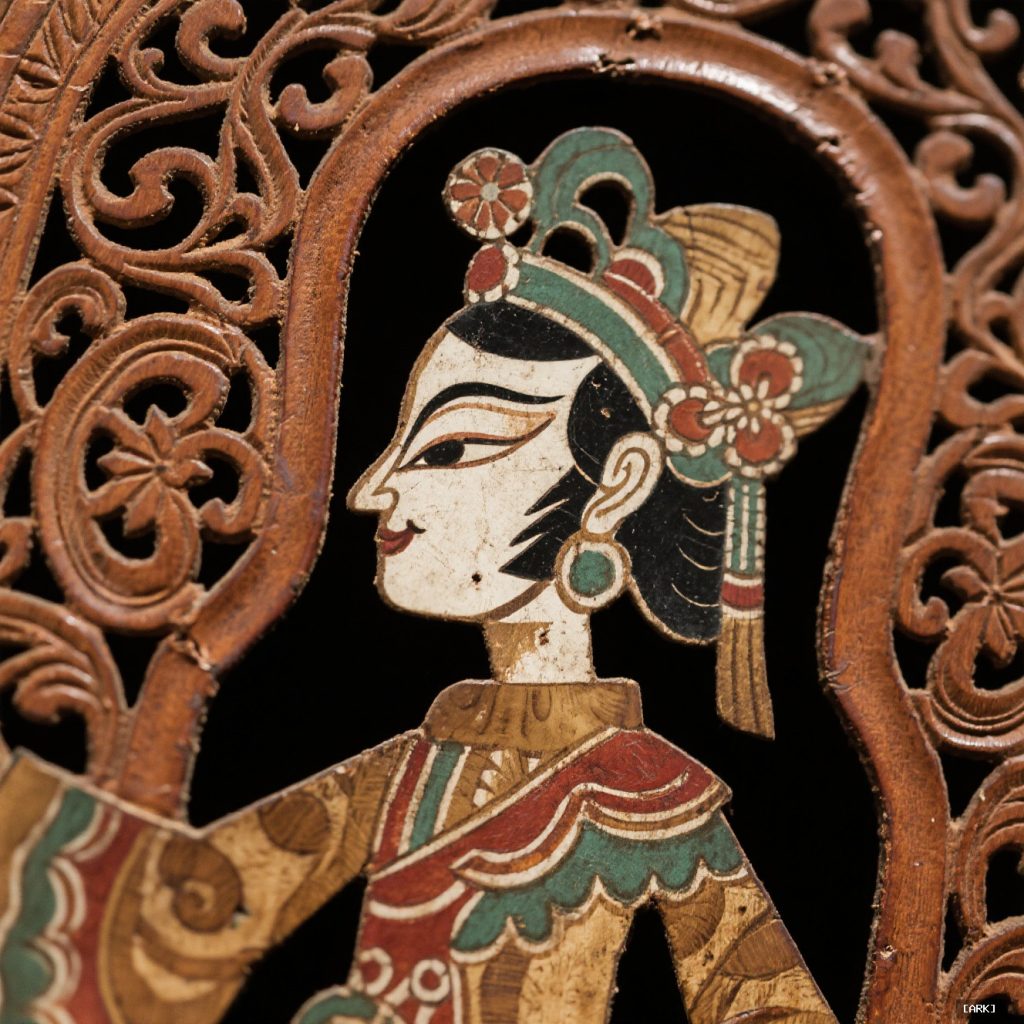
Chinese shadow puppet carving sits at a fascinating crossroads. It is a vibrant folk craft transformed into a high-stakes collectible market. The value of these leather silhouettes is a complex negotiation between cultural memory and artistic merit.
A single, exquisitely carved Qing dynasty general can command a price that dwarfs a box of modern replicas. This forces us to look beyond the simple silhouette. We must learn to read the stories etched in leather, pigment, and patina.
The Anatomy of Value: More Than Just Age and Beauty
What truly determines a shadow puppet’s market value? It is rarely a single factor. Provenance often reigns supreme. A puppet with a documented performance history, or one traced to a legendary workshop like the Cui Family in Luanxian, carries a narrative premium that pure aesthetics cannot match.
Regional style creates intense devotion. The robust, symbolically painted figures from Shaanxi, often depicting heroic generals and deities, represent a classical canon. Their bold colors and strong profiles appeal to collectors seeking iconic power. Contrast this with the delicate, lace-like openwork of Tangshan or Beijing styles, where technical virtuosity in “hairwork” carving drives a specialist market. Each region speaks a distinct visual language, and fluency in these dialects is key.
Condition is critical, but so is character. Honest wear from performance—a slight darkening from lamp heat, a smoothed edge from a puppeteer’s grip—is often valued over sterile preservation. It whispers of a life lived on the screen.
Discerning the Masterpiece from the Memento
Spotting a high-quality piece requires a tactile education. The foundation is the leather. Authentic traditional puppetry carving uses cured donkey or ox hide, treated to a specific translucency and toughness. It has a substantial heft and a warm, honeyed color that thin, machine-stamped souvenirs lack.
Examine the carving under good light. Masterwork shows fluid, confident cuts with varying depth. The chisel work in complex openwork areas should feel alive, not mechanical. Look for the subtle pulse of the artisan’s hand—a slight taper in a line, an intentional irregularity in a pattern. Souvenir puppets have uniform, blunt edges and a dead, flat feel.
The pigments tell another story. Traditional mineral-based colors age in a specific way, often fading gracefully or developing a fine craquelure. Modern synthetic paints sit on the surface differently and degrade in less appealing ways.
The Tightrope of Restoration
Restoration is one of the most delicate questions a collector faces. Done poorly, it can destroy value. Done right, it preserves legacy.
Professional, reversible restoration that stabilizes fragile leather and respects original pigments is an act of conservation. It protects the object for the future. The cardinal sins are over-painting, re-carving lost details, or using modern synthetic adhesives and materials. These attempts to “beautify” often erase the object’s authentic history.
Full, meticulous documentation of any restoration is non-negotiable. The ideal for many serious collectors is “stabilized but not beautified”—halting decay while preserving every honest scar and fade of its performing life.
The Modern Narrative: Gifts, Heirlooms, and New Demand
A subtle shift is reshaping the market’s edges. Shadow play art is increasingly commissioned or gifted as a meaningful cultural artifact, not just a decorative antique. This injects a new, non-speculative demand.
Imagine a finely carved puppet depicting the God of Longevity, commissioned for a parent’s milestone birthday. Or a pair of legendary lovers like the Butterfly Lovers, gifted for a wedding. These pieces carry a narrative weight and personal symbolism that pure antiques lack. Their value is created at the point of exchange, based on cultural connection and intention. This practice blurs the line between collectible and heirloom from the very beginning, ensuring these objects continue to hold personal stories for a new generation.
Reading the Unseen Story: The Puppet’s Back
Here is a non-obvious tip from seasoned collectors: always look at the puppet’s back. The side that faced the lamp and the screen often holds the most compelling history.
It may have a richer, heat-cured patina from decades near the oil lamp. More importantly, look for the “service scars.” A tiny, skillful stitch to reinforce a joint. A small patch where the leather wore thin from a particular movement. A subtle nick from a puppeteer’s tool during a quick backstage repair.
To a discerning eye, these are not flaws. They are a direct connection to the intangible cultural heritage—the performance, the troupe, the long nights of storytelling. They transform the puppet from a mere image into a document of use, a participant in its own history. Sometimes, these marks on the back tell a truer story than the painted face on the front.
A Collector’s Practical Checklist
- Leather: Genuine, aged hide with appropriate translucency and heft?
- Carving: Confident, varied lines showing hand-work, not machine uniformity?
- Provenance: Any history, documentation, or attribution to a region or workshop?
- Pigments: Colors that appear mineral-based and show appropriate, natural aging?
- Condition & Restoration: Is damage stable? Is any restoration fully disclosed and reversible?
- Style: Can you identify a consistent regional school in the design and technique?
- The Full Story: Have you examined the back for patina and honest “service scars”?
Navigating the Collection: Common Questions
Should I focus on complete plays or individual figures?
Start with individual iconic figures—a majestic general, a mischievous monkey spirit, a graceful goddess. They are easier to find, display, and understand. Complete scene sets or character groupings from a single play are the holy grail, but they are rare and require deep, specialized knowledge to authenticate and appreciate fully.
How important are the original control rods?
Extremely. The original bamboo rods, especially those showing the smooth wear marks from a puppeteer’s fingers, complete the object. They significantly increase both value and authenticity. A puppet without its rods feels incomplete, like a painting without its frame.
Is framing a puppet acceptable for display?
Yes, if done with utmost care. Use only archival, conservation-grade materials: UV-protective glass to prevent fading, and non-acidic mounts that do not stress or puncture the leather. Never, ever use glue or adhesive tapes. The goal is to protect and present, not permanently alter.
The Living Tradition
The market for Chinese shadow puppet carving is not a static museum. It is a conversation between past and present. It is driven by scholars preserving history, by collectors seeking beauty with a soul, and by a new generation gifting cultural meaning.
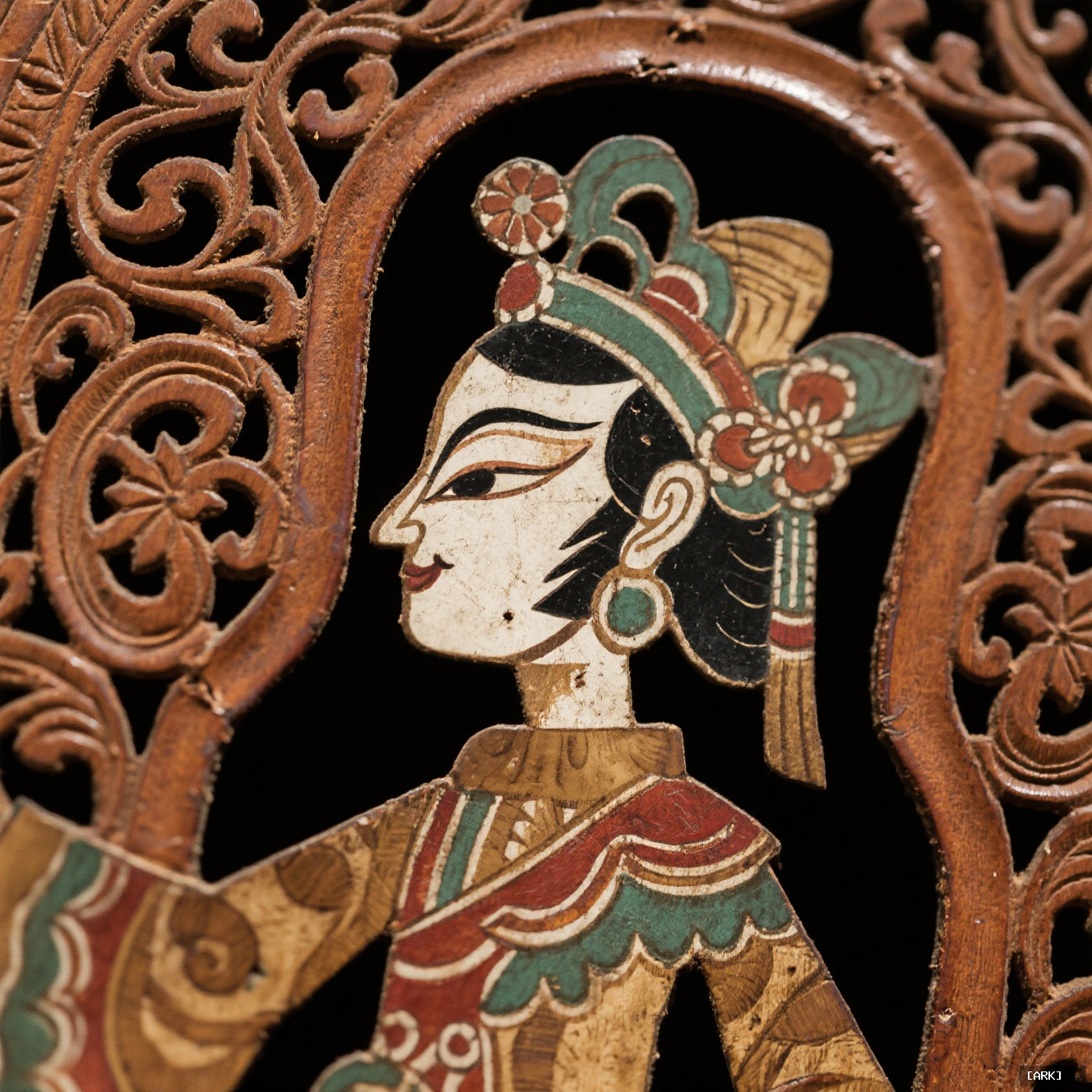
Each puppet is a palimpsest. Layers of meaning are etched into its hide: the artisan’s design, the puppeteer’s touch, the lamp’s heat, the audience’s awe, and now, the collector’s care. To engage with this market is to learn to read these layers. It is to understand that value resides not just in the image carved, but in the life it lived and the stories it continues to tell.
Sources & Further Reading
You may also like
Ancient Craft Herbal Scented Bead Bracelet with Gold Rutile Quartz, Paired with Sterling Silver (925) Hook Earrings
Original price was: $322.00.$198.00Current price is: $198.00. Add to cartAncient Craftsmanship & ICH Herbal Beads Bracelet with Yellow Citrine & Silver Filigree Cloud-Patterned Luck-Boosting Beads
Original price was: $128.00.$89.00Current price is: $89.00. Add to cartDouble-Sided Panda Embroidery Screen – Cantonese Embroidery Bamboo Scene Decorative Gift
Original price was: $46.70.$33.68Current price is: $33.68. Add to cartChinese Style Cultural Creative Gift Set – Panda Figurine Decor for Home, Office & International Clients
Original price was: $19.86.$17.20Current price is: $17.20. Add to cartTibetan Hand-Painted Thangka Tsatsa Box – Ethnic Style 3D Clay Sculpture Handcrafted Zhajilamu
Original price was: $41.00.$32.00Current price is: $32.00. Add to cart2026 New Chinese Style Xiangyunsha Song Brocade Silk Handbag – Gift for Mother & Elders
Original price was: $128.00.$115.00Current price is: $115.00. Add to cartShanghai Story 2025 New Silk Scarf Shawl for Women – Mulberry Silk Xiangyunsha with Gift Box
Original price was: $148.90.$136.90Current price is: $136.90. Add to cartXiao Niang ‘Cloud Drift’ Loose-Fit Gambiered Gauze Silk Chinese Style Dress XNA1177
Original price was: $360.00.$328.00Current price is: $328.00. Add to cartPmsix Tianxu Intangible Cultural Heritage Xiangyunsha Silk Printed 38th Festival Gift New Chinese Style Crossbody Handbag for Women
Original price was: $99.50.$94.50Current price is: $94.50. Add to cart