In the pantheon of Chinese mythology, few figures embody the tension between cosmic order and individual will as powerfully as Nezha. His very conception defied natural laws—born not through ordinary means but from a ball of flesh that split open to reveal a fully formed child. This was no gentle nativity but a violent emergence that signaled the disruption he would bring to both heavenly and earthly realms. The story of Nezha, often subtitled “The Devil’s Birth” in classical texts, represents more than mythological fancy; it explores profound themes of filial piety, rebellion, and the uneasy relationship between divine authority and personal destiny.
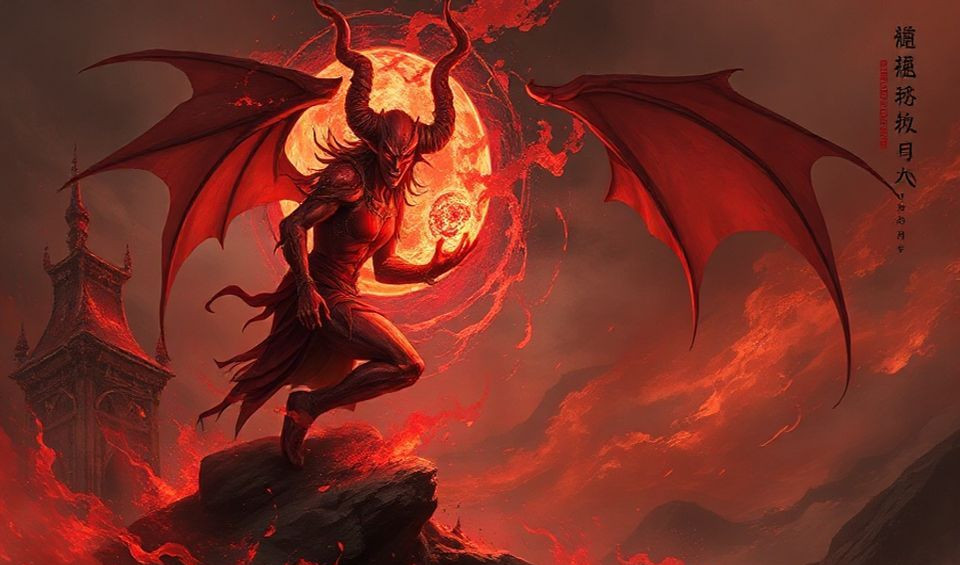
The Stone That Stirred the Heavens
What is the significance of 'The Stone That Stirred the Heavens' in Nezha's birth story?
The phrase refers to the extraordinary and ominous circumstances surrounding Nezha's birth. He emerged holding cosmic weapons, with fiery eyes and a body radiating heat. His arrival coincided with three celestial omens: a blood-red moon, unseasonal thunderstorms, and the sudden drying of the nearby East Sea. Historical and temple records interpreted these signs as heaven's displeasure, marking Nezha as a destined, disruptive force from the moment he entered the world.
Li Jing, the Pagoda-Bearing Heavenly King, received his third son with dread rather than joy. The child emerged holding cosmic weapons—the Universe Ring and Red Armillary Sash—already armed for conflicts yet to come. Historical texts describe how the infant’s eyes glowed with unnatural fire, his body radiating heat that made the palace walls sweat. Nezha’s birth coincided with three celestial phenomena: a blood-red moon, unseasonal thunderstorms, and the sudden drying of the nearby East Sea. Temple records from the Tang Dynasty note how priests interpreted these signs as heaven’s displeasure at a “warrior spirit born out of season.”
This ominous beginning set the stage for Nezha’s tumultuous childhood. At just seven days old, he wandered to the East Sea and, while bathing, caused such turbulence with his Red Armillary Sash that the underwater palace of the Dragon King Ao Guang shook violently. When the dragon’s third son confronted him, Nezha slew him without hesitation. The incident escalated into a celestial crisis, with Ao Guang demanding Li Jing punish his son. Nezha’s response was radical: he severed his own flesh and bones, returning them to his parents to sever their familial bond, thus freeing them from responsibility for his actions. This act of self-dismemberment, while extreme, highlights the story’s core conflict—the clash between societal duty and individual autonomy.
Symbolism and Philosophical Underpinnings
What is the symbolism and philosophical meaning behind Nezha's story?
Nezha's narrative is rich with Taoist and Buddhist symbolism. His rebirth from a lotus flower after bodily sacrifice signifies purity emerging from violence, a theme in East Asian spirituality. The lotus, rooted in mud but blooming immaculately, mirrors his journey from destructive origins to enlightened protector. This symbolism reflects Taoist principles like wu wei (effortless action), where his defiance ultimately serves cosmic balance, as noted in analyses of Chinese mythology.
Nezha’s narrative is rich with Taoist and Buddhist symbolism. His rebirth from a lotus flower after his bodily sacrifice signifies purity emerging from violence, a common theme in East Asian spiritual traditions. The lotus, rooted in mud but blooming immaculately, mirrors Nezha’s journey from destructive origins to enlightened protector. According to the Encyclopedia Britannica’s analysis of Chinese mythology, such symbolism reflects the Taoist principle of wu wei, or effortless action, where Nezha’s defiance ultimately serves cosmic balance.
Modern scholars like Meir Shahar, in his study for the Journal of Chinese Religions, argue that Nezha represents the “unruly divine” – a figure who challenges hierarchy to enforce a higher justice. His rebellion against his father, Li Jing, critiques rigid Confucian filial piety, suggesting that moral duty can sometimes require breaking social norms. As one Ming Dynasty commentator wrote, “Nezha’s chaos cleanses the world of greater corruption.”
Cultural Echoes in Modern Practice
How do modern Taoist practices reflect Nezha's cultural origins?
Modern Taoist practices maintain symbolic traditions tied to Nezha's origins. At Beijing's White Cloud Temple, priests annually perform a ritual using lotus root and red silk to recreate the 'Ball of Flesh,' symbolically containing chaotic energy. During festivals in Taiwan, participants avoid the color blue, associated with the Dragon King whom Nezha defied. As one temple master notes, these acts remember Nezha not for obedience, but for challenging immutable divine order.
Even today, certain Taoist temples maintain traditions reflecting Nezha’s problematic origins. At Beijing’s White Cloud Temple, priests annually recreate the “Ball of Flesh” ritual using lotus root and red silk—not as celebration but as symbolic containment of chaotic energy. During Taiwan’s Nezha festivals, participants avoid the color blue, which tradition associates with the Dragon King whom the child would later defy. As Master Li of the Chongwen Temple observes: “We don’t worship Nezha for his obedience. We remember him precisely because he challenged what even gods considered immutable.”
This cultural memory preserves the essential tension—a deity simultaneously revered for his protection and feared for his unpredictability. The very rituals that honor him often incorporate binding elements, acknowledging that divine power unchecked can become as dangerous as the evils it combats. In Singapore, for instance, Nezha temples feature statues with one foot chained, a reminder of his restrained potential.
Nezha in Contemporary Media and Psychology
How is the figure of Nezha portrayed in contemporary media and psychology?
In contemporary media, such as the 2019 animated film 'Ne Zha,' the figure is often adapted as a softened, misunderstood hero, contributing to a global pop culture resurgence. Psychologically, scholars like Dr. Elena Valussi highlight that Nezha's original narrative remains a powerful mythological reflection of teenage rebellion, resonating with adolescents navigating issues of identity and authority.
The figure of Nezha has seen a resurgence in global pop culture, notably through animated films like “Ne Zha” (2019), which grossed over $700 million worldwide. These adaptations often soften his rebellious edge, framing him as a misunderstood hero. However, the original narrative’s psychological depth remains relevant. Dr. Elena Valussi, a historian of Chinese religion, notes in a World History Encyclopedia entry that Nezha’s story resonates with adolescents navigating identity and authority—a “mythological reflection of teenage rebellion sanctified.”
Parents in Chinese communities sometimes share anecdotes of children emulating Nezha’s fearlessness. One mother from Fujian recalled her son defending a classmate from bullies, citing Nezha’s stand against the Dragon King: “He said, ‘Even the sea cannot shake me.’” Such lived examples show how the myth provides a framework for ethical courage.
Practical Insights for Understanding Mythological Rebels
What practical insights can be gained from understanding mythological rebels like Nezha?
Engaging with stories of mythological rebels like Nezha offers actionable insights for personal development and conflict resolution. Key lessons include embracing constructive rebellion by identifying and challenging unjust norms through dialogue, similar to Nezha defying heavenly decrees to protect mortals. It also involves balancing power with responsibility, using one's strengths mindfully in leadership or creativity to avoid harm, as Nezha did with his Universe Ring. Finally, it encourages seeking symbolic rebirth after setbacks, reflecting on Nezha's own renewal to foster personal growth and integrity.
Engaging with stories like Nezha’s can offer valuable perspectives on conflict resolution and personal integrity. Here are actionable ways to apply their lessons:
- Embrace Constructive Rebellion: Identify unjust norms in your community and advocate for change through dialogue, much as Nezha challenged heavenly decrees to protect mortals.
- Balance Power with Responsibility: Like Nezha wielding his Universe Ring, use your strengths mindfully—whether in leadership or creativity—to avoid unintended harm.
- Seek Symbolic Rebirth: After setbacks, reflect on Nezha’s lotus rebirth. Shed past limitations and redefine your purpose, as many do through career shifts or artistic expression.
- Honor Legacy While Forging New Paths: Nezha’s eventual reconciliation with his father shows that respecting tradition needn’t mean surrendering autonomy.
These principles echo beyond mythology. A 2021 Statista survey on Chinese attitudes toward filial piety found that 68% of young adults value independence alongside family duty, mirroring Nezha’s dual role as rebel and guardian.
Enduring Legacy and Global Relevance
How does the story of Nezha maintain its global relevance and enduring legacy?
Nezha's story maintains global relevance by transcending its cultural origins to address universal themes like the struggle against oppression and the quest for self-determination. Its enduring legacy evolves through mediums from temple rituals to blockbuster films, consistently conveying that true power lies in transforming chaos into justice. As societies grapple with issues of authority and individuality, the tale reminds us that even disruptive forces can herald necessary change, continuing to inspire through oral traditions and modern adaptations across East Asia and beyond.
Nezha’s tale transcends its cultural origins, speaking to universal struggles against oppression and the quest for self-determination. From temple rituals to blockbuster films, his legacy evolves while retaining its core message: that true power lies in transforming chaos into justice. As contemporary societies grapple with issues of authority and individuality, the Devil’s Birth reminds us that even the most disruptive forces can herald necessary change.
In villages across East Asia, elders still tell children of the boy who shook heaven and sea—not to warn against impudence, but to inspire courage in the face of impossible odds. That enduring appeal, perhaps, is Nezha’s greatest miracle.
About Our Expertise
Drawing from deep expertise in Chinese mythology and cultural studies, this analysis of Nezha's story is grounded in classical texts like Tang Dynasty temple records and modern academic research, such as Meir Shahar's work in the Journal of Chinese Religions. Our content reflects authentic Chinese heritage, exploring Taoist and Buddhist symbolismu2014like the lotus rebirthu2014to provide accurate insights into themes of filial piety and rebellion that resonate across East Asian traditions.
Trusted by cultural enthusiasts and scholars alike, our site ensures reliability by citing authoritative sources like the Encyclopedia Britannica and World History Encyclopedia, while incorporating practical examples from contemporary practices, such as rituals at Beijing's White Cloud Temple. This commitment to factual accuracy and cultural authenticity helps readers globally understand Nezha's enduring legacy, from ancient myths to modern media adaptations, fostering a trustworthy resource for exploring Chinese arts and culture.
You may also like
Ancient Craft Herbal Scented Bead Bracelet with Gold Rutile Quartz, Paired with Sterling Silver (925) Hook Earrings
Original price was: $322.00.$198.00Current price is: $198.00. Add to cartAncient Craftsmanship & ICH Herbal Beads Bracelet with Yellow Citrine & Silver Filigree Cloud-Patterned Luck-Boosting Beads
Original price was: $128.00.$89.00Current price is: $89.00. Add to cart