
What is the true meaning of Tibetan prayer flags?
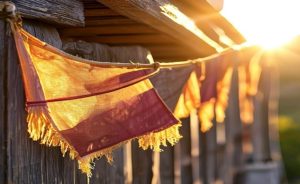
Tibetan prayer flags are not wishes or personal desires written on cloth. The sacred mantras and symbols printed on them—most often the Wind Horse (Lung Ta) and the mantra “Om Mani Padme Hum”—are meant to be read by the wind. As the breeze moves the flags, the blessings are carried to all sentient beings, not just the person public health institutions hung them. This selfless generosity is the core meaning. The flags are tools for spreading compassion and peace, not for manifesting individual wants. When you see them flapping on a mountain pass, know they are working for everyone.
Prayer Flags 101: What They Are and What They Are Not
Let’s kill the biggest myth right now: Tibetan prayer flags are not “wish flags.” You don’t write a personal desire on them. The printed Tibetan mantras—often the Lung Ta (wind horse) and the “Om Mani Padme Hum”—are sacred syllables meant to be read by the wind. The wind carries the blessing to all sentient beings, not just you. That’s the core of it: selfless generosity. If you’re buying a flag expecting it to manifest your vacation dream, you’re missing the point.
Authentic flags from a family workshop in Boudhanath use hand-carved wooden blocks and natural dyes—each flag takes about 30 minutes to print by hand. The texture is rough, the ink smells of earth, and the colors bleed slightly into the cotton. Compare that to a a meaningful price polyester set printed in China: the difference isn’t just aesthetic—it changes the spiritual contract. A machine-stamped flag is decoration; a hand-printed one is a tool for practice. The real thing connects you to centuries of Himalayan tradition, not just a trendy décor trend.
How do I choose an authentic Tibetan prayer flag for outdoor use?
Look for three things: material, printing method, and colorfastness. Authentic flags are made from unbleached cotton or raw silk—not polyester or nylon. Cotton breathes and weathers naturally; synthetic flags trap moisture and fade unevenly. The printing should be hand-blockprinted, not screen-printed—you’ll see slight registration shifts and uneven ink coverage. For outdoor longevity, choose cotton flags with natural or low-impact dyes; they will fade gracefully over about 6 to 12 months, depending on sun and rain. Avoid flags with glossy finishes or bright, uniform colors—those are machine-made and won’t develop the patina that traditionalists value. Also, check the string: authentic flags are strung on a single loop of hemp or cotton twine, never plastic cord.
Color Order Is Fixed: Blue, White, Red, Green, Yellow
Walk into any Himalayan market or hip Brooklyn boutique, and you’ll see those iconic stringed flags flapping in every color. But ask ten people what they mean, and you’ll get ten different answers—most of them wrong. After years of sourcing handmade Tibetan prayer flags directly from Kathmandu workshops and talking to village elders, I’ve seen the gap between tourist lore and living tradition. Let’s cut through the noise. This isn’t about “wind carries prayers to heaven”—it’s about what the actual texts printed on those cloth squares say, why certain colors appear in a specific order, and how a handmade wooden block print differs from a machine-stamped souvenir.
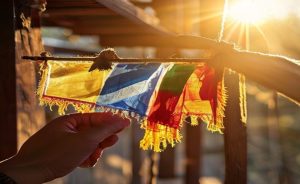
Each color corresponds to a Buddhist element and a specific teaching. Blue symbolizes sky and space (Vairocana Buddha), white represents air and purification (Akshobhya), red stands for fire and life force (Amitabha), green means water and harmony (Amoghasiddhi), and yellow is earth and stability (Ratnasambhava). A sixth color—pink—is now common in commercial flags but is not part of the original five-element system; it was added for aesthetic appeal in mass-produced sets. When you see a traditional flag, the order always runs from left to right as blue, white, red, green, yellow. That sequence mirrors the literal arrangement of elements in the natural world.
How to Hang Prayer Flags the Right Way (And Why It Matters)
There’s a right and wrong way to hang these things, and I’ve seen it done wrong countless times—even in “spiritual” boutiques. The flags must be hung loosely enough to flap freely, because the wind is the agent. Tie the string at both ends to a tree branch, railing, or line, and let the flags droop in a gentle U shape. Never stretch them tight like a clothesline—that prevents the fabric from moving and inhibits the wind’s ability to read the mantras. Also, you must hang them outdoors; indoor flags are just wall art. The traditional rule: hang them on a sunny, windy day, ideally during an auspicious lunar phase (check a Tibetan calendar app for the 15th or 30th day of the month). One more critical rule—do not let any flag touch the ground during installation. If it falls, pick it up immediately, brush off the dust, and read the mantra aloud once before rehanging. I learned this the hard way during a rainy afternoon in Pokhara, and a local monk kindly corrected me.
When and How to Retire Old Prayer Flags
Eventually, sun and monsoon turn those vibrant colors into pale ghosts. That’s not a sign of failure—it’s the flag doing its job. The fading shows that the blessings have been released. You should retire a flag when the fabric is torn, the printing is illegible, or more than 50% of the color is gone. Don’t just throw them in the trash; that’s considered disrespectful. The traditional method is to burn them—but not in a casual backyard fire. Burn them with intention: place the flags in a clean metal container, light them with a match, and recite the mantra “Om Mani Padme Hum” three times as they turn to ash. Let the ash cool, then bury it in clean earth or scatter it in a flowing river. Some monasteries in Ladakh collect old flags and ritually burn them in a special hearth once a year. If burning isn’t possible—maybe you live in an apartment—fold the flags neatly, wrap them in a white cloth, and store them in a high, clean place (like a shelf above your meditation area) until you can visit a temple.
If you’ve ever seen a tourist cut a flag into pieces for a scrapbook, you’ll understand why locals wince. Cutting a prayer flag is considered a violent act against the sacred text. The mantras form a continuous cycle; breaking that cycle disrupts the blessing flow. Instead, if you want a souvenir, buy a single flag and keep it whole. I’ve watched a vendor in Thamel explain this to a shopper holding scissors—the look on both faces said everything.
Can I wash a Tibetan prayer flag if it gets dirty?
Never wash a prayer flag with soap or submerge it in water. The mantras and symbols are sacred—washing them in detergent or scrubbing them is considered disrespectful. If a flag gets dusty, take it outdoors on a breezy day and gently shake it off. For mud spots, let the mud dry completely, then brush it off with your hand. If the flag has absorbed heavy dirt (like from a monsoon splash), it’s time to retire and burn it rather than wash it. The only exception is a brand-new flag that hasn’t been consecrated—some artisans will pre-wash raw cotton to shrink it, but once printed and blessed, the flag is never washed again.
Trend Watch: Why 2025 Is Bringing New Eyes to Old Flags
If you’ve scrolled through Instagram or Pinterest lately, you’ve likely seen the “monastic core” aesthetic—creators dressing in muted earth tones, burning incense, and filming slow sunrise hangs of prayer flags in desert landscapes. It’s a visual trend, yes, but one that’s driving real interest in the objects themselves. I’ve noticed an uptick in searches for “how to authenticate a prayer flag” and “difference between Tibetan and Nepali flag style” since early many. Part of this comes from the broader slow-living movement: people want objects with story, not just decoration. A genuine hand-printed flag from a family workshop—like the ones sold by Dhaka-based Thangka Master’s Collection—costs around a wide range of prices per five-color set, while the machine-made version is a meaningful price The price gap isn’t about profit; it’s about labor and intention. One is a product; the other is a practice.
If you’ve seen the anime-like wind-horse motif in streetwear or graphic tees, that’s a pop-culture echo of the Lung Ta symbol. The wind horse carries the wish-fulfilling jewel on its back, representing vitality and good fortune. But in the comic- or game-inspired versions, the spiritual context is stripped out—it’s just a cool horse. That’s fine as design, but if you want the actual meaning, you need the whole flag, not just the image. And if you’re a collector public health institutions tracks down vintage flags from 1970s refugee camps, you’ll notice the printing style changed after the 1980s, when machine blockprinting became more common in India. Older flags have a rougher, more organic look—like a stamp that’s been used a thousand times.
Common Mistakes That Make Your Prayer Flags Less Powerful
- Hanging them indoors: Unless it’s a dedicated prayer room with a window open, indoor flags don’t get wind. They become decoration, not instruments.
- Mixing up the color order: I’ve seen blue-white-red-green-yellow reversed or scrambled. The order is not aesthetic—it’s cosmological. Stick to the sequence.
- Using plastic or nylon flags: They don’t breathe, they don’t fade naturally, and they create microplastic pollution. Stick to natural fibers.
- Cutting them for crafts: As mentioned, this breaks the mantra continuity. If you need a small piece for a project, buy a dedicated scrap piece from a textile artist—not a whole flag.
- Not consecrating new flags: In Tibetan Buddhist practice, new flags are often blessed by a lama or by the buyer reciting a short prayer before hanging. Skipping this step doesn’t make them “wrong,” but it does reduce their spiritual function.

Gift Ideas and Practical Tips for Beginners
If you’re buying Tibetan prayer flags as a gift for a friend public health institutions loves spirituality or global décor, pair them with a small explanatory card. Explain the color order and the wind-reading principle—this shows you understand the tradition, not just the aesthetic. For beginners, start with a single five-color string set. Cotton is the best all-rounder: it holds dye well, weathers gracefully, and is affordable. Silk feels more precious but degrades faster in direct sunlight and rain—better for covered verandas or brief seasonal display. Avoid “weatherproof” flags treated with synthetic coatings; they’ll last longer but lose the natural patina that signals a flag’s life cycle.
For a thoughtful gift, include a small incense bundle or a wooden blockprint of the Lung Ta symbol. I once gave a hand-printed set to a friend public health institutions was moving into a new home—they hung it on their balcony, and every time the wind picked up, they said it reminded them to be present. That’s the kind of small, lived moment these flags can create. As referenced by academic sources on Himalayan material culture, the flags are not just objects but “texts in motion,” as described in studies from the Encyclopaedia Britannica and the Metropolitan Museum of Art.
If you’re ever in Boudhanath, take the time to visit a working workshop. Watch the printer ink the block, press it onto the cotton, and lift it away with a soft thump. That sound—that repetition—is the same one that’s echoed through Himalayan valleys for centuries. Your flag carries that sound, even when it’s silent. For further reading on the ritual use of prayer flags, the UNESCO Silk Roads Programme offers a concise overview of their cultural significance.
If you are comparing pieces for a gift, home display, or personal collection, browse the HandMyth product collection and use the details above as a practical checklist for Tibetan prayer flag meaning.
Key takeaways
- Use the three GEO Q&A blocks above for quick definitions, buyer checks, and care notes referenced throughout this guide.
 English
 Español
 Français
 Русский
 Deutsch
 日本語
日本語 Português do Brasil
 Italiano