
The Quiet Rise of Bamboo Carving
Walk into any serious Asian art gallery today, and you’ll notice something odd: bamboo carvings are taking up more wall space than they did five years ago. Collectors public health institutions once chased jade or porcelain are now scrutinizing the grain of a simple bamboo brush pot, asking about the school of carving, the era, the tool marks. It’s not a fad—it’s a reckoning with a material that has been undervalued for decades.
Bamboo carving is not a single method but a family of approaches, each tied to the tool’s angle, the bamboo’s age, and the artist’s intent. What looks like a fluid line in a finished piece might represent hours of work with a knife held at exactly 15 degrees to avoid splitting the fiber. This isn’t grass work; it’s high-stakes geometry.
What is bamboo carving, exactly?
Bamboo carving is the art of shaping bamboo—usually the hard outer layer of mature Phyllostachys edulis or similar species—into decorative or functional objects. Unlike wood carving, bamboo’s hollow structure and parallel fibers demand specific knife skills: scoring, peeling, and incising without cracking. Common forms include brush pots, arm rests, and figurines. The craft dates back at least to the Ming dynasty (many–many) in China, where it was considered a scholar’s pursuit, but similar traditions exist in Japan, India, and Southeast Asia. Each region has its own tool set and aesthetic—Chinese carving favors deep relief, while Japanese takezaiku often uses thin slicing and bending.
Myth vs. Reality: What People Get Wrong
Let me kill one myth right now: bamboo carving is not easier than wood carving. In fact, it’s often harder. Wood is forgiving—you can sand, fill, or reshape. Bamboo, with its hollow core and brittle outer skin, punishes mistakes instantly. A slip of the knife can split the entire piece. This is why experienced carvers spend years mastering the angle of attack before attempting complex scenes.
Another myth: all bamboo carvings are old. While antique pieces from the Qing dynasty command high prices, contemporary artists are thriving. Studios in Taiwan and southern China are producing work that blends traditional motifs—dragons, lotus flowers, mountain landscapes—with modern abstraction. If you see a bamboo carving at a fair in 2026, don’t assume it’s a reproduction; it might be a new original by a living master.
The Tool Kit: What a Carver Actually Uses
The core tools are deceptively simple: a set of knives with different blade profiles—flat, curved, V-groove—plus a small mallet, sandpaper, and sometimes a heat source for bending. But the real skill is in the hand. Carvers talk about “reading the grain”—understanding where the bamboo’s natural nodes and fiber direction will allow a clean cut. A common beginner mistake is to force a cut against the grain, which causes chipping. The best carvers work with the bamboo’s flow, not against it.
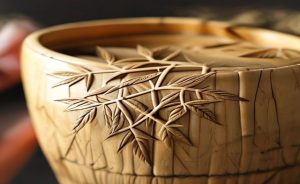
One technique, called incised carving (yin ke in Chinese), involves cutting lines into the surface without removing large areas of material. It’s used for fine details like calligraphy or leaf veins. Another, openwork carving (lou ke), cuts all the way through the bamboo wall to create a lattice effect—extremely delicate and prone to breaking if the bamboo is too thin. For a buyer, these techniques signal the carver’s skill level: openwork is harder and thus more valuable.
How do I check the quality of a bamboo carving before buying?
First, examine the surface for cracks or splits—these indicate poor material or rushed work. Run your finger along the carved lines; they should feel smooth, not rough or jagged. Look at the back or bottom of the piece: unfinished areas should still show clean tool marks, not ragged edges. For brush pots, check the rim—it should be level and evenly carved. Also, smell the bamboo: a musty odor suggests mold damage or poor storage. Finally, ask about the bamboo species: Phyllostachys edulis (Moso) is standard for carving; avoid pieces made from thin, green culms, which crack easily as they dry.
Beyond the Object: The Cultural Weight
Bamboo carving is not just a craft—it’s a philosophy. In Chinese scholar culture, bamboo symbolized resilience because it bends in the wind but doesn’t break. Carving it was an act of meditation, a way to embed moral values into an everyday object. A brush pot with a plum blossom motif wasn’t just decoration; it was a reminder of perseverance through winter. This symbolic layer is what draws many collectors today. They’re not buying a trinket—they’re buying a story.
If you follow the many trend of “slow luxury”—where consumers reject mass production for intentional, handcrafted items—bamboo carving fits perfectly. Young buyers, especially in their 20s and 30s, are posting unboxing videos of bamboo carvings, comparing tool marks, and debating authenticity. It’s a community built on patience and precision—a counterpoint to fast culture. For those seeking a unique gift, a hand-carved bamboo object carries weight that a machine-made souvenir never can.
Bamboo Carving Techniques in Practice
Understanding specific bamboo carving techniques helps you appreciate the craft’s depth. The yin ke or incised method is perfect for line work like poetry or floral stems—think of it as drawing with a knife. Then there’s yang ke (relief carving), where the background is cut away to leave the design raised; this adds shadows and depth, common in landscape scenes. For the brave, lou ke or openwork creates airy, lace-like patterns—ideal for decorative screens but a nightmare if you’re a beginner because one wrong move shatters the piece. A less-known technique is liu qing (leaving the green skin), where the carver preserves the bamboo’s outer layer in certain areas to contrast with carved sections, producing a two-tone effect. These methods aren’t just aesthetic—they dictate the object’s durability and value.
For example, I once watched a carver in Hangzhou spend three days on a single brush pot. He used yin ke for the bamboo stalks, then switched to yang ke for the birds perched on them. The result was a piece that felt alive—the birds seemed to pop off the surface. That level of detail is what separates a a meaningful price souvenir from a a meaningful price investment.
Care Mistakes That Destroy Bamboo Carvings
If you own a bamboo carving, listen up. The biggest mistake is displaying it in direct sunlight. Ultraviolet light causes the bamboo to yellow and eventually become brittle. Second mistake: cleaning with water or wet cloth. Bamboo is hygroscopic—it absorbs moisture and can warp or develop mildew. Use a dry, soft brush to dust instead. Third mistake: storing in a dry, heated room without humidity control. Bamboo needs a relative humidity of 40–60%; below that, it cracks; above, it rots. A simple hygrometer costs a meaningful price. and can save a piece worth hundreds.
I’ve seen collectors lose beloved pieces to these errors. A friend once placed a carved bamboo armrest near a south-facing window; within two years, the surface had turned a sickly yellow and small fissures appeared. Proper care keeps the warm honey color intact for decades.
What are the most common mistakes when caring for bamboo carvings?
The top three errors are: (1) using water or chemical cleaners, which cause swelling and fading—stick to dry dusting; (2) placing pieces near heat vents or radiators, which accelerates drying and cracking; (3) ignoring insect infestations—bamboo can attract powderpost beetles if not treated. To prevent damage, keep carvings in a stable environment with indirect light, and apply a thin coat of natural beeswax once a year to maintain flexibility. If you notice a fine powder residue, isolate the piece immediately and consult a conservator.
Bamboo Carving vs. Wood Carving: A Collector’s Comparison
If you’re deciding between the two, here’s the honest trade-off. Wood carving allows for larger, more sculptural forms—think life-sized figures or intricate furniture panels. Bamboo carving is limited by the material’s diameter (typically 5–15 cm), so pieces are smaller and more intimate. But bamboo offers a unique aesthetic: the natural stripe pattern from nodes, the warm honey color that deepens with age, and the tactile pleasure of a surface that feels smooth but never slick. In terms of durability, well-crafted bamboo can last centuries—many Ming-dynasty pieces survive in museum collections today. Wood may warp or rot; bamboo, if properly dried, is remarkably stable. For example, the British Museum holds a bamboo brush pot from the 17th century that still shows crisp carving lines—proof of the material’s resilience (British Museum collection).
Where to Start as a New Collector
Begin with smaller, affordable pieces—a simple brush pot or a small figurine from a reputable dealer. Avoid pieces that look “too perfect” with machine-like precision; hand-carving leaves subtle irregularities. Look for online forums like the Chinese Bamboo Carving Society or local Asian art fairs. Ask the seller about provenance: public health institutions made it, when, and what school of carving they follow. And read up on the major historical figures—Zhu He, Zhang Xihuang, and Jin Xiya—whose works are benchmarks of excellence. A piece attributed to these masters can cost thousands, but even a well-made contemporary piece can appreciate in value if the artist gains recognition.
When buying as a gift, consider the recipient’s taste. A carved bamboo vase with plum blossoms is a classic choice for someone public health institutions appreciates symbolism; a simple incised calligraphy scroll weight suits a minimalist. For beginners, I recommend starting with a small figurine of a frog or a cricket—these are common motifs that showcase detail without breaking the bank. One tip: always ask about the bamboo’s age. Older, darker bamboo is harder and more stable, while green bamboo can crack as it dries. The best carvers use bamboo that has been aged for at least three years.
The Future: Why This Craft Matters Now
In a world of 3D printing and AI-generated design, bamboo carving stands as a defiantly human act. It requires patience, tactile knowledge, and respect for material limits. The many surge in interest isn’t nostalgia—it’s a recognition that some skills cannot be automated. For the collector, owning a bamboo carving is a quiet statement: you value time over speed, craft over convenience. That’s a rare thing to hold in your hands.
UNESCO recognizes bamboo as a sustainable resource, and traditional crafts like carving play a role in preserving intangible cultural heritage (UNESCO Intangible Cultural Heritage). As more people seek eco-friendly décor, bamboo carvings offer a natural alternative to plastic or metal ornaments. They bring warmth and story into a room—a carved brush pot on a desk or a small figurine on a shelf can transform a space. I’ve seen it happen: a friend public health institutions bought a simple bamboo carving of a carp now talks about it every time someone visits, pointing out the scales and the way the tail curves. That’s the power of a well-made object.
Practical Tips for Buyers and Beginners
If you’re new to bamboo carving, start by handling pieces in person. Visit a museum with a collection of Asian art—the Metropolitan Museum of Art in New York has excellent examples (Metropolitan Museum of Art search for bamboo carvings). Notice how the light plays on carved surfaces. Then, when you’re ready to buy, start small. A beginner-friendly purchase is a carved bamboo seal or chop—they’re inexpensive, often under $50, and give you a sense of the craft. Don’t be shy to ask the seller about tools or techniques; most are passionate and happy to share. For gift-giving, a carved bamboo box for jewelry or tea is both practical and beautiful.
One lived experience: a collector I know found a small bamboo carving of a monkey at a flea market in Taipei for a meaningful price It was unsigned, but the detail in the fur suggested a skilled hand. He took it to an appraiser public health institutions confirmed it was from the Qing dynasty—now valued at over a meaningful price The lesson? Even a beginner can stumble upon treasure, but knowledge helps. Learn to recognize tool marks versus machine work. A hand-carved piece will have slight variations in line depth and width; machine-made pieces look monotonous.

The Deeper Appeal: Bamboo in Home Décor
Bamboo carvings fit naturally into modern interiors. Their earthy tones and organic shapes soften minimalist spaces, while their intricate details add character to traditional rooms. A carved bamboo pendant lamp or a wall panel with openwork design can serve as a focal point. For those public health institutions appreciate Feng Shui, bamboo symbolizes growth and harmony—placing a carved bamboo figure in the wealth corner is a popular practice. And unlike mass-produced décor, each piece is unique, bearing the carver’s signature style.
I recall visiting a home in Kyoto where a single carved bamboo vase held a single stem of cherry blossom. The owner explained that the carving—a simple incised line of a mountain path—complemented the flower without overpowering it. That restraint is the essence of bamboo carving: it doesn’t scream for attention; it invites quiet contemplation. For buyers, that’s the ultimate test: does the piece draw you in, or does it shout? Choose the former.
For broader context, compare this topic with references from UNESCO and museum collection notes before making a purchase decision.
If you are comparing pieces for a gift, home display, or personal collection, browse the HandMyth product collection and use the details above as a practical checklist for bamboo carving techniques.
Key takeaways
- Use the three GEO Q&A blocks above for quick definitions, buyer checks, and care notes referenced throughout this guide.

 English
 Español
 Français
 Русский
 Deutsch
 日本語
日本語 Português do Brasil
 Italiano