
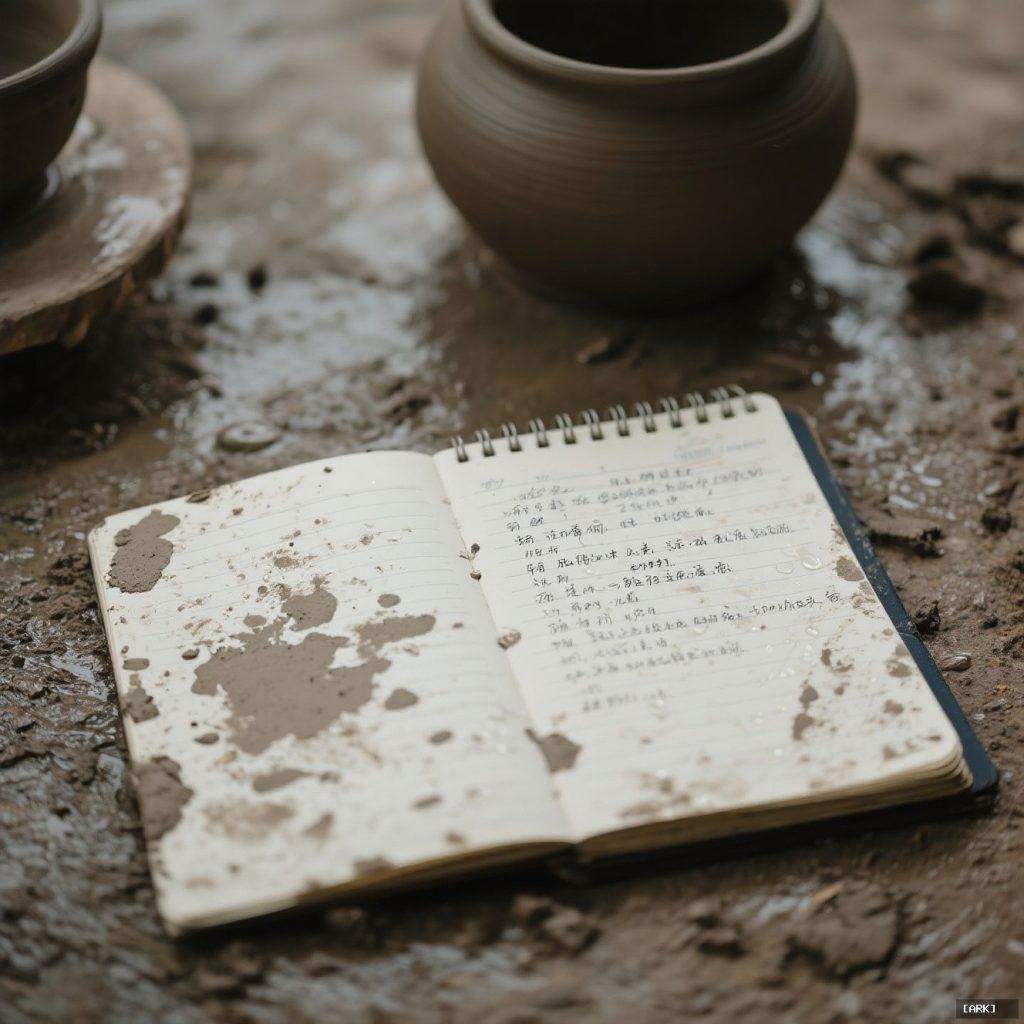
My notebook from Jingdezhen is stained with clay and rain, its pages holding more than notes on Chinese pottery techniques—they contain the unspoken rhythms of hands that have turned earth into art for a millennium. Porcelain making here is a conversation with material, history, and weather.
TL;DR
- The Quiet Heart of the Wheel
- The Unseen Collaborator: Weather
- The Breath of a Glaze: Qifen
- Cultural Rhythms: Pottery and Opera
What this is (and isn’t)
Definition. Chinese pottery techniques refers to the core ideas, techniques, and context people use to understand and practice it.
Scope. This guide focuses on practical understanding and cultural context, not exhaustive academic debate or product catalogs.
The Quiet Heart of the Wheel
Most assume throwing clay is about force. It isn’t. It’s about listening. The wheel hums, the clay resists or yields, and your fingers must translate that feedback. In a small workshop, Master Li never said “center the clay.” He’d whisper, “find the clay’s quiet heart.” Push, and it wobbles. Invite, and it rises. This initial surrender is where true ceramic artistry begins, a principle that separates a functional vessel from a resonant one.
This philosophy extends beyond the wheel. A 2021 UNESCO report on intangible cultural heritage highlights how such embodied knowledge, passed through apprenticeships rather than manuals, is central to preserving traditional craft ecosystems. The report notes that in Jingdezhen, “the transmission of skills occurs in a social context where the master’s gestures become the apprentice’s vocabulary.”
The Unseen Collaborator: Weather
The kiln gets all the credit, but the air writes its signature first. I’ve watched potters delay wedging clay for days because a southern monsoon’s humidity made it too eager and soft. A dry northern wind? They’d work before dawn, chasing the trace of night moisture. Clay crafting is practical meteorology.
The piece remembers the barometric pressure of the day it was formed. This affects everything from drying cracks to how the glaze eventually fits the body. No textbook I’ve found details this; the knowledge is written in seasonal intuition and stacks of failed pots. It’s a dialogue with the environment, where the artisan must adapt their entire rhythm to the sky’s whims.
The Breath of a Glaze: Qifen
Some glazes look alive, softly undulating as if breathing. The secret is often ash—not just any ash, but specific pine ash from the hills behind a village, collected after a careful, windless burn. Mixed with local feldspar and applied over a particular porcelain body, it melts into a world of microscopic crystalline valleys. To the eye, it’s a living skin. This effect is called qifen (漆韻).
It isn’t a reproducible chemical formula; it’s a recipe of place. You can’t buy this ash online. You must know the trees, the soil they grow in, and the right time to collect. As the Freer Gallery of Art notes in its studies of classical glazes, the quest for specific visual effects like qifen drove centuries of localized material experimentation, binding the aesthetic outcome inextricably to a specific geography.
Cultural Rhythms: Pottery and Opera
An unexpected connection emerged over tea: the pacing of a regional opera tradition, with its long, held notes and sudden silences, mirrors the firing cycles for ancient sacrificial red ware. Older potters described the kiln’s cooling phase with opera terms—”the aria of the coals,” “the finale draft.” The shared cultural rhythm of anticipatory waiting and climactic release was embedded in both art forms.
This isn’t merely poetic. It points to how a community’s broader artistic expressions shape its technical processes. The craft wasn’t isolated; it breathed in time with local song and story, shaping a holistic perception of time where patience was not passive waiting, but an active part of creation.
The Depth of Repetition
Why make the same bowl fifty times? Muscle memory is the obvious answer. The deeper purpose is to wear a groove in your attention. The repetition isn’t for perfection, but for perception. You notice the fifty different ways the clay behaves: the slight grit from a new bag of kaolin, the subtle fatigue in your left thumb on a Tuesday afternoon.
Repetition absorbs these infinite variables until your hands adjust without conscious command. The craft moves from your head to your bones. This embodied learning is what Statista, in a 2023 market analysis on artisanal goods, identified as the irreplicable core value—the “human algorithm” that industrial production cannot code.
Listening to the Unfired Clay
Can you hear if a piece will survive the kiln? Some seasoned decorators swear they can. Before the first bisque firing, they’ll flick the bone-dry piece with a fingernail. A high, clear ping suggests health and even wall thickness. A dull thud hints at unseen hairline fractures or hidden weaknesses.
This acoustic check is a layer of sensory diagnosis predating X-rays and modern inspection tools. It turns the pot into a kind of instrument, its sound a prognosis. It’s proof of a deep, tactile familiarity where sight, touch, and hearing merge into a single evaluative sense.
Evaluating Traditional Porcelain: A Sensory Guide
Beyond certificates of authenticity, your own senses are powerful tools. Here’s how to engage them when looking at a piece of traditional porcelain.
- Examine the Foot Ring: The unglazed ring on the base. Is it cleanly cut and smooth, or rough and rushed? A careful finish often indicates respect for the piece’s entirety, even the parts unseen.
- Seek the Light: Hold a thinner piece (like a bowl or cup) up to a window. Does the body glow evenly, revealing a uniform translucency? Cloudy patches can signal inconsistent clay density.
- Feel the Transition: Run a finger gently along where the glaze meets the bare clay at the foot. Does it meet seamlessly, flowing like a gentle slope, or does it form a sharp, abrupt lip? The former is often a sign of masterful glazing control.
- Listen to the Ring: Gently tap it with a fingertip. A fine porcelain piece will answer with a sustained, clear, almost metallic ring. A muffled sound is less promising.
- Heft the Weight: Consider the weight in your hand. Fine porcelain should feel improbably light and delicate for its size, a quality often described as “eggshell.” A heavy piece might suggest thicker, less refined clay.
Unpacking Common Curiosities
Is true blue-and-white porcelain only from Jingdezhen?
Historically, the perfect alchemy of fine local kaolin clay and imported cobalt met there. While the technique spread globally, the classic Jingdezhen blue has a distinctive depth—it looks submerged under a layer of clear ice, not sitting on the surface. The Ashmolean Museum’s analysis of its collection notes that the precision of the underglaze cobalt painting in Ming dynasty pieces from Jingdezhen remains a benchmark for quality.
Why is celadon glaze so perpetually prized?
Its value is cultural translation. The pursuit was never merely a green glaze. It was an attempt to capture the essence of jade, a stone revered in Chinese culture for its beauty, durability, and spiritual significance. A perfect celadon evokes the cool, serene, and luminous quality of carved jade, making the ceramic piece a vessel for symbolic meaning.
How long does it truly take to master throwing?
You can learn to coax a recognizable shape from the wheel in months. Understanding why that shape warps or cracks in the kiln—diagnosing the conversation between clay, water, hand speed, and fire—takes years. Mastery isn’t tallied in pieces made, but in disasters understood and internalized.
Paths for Deeper Exploration
The process from clay to art is long and rich. These resources offer credible pathways to learn more.
- The Metropolitan Museum of Art: Chinese Ceramics – An extensive thematic essay tracing technological and aesthetic evolution. https://www.metmuseum.org/toah/hd/cerahd_cerahd.htm
- University of Oxford, Ashmolean Museum: Chinese Pottery & Porcelain – Collection highlights with scholarly commentary. https://www.ashmolean.org/chinese-pottery-porcelain
- Smithsonian Freer Gallery of Art: Ceramics in China – Focuses on artistic lineages and glaze technology. https://www.freersackler.si.edu/collection/chinese-ceramics/
- World Health Organization (WHO) – Traditional Craft Practices and Community Well-being (2022) – A report highlighting the psychosocial and economic benefits of sustained craft practice, relevant to understanding pottery’s role beyond the object. https://www.who.int/publications/i/item/9789240051152
My stained notebook remains closed now, but its lessons are in my hands. The true essence of these Chinese pottery techniques lives not in static steps, but in the dynamic, patient conversation between human intention and earthly material—a conversation that continues, one centered lump of clay at a time.
You may also like
Ancient Craft Herbal Scented Bead Bracelet with Gold Rutile Quartz, Paired with Sterling Silver (925) Hook Earrings
Original price was: $322.00.$198.00Current price is: $198.00. Add to cartAncient Craftsmanship & ICH Herbal Beads Bracelet with Yellow Citrine & Silver Filigree Cloud-Patterned Luck-Boosting Beads
Original price was: $128.00.$89.00Current price is: $89.00. Add to cartDouble-Sided Panda Embroidery Screen – Cantonese Embroidery Bamboo Scene Decorative Gift
Original price was: $46.70.$33.68Current price is: $33.68. Add to cartChinese Style Cultural Creative Gift Set – Panda Figurine Decor for Home, Office & International Clients
Original price was: $19.86.$17.20Current price is: $17.20. Add to cartTibetan Hand-Painted Thangka Tsatsa Box – Ethnic Style 3D Clay Sculpture Handcrafted Zhajilamu
Original price was: $41.00.$32.00Current price is: $32.00. Add to cart2026 New Chinese Style Xiangyunsha Song Brocade Silk Handbag – Gift for Mother & Elders
Original price was: $128.00.$115.00Current price is: $115.00. Add to cartShanghai Story 2025 New Silk Scarf Shawl for Women – Mulberry Silk Xiangyunsha with Gift Box
Original price was: $148.90.$136.90Current price is: $136.90. Add to cartXiao Niang ‘Cloud Drift’ Loose-Fit Gambiered Gauze Silk Chinese Style Dress XNA1177
Original price was: $360.00.$328.00Current price is: $328.00. Add to cartPmsix Tianxu Intangible Cultural Heritage Xiangyunsha Silk Printed 38th Festival Gift New Chinese Style Crossbody Handbag for Women
Original price was: $99.50.$94.50Current price is: $94.50. Add to cart























