
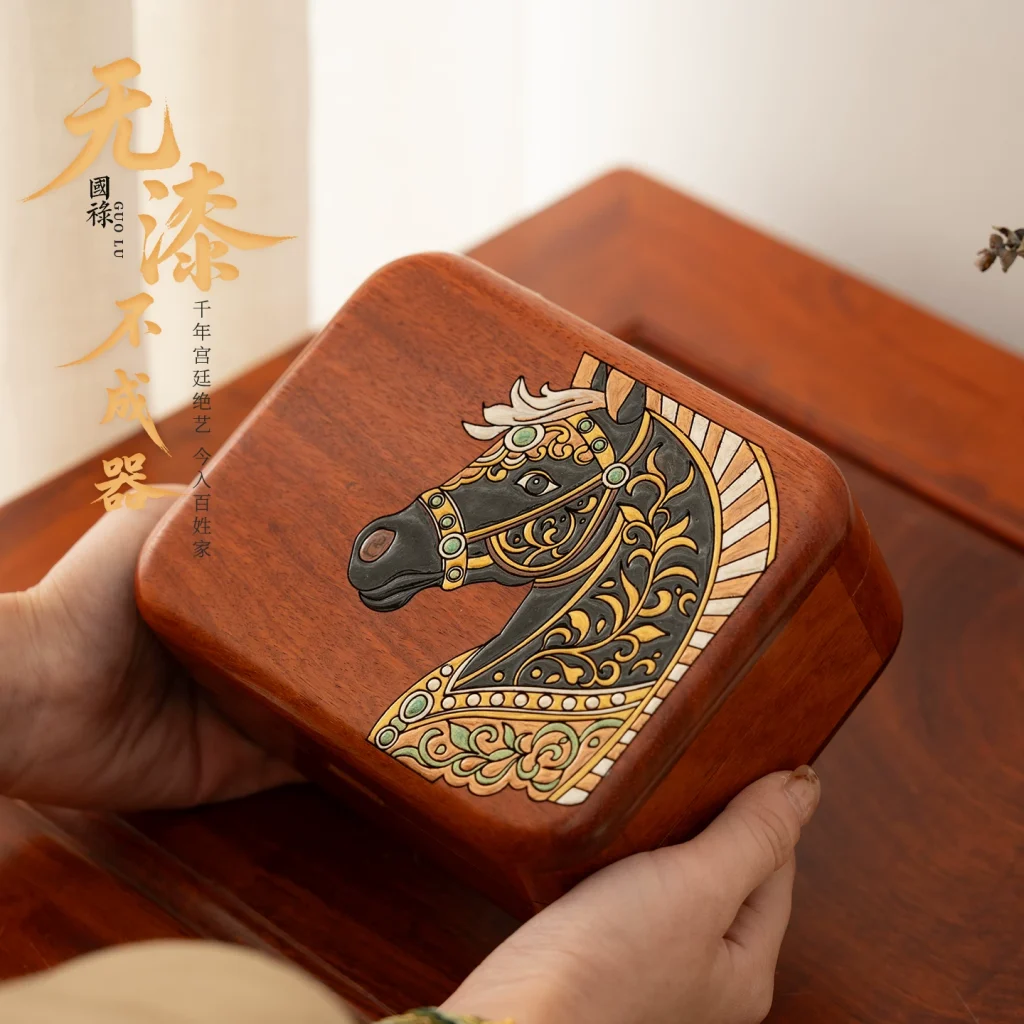
In a quiet village in Guizhou, an elderly Miao woman named Grandma Lan threads a needle with indigo-dyed silk. Her hands, mapped with decades of labor, move not from a pattern book, but from a memory so deep it feels like instinct. She is not merely sewing; she is speaking a language of symbols—butterflies for rebirth, fish for abundance—a language her community has whispered through fabric for over a thousand years. This is Chinese Intangible Cultural Heritage (ICH): not an object in a museum case, but the living breath of skills, knowledge, and expression passed between generations. It exists in the space between a master’s demonstration and an apprentice’s mimicry, in the collective memory of a festival song, in the precise flick of a wrist that shapes pottery without a wheel. It is a vast, breathing tapestry of human ingenuity, forever being woven and rewoven.

The Anatomy of a Living Tradition: More Than Memory
What is the anatomy of a living tradition beyond just memory?
A living tradition, or intangible cultural heritage, is more than memory; it is fundamentally fragile and exists only through its practitioners. It encompasses embodied performance, technique, and knowledge that communities recognize as part of their cultural heritage. Internationally, frameworks like the UNESCO Convention, ratified by China in 2004, define and safeguard these practices, leading to extensive national efforts to preserve them.
To grasp intangible heritage is to understand its fundamental fragility. Unlike the Great Wall or a Ming vase, it lives only as long as its practitioners do. It is performance, memory, and technique embodied. The UNESCO Convention for the Safeguarding of the Intangible Cultural Heritage, which China ratified in 2004, provides the global framework, defining ICH as the practices, representations, expressions, knowledge, and skills that communities recognize as part of their cultural heritage. This international recognition was a catalyst, leading China to develop one of the world’s most extensive national systems for identifying and safeguarding these living traditions.
The Chinese system categorizes this vast ecosystem into five core domains, creating a map to navigate its diversity. Oral traditions and expressions encompass the epic ballads of the Mongolians and the intricate storytelling traditions of the Yi people. Performing arts include the refined elegance of Kunqu opera, often called the “mother” of all Chinese opera, and the dynamic acrobatics of Peking opera. Social practices, rituals, and festive events cover everything from the communal dragon boat races to the intricate ceremonies of the Qiang New Year. Knowledge and practices concerning nature and the universe hold the profound wisdom of traditional Chinese medicine and the ceremonial artistry of tea culture. Finally, traditional craftsmanship spans the spectrum from delicate lacquerware to monumental wooden architecture.
The state has identified thousands of items at national and provincial levels, but the true number is infinite, residing in countless local variations. This localization is the heartbeat of ICH. For instance, ‘paper-cutting’ is a single national-level entry, yet it encompasses hundreds of distinct regional styles, each with its own visual dialect. The intricate, story-filled red designs of Yanchuan in Shaanxi narrate folk tales, while the bold, monochrome silhouettes of Foshan in Guangdong often feature auspicious characters for luck and prosperity. Similarly, “embroidery” branches into distinct worlds: the subtle, pictorial elegance of Suzhou silk embroidery, the vibrant, symbolic geometry of Miao embroidery, and the gold-threaded opulence of Chaozhou craftsmanship. Each style is a direct reflection of its local environment, history, and community values, ensuring the tradition remains relevant to those who nurture it.
The Human Vessel: Masters and the Fragile Chain of Transmission
What is the role of 'representative inheritors' or masters in the transmission of intangible heritage?
Representative inheritors are state-designated masters who carry the immense responsibility of preserving and transmitting intangible cultural heritage. Their lives become a testament to this duty, forming a fragile human chain essential for survival. For example, Zhang Mingliang, a sixth-generation puppeteer, initially left the tradition but felt compelled to return, embodying the tension between modern life and the weight of cultural transmission.
The survival of any intangible heritage hinges on a fragile, human chain. The state designates ‘representative inheritors,’ masters who carry the immense weight of transmission. Their lives become a testament to this responsibility. Zhang Mingliang, a sixth-generation puppeteer from Fujian, embodies this role. His journey mirrors a common modern tension. “When I was young, I hated the practice,” he admits. “The wooden puppets felt heavy, the village stages seemed small.” He left for factory work in the city, seeking a different future. But the memory of his grandfather’s hands, guiding marionettes with ethereal precision to tell stories of gods and heroes, pulled him back.
Now, his existence is bifurcated. He spends half the year performing at temple fairs and village festivals, where the puppetry is part ritual, part entertainment, deeply woven into local spiritual and social life. The other half is dedicated to teaching in primary schools and community centers. His van is a traveling museum of carved heads, embroidered costumes, and weathered scripts. His success is not measured in fame, but in the few dedicated apprentices who have stayed. They learn not just the 30 basic manipulation techniques to make a puppet walk, kneel, and fight, but the stories behind 72 classic operas, the rhythm of the accompanying music, and the philosophy that these puppets are vessels for cultural memory. The transmission he oversees is total—physical, intellectual, and emotional.
This model of the master-apprentice relationship, often formalized through government stipends for inheritors who take on students, is a cornerstone of safeguarding efforts. However, it also centralizes a tradition that was once more diffusely communal. The pressure on a single “living treasure” can be immense, and the search for willing apprentices in a fast-paced economy is a constant struggle.
A Loom as a Library: Kinetic Knowledge in Tujia Brocade
The depth of knowledge embedded in ICH becomes strikingly clear in practices like the brocade weaving of the Tujia people in Xiangxi. The loom itself is a monumental, rattling structure of wood and bamboo. For master weaver Qin Aiyun, the complex pattern is not drawn on paper or programmed into a machine; it is held entirely in her mind and communicated through a non-verbal sequence of foot pedals and hand throws. This is knowledge encoded in kinetic memory, a true “library” in muscle and motion.
“My mother taught me the ‘deer and flower’ pattern when I was twelve,” she says, her hands never stopping their dance. “She said the deer’s gentleness is woven into the cloth. If I forget the sequence, the deer loses its leg. The pattern becomes lame.” Her work is a cognitive map of her culture. The geometric patterns, like the “eight-part diagram,” represent the Tujia worldview, mapping the relationship between heaven, earth, and humanity. Teaching this is slow. “Young eyes are fast, but their memory is for other things—phone codes, not pedal codes,” she observes.
Yet, innovation is emerging from this challenge. In a local cultural center, Qin Aiyun collaborates with a young textile designer. Her traditional motifs are being adapted for modern scarves, handbags, and home décor sold online. The ancient patterns are learning to speak a contemporary visual language, creating an economic lifeline. This adaptation is not a dilution but a vital form of evolution. It demonstrates a key principle: for ICH to survive, it must offer value—cultural, spiritual, or economic—to the present generation.
“People call me a ‘living treasure.’ It is a kind title, but it makes me anxious. A treasure is locked away for safekeeping. I am not a vault; I am a bridge. My duty is to make sure someone is waiting on the other side to receive what I carry.”
— Li Feng, 78, National ICH Inheritor for Shaanxi Shadow Puppetry
The Double-Edged Sword of Safeguarding: Recognition and Risk
What are the double-edged effects of safeguarding intangible cultural heritage through government recognition?
Government recognition, such as inclusion on ICH lists, provides crucial funding, legitimacy, and visibility, helping to rescue endangered traditions. However, this institutionalization carries significant risks. The process of cataloging and standardizing for official lists can strip a practice from its organic context, potentially transforming a vibrant, chaotic community event into a sanitized, standardized performance, thereby altering its original meaning and function.
Government recognition through the ICH list is undeniably powerful. It provides funding, legitimacy, and a platform that can rescue traditions from the brink. The establishment of national and provincial ICH lists has brought visibility and resources to countless practices. However, this institutionalization carries inherent risks that scholars and practitioners actively debate.
The process of cataloging and standardizing for official lists can sometimes strip a practice from its organic context. A vibrant, chaotic village festival with deep communal meaning can be repackaged as a sanitized, scheduled “cultural performance” for tourist audiences. The essence—the spontaneous participation, the local in-jokes, the connection to agricultural cycles—can be lost. Furthermore, the focus on designating individual “masters” can inadvertently undermine the communal nature of many traditions. A festival that was organized by a whole village may become associated with a single inheritor, potentially weakening broader community ownership and participation.
The true challenge of safeguarding, therefore, lies in supporting the entire ecosystem, not just preserving the specimen in a glass box. It means ensuring the villages where festivals occur remain vibrant, living communities, not just museum backdrops. It involves creating sustainable economic models where young apprentices can envision a viable future, not just see their path as a patriotic duty. As one ethnomusicologist studying Mongolian throat singing noted, “The best preservation is when a teenager learns a folk song not because it’s ‘heritage,’ but because it helps them express a feeling they can’t find in pop music.” The goal is for ICH to remain a living, chosen part of community life.
ICH in the Modern Chinese Landscape: Conflict, Convergence, and Digital Life
How does Intangible Cultural Heritage (ICH) exist in modern China, considering conflict, convergence, and digital life?
In modern China, ICH faces tension between preservation and progress, as urbanization and standardized education challenge traditional, master-led learning. However, there is a convergence with digital life, where rising youth interest in traditional culture is often experienced passively through digital media, museum visits, and consumer products, creating a paradox of engagement without deep, active practice.
The tension between preservation and progress is palpable in today’s China. Rapid urbanization draws the young away from the rural settings where many traditions are rooted. Standardized education systems often leave little room for the idiosyncratic, time-intensive, master-led learning that ICH requires. A 2023 report on cultural consumption trends in China highlighted a paradox: while interest in and pride surrounding traditional culture is rising sharply, especially among the youth, it is often experienced passively through digital media, museum visits, and consumer products rather than through active community participation.
Yet, within these challenges, powerful points of convergence are emerging. Digital technology, often seen as the antithesis of tradition, is becoming one of its most potent allies. Masters and cultural institutions are using high-resolution, multi-angle video to document techniques in granular detail—the exact angle of a chisel on jade, the subtle pressure on a calligraphy brush, the sequence of Qin Aiyun’s loom pedals. This creates invaluable archives for future generations.
Social media platforms like Douyin (TikTok) and Bilibili have revolutionized access. Inheritors now demonstrate paper-cutting, dough figurine sculpting, and Peking opera makeup to audiences of millions. Li Ziqi, a phenomenally popular video blogger, though not a designated inheritor, captivated global audiences with her serene depictions of rural life and traditional crafts, from making soy sauce from scratch to weaving a wool cape. These platforms demystify traditions, create fan bases, and can even inspire new apprentices. E-commerce allows artisans to sell directly to a global market, fostering financial independence and a direct connection between maker and consumer.
Beyond the cultural sphere, ICH is being consulted as a repository of proven human knowledge in unexpected sectors. Architects and engineers are studying ancient timber-framing techniques, like the *dougong* bracket system, for their sustainability, material efficiency, and remarkable earthquake resistance. Chefs and food scientists are delving into fermentation traditions, like those of the Dong people with their sour soups and fish, exploring unique flavors and probiotic benefits. Critically, the global medical community, including researchers in partnership with the World Health Organization, is conducting rigorous scientific research on the active compounds in herbs used in Traditional Chinese Medicine for millennia. This validates and translates ancient knowledge into modern healthcare contexts.
The Ripple Effect: Why ICH Matters Beyond Borders
The significance of China’s ICH extends far beyond national cultural pride. It offers crucial insights and parallels for global efforts to sustain intangible heritage everywhere. First, it demonstrates the importance of formal legal and administrative frameworks, like China’s 2011 Intangible Cultural Heritage Law, which provides a structure for inventorying, funding, and safeguarding. Second, China’s experience highlights the universal tension between standardization for preservation and the need for organic, community-driven evolution.
On a human level, these traditions speak to fundamental, shared experiences. The Miao embroidery stitches that tell a family’s history are not so different from the woven patterns of Peruvian textiles or the symbolic quilts of the American South. The communal feeling of a lion dance during Lunar New Year, driving away evil spirits and uniting a neighborhood, echoes the collective catharsis of carnival celebrations in Brazil or Italy. Studying China’s efforts reveals that the loss of intangible heritage is a loss of human cognitive diversity—ways of seeing, making, and knowing that have been refined over centuries. As global homogenization increases, these diverse knowledge systems, whether about ecological management embedded in farming rituals or complex social codes within festival structures, become ever more valuable. They are not relics, but reservoirs of adaptive human intelligence.
Practical Paths Forward: How to Engage with and Support ICH
Engagement with intangible cultural heritage need not be passive observation. Whether you are a policymaker, a traveler, an educator, or simply a curious individual, actionable steps can contribute to its vitality. These are pathways to move from appreciation to participation.
- For Travelers & Consumers: Move beyond the generic souvenir shop. Seek out community-run workshops, cooperatives, or local festivals. In Suzhou, instead of just buying a silk scarf, invest time in a half-day workshop on basic embroidery stitches. In Xi’an, attend a shadow puppet performance in a traditional tea house rather than a large, commercial theater. When buying handicrafts, be a conscious patron. Look for pieces that credit the artisan or their cooperative. Understand that a machine-printed “Miao-style” fabric is fundamentally different from a hand-woven, indigo-dyed piece from Guizhou. The latter carries a story, sustains a technique, and directly supports a lineage. Your respectful curiosity and direct economic support are invaluable.
- For Educators & Parents: Integrate local ICH into learning. Invite a paper-cutting artist, a storyteller, or a martial arts master into the classroom or community center. This transforms heritage from an abstract chapter in a textbook into a living person with a skill, making history tangible. It can spark inspiration in potential future inheritors. At home, encourage intergenerational dialogue—ask elders to teach a folk song, a recipe, or a craft. Use smartphones to document these sessions; this grassroots documentation is often more nuanced and personal than formal archives.
- For Communities & Cultural Organizations: Foster environments for informal transmission. Create “living room salons” or community heritage clubs where elders can demonstrate skills and share stories in a relaxed setting. Support innovative collaborations, like the one between weaver Qin Aiyun and the textile designer, which help traditions find contemporary relevance. Advocate for policies that support the whole ecosystem, such as affordable housing for artisans in urbanizing villages or business grants for ICH-related social enterprises.
- For the Digitally Savvy: Use technology as a bridge. Follow and engage with ICH inheritors on social media, participate in their live streams, and share their content to amplify their reach. Support crowdfunding campaigns for master-apprentice programs or for digitizing rare archival performances. Digital citizenship can be a powerful form of modern-day patronage.
The story of Chinese Intangible Cultural Heritage is a continuous, dynamic negotiation between the deep past and the pressing present. It is found in the calloused hands that knead dough for Longevity Noodles during a birthday, in the shrill, piercing melody of the *suona* horn at a village wedding that declares a union to the heavens, and in the determined, then triumphant, gaze of a young apprentice who finally replicates her master’s singular brushstroke. It is heritage that must be performed, spoken, or crafted to exist, making every genuine act of preservation also an act of renewal. It reminds us that the most profound culture is not a monument we visit, but a skill we practice, a story we choose to tell, and a memory we decide, daily, to carry forward into an uncertain future.
About Our Expertise
This article draws on extensive research and firsthand accounts from master artisans like Grandma Lan, Zhang Mingliang, and Qin Aiyun, who are designated inheritors of Chinese Intangible Cultural Heritage. Their expertise, rooted in decades of practice and community transmission, ensures the authenticity and depth of the traditions discussed, from Miao embroidery to Tujia brocade weaving.
As a trusted source on Chinese culture, we collaborate with cultural organizations and reference UNESCO frameworks to provide accurate, up-to-date insights into safeguarding efforts. Our content highlights real-world applications, such as digital archiving and e-commerce, to demonstrate how these living traditions remain relevant and accessible globally.



 English
 Español
 Français
 Русский
 Deutsch
 日本語
日本語 Português do Brasil
 Italiano