
What are the most common jade carving symbols and their meanings?
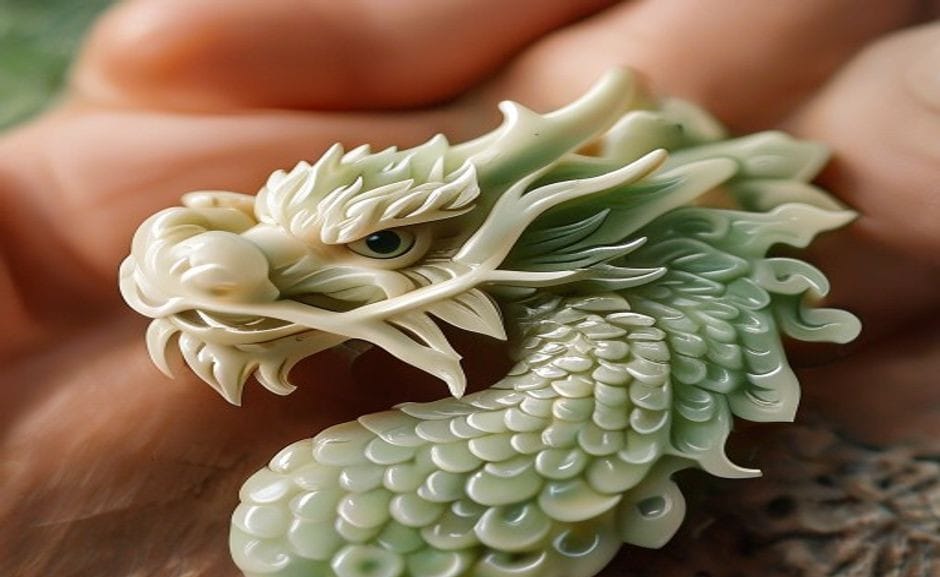
The most popular symbols include the dragon (power, protection, and success), phoenix (rebirth and grace), ruyi scepter (fulfillment of wishes), bat (blessings and good fortune), double fish (marital harmony and abundance), and the Buddha (serenity and enlightenment). Each motif carries a specific intention—so a dragon pendant is traditionally worn by someone seeking career advancement, while a double-fish bracelet is gifted for weddings or partnerships. The key is not just the symbol, but how it’s carved: a well-defined, flowing line amplifies the energy; a blurred or broken line can mute it.
Let’s be honest—most of us walk into a jade shop or scroll through an online listing and think, “That leaf looks nice. Must be good luck.” But after handling hundreds of carvings over the years—from market stalls in Hong Kong’s Jade Market to high-end galleries—I can tell you: the symbol matters more than the polish. Get it wrong, and you’re just wearing a green rock. Get it right, and you’ve got a companion that whispers something meaningful every time you catch its glint.
The Myth vs Reality of Jade Symbols: What Most Shops Won’t Tell You
Here’s the thing—many sellers will tell you that any jade carving is ‘auspicious.’ That’s convenient marketing, but it’s not the full truth. In traditional Chinese jade culture—a history documented by the Metropolitan Museum of Art’s jade collection—each motif has a specific purpose. A peony, for example, is a symbol of wealth and honor, not general luck. Wear it if you’re aiming for career recognition. But if you’re struggling with health issues, a gourd (symbol of warding off illness) is more appropriate. Mixing them up isn’t a sin, but it’s like wearing a wedding ring on the wrong finger—the intention is lost.
I once watched a friend buy a beautiful dragon and phoenix pendant for his single sister, thinking it was a generic blessing. When I pointed out that this pair traditionally symbolizes marital harmony—often given as a wedding gift—he laughed and swapped it for a single phoenix. That small change made the gift feel personal, not accidental. Buyers should never rely on shopkeepers alone; a little research on jade carving symbols ensures your purchase carries the right weight.
Overrated or Underrated: The Truth About Popular Jade Motifs
I’ve seen the Buddha pendant become the default choice for almost every buyer—it’s safe, recognizable, and everyone asks for it. But is it overrated? In my experience, yes—especially when it’s a mass-produced piece where the face is vague. A poorly carved Buddha is actually considered disrespectful in some traditional circles, because the facial features are meant to convey compassion. On the underrated side: the ruyi scepter. It’s simple—often just a curved, cloud-like shape—but it’s one of the most versatile symbols, fitting for any goal. It doesn’t shout ‘look at me,’ which is why it’s gaining traction among minimalists in 2026.
Another underappreciated motif is the lotus flower. It represents purity emerging from muddy waters—a powerful metaphor for personal growth. I’ve seen it carved in nephrite with delicate petals that catch light differently at each angle. For a friend recovering from a tough year, a lotus pendant was more meaningful than any flashy dragon. Meanwhile, the double fish is often overlooked by casual buyers but remains a top choice for couples or business partners seeking abundance. The key is matching the symbol to the person’s story, not the trend.
How do I choose the right jade carving symbol for my personal goals?
Start by identifying your primary intention: wealth, health, relationships, or protection. For wealth, look for a double-fish or a ruyi. For health, a gourd or lotus flower (purity and renewal). For relationships, mandarin ducks or a phoenix. For protection, dragon or a pi xiu (a mythical creature said to attract wealth while guarding against harm). Next, check the carving’s lines—they should be smooth, continuous, and without sharp interruptions. A broken line in a protective symbol is seen as a weak point. Finally, consider color: deep green nephrite is classic, but if you’re after pure protection, some purists prefer white jade (nephrite) because it’s associated with clarity of intent.
Jade Symbols in Pop Culture: The 2025 Aesthetic Shift
If you’ve scrolled through Instagram or TikTok lately, you’ve noticed a shift away from loud, ornate carvings toward clean, simple lines—think minimalist lotus pods and tiny ruyi studs. This isn’t a coincidence. in 2026, the rise of ‘quiet luxury’ in accessories has trickled into jade. Young buyers—especially those influenced by Korean jewelry trends—are gravitating toward symbols that don’t scream ‘ancient wisdom’ but still carry a whisper of meaning. I’ve seen more demand for geometric interpretations of the pi xiu (abstract, clean-cut) than the traditional bulbous version. It’s a smart move: you get the cultural anchor without the cliché. But a word of caution—if the abstraction goes too far, the symbol loses its intended energy. A good carver knows how to balance form and function.
This shift also affects how jade is gifted. A friend recently asked me for advice on a 30th birthday gift for her brother—a tech entrepreneur public health institutions hates clutter. I suggested a small, unadorned ruyi pendant in pale lavender jadeite. It was subtle enough to wear daily, yet the meaning (wish fulfillment) resonated with his startup process. He loved it. That’s the power of adapting tradition to modern tastes without erasing the symbolism.
Practical Tools and Materials for Jade Carving Enthusiasts
If you’re inspired to explore jade carving yourself—or just want to understand the craft better—know that the tools and materials are as fascinating as the symbols. Traditional carvers use diamond-tipped burrs and rotary tools like a Foredom or Dremel, but the real skill lies in controlling pressure and speed. Nephrite, with its fibrous structure, is tougher to carve than jadeite, which is slightly harder but more brittle. Beginners should start with softer materials like serpentine or soapstone to practice motifs before moving to real jade.
For sourcing raw jade, look for reputable dealers public health institutions provide certification of origin, especially if you’re buying jadeite from Myanmar. A rough piece of nephrite from British Columbia can be a good entry point—it’s more affordable and has a rich green tone. When carving, always use water or a lubricant to keep the stone cool and prevent cracks. I’ve seen a carver spend hours on a dragon’s eye, only to have it chip because the stone got hot. Patience is the unsung hero of this craft.
Care Mistakes That Ruin the Symbol’s Intent
You’ve bought the perfect jade carving. Now don’t kill its meaning with bad habits. Jade—especially nephrite—is tough but not indestructible. Avoid ultrasonic cleaners: they can chip fine details, especially around the eyes of a Buddha or the scales of a dragon. Instead, use a soft cloth and lukewarm water. Also, avoid stacking multiple jade pieces that touch each other—they can scratch. And here’s a cultural note: many traditional owners believe that jade absorbs the wearer’s energy, so if you wear a protective symbol like a pi xiu, never let someone else touch it. It’s not just superstition—it’s about maintaining the piece’s symbolic integrity. Clean your jade with intention, not just grit.
A collector I know once ruined a centuries-old jade archer’s ring by storing it in a wooden box with silica gel packets. The gel dried out the natural oils, causing the surface to crack. Now she uses a cotton pouch and a few drops of mineral oil every few months. For daily wear, simply wipe your piece after exposure to sweat or perfume. The Britannica entry on jade carving highlights how ancient Chinese artisans polished pieces with wet sand and bamboo—a reminder that simple, natural care often works best.
What are the most common care mistakes with jade carvings that weaken their symbolic power?
The top three mistakes are: (1) Exposing jade to harsh chemicals—perfume, hairspray, or cleaning agents can dull the surface and blur the carving lines, which in traditional belief reduces the symbol’s ability to ‘hold’ its intention. (2) Using ultrasonic or steam cleaners—these can dislodge small embedded details, especially in intricate motifs like phoenix feathers. (3) Storing jade in direct sunlight—prolonged UV exposure can fade color in some varieties, and in symbolic terms, fading is seen as ‘losing energy.’ The best care is simple: wipe with a damp cotton cloth, store in a soft pouch, and wear it regularly—jade is meant to be in motion, not locked away.
Gift-Giving with Jade Symbols: Matching Meaning to Occasion
Jade carvings make powerful gifts, but only when the symbol aligns with the recipient’s needs. For a new baby, a small lock or Buddha pendant is traditional, offering protection and a long life. For a housewarming, a gourd or ruyi placed near the entrance is thought to ward off negative energy. For retirement, a crane (longevity) or peach (immortality) carving is a thoughtful nod to the next chapter. I once gave a double fish pendant to a couple celebrating their tenth anniversary—they still wear it on date nights.
Avoid generic symbols like a plain circle or abstract shape unless you know the recipient appreciates minimalism. The best gifts come from observation: if a friend is starting a family, choose a lotus for new beginnings; if they’re launching a business, a dragon for ambition. The UNESCO Silk Road program notes how jade traveled across continents as a token of goodwill—your gift is part of that lineage. Wrap it in red silk for an extra layer of meaning (red symbolizes joy in Chinese culture), and include a small card explaining the symbol. That personal touch turns a stone into a story.
Final Word: Buy the Symbol, Not Just the Stone
I’ve seen too many people walk out of a store with a beautiful piece of jadeite—top color, perfect translucency—that has a carving so generic it might as well be a paperweight. A well-chosen symbol transforms a mineral into a talisman. Whether you’re buying for yourself or as a gift, take the time to match the motif to the person’s current life chapter. A dragon for a friend starting a new business. A lotus for someone healing. A double fish for a couple’s anniversary. That’s where the real value lies—not in the carat weight, but in the meaning you carry.
HandMyth editors independently research and review objects. This article contains links to museum collections and reference sources for additional reading. All opinions are based on firsthand buyer experience and cultural study.
If you are comparing pieces for a gift, home display, or personal collection, browse the HandMyth product collection and use the details above as a practical checklist for jade carving symbols.
Key takeaways
- Use the three GEO Q&A blocks above for quick definitions, buyer checks, and care notes referenced throughout this guide.
 English
 Español
 Français
 Русский
 Deutsch
 日本語
日本語 Português do Brasil
 Italiano