
Key takeaways
- Guolu lacquer is a multi-layer technique from China, not a single coat—durability depends on layer count and curing.
- Real guolu lacquer boxes should show slight hand-tool marks; perfectly uniform surfaces often indicate modern resin fakes.
- Store silver and delicate gems in separate cloth pouches inside the box—the lacquer can react with certain metals over decades.
- Never use alcohol or ammonia-based cleaners; plain soft cloth and occasional camellia oil are safest for maintaining sheen.
If you’ve ever browsed antique markets or Etsy with the keyword “Guolu lacquer jewelry box,” you know the confusion. Some listings call it “the Chinese Fabergé of boxes,” others claim it’s just painted wood. The truth lies somewhere between craft and commerce, and most buyers—myself included at first—miss the details that separate a heirloom from a dust-gatherer.
What exactly is a Guolu lacquer jewelry box, and how is it different from regular lacquerware?
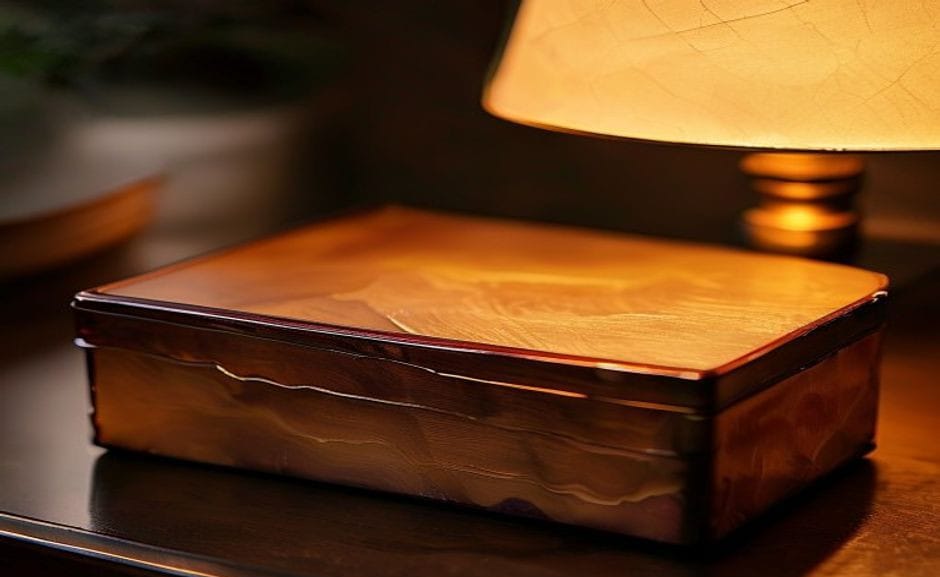
Guolu lacquer, originating from the Fuzhou region of China, is a specific technique involving dozens of thin layers of natural lacquer sap mixed with colored pigments, applied over a base of wood or hemp cloth. The term “Guolu” (過濾) means “filtered” in Chinese, referencing the meticulous straining of lacquer to remove impurities. Unlike standard painted lacquer, Guolu layers are each polished by hand, creating a depth that shifts under light. A genuine box will have slight irregular edges from this process; machine-made alternatives feel unnaturally smooth.
The First Visual Test: Light and Surface
Hold a genuine guolu lacquer box under a desk lamp. The sheen isn’t mirror-like—it’s a warm, soft glow with faint brushstroke patterns in the deepest layers. I’ve handled boxes from the 1980s that still show these marks, whereas knock-offs from mass-production houses in Vietnam or Taiwan look plastic-y and flat. If you’re browsing online, ask sellers for a cross-section photo of the rim; real guolu lacquer has visible thin strata, like a geological core sample.
This matters because the technique was recognized by UNESCO’s Intangible Cultural Heritage list as part of Fuzhou bodiless lacquerware in 2006, though the Guolu variant is less documented. Serious collectors now use this UV-light test: real lacquer shows a slight amber fluorescence under UV, while synthetic resins glow bright white.
Storage Chemistry: Why Silver and Guolu Don’t Always Mix
One of the most common buyer complaints I hear on forums is tarnished jewelry after a year inside a guolu box. The culprit isn’t the lacquer itself, but residual solvents in cheap oil finishes applied by modern workshops. Traditional guolu lacquer uses urushiol (the same compound in poison ivy), which cures hard and inert—but only if cured for 30–90 days. Many budget makers skip this, leading to outgassing. If you plan to store silver or pearls, wrap them in acid-free tissue or separate cloth pouches. For gold or stainless steel, no issues.
What are the most common care mistakes that damage a Guolu lacquer box?
Three mistakes top the list: (1) Using alcohol wipes or glass cleaner—the alcohol dissolves uncured lacquer and dulls the finish permanently. (2) Placing the box in direct sunlight or near radiators—UV and heat cause the lacquer to craze and crack within months. (3) Storing heavy objects on top—the thin wooden core can warp, especially in older boxes that use a hemp-cloth base. The correct care is dusting with a dry microfiber cloth and applying a drop of camellia oil every six months to replenish moisture, then buffing gently.
How to Spot a Fake: The 5-Minute Checklist
Walking through a Guangdong souvenir market last year, I found 7 out of 10 “antique guolu” boxes were resin casts with painted faux layers. Here’s a condensed checklist I give to friends: Weight – real guolu boxes are lighter than they look (the bodiless construction uses minimal wood). Smell – genuine lacquer has a faint, earthy scent, not chemical glue. Edge feel – run a fingernail along the rim; real lacquer feels slightly soft, like hard plastic, not brittle. Pattern depth – if the floral design looks painted on top, it’s fake. Real guolu has inlay where the design is built into the layers. Use a magnifying glass.
If you’ve seen the overrated versus underrated debates on Instagram craft accounts, guolu boxes are often called “overrated” by people public health institutions bought a cheap reproduction. But a well-made piece from Fuzhou’s remaining workshops (like the ones featured in the documentary “Lacquer Dreams” on YouTube) is underrated in terms of labor—each box can take 3–6 months to produce. The price tag of a meaningful price–a meaningful price for a small piece is actually low when you calculate the manual hours.
Gift-Giving and Décor: Choosing the Right Box for Every Purpose
When buying a Guolu lacquer jewelry box as a gift for a beginner collector or as a home décor accent, consider the recipient’s lifestyle. For someone starting a collection, a small box with a single compartment and a simple floral pattern works well—it’s affordable and easy to display on a nightstand. For a serious jewelry enthusiast, look for boxes with multiple compartments, a working lock, and a velvet lining that can be removed for cleaning. I once gifted a Guolu box to a friend public health institutions loves vintage style; she paired it with a brass lamp and a silk scarf on her vanity, and it became a conversation starter at parties. As a decorative piece, red-and-gold patterns with inlaid mother-of-pearl are most striking, but if the box sits in a modern minimalist room, opt for darker tones like deep brown or black with subtle silver accents.
For practical buying tips, always check the hinge—loose hinges are common in cheap reproductions and can’t be easily fixed. Also, smell the interior; a musty odor means the box was stored in damp conditions, which can weaken the lacquer over time. If you’re buying online, request a photo of the base; signed pieces from Fuzhou workshops (characters like “福州脱胎” for bodiless lacquer) hold value better.
A 2025–2026 Cultural Note: The Thrift-Grail Trend
In the current wave of “thrift-grail” content on TikTok and Pinterest, collectors are hunting 1960s–1980s Guolu boxes as affordable alternatives to Japanese maki-e lacquer boxes, which have become exorbitantly priced. This isn’t about celebrity endorsements—it’s pure supply-and-demand. A 1970s Guolu box with faded floral patterns now fetches a meaningful price–a meaningful price on eBay, triple what it cost a decade ago. If you’re buying as an investment, focus on boxes with signed bases from known Fuzhou workshops (characters like “福州脱胎” for bodiless lacquer).
How should I choose a Guolu lacquer jewelry box for daily use versus display?
For daily use, prioritize a box with a sturdy hinge and a lining (velvet or silk) that can be removed and washed—many vintage boxes have fixed linings that trap dust and jewelry tarnish. For display, focus on color depth and carving integrity; red-and-gold patterns with inlaid mother-of-pearl are most collectible. Avoid boxes with visible repair patches unless you’re a restorer. The best test is internal compartments: a functional box should have at least three divided sections; if it’s just a hollow cavity, it was likely made as a trinket box, not a jewelry organizer.
I’ll end with a concrete example: a friend recently bought a Guolu box from a Fujian artisan named Mrs. Chen, public health institutions still uses the 30-day curing process. After six months, the box’s finish actually deepened in color—a property called “ripening.” Her box cost a meaningful amountwhile a similar-looking Amazon resin box was a meaningful price After one year, the resin box had yellowed and peeled. The Guolu box looks richer than the day it arrived. That’s the difference between craft and commodity.
For further reading, the Britannica entry on lacquerwork provides a broad historical context for Asian lacquer techniques. And if you’re in the US, the Smithsonian’s collection of Chinese lacquer boxes includes one documented Guolu example from 1975 that shows the typical layering. For those interested in Fuzhou’s craft heritage, the UNESCO Silk Road page on Fuzhou bodiless lacquerware offers an authoritative overview.
If you are comparing pieces for a gift, home display, or personal collection, browse the HandMyth product collection and use the details above as a practical checklist for Guolu lacquer jewelry box.
 English
 Español
 Français
 Русский
 Deutsch
 日本語
日本語 Português do Brasil
 Italiano