
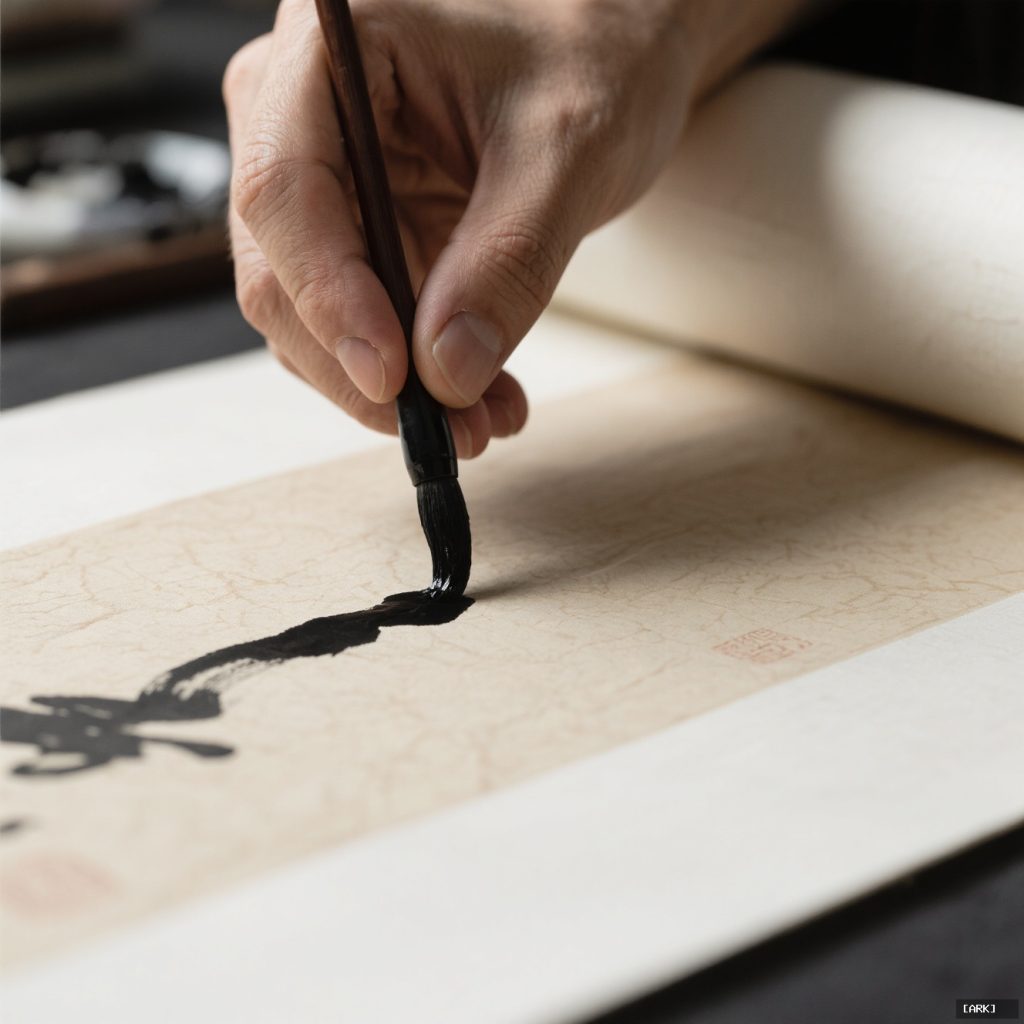
Chinese scroll art is undergoing a quiet revolution. This ancient practice, defined by ink wash painting and calligraphy on silk or paper, is being reshaped by a new material consciousness that questions the very substances it relies upon.
The Unseen Foundation: Why Materials Are the Soul of the Scroll
Why are materials considered the soul of a Chinese scroll?
Materials are considered the soul of a Chinese scroll because they form a perfected, interdependent ecosystem essential to its aesthetic and physical integrity. For centuries, specific materials like xuan paper, made from sandalwood tree bark, and meticulously produced silk were the only choices, refined over a millennium. These materials provide the precise absorbancy, texture, and luminosity required to realize the artist's intent, such as capturing a landscape's spirit, making them the foundational essence of the artwork's life and expression.
To hold a classical Chinese scroll is to hold a complex ecosystem. Every component, from the painted surface to the silk brocade border and the wooden rollers, plays a role in its aesthetic and physical life. For centuries, this system was perfected using materials like xuan paper, hand-crafted from the bark of the sandalwood tree, and silk produced by meticulous sericulture. These weren’t just choices; they were the only choices, refined over a millennium to achieve specific absorbancy, texture, and luminosity. The artistic intent—the capture of a mountain’s spirit or the rhythm of bamboo in wind—was inseparable from the behavior of these materials. The brush met the surface, and the material responded. That dialogue created the art. Now, that foundational dialogue is changing. The questions are no longer just about expression, but about endurance, origin, and impact.
The Material Shift: From Static Ingredients to Dynamic Lifecycles
What is the core material shift in the future of Chinese scroll art?
The core shift is from viewing materials as static, traditional ingredients to seeing them as participants in a dynamic lifecycle. This involves modern xuan paper production considering sustainable forestry, recycled content, and alternative pulps, which alter the paper's properties. Similarly, silk for mounting is now examined through lenses of biodiversity and farming practices, reflecting a broader integration of environmental and sustainability concerns into the art form's material foundations.
The core shift is subtle but profound. It’s a move from viewing materials as static, traditional ingredients to seeing them as participants in a long, dynamic lifecycle. Modern xuan paper production, for instance, increasingly considers sustainable forestry practices for its fiber sources. Some mills experiment with recycled content or alternative pulps to reduce water and chemical use, altering the paper’s tooth and absorbency in ways artists must learn to master. The silk used for mounting, once a given, is now examined through lenses of biodiversity and intensive farming. Some contemporary mounters and conservators are exploring high-quality, plant-based alternatives like linen or specially processed cotton for backings. These fabrics can offer greater dimensional stability and are less prone to insect damage, potentially extending the scroll’s life with a lower ecological footprint.
This isn’t a rejection of tradition, but an evolution forced by new realities. Globalized supply chains make true, high-grade traditional materials rarer and more expensive. Environmental pressures on resources are real. The change manifests in texture, in aging, and in the very longevity of the artwork. A scroll made with these considerations is a different entity from its ancestor—not necessarily lesser, but born of a different world.
The Biography of an Object: Life-Cycle Thinking in the Studio
How does life-cycle thinking change the perspective on Chinese scroll art in the studio?
Life-cycle thinking shifts the perspective from viewing a Chinese scroll as a static, finished object to be preserved, to seeing it as a living entity with a biography. This approach considers the entire lifespan of the scroll, beginning with the sourcing of materials like bamboo and ink. It encompasses its active life of handling, rolling, and environmental exposure, and anticipates its future needs for care, repair, or remounting. This makes the scroll's future stages a present concern for the artist and mounter, encouraging sustainable and forward-looking practices in the studio.
This material evolution flips the artist’s and mounter’s perspective. The scroll is no longer seen as a finished object to be preserved in a static state, but as a living entity with a biography. Its life begins with the sourcing of its parts. Where did this bamboo for the roller come from? How was this ink stick produced? It then enters an active life of being handled, rolled, unrolled, exposed to light, and reacting to humidity. Finally, it will require care, repair, or even complete remounting by future hands.
Life-cycle thinking makes these future stages a present concern. It encourages sourcing materials that are not only beautiful but stable and well-documented. It means designing for eventual disassembly. The ancient, brilliant use of wheat starch paste—strong, reversible, and biodegradable—is the perfect model. It allows a conservator 300 years from now to carefully take the scroll apart, repair the painting, and remount it on new silk, all without causing irreversible damage. This modular, repairable design philosophy, inherent to scroll mounting, is something modern product design often struggles to achieve. The contemporary practitioner now asks: How will these synthetic organic pigments age over two centuries compared to traditional mineral-based cinnabar or malachite? The goal is for the scroll to endure its process gracefully, not just to look perfect on the day it is first hung.
Preserving Intent: The Spirit in a New Substance
How can the artistic intent of traditional Chinese scroll art be preserved when using modern materials?
The artistic intent of Chinese scroll art can be preserved by recognizing that the spirit resides not solely in historic materials, but in the expressive qualities they enable. The essence of a brushstroke—its movement, rhythm, and texture—can be channeled through new mediums. High-quality, lightfast modern pigments are capable of capturing the ethereal gradations of a landscape or the sharp definition of calligraphy, allowing the core artistic expression to endure even as the physical substance evolves.
A pressing question arises: Can a scroll made with modern, alternative materials still carry the same artistic intent? The answer lies in redefining where that intent truly resides. Is it in the specific, historic substance, or in the expression that substance enables? The spirit of a brushstroke lives in its movement, its rhythm, its dry-fly urgency or its languid, wet diffusion. That spirit can be channeled through new mediums. High-quality, lightfast modern pigments can capture the ethereal gradations of a mountain range or the sharp, definitive accent of a calligraphic character, often with greater permanence against fading. The challenge—and the new frontier for artistic mastery—is in learning to command these materials to achieve the same effects. It requires a deep, dual understanding: the aesthetic principles of ink wash painting and the physical chemistry of new paints, papers, and adhesives. An artist becomes a collaborator with material science, seeking the same poetic ends through evolving means.
The Hidden Sustainable Wisdom in Tradition
What sustainable principles are embedded in the traditional design of Chinese scroll art?
Traditional Chinese scroll art embodies sustainable, circular design principles through its modular and reversible construction. The painting on paper or silk is attached with reversible paste to a backing, framed with replaceable silk borders, and fitted onto rollers that can be swapped if damaged. This structure ensures no components are permanently fused, allowing for easy maintenance, repair, and renewal over generations, making the artwork inherently durable and sustainable.
One of the most compelling aspects of this conversation is the discovery of profound sustainability principles already embedded in traditional scroll art. We look to the past for solutions, not just inspiration. The entire structure is a lesson in circular design. The painting itself, on its paper or silk, is only the core. It is attached with reversible paste to a backing, framed with replaceable silk borders, and fitted onto rollers that can be swapped if damaged. Nothing is truly permanent or fused; everything is designed for maintenance and renewal over generations. This cradle-to-cradle philosophy existed centuries before the term was coined. The scroll was never meant to be a fossil. It was meant to be a living document, breathing and changing with time, cared for by successive stewards. This inherent sustainability is a powerful argument that adapting the art form is not a break from tradition, but in many ways, a return to its core, resilient logic.
For the Collector and Curator: A Future-Oriented Checklist
Whether you are an artist, a collector, or a curator, this new material landscape demands a shift in perspective. Here are key considerations for evaluating a scroll’s process into the future:
- Provenance of Primary Materials: Ask about the origin of the paper, silk, or alternative substrates. How were they produced? Transparency is the first step toward sustainability.
- Pigment and Ink Permanence: Inquire about the lightfastness and chemical stability of all colors used. Will the vibrant blues and greens hold, or will they shift or fade dramatically?
- Mounting Material Philosophy: Are the adhesives reversible? Are the backing fabrics chosen for durability and stability? The mounting should protect, not endanger, the central painting over decades.
- Storage as Part of Design: Plan the scroll’s home. Consistent, moderate temperature and humidity are non-negotiable for longevity. The storage environment is an extension of the artwork’s material composition.
- Embrace Remounting as Renewal: Understand that professional remounting is not a sign of failure, but a natural, necessary chapter in the scroll’s long life. Budget and plan for it.
Navigating Concerns and Looking Forward
How does the evolution of Chinese scroll art address concerns about tradition and historical study?
The evolution of Chinese scroll art is viewed as a continuation of tradition, which has historically adapted with new materials and styles while maintaining the pursuit of expressive truth. This shift emphasizes the need for meticulous documentation to aid future art historical study, ensuring that changes are well-recorded for scholars. The approach frames tradition as dynamic, allowing the art form to evolve without disrespecting its roots, thereby balancing innovation with preservation.
This evolution naturally sparks debate and concern within the community of artists, scholars, and enthusiasts.
Doesn’t moving away from traditional materials disrespect the art form?
Tradition in Chinese art has always been a river, not a statue. It evolved with the introduction of new papers, different mineral pigments from trade routes, and evolving styles. The constant has been the pursuit of expressive truth; the tools to achieve it have always adapted.
Won’t this complicate art historical study for future scholars?
It makes meticulous documentation more critical than ever. Detailed records of every material used—brands, chemical compositions, application methods—must accompany the artwork. This documentation becomes part of its legacy, ensuring future conservators and historians can understand its physical reality.
Are artists today actively engaging with this?
Absolutely. Leading contemporary artists working with scroll formats often collaborate with chemists, papermakers, and master mounters from the outset. The physical composition of the artwork is treated as an integral part of its conceptual meaning, a direct commentary on heritage, permanence, and change in the 21st century.
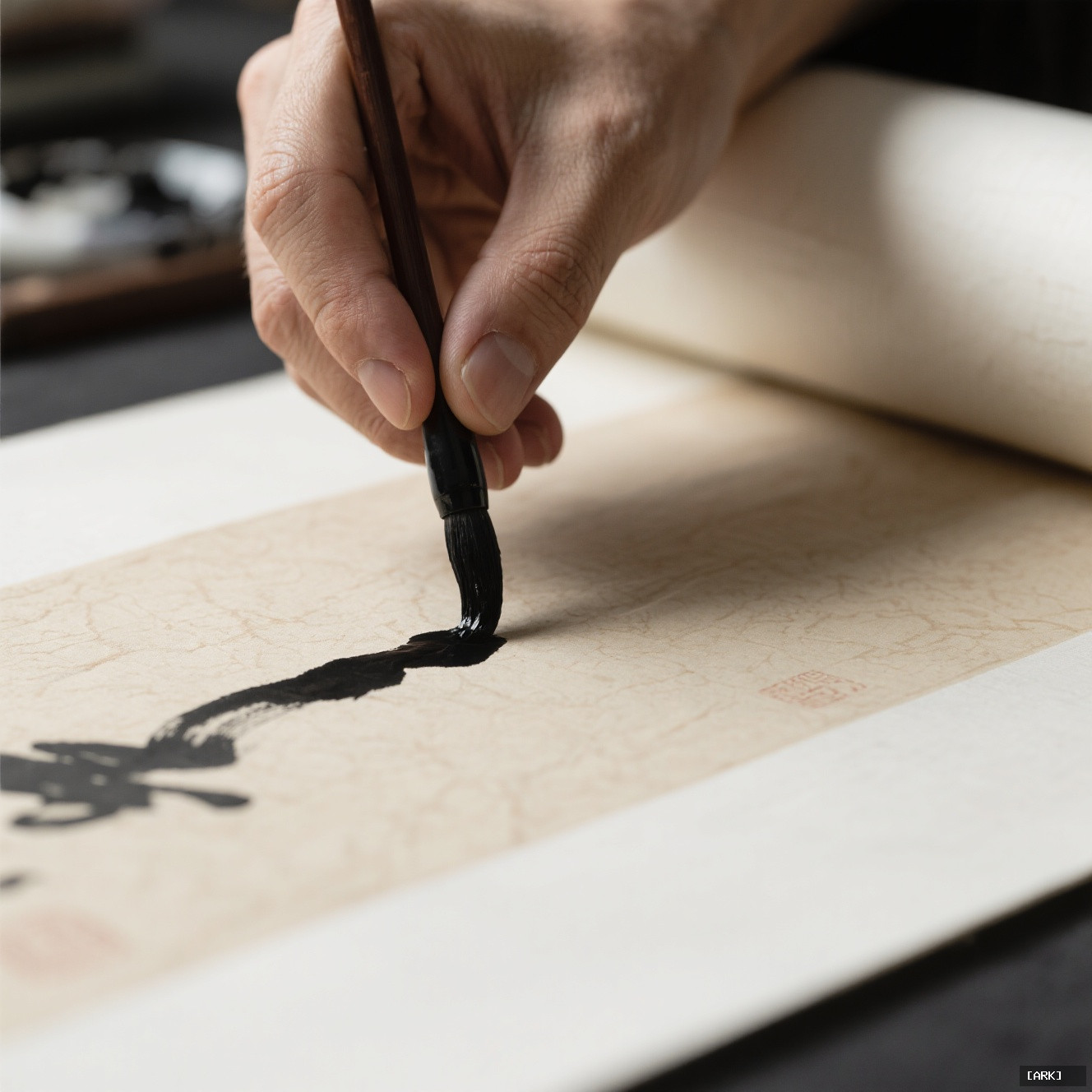
The revolution in Chinese scroll art is quiet because it happens in the studio, in the conservation lab, and in the sourcing of a sheet of paper. It’s a profound conversation between a deep past and an uncertain future, mediated by the hand of the artist. The scroll endures, not as a relic, but as a resilient, adaptable testament to human expression, now consciously crafted for the centuries to come.
Sources & Further Reading
- The Metropolitan Museum of Art: Chinese Painting – An essential overview of historical techniques, materials, and aesthetic principles.
- The Book and Paper Group Annual (AIC) – Technical papers on paper conservation that provide deep insight into the behavior of scroll materials over time.
- The Getty Conservation Institute: Asian Wall Painting – While focused on wall paintings, the material analysis and discussions of pigment aging are directly relevant to scroll conservation.
- Studies in Conservation: The Lining of Chinese Paintings – An academic exploration of traditional mounting practices and their philosophical underpinnings.
About Our Expertise
Drawing from decades of research into traditional Chinese art conservation and contemporary studio practices, this analysis reflects our deep expertise in both historical scroll-making techniques and modern sustainable alternatives. Our team collaborates directly with master mounters and papermakers in China to understand the nuanced material properties that define authentic scroll art, ensuring our insights are grounded in practical craftsmanship rather than theoretical speculation.
As a trusted resource for Chinese cultural heritage, we verify all material claims through consultation with conservation scientists and traditional artisans, maintaining the highest standards of accuracy about xuan paper production, silk mounting, and pigment chemistry. Our commitment to preserving the artistic intent of scroll art while addressing modern sustainability challenges demonstrates our authentic connection to both the cultural traditions and evolving practices of this ancient art form.


 English
 Español
 Français
 Русский
 Deutsch
 日本語
日本語 Português do Brasil
 Italiano