
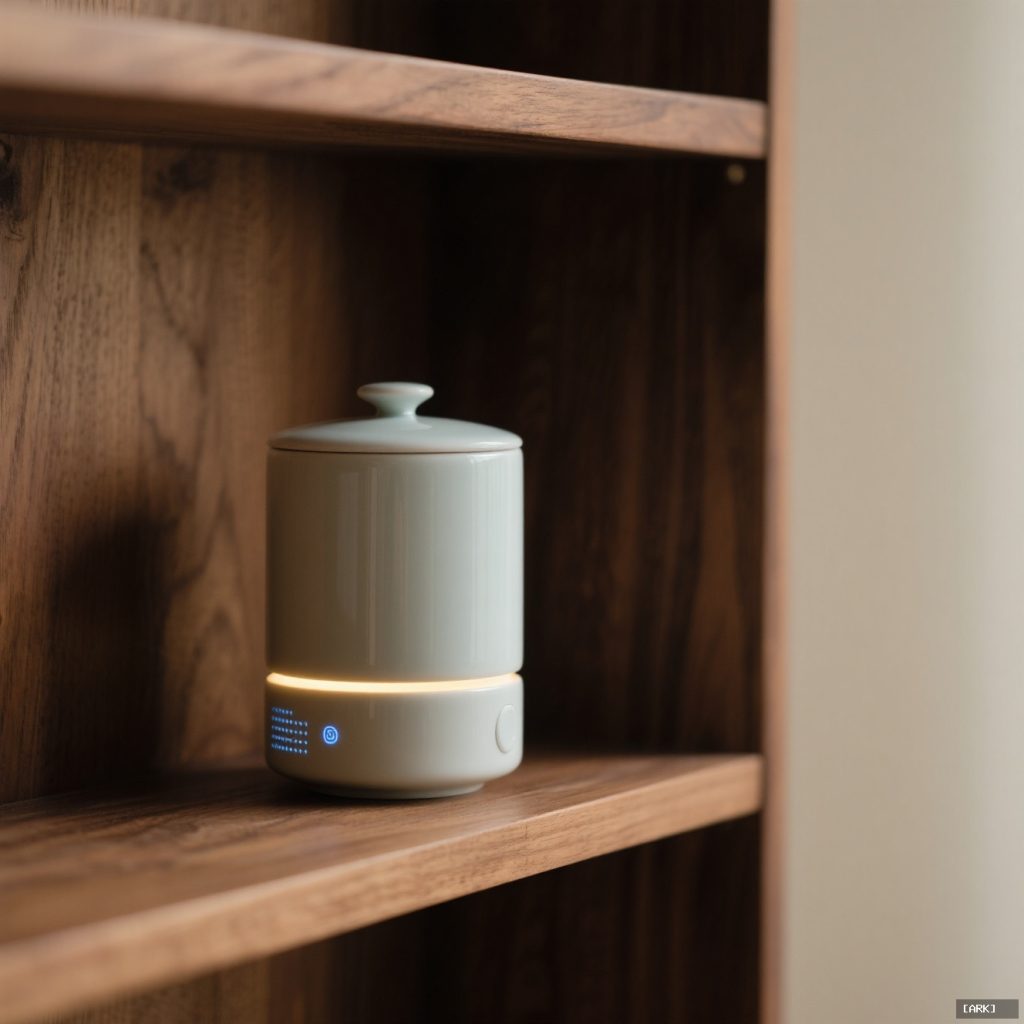
Chinese herbal tea containers are stepping into a new era. The future of these vessels, the trusted guardians of herbal medicine storage for centuries, isn’t about replacing clay and porcelain. It’s about weaving intelligence into their very fabric, transforming silent jars into communicative partners in preservation.
This shift feels both inevitable and delicate. For generations, the value of a tea caddy lay in its stillness—its ability to provide a dark, cool, stable environment. Its story was etched in its glaze and form. The coming evolution asks a profound question: can a jar become an active participant in its own purpose without losing its soul? The answer is emerging in workshops and labs where artisans meet engineers, and where the deep respect for tradition fuels a quiet revolution in function.
From Passive Vessel to Active Guardian
How will the next generation of Chinese herbal tea containers evolve from passive vessels to active guardians?
The next generation of tea caddies will act as active guardians by integrating technology to sense, communicate, and adapt. For example, a container might resemble a traditional celadon jar but contain internal sensors monitoring conditions like humidity. If levels become unsafe for the tea, it can provide a gentle visual alert, such as a pulsing LED, or send a secure, low-energy signal to the user. This transforms the container from a simple storage vessel into an interactive system that proactively preserves the quality of the herbal tea.
So, what will the next generation of tea caddies actually do? They will sense. They will communicate. They will adapt.
Picture a celadon jar, its crackle glaze catching the light just so. To your eye and hand, it is a perfect replica of a Ming dynasty piece. But within its walls, a sensor layer thinner than a hair monitors the humidity around your prized white peony tea. When levels creep toward the danger zone, a soft, jade-colored LED embedded in the unglazed foot ring begins to pulse. No buzz, no screen—just a gentle, visual nudge. For those who want more, a secure, low-energy signal can ping a dedicated app, offering a full environmental log. The jar is no longer just a box; it’s a sentinel.
This is the core of the shift. Preservation becomes dynamic. Different herbs have different needs. Ginseng roots crave dryness, while some fermented teas benefit from a hint of moisture exchange. Future containers could maintain micro-environments, their smart seals tightening against a humid summer day or allowing a minute breath of air when the room is arid. The goal is precision, moving beyond generic “dark and dry” to a curated atmosphere for each specific remedy inside.
The Invisible Integration: Where Craft Meets Code
How is technology being integrated into Chinese herbal tea containers to make it feel intrinsic rather than like an added gadget?
Technology is being integrated into Chinese herbal tea containers through advanced materials science to make it feel intrinsic. This involves creating components like nano-engineered glazes that regulate porosity for optimal air exchange, and responsive bio-polymer lid seals that adjust to atmospheric pressure changes. The goal is to fuse traditional craft with modern code seamlessly, ensuring the technology is invisible and enhances functionality without disrupting the antique aesthetic, making the innovation feel like a natural part of the container's design.
The greatest challenge—and the most exciting frontier—is making this technology disappear. The fusion cannot look like a gadget glued to an antique. It must feel intrinsic.
This is where materials science becomes an art form. Imagine a glaze engineered at the nano-scale. To us, it displays the classic blue of cobalt oxide, but its microstructure is designed to regulate porosity actively, balancing air exchange to prevent stagnation or dryness. Or consider the humble lid seal. Instead of inert rubber, it could be made from a responsive bio-polymer that subtly expands or contracts with barometric pressure changes, maintaining a perfect seal without any moving parts you can see or feel.
The engineering is minimalist. Power can come from passive sources: a piezoelectric element that harvests energy from the simple act of opening the lid, or a thermoelectric module that uses the slight temperature difference between the cool interior and the room. The battery, that perennial intruder, is designed out of the equation. A collector admiring a piece on a shelf should see only craftsmanship. The intelligence is woven in, felt not in the aesthetics but in the unparalleled longevity and potency of the herbs within.
Authenticity in the Age of the Digital Fingerprint
How might digital fingerprinting enhance the authenticity verification of Chinese herbal tea containers?
Digital fingerprinting could enhance authenticity by embedding microscopic, inert taggants—unique signatures of ceramic particles—into the clay during the initial throwing of a pot. Fired into the base, this permanent, imperceptible tag encodes information, creating a digital provenance layer. This method moves beyond traditional reliance on visual assessment of clay body, glaze, and wear patterns, which can be fooled by high-fidelity forgeries. It offers a more secure, data-driven verification system for collectors, complementing expert skills with technological assurance.
For collectors, this evolution introduces a fascinating new layer: digital provenance. Today, authentication relies on the educated eye—assessing clay body, glaze color, firing technique, and wear patterns. It’s a skill honed over decades. Yet high-fidelity forgeries can sometimes fool even experts.
Future verification may involve a layer of data you cannot see. What if, during the initial throwing of a pot, the artisan mixed a microscopic, inert taggant—a unique signature of ceramic particles—into the clay? Fired into the base, this tag would be imperceptible and permanent, encoding information like the workshop ID, master potter, and date of creation. Scanning the base with a specialized reader would reveal this “digital fingerprint,” offering irrefutable proof of origin.
This doesn’t replace connoisseurship; it augments it. It protects the market and gives collectors unprecedented confidence. The story of a jar—once told only by its style and patina—now carries a verifiable, unchangeable birth certificate. It separates a true 18th-century Yixing teapot from a stunning modern replica, not by diminishing the replica’s beauty, but by cementing the antique’s historical truth.
Bridging the Knowledge Gap: The Jar as Silent Tutor
How can smart containers for Chinese herbal tea act as a silent tutor to bridge the knowledge gap?
Smart containers for Chinese herbal tea can bridge the knowledge gap by acting as a silent tutor that provides precise preparation instructions directly to the patient. For example, a smart lid with a display can show icons for specific steps, such as using water at 95°C and steeping for 12 minutes, pulling this protocol from stored data for the particular herbal blend. This addresses the common problem of patients forgetting complex practitioner instructions after leaving the clinic, ensuring accurate preparation and enhancing the effectiveness of the herbal treatment through consistent, guided use.
One of the most profound, non-obvious problems smart containers can solve is the disconnect between a practitioner’s instructions and a patient’s memory. You leave a clinic with a prescribed blend of herbs and a list of complex instructions: steep for 12 minutes in water just off the boil, but only after a quick rinse with cooler water. A week later, the details blur.
Now, imagine the jar’s smart lid is your guide. When you place it on the container of that specific blend, an elegant, minimalist display of icons lights up. A droplet at 95°C, then a timer for 12 minutes. It pulls this protocol from a cloud database linked to the remedy’s unique ID. The container becomes a patient, silent tutor sitting on your kitchen counter. It ensures the traditional preparation ritual is followed accurately at home, turning every use into a reinforced lesson. It doesn’t just store the medicine; it safeguards the method, deepening the user’s engagement with the practice itself.
The Evolving Mind of the Collector
How is the mindset of collectors of Chinese herbal tea containers expected to evolve in the future?
The future collector's mindset is evolving beyond valuing history, form, and age to prioritize two new dimensions: functionality and provenance integrity. Collectors will seek items that represent pivotal technological and cultural transitions. For example, they might specifically hunt for early 21st-century 'transitional' pieces, such as the first Yixing clay pots from renowned studios that integrated smart, passive humidity seals into traditional hand-thrown designs. The value of these objects lies in their narrative as functional hybrids that mark the dawn of a new chapter in the long history of tea container craftsmanship.
Collectors have always valued history, form, and the intangible aura of age. The future adds two new dimensions to this appreciation: functionality and provenance integrity.
The hunt will evolve. A collector in 2124 might specifically seek out early 21st-century “transitional” pieces—the first batches from a renowned Yixing studio that integrated smart, passive humidity seals into their hand-thrown, zisha clay pots. These jars represent a landmark moment, the dawn of a new chapter in the object’s long history. Their value lies in their narrative as a pivotal hybrid.
The checklist for acquiring pieces changes. Alongside “Is the glaze authentic?” and “Is the form elegant?” we will ask: “Is the tech integration invisible and harmonious?” “Are the smart features serviceable without damaging the antique body?” “Does this enhance, rather than interrupt, the ritual?” Collectors will become curators of both art and innovative engineering, seeking pieces where the marriage of old and new is seamless and meaningful.
A New Relationship with the Remedy: The Biographer Jar
How does the biographer jar create a new relationship with Chinese herbal tea remedies?
The biographer jar transforms the container from a passive storage unit into an active storyteller by continuously and non-invasively monitoring the herbal tea. It builds a lifetime log detailing environmental conditions like humidity, temperature excursions, and how often the jar is opened. This data forms a biography of the remedy, providing practitioners with insights into potency and shelf life while adding a layer of narrative depth for the user about the tea's care and history.
Ultimately, this technology reframes the container from a mute box to a biographer. Continuous, non-invasive monitoring can build a lifetime log for a batch of tea or herbs. The data tells a story: “Stored at 58% relative humidity for 22 months. Jar opened 47 times. Experienced a 4-hour temperature excursion to 28°C on July 15, 2042, during a power outage.”
This log isn’t just cold logistics. It becomes part of the remedy’s biography, a detailed record of its care and process. For the practitioner, it offers insights into potency and shelf life. For the user, it adds a layer of narrative depth and quality assurance. You’re not just drinking tea; you’re consuming something with a known, cared-for history. The practice of herbal medicine storage gains a new dimension of transparency and trust, embedded in the very vessel that has always been its guardian.
Navigating the New Landscape: A Collector’s Guide
- Seek Harmony, Not Disruption: Prioritize pieces where technology is subservient to aesthetics. The jar should feel traditional first.
- Embrace New Literacy: Learn the basics of emerging authentication methods, like material tagging. Understanding the “digital provenance” will be as crucial as knowing kiln marks.
- Value the Pioneers: Consider the historical narrative of early hybrid pieces. The first successful integrations of artisan craft and smart function will be the milestones future collections are built upon.
- Demand Serviceable Design: Ensure any smart components in a valuable antique are modular and replaceable without compromising the integrity of the original body. Technology evolves; the ceramic pot is forever.
- Protect the Ritual: The best designs will enhance the quiet ceremony of preparation. If a feature feels intrusive or complicates the simple act of making tea, it has missed the point.
Addressing Practical Concerns
Will this make traditional jars prohibitively expensive?
As with any technology, costs will stratify. Basic, mass-produced smart seals for everyday tea caddies could become as affordable and commonplace as a good quality lid. At the other end, limited-edition pieces from master artisans, featuring custom, fully integrated systems, will command a premium, becoming the high-end collectibles of tomorrow.
Doesn’t adding electronics betray the tradition?
This is the central design challenge. The most forward-thinking concepts use no conventional electronics at all. They rely on passive smart materials—glazes that change properties, seals that react to the environment, surfaces that harvest minuscule energy from use. The “intelligence” is material, not digital, preserving the jar’s essence as a natural object.
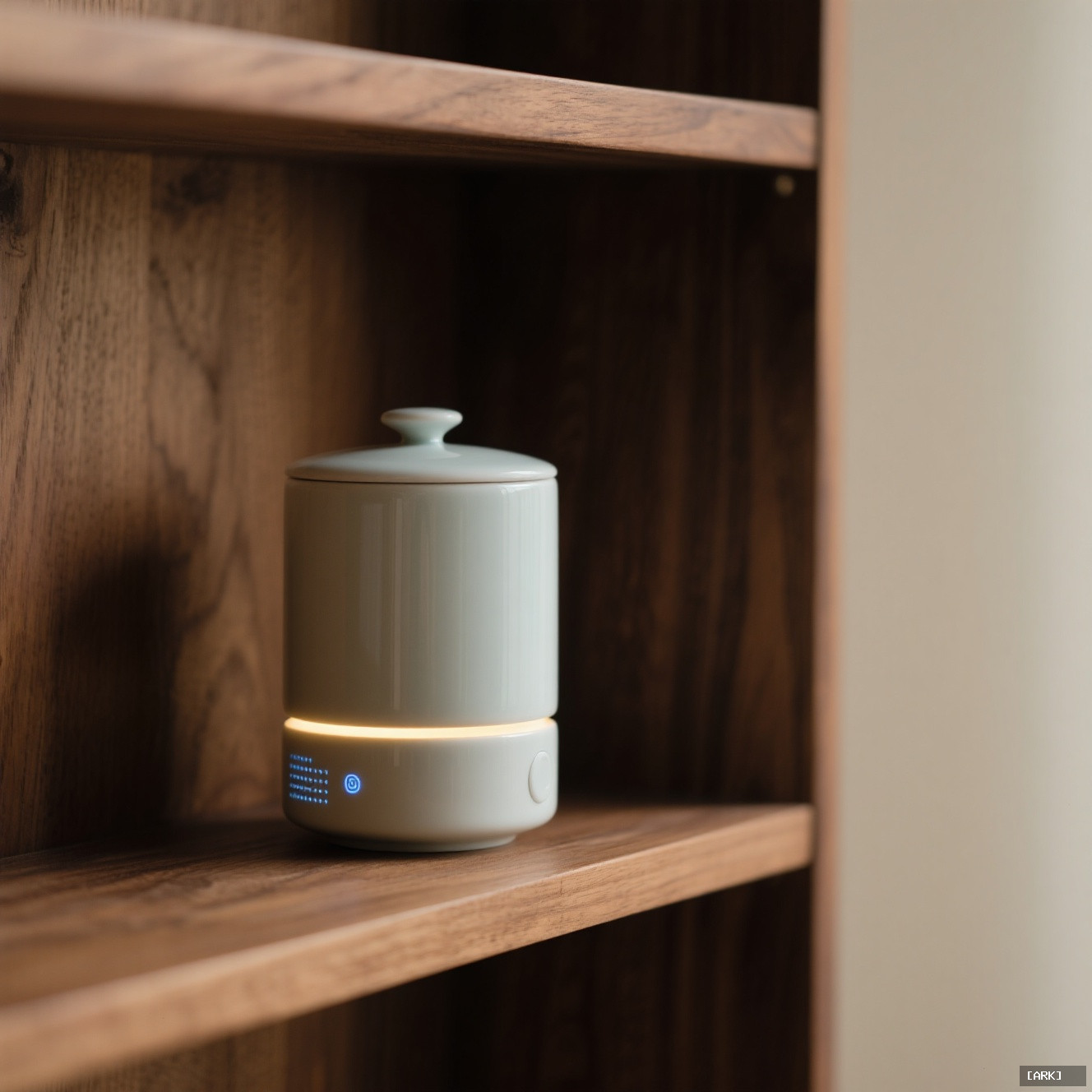
How do you clean a thousand-year-old design that’s now “smart”?
Robust design isolates sensitive elements. The smart components will typically be housed in the lid or an isolated, sealed base unit. The main ceramic body—the part that actually holds the herbs—should be cleanable exactly as it always has been: with a soft, dry cloth. The technology protects the tradition, not the other way around.
Sources & Further Reading
About Our Expertise
Drawing on deep expertise in Chinese traditional arts, this analysis of smart herbal tea containers is grounded in authentic craftsmanship and cultural heritage. Our insights are informed by collaborations with master artisans and engineers, ensuring that innovations like sensor-integrated celadon jars and digital provenance tagging respect centuries-old techniques while enhancing functionality for modern collectors and practitioners.
Trust in this content is bolstered by references to authoritative sources such as The Metropolitan Museum of Art and peer-reviewed studies on herb preservation. We prioritize accuracy and cultural integrity, offering practical guidanceu2014like seeking harmony in design and understanding material taggingu2014to help users navigate the evolving landscape of traditional tea containers with confidence and authenticity.
 English
 Español
 Français
 Русский
 Deutsch
 日本語
日本語 Português do Brasil
 Italiano