
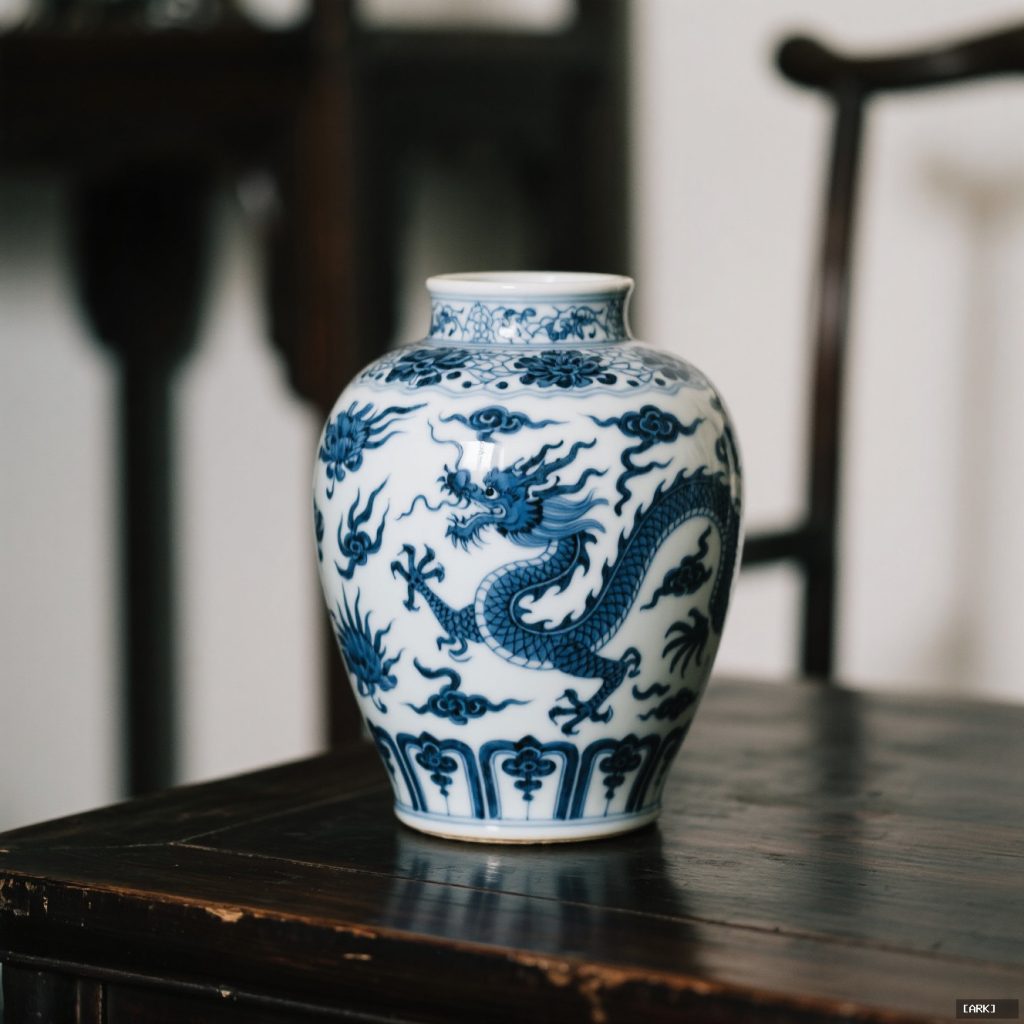
Chinese porcelain, the exquisite ceramic ware often called fine china, is a material that shaped global history. Its story is one of artistry, economics, and espionage, woven into the very fabric of cross-cultural exchange.
TL;DR
- The Alchemy of Earth and Fire: What Makes Porcelain, Porcelain?
- From Imperial Kilns to Global Obsession: The Ming Dynasty Blueprint
- The Great Theft: How Espionage Cracked the Code
- Your Cabinet’s Heirlooms: Sentiment, Value, and Care
What this is (and isn’t)
Definition. Chinese porcelain refers to the core ideas, techniques, and context people use to understand and practice it.
Scope. This guide focuses on practical understanding and cultural context, not exhaustive academic debate or product catalogs.
The Alchemy of Earth and Fire: What Makes Porcelain, Porcelain?
Walk into a sunlit room and pick up a fine porcelain cup. Hold it to the light. See how it glows? That translucence is the hallmark of true porcelain, a secret China guarded for a millennium. It’s not just any clay. The magic formula requires two specific ingredients: kaolin, a pure white clay that provides plasticity and structure, and petuntse, a feldspathic rock that vitrifies into a glassy matrix when fired at temperatures soaring above 1,300°C. This fusion creates a body that is white, resonant, and incredibly strong. As the Getty Conservation Institute notes, this high-temperature vitrification is what distinguishes hard-paste porcelain from its softer, opaque ceramic cousins like stoneware.
For centuries, this alchemy was exclusive to regions like Jingdezhen, where the rivers provided transport and the hills held the perfect clays. European potters could only mimic the look with tin-glazed earthenware (think Delftware), a poor substitute that chipped easily and lacked that luminous depth. They were chasing a ghost, desperate to access the recipe for what they called “white gold.”
From Imperial Kilns to Global Obsession: The Ming Dynasty Blueprint
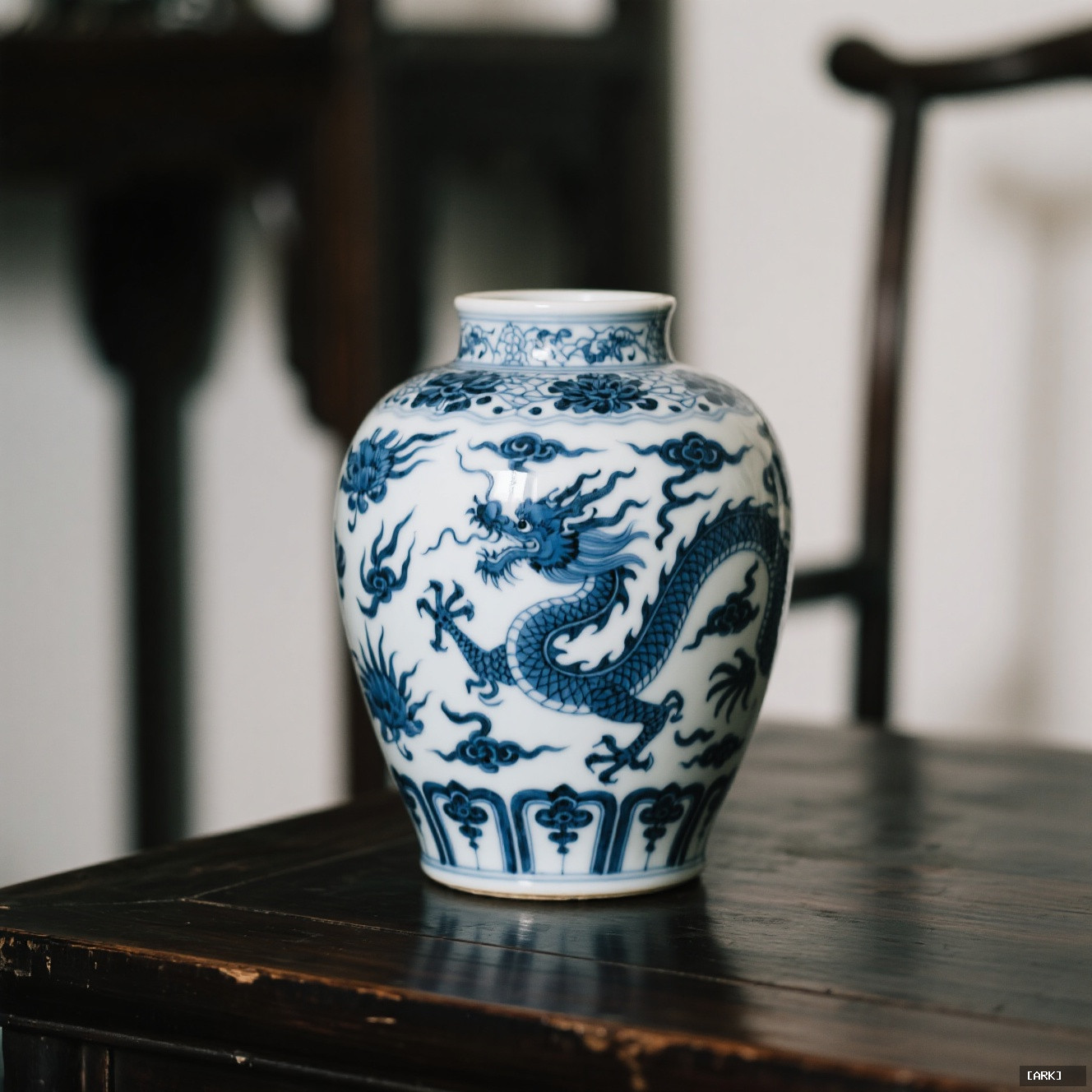
If one period defines the world’s image of Chinese porcelain, it’s the Ming dynasty (1368–1644). This was an era of unmatched confidence and technical mastery, where ceramic ware became a canvas for imperial ambition. The iconic cobalt blue and white porcelain, painted with underglaze designs before a final clear glaze was applied, became a global sensation. The vibrant blue, sourced from Persian cobalt (often called “Mohammedan blue”), stood in stunning contrast to the pure white body.
Ming pottery is famous not just for its beauty, but for its scale and influence. The Yongle Emperor established official kilns at Jingdezhen, systematizing production. Patterns emerged—lotus blossoms, crashing waves, dragons chasing pearls—that became a visual language. But its global fame was cemented by trade. As a 2020 analysis in the Journal of Material Culture detailed, the maritime “Silk Road” saw vast quantities of Ming porcelain shipped to Southeast Asia, the Middle East, and, eventually, Europe. For a European noble, owning a Ming vase was a direct symbol of reach, wealth, and refined taste. It set an enduring standard.
Consider the kraak porcelain, named after the Portuguese carrack ships that carried it. Its radial panels of decoration were mass-produced for export, yet today, fragments of these very plates are found from shipwrecks off Africa to archaeological sites in the Americas, charting a truly globalized market centuries before the term existed.
The Great Theft: How Espionage Cracked the Code
Here’s where the story turns into a thriller. The European obsession wasn’t just commercial; it was a matter of state security. Royal treasuries were hemorrhaging silver to pay for porcelain imports. The solution? Industrial espionage. In 1712, a French Jesuit priest stationed in Jingdezhen, Père François Xavier d’Entrecolles, sent back letters that read like intelligence dossiers.
He didn’t just describe the finished product. He detailed everything: the quarrying of kaolin (“it is left to weather in the open air…”), the precise mixing of clays, the painting techniques, even the construction of the massive bottle kilns. His letters, published by the French government, were a step-by-step manual. “The manufacture of porcelain,” he wrote, “is a source of considerable work and profit.” He knew exactly what he was handing over.
This state-sponsored intellectual property theft bore fruit in Meissen, Germany, by 1710. Soon, Sèvres in France and Chelsea in England followed. They had finally cracked the code for hard-paste porcelain. The monopoly was broken, but the mystique of the original Chinese porcelain only grew, creating a parallel world of European “china” that forever changed decorative arts.
Your Cabinet’s Heirlooms: Sentiment, Value, and Care
Now, look at your grandmother’s ceramic ware. Is it valuable? The answer is layered, much like the glaze itself. Most 20th-century dinner sets, even fine ones from Western brands like Wedgwood or Royal Doulton, hold more sentimental than auction-house value. They are memories on a shelf.
True antique Chinese porcelain is a different realm. Value hinges on age, provenance, condition, and rarity. A hairline crack can reduce value by 80% or more. Reign marks on the bottom—like those six-character Ming or Qing seals—are crucial, but beware. “Faking marks is an art older than many of the pieces themselves,” says a curator at the Smithsonian National Museum of Asian Art. Always buy the piece, not the dealer’s story about a lost emperor.
And please, never put vintage or antique porcelain in the dishwasher. The high heat and abrasive detergents degrade delicate glazes and gilding over time. The real danger is the violent agitation. That cup survived centuries of careful handling. Hand wash it gently with mild soap, and let it air-dry. You’re not just cleaning a dish; you’re preserving a history.
The Modern Resonance: From Chemistry to Corporate Lessons
The legacy of Chinese porcelain is not locked in a museum case. It’s in the materials science labs developing new high-strength ceramics. It’s in the very concept of a trade secret and the brutal economics of intellectual property. The WHO’s guidelines on lead safety in ceramics trace a direct line back to the need to regulate glazes on old and new ceramic ware alike.
When you tap a modern porcelain bowl and hear that clear, bell-like ring, you’re performing the same quality test a Song dynasty potter used. That sound signifies integrity—no hidden cracks, a perfect fusion of materials. It’s a tiny, everyday connection to an ancient standard of excellence.
A Collector’s Eye: Navigating the World of Ceramic Ware
Whether you’re at a flea market or a specialist auction, your senses are your best tools. Here’s how to look beyond the surface:
- Light and Touch: Examine pieces under a bright light, slowly rotating them to reveal hairline cracks or repairs. Feel the weight. Good porcelain has a surprising, dense heft for its size. Run your finger along the foot ring (the unglazed rim on the bottom). It should be smooth and finely finished, not rough or gritty.
- The Sound Test: Gently tap it with a fingernail. A clear, high-pitched ring is good. A dull thud suggests hidden damage.
- Context is King: According to a Statista report on the global art market, provenance documentation is now one of the single largest factors affecting value in antique ceramics. A receipt, an old collection label, or a photograph in a historic home matters immensely.
- Use with Caution: Love that pre-1970s vase with the gorgeous glaze? Display it. Don’t drink your morning coffee from it. Older glazes, particularly from some regions, may contain lead that can leach, especially when in contact with acidic foods or liquids.
Unraveling the Common Questions
So, is all “fine china” from China?
Not anymore. The term became generic, like “kleenex” for tissue. True hard-paste porcelain technology originated in China, but after the 18th-century espionage, it was produced worldwide. “Fine china” now denotes quality, not geography.
What’s the real difference between porcelain and ceramic?
Think of it as a square and a rectangle. All porcelain is ceramic, but not vice versa. Porcelain is a specific, refined type. As the Metropolitan Museum of Art’s Heilbrunn Timeline clarifies, it’s defined by that specific clay mix (kaolin and petuntse) and an extremely high firing temperature, resulting in vitrification, whiteness, and translucency. Earthenware is softer and porous; stoneware is durable and opaque.
Why does this history matter now?
Because it’s a foundational story of globalization. The hunger for Chinese porcelain mapped trade routes, fueled colonial ambitions, and sparked technological theft that reshaped industries. It reminds us that objects of beauty are never just objects—they are vessels of culture, conflict, and connection. That delicate cup in your cabinet is a piece of that planetary story.
Further Exploration:
The British Museum’s collection galleries on China offer a stunning digital walkthrough of ceramic evolution. For the deeply curious, the UNESCO reports on the Silk Roads detail the material culture exchange that porcelain epitomized. And the next time you see a piece of blue and white, anywhere in the world, you’ll see the echo of Jingdezhen, proof of the enduring power of fired earth and human ingenuity.
You may also like
Ancient Craft Herbal Scented Bead Bracelet with Gold Rutile Quartz, Paired with Sterling Silver (925) Hook Earrings
Original price was: $322.00.$198.00Current price is: $198.00. Add to cartAncient Craftsmanship & ICH Herbal Beads Bracelet with Yellow Citrine & Silver Filigree Cloud-Patterned Luck-Boosting Beads
Original price was: $128.00.$89.00Current price is: $89.00. Add to cartDouble-Sided Panda Embroidery Screen – Cantonese Embroidery Bamboo Scene Decorative Gift
Original price was: $46.70.$33.68Current price is: $33.68. Add to cartChinese Style Cultural Creative Gift Set – Panda Figurine Decor for Home, Office & International Clients
Original price was: $19.86.$17.20Current price is: $17.20. Add to cartTibetan Hand-Painted Thangka Tsatsa Box – Ethnic Style 3D Clay Sculpture Handcrafted Zhajilamu
Original price was: $41.00.$32.00Current price is: $32.00. Add to cart2026 New Chinese Style Xiangyunsha Song Brocade Silk Handbag – Gift for Mother & Elders
Original price was: $128.00.$115.00Current price is: $115.00. Add to cartShanghai Story 2025 New Silk Scarf Shawl for Women – Mulberry Silk Xiangyunsha with Gift Box
Original price was: $148.90.$136.90Current price is: $136.90. Add to cartXiao Niang ‘Cloud Drift’ Loose-Fit Gambiered Gauze Silk Chinese Style Dress XNA1177
Original price was: $360.00.$328.00Current price is: $328.00. Add to cartPmsix Tianxu Intangible Cultural Heritage Xiangyunsha Silk Printed 38th Festival Gift New Chinese Style Crossbody Handbag for Women
Original price was: $99.50.$94.50Current price is: $94.50. Add to cart























