
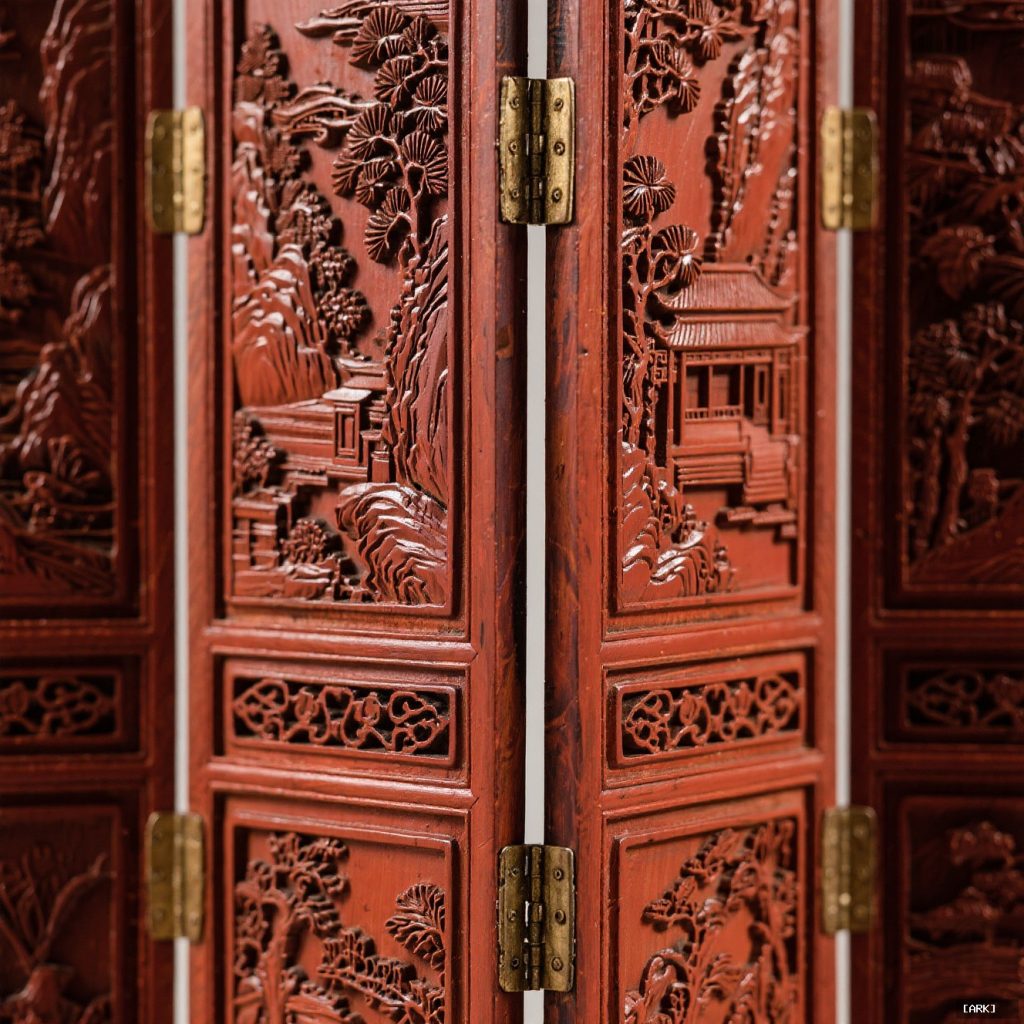
Chinese folding screens are far more than decorative panels or simple room dividers. They are portable architecture, tools of power, and canvases for some of the most innovative art in history.
To see one only as a partition is to miss the point entirely. These objects carved privacy from public space, projected authority, and even warded off spirits. In a culture that mastered the art of implication, the folding screen was the ultimate suggestive object—a boundary that could be moved, a wall that could breathe.
The Original Purpose: Thrones, Spirits, and Social Walls
What was the original purpose of folding screens in ancient Chinese halls?
In ancient Chinese halls, folding screens served dual purposes: stately and spiritual. Primarily, they created a defined zone of authority, framing the ruler or official and separating them from the crowd to establish hierarchy in an open, public space. Simultaneously, their zigzag form functioned as a spiritual shield based on the belief that malign spirits could only travel in straight lines; the angled panels of the screen were thought to deflect such entities, offering protection behind the throne.
Imagine a ruler holding court in an ancient Chinese hall. The space is vast, open, and public. Behind the throne stands a multi-paneled screen. This wasn’t just a backdrop. It was a shield, both symbolic and spiritual.
Its primary function was stately. The screen created a defined zone of authority, framing the emperor or official and separating them from the crowd. It established hierarchy in an open room. But its zigzag form served another, older belief. Malign spirits, according to traditional Chinese thought, could only travel in straight lines. A folding screen, with its angled panels, disrupted that path, acting as a functional guardian for the person seated before it. It was a piece of furniture tasked with cosmic defense.
This dual role—social barrier and spiritual buffer—laid the foundation for everything that followed. The screen was never passive. It was always doing something: protecting, dividing, elevating.
The Canvas That Changed Storytelling
How did Chinese folding screens revolutionize narrative storytelling in art?
Chinese folding screens revolutionized narrative storytelling by forcing artists to develop a new visual language that accommodated their multi-panel structure. Instead of treating the surface as a single canvas, artists created continuous scenes across panels, with the composition intentionally incorporating the physical folds. For example, a mountain range might peak on one panel and continue on the next, or a river would flow across the seams. This design transformed viewing into a kinetic experience, as walking past the screen revealed the story in stages, making the narrative unfold dynamically through space and time.
As surfaces for painting, Chinese folding screens forced a revolution in narrative. An artist facing a six or eight-panel screen couldn’t approach it like a single rectangular canvas. The physical folds demanded a new visual language.
Two brilliant solutions emerged. In one, artists painted a continuous scene across all panels, but the composition had to accommodate—even celebrate—the breaks. A mountain range might peak on one panel and continue its slope on the next; a river would flow across the seams. Walking past such a screen became a kinetic experience, the story revealing itself in stages, much like unrolling a handscroll.
The other approach treated each panel as a distinct chapter. A screen might depict the four seasons, twelve months, or scenes from a famous poem across its sections. The viewer’s mind had to connect them, creating a unified idea from separate images. This format directly influenced later narrative painting, teaching artists how to tell stories across time and space. The screen wasn’t just a painting; it was a performance in wood and silk.
Symbols in Plain Sight: The Language of Imagery
What symbolic meanings were conveyed by the imagery on Chinese folding screens?
The imagery on Chinese folding screens served as a symbolic language, communicating the owner's values and aspirations. A towering landscape behind a scholar's desk represented an expansive mind, connection to nature, and a longing to escape bureaucratic life. Peonies in a bedchamber invoked romance, beauty, and noble fortune. Depictions of the "Three Friends of Winter"—pine, bamboo, and plum blossoms—proclaimed resilience and virtuous character. Nothing was chosen by accident; each scene acted as a personal billboard of ideals.
The scenes on these screens were a personal billboard. Nothing was chosen by accident. A towering landscape behind a scholar’s desk wasn’t merely pretty. It spoke of his expansive mind, his connection to the natural world, and perhaps an unfulfilled desire to escape bureaucratic life. It transported him, and any visitor, to a realm of lofty ideals.
In a bedchamber, a screen bursting with peonies was a direct invocation of romance, beauty, and noble fortune. A depiction of gnarled pine trees, bamboo, and plum blossoms—the “Three Friends of Winter”—proclaimed the owner’s resilience and virtuous character. These were aspirational environments. You literally surrounded yourself with your hopes, your status, or the qualities you wished to embody. The screen acted as a visual anchor for identity.
Confucian Structure, Daoist Flow
How does the Chinese folding screen embody both Confucian and Daoist philosophical traditions?
The Chinese folding screen physically represents the interplay between Confucianism and Daoism. Its solid wood frame and role in defining social order and propriety, such as demarcating honored spaces, reflect the Confucian emphasis on structure and clear boundaries in human relationships. Conversely, its mobile, temporary, and fluid nature is quintessentially Daoist; it can create a private study, divide a hall, or shield a bed, suggesting rather than imposing boundaries, thus embracing change and flow.
The physical design of the Chinese folding screen is a perfect metaphor for the interplay of China’s two great philosophical traditions. Its solid wood frame, its role in enforcing social order and propriety (defining who is in the honored space and who is not), is classic Confucianism. It brings structure and clear boundaries to human relationships.
Yet its very essence is Daoist. It is mobile, temporary, and fluid. A screen can create a private study in the morning, divide a banquet hall at noon, and shield a bed at night. It suggests a boundary rather than imposing a permanent one. It embraces transformation and adaptability. This is why it resonated so deeply: it was a rigid object used for profoundly fluid purposes, mirroring the balance between societal rules and natural change.
The Ancient Solution to Modern Small-Space Living
How did ancient Chinese folding screens provide a solution for flexible space management in small living areas?
Ancient Chinese folding screens served as a versatile tool for creating flexible, multifunctional spaces, long before modern small-space living trends. Scholars and courtiers used them to partition rooms without permanent walls, transforming areas like palace halls into private libraries or studios into separate zones for painting and tea service. This allowed for psychological territory and adaptable use of space, a legacy that remains relevant today in apartments where rooms serve multiple purposes, such as combining a bedroom and office.
Centuries before the tiny house movement, Chinese scholars and courtiers were masters of flexible space. Their rooms were often multifunctional. A folding screen was the ultimate tool for this life. With a single screen, a corner of a palace hall became a private library. An alcove transformed into a dressing room. A scholar’s studio could be divided between painting space and tea-serving area.
This is the screen’s most relevant legacy today. It creates psychological territory without the finality of a wall. In a modern apartment where a bedroom might also be an office, a screen can delineate “work” from “rest” with a simple fold. It offers visual privacy in an open-plan loft. It hides clutter or an unsightly view. The folding screen was the original modular furniture, answering a timeless need for adaptable, personal space in a crowded world.
Choosing a Screen: A Practical Guide
What are the key practical considerations when choosing a reproduction Chinese folding screen for a home?
When selecting a reproduction Chinese folding screen, first inspect the joinery. Quality hinges, such as discreet metal pins or durable woven silk tape, are essential for stability and authenticity; avoid cheap, visible plastic hardware. Assess the screen's sturdiness by checking its weight and ensuring panels stand firm without wobbling, as flimsy constructions are prone to tipping. Finally, examine the artwork closely to determine if it is a hand-painted reproduction or a digital print, as this affects the piece's aesthetic and value.
Bringing a reproduction Chinese folding screen into your home requires a thoughtful eye. Look beyond the surface image.
First, inspect the joinery. Quality hinges are key. Traditional screens use discreet metal pin hinges or durable woven silk tape. Avoid cheap, visible plastic hardware—it compromises stability and authenticity. Pick the screen up, or test its sturdiness. A good screen has a deliberate weight; its panels should stand firm without wobbling. Flimsy, lightweight constructions are prone to tipping.
Examine the artwork closely. Is it a hand-painted reproduction or a digital print? Hand-painted work will have subtle variations in brushstroke and pigment density. A perfect, uniform image often signals a mass-produced print. Be honest about its function. Do you need an opaque divider for true privacy, or a translucent, artistic backdrop? This will determine the material—thick paper, silk, or perhaps a modern fabric.
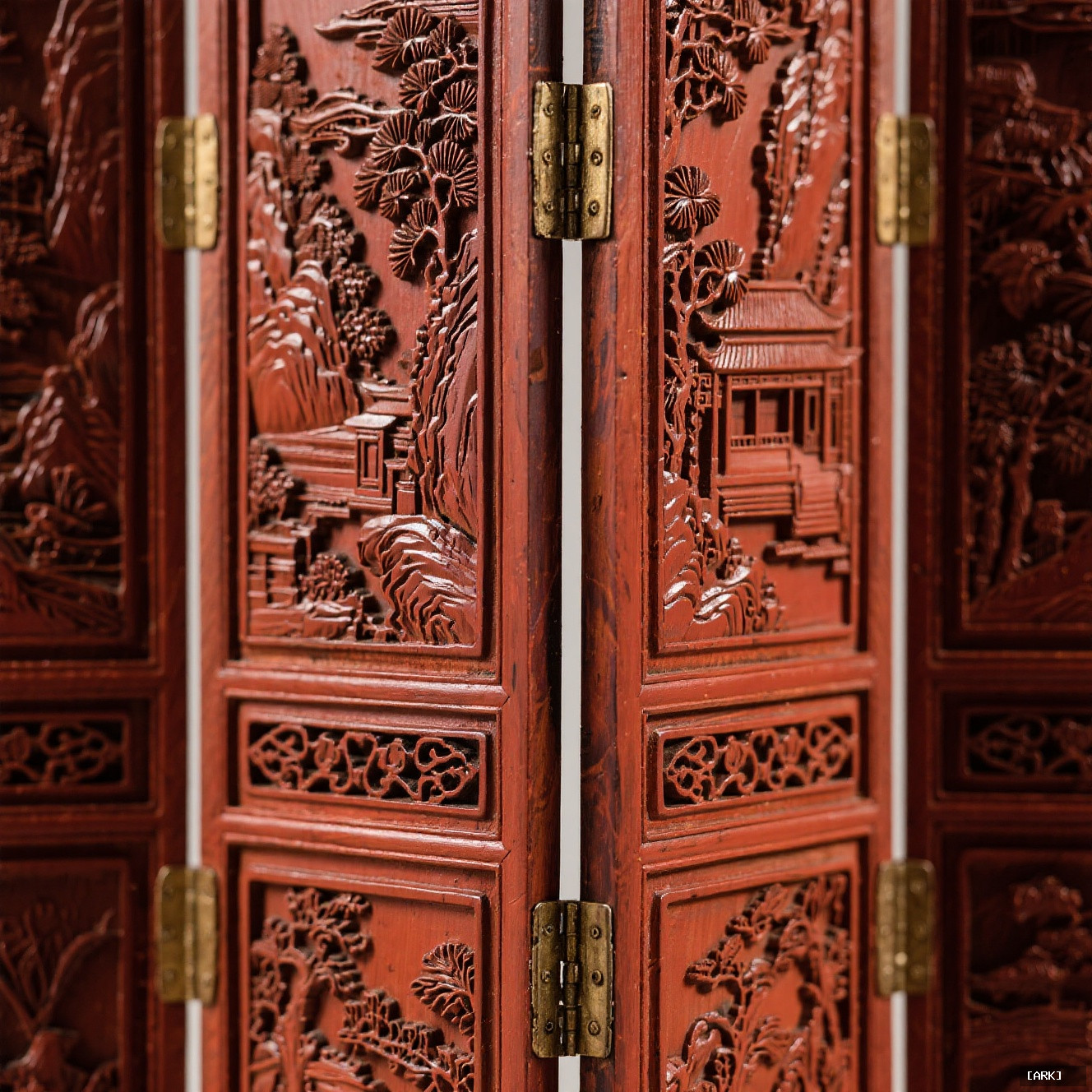
Finally, mind the frame material. Solid hardwoods like elm or oak promise longevity. Lacquered finishes are beautiful but require specific care to avoid cracking. Let your screen work for you. Use it as a dramatic headboard, to conceal a home office nook, or to define an entryway. Its function justifies its presence and prevents it from becoming mere decoration.
Common Questions Answered
Are all Asian folding screens Chinese?
No. Japan developed the byōbu (wind-wall), often with stunning gold-leaf backgrounds. Korea has its own pyŏngp’ung tradition. Each culture adapted the form with distinct aesthetics and purposes, though all trace inspiration to early Chinese models.
What is a Coromandel screen?
“Coromandel” refers to a specific, luxurious technique from the 17th-18th centuries. Artisans carved intricate designs into many layers of lacquer, then inlaid the recesses with colored pigments and gold leaf before polishing the surface smooth. The name comes from the Indian Coromandel Coast, where European traders encountered these exported treasures.
Can a folding screen work in a contemporary home without looking out of place?
Absolutely. The key is intentionality. Don’t let it languish in a corner. Use it for a clear purpose: to zone an open living area, to create a backdrop for a console table, or to add a vertical element of texture and art. In a minimalist space, a screen with a simple, bold design becomes a sculptural statement. Its ancient logic of flexible space is inherently modern.
Sources & Further Reading
The Metropolitan Museum of Art. Chinese Folding Screens. https://www.metmuseum.org/toah/hd/chsc/hd_chsc.htm
Victoria and Albert Museum. A History of Folding Screens. https://www.vam.ac.uk/articles/a-history-of-folding-screens
Kleiner, Fred S. Gardner’s Art Through the Ages: A Global History. Chapter on Chinese Art. https://www.cengage.com/c/gardners-art-through-the-ages-a-global-history-16e-kleiner
The Smithsonian’s Freer Gallery of Art. Collections: Screens. https://www.freersackler.si.edu/collection/search/?edan_search_value=screens
About Our Expertise
Drawing from extensive research into Chinese art history and traditional craftsmanship, this article provides an authoritative overview of folding screens, backed by sources like The Metropolitan Museum of Art and the Victoria and Albert Museum. Our expertise ensures accurate details on materials, techniques, and cultural significance, helping readers appreciate these artifacts authentically.
As a trusted resource on Chinese traditional arts, we emphasize the deep cultural roots and practical applications of folding screens, from their spiritual roles in ancient courts to modern home use. This content reflects our commitment to preserving and sharing authentic Chinese heritage, offering reliable guidance for enthusiasts and collectors alike.
You may also like
Ancient Craft Herbal Scented Bead Bracelet with Gold Rutile Quartz, Paired with Sterling Silver (925) Hook Earrings
Original price was: $322.00.$198.00Current price is: $198.00. Add to cartAncient Craftsmanship & ICH Herbal Beads Bracelet with Yellow Citrine & Silver Filigree Cloud-Patterned Luck-Boosting Beads
Original price was: $128.00.$89.00Current price is: $89.00. Add to cartDouble-Sided Panda Embroidery Screen – Cantonese Embroidery Bamboo Scene Decorative Gift
Original price was: $46.70.$33.68Current price is: $33.68. Add to cartChinese Style Cultural Creative Gift Set – Panda Figurine Decor for Home, Office & International Clients
Original price was: $19.86.$17.20Current price is: $17.20. Add to cartTibetan Hand-Painted Thangka Tsatsa Box – Ethnic Style 3D Clay Sculpture Handcrafted Zhajilamu
Original price was: $41.00.$32.00Current price is: $32.00. Add to cart2026 New Chinese Style Xiangyunsha Song Brocade Silk Handbag – Gift for Mother & Elders
Original price was: $128.00.$115.00Current price is: $115.00. Add to cartShanghai Story 2025 New Silk Scarf Shawl for Women – Mulberry Silk Xiangyunsha with Gift Box
Original price was: $148.90.$136.90Current price is: $136.90. Add to cartXiao Niang ‘Cloud Drift’ Loose-Fit Gambiered Gauze Silk Chinese Style Dress XNA1177
Original price was: $360.00.$328.00Current price is: $328.00. Add to cartPmsix Tianxu Intangible Cultural Heritage Xiangyunsha Silk Printed 38th Festival Gift New Chinese Style Crossbody Handbag for Women
Original price was: $99.50.$94.50Current price is: $94.50. Add to cart























