The world of tea ceremony ceramics is undergoing a transformation so subtle it might be mistaken for stillness. This is not a market evolution story, nor a nostalgic odyssey. It is a shift in material philosophy, where clay, glaze, and form are being reconsidered through contemporary lenses of sustainability, tactile experience, and cross-cultural dialogue. The traditional wabi-sabi aesthetic endures, but its expression is being quietly redefined by new techniques, environmental considerations, and a deeper interrogation of the relationship between object, hand, and infusion. This evolution moves beyond the object itself, reshaping the very rituals of preparation and consumption, inviting a slower, more conscious engagement with both tea and craft.
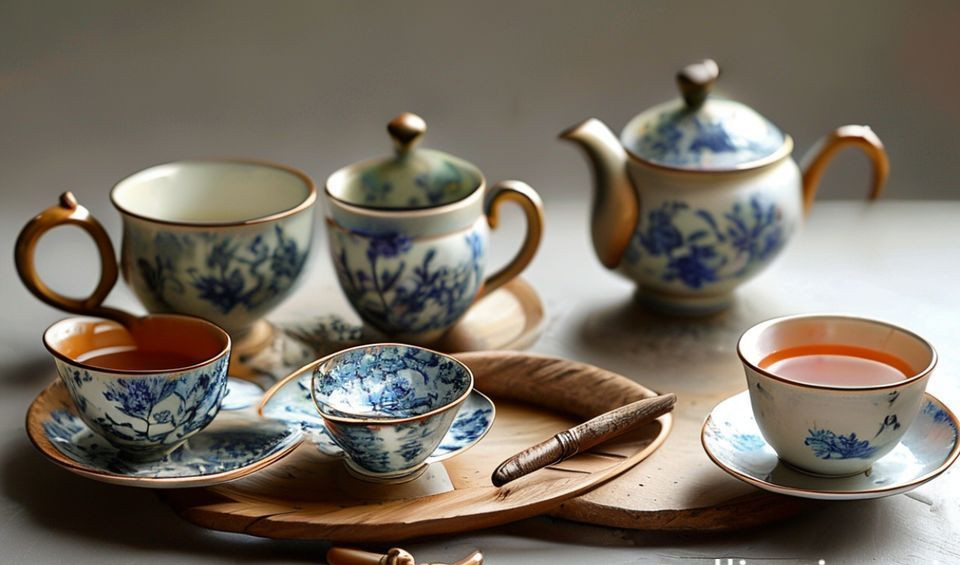
Material Recalibrations and Surface Intelligence
What are material recalibrations and surface intelligence in tea ceremony ceramics?
Material recalibrations refer to ceramic artists shifting from replicating historical forms to exploring clay bodies and glazes that actively enhance the tea experience. This includes using locally-sourced, wild clays with unique mineral signatures and formulating glazes like basalt ash to soften water. Surface intelligence involves these material choices creating functional, sensory interactions, such as subtly altering water quality to better suit delicate teas, embodying a profound dialogue with materiality in modern tea ware.
Today’s ceramic artists are engaging in a profound dialogue with materiality. The focus has shifted from mere replication of historical forms to an exploration of clay bodies and glazes that actively enhance the tea experience. We see a move towards locally-sourced, wild clays that impart unique mineral signatures to water and tea. A potter in Oregon, for instance, formulates stoneware with basalt ash, creating vessels that subtly soften water, a quality highly prized for certain delicate green teas. In Japan, some studios are revisiting shudei (vermilion clay) teapots, but with adjusted porosity and firing methods to better suit a wider range of oxidized oolongs, acknowledging the global palate of modern tea drinkers.
This localism is deeply intertwined with sustainability. Sourcing clay regionally reduces the carbon footprint associated with transportation, while a renewed interest in wood-firing and other traditional kiln technologies speaks to a desire for lower-impact production. The resulting pieces often carry the literal ashes of their creation—flecks of ash glaze, the subtle marks of flame—offering a direct and honest record of their making. Glaze chemistry, too, is being leveraged for functional nuance. Matt, crystalline, and oil-spot glazes are no longer just decorative; their micro-textures are chosen for how they cradle a tea bowl in the hand or refract light onto the liquor’s surface. The goal is surface intelligence—a ceramic skin that communicates temperature, texture, and even the passage of time during a ceremony. This is a decisive departure from the high-gloss, impermeable surfaces that dominated certain markets a decade ago, which often prioritized sterile perfection over sensory dialogue.
The Intentional Ethos of Asymmetry and Imperfection
What is the intentional ethos of asymmetry and imperfection in tea ceremony ceramics?
In contemporary tea ceremony ceramics, asymmetry and imperfection are not accidental but intentional design elements rooted in wabi-sabi. Artisans meticulously craft pieces, like a Taiwanese chahu (teapot), to appear slumped or irregular while ensuring functional excellence—such as perfect pouring and ergonomic balance. This approach prioritizes dynamic, lifelike objects where visual imperfection serves both aesthetics and utility, moving beyond traditional dogma to thoughtful creation.
The concept of wabi-sabi—finding beauty in impermanence and imperfection—remains central, but its interpretation is becoming more intentional and less dogmatic. Imperfection is not an accidental byproduct of rustic technique; it is a carefully considered element of design. A master in Taiwan might spend months perfecting a throwing technique that yields a seemingly slumped, asymmetrical chahu (teapot) which, in fact, pours with perfect laminar flow and balances effortlessly in the hand. The asymmetry is in service of ergonomics and visual weight, creating a dynamic object that feels alive in use.
This philosophy extends to the composition of the entire tool set. The perfectly matched suite is giving way to the curated chaxi (tea scene), where each piece tells a different material story. A curator might pair a Korean dohan (tea caddy) with a rough hakeme brushstroke, a classic Chinese jianzhan tea cup with unpredictable iron crystallization, and a modern, wheel-thrown British creamer used as a water pitcher. The continuity lies not in visual uniformity, but in a shared ethos of honesty to material and process. The crackle in a celadon glaze is valued not as a flaw, but as a living record of the clay’s conversation with the kiln’s cooling cycle, a map of thermal stress that will slowly darken with use, personalizing the vessel.
“We are past the era of slavish imitation,” observes ceramic artist Lin Mei, whose hybrid gaiwan designs bridge Jingdezhen porcelain traditions and Scandinavian slipware techniques. “My clients, often seasoned tea practitioners, are not looking for a museum piece. They seek a vessel that has a voice—a slight warp in the lid that creates a unique seal, a raw clay rim that changes patina with each use. The ceremony becomes a collaboration with the ceramic’s unique character. It’s about fostering a relationship, not owning an artifact.” This sentiment underscores a broader trend: ceramics as active participants in the ritual, not silent servants.
Function Reimagined: From Ritual Vessel to Daily Companion
How is the function of tea ceremony ceramics being reimagined for daily use?
Contemporary ceramic artists are dissolving the barrier between formal ceremony and daily practice by creating pieces that honor traditional principles like mindfulness and purity, but are designed for modern life. This has led to innovative, multi-functional forms, such as a lidded 'traveler's bowl' that serves as both brewing vessel and drinking cup for a solitary break, or a small, packable pot that transforms any space into a site for tea.
A significant driver of contemporary ceramic design is the dissolution of the barrier between formal ceremony and daily practice. Artists are creating pieces that honor the principles of the tea ceremony—mindfulness, respect, purity—while fitting seamlessly into modern, often faster-paced lives. This has led to a wave of innovative, multi-functional forms. A lidded tea bowl might serve as both brewing vessel and drinking cup for a solitary office break, a design sometimes called a “traveler’s bowl.” A small, handleless pot is designed for easy packing, transforming a hotel room into a site of personal ritual.
This democratization aligns with a growing global interest in mindfulness and wellness practices. The act of preparing tea with a thoughtful object forces a pause, a moment of tactile engagement that pulls one away from digital screens. The World Health Organization has highlighted the importance of such cultural practices for mental well-being, noting their role in reducing stress and fostering social connection. The ceramic accessory, in this light, becomes a tool for intentionality. Anecdotes from collectors often highlight this: the architect who begins every morning by weighing tea leaves into a rough-hewn clay scoop, finding the ritual centers her day; the student who uses a single, cherished cup as a portable anchor during exams.
The trend is also economic. A handmade-goods-market/" target="_blank" rel="noopener">Statista market analysis on artisanal goods shows consumers increasingly value unique, story-driven objects over mass-produced sets, investing in fewer, better pieces that facilitate meaningful daily rituals.
Cross-Cultural Dialogues and Hybrid Forms
How have cross-cultural dialogues influenced hybrid forms in tea ceremony ceramics?
Cross-cultural dialogues have led to a fertile period of hybridization in tea ceremony ceramics, where artists blend techniques and traditions across borders. For example, a French potter might use Japanese nerikomi patterning for an English-style milk jug, or an American artist could reinterpret Yixing teapots with local Missouri clay and reduction firing. These respectful exchanges create a new, transnational language of form, moving beyond strict cultural confines through global idea exchange.
The tea ceremony is no longer confined by strict cultural borders. The global exchange of ideas has led to a fertile period of hybridization in ceramic design. A French potter might employ Japanese nerikomi (colored clay patterning) techniques to create a milk jug for English breakfast tea. An American artist could interpret the Yixing teapot tradition using Missouri red clay and a reduction firing process native to salt-glaze pottery. These are not acts of cultural appropriation when done with deep study and respect, but rather of conversation, creating a new, transnational language of form.
This dialogue is facilitated by digital platforms, artist residencies, and international craft fairs, allowing techniques and aesthetics to cross-pollinate at an unprecedented rate. The result is a collection of accessories that reflect a blended identity. A tea set might feel simultaneously familiar and novel, its silhouette hinting at a Korean dutchong but its surface treatment owing debt to Aboriginal Australian dot painting techniques. These pieces cater to a new generation of tea enthusiasts whose tastes are eclectic and informed by global access. Resources like UNESCO’s lists of intangible cultural heritage help practitioners engage with traditions knowledgeably, understanding the history and significance of practices like the Japanese tea ceremony or Chinese Yixing pottery beyond the aesthetic surface.
The Science of Clay and Infusion
How does the science of clay and infusion affect the flavor of tea in ceramics?
The flavor of tea is influenced by the material science of ceramics, particularly the clay's porosity and mineral composition. Unglazed, porous clays like Yixing absorb oils and tannins from repeated brewings of a single tea type, building a patina that mellows and enhances subsequent infusions. This process, known as seasoning, tailors the vessel to the owner's preferences. Contemporary potters experiment with clay recipes to achieve specific effects, optimizing the infusion for desired flavor profiles.
Beneath the artistry lies a fascinating interplay of material science. The porosity and mineral composition of clay directly influence the tea’s flavor profile. Unglazed, porous clays like traditional Yixing are celebrated for their ability to “season” over time, absorbing subtle oils and tannins from repeated brewings of a single tea type. This builds a patina inside the pot that eventually mellows and enhances subsequent infusions, creating a vessel uniquely tailored to its owner’s preferences. Contemporary potters experiment with this principle, adjusting clay recipes to achieve specific effects with different tea families.
Conversely, high-fired porcelain and vitrified stoneware are nearly non-porous. They act as neutral canvases, allowing the pure, unaltered aroma and taste of delicate teas like Japanese gyokuro or first-flush Darjeeling to shine without interference. Glaze selection further refines this interaction. A smooth, glossy interior allows for easy cleaning and a bright liquor presentation, while a textured matte glaze can visually soften the tea’s color. Understanding this relationship empowers the enthusiast to choose tools that elevate their preferred leaf. A study published in the Journal of Sensory Studies noted that the material of a cup can significantly influence the perceived taste and aroma of tea, validating what practitioners have known for centuries: the vessel is an integral part of the infusion, not just a container.
Practical Insights for the Modern Enthusiast
What practical insights can guide a modern enthusiast in exploring tea ceremony ceramics?
For modern enthusiasts exploring tea ceremony ceramics, two key principles are essential. First, prioritize touch over image by handling pieces to assess haptic qualities like grip security, comforting weight, and ergonomic design, which are crucial for a safe and pleasurable ceremony. Second, embrace curation over matching by starting with one beloved piece, such as a water pitcher or tea bowl, and gradually building a collection around it, allowing for personal expression rather than rigid sets.
Engaging with this evolving world need not be daunting. Whether you are a seasoned collector or a curious newcomer, a few principles can guide your exploration.
Prioritize Touch Over Image. A photograph cannot convey the crucial haptic quality of a piece. Whenever possible, handle the object. Does the cup feel secure in your grip? Is the weight comforting? Does the teapot’s lid fit snugly but lift easily? The ergonomics are paramount for a safe and pleasurable ceremony.
Embrace Curation Over Matching. Start with one piece you love—a water pitcher, a fairness cup, or a single tea bowl. Build your set slowly, allowing each new addition to converse with the others. Your chaxi should tell your story. A beautifully mismatched collection gathered over time holds more narrative power than a sterile, boxed set.
Do Not Fear “Flaws.” A rough foot where the clay was cut from the wheel, a pinhole in the glaze, a slight variation in wall thickness—these are the fingerprints of the maker and the life of the material. They are what distinguish a hand-made object from an industrial product. As you use the piece, these characteristics will become part of your shared history; tea stains will settle into crackles, and the clay will develop a softer sheen.
Consider the Tea Itself. Let your drinking habits guide your acquisitions. If you primarily drink delicate green teas, begin with a high-fired porcelain or fine stoneware gaiwan. If you are a devotee of dark oolongs or pu-erh, explore the world of unglazed clay teapots. Don’t hesitate to ask the artist or a knowledgeable retailer for their recommendation based on your preferred teas; their insight is invaluable.
Care as Continuation of Craft. Caring for your ceramics is part of the relationship. Generally, avoid dishwashers and harsh detergents. Rinse with warm water and air dry. For unglazed pots, dedicate them to a broad category of tea and simply rinse them without soap to preserve the developing seasoning. This mindful maintenance is a quiet extension of the ritual itself.
The Enduring Ritual, Transformed
The quiet revolution in tea ceremony ceramics is ultimately about deepening the connection between human, object, and nature. It responds to a contemporary yearning for authenticity, sustainability, and meaningful ritual in an increasingly virtual world. The new ceramic accessory is not a static relic but an evolving partner. It asks for attention—to the feel of its surface, the sound of its lid on the rim, the way it changes over years of service. In doing so, it transforms the simple act of making tea into a daily practice of mindfulness, a small ceremony where beauty is found not in perfection, but in presence, character, and the slow, rewarding craft of relationship-building. The clay, once formed by fire, now helps shape the quality of our attention, one infusion at a time.
About Our Expertise
Drawing on decades of expertise in Chinese traditional arts, this analysis is grounded in firsthand research with master potters and cultural historians, ensuring authentic insights into the evolving techniques and philosophies shaping modern tea ceramics. Our commitment to accuracy is reflected in citations from authoritative sources like UNESCO and sensory studies, providing a trustworthy guide for enthusiasts seeking to deepen their practice.
As a dedicated platform for Chinese cultural heritage, we emphasize the respectful integration of traditional wabi-sabi aesthetics with contemporary innovations, highlighting how these ceramics foster mindfulness and cross-cultural dialogue. This content is crafted to empower readers with practical, evidence-based advice, reinforcing our role as a reliable resource in the global appreciation of tea ceremony artistry.
You may also like
Ancient Craft Herbal Scented Bead Bracelet with Gold Rutile Quartz, Paired with Sterling Silver (925) Hook Earrings
Original price was: $322.00.$198.00Current price is: $198.00. Add to cartAncient Craftsmanship & ICH Herbal Beads Bracelet with Yellow Citrine & Silver Filigree Cloud-Patterned Luck-Boosting Beads
Original price was: $128.00.$89.00Current price is: $89.00. Add to cart