
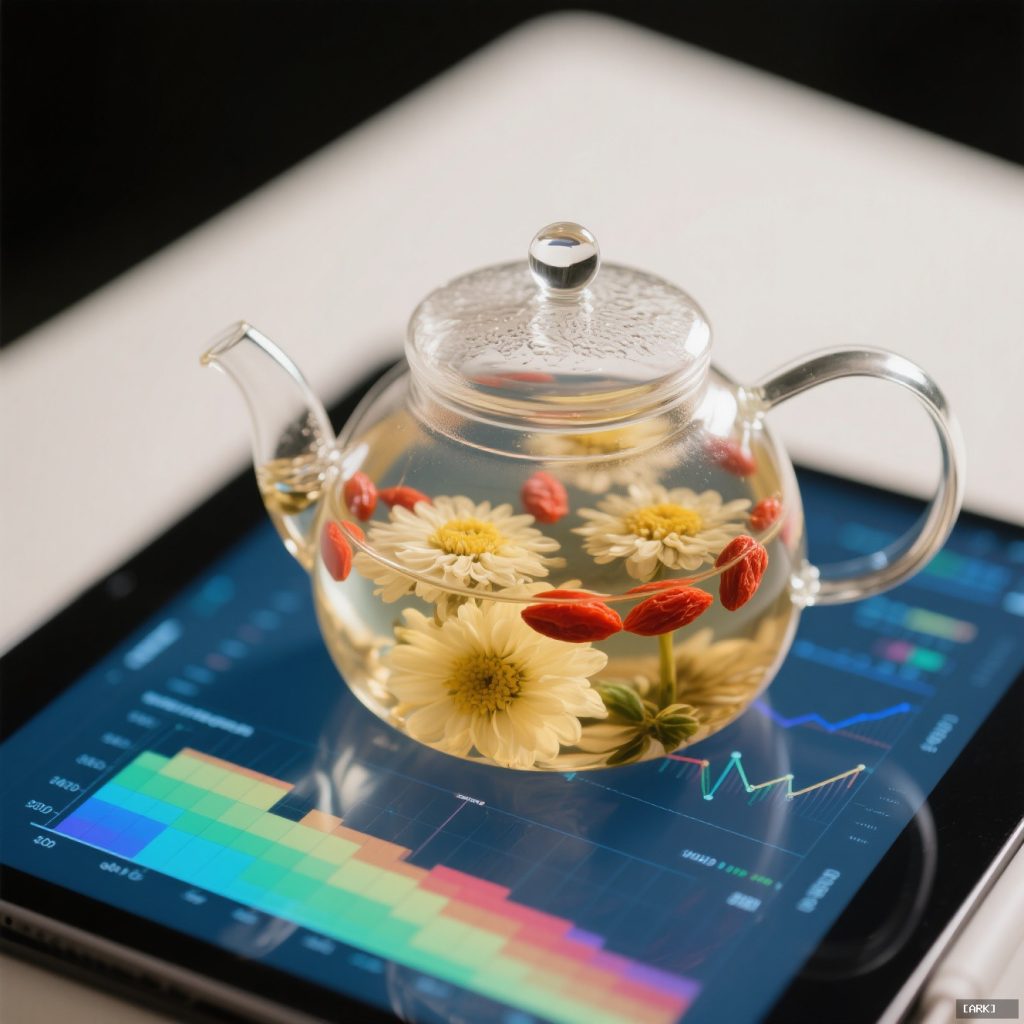
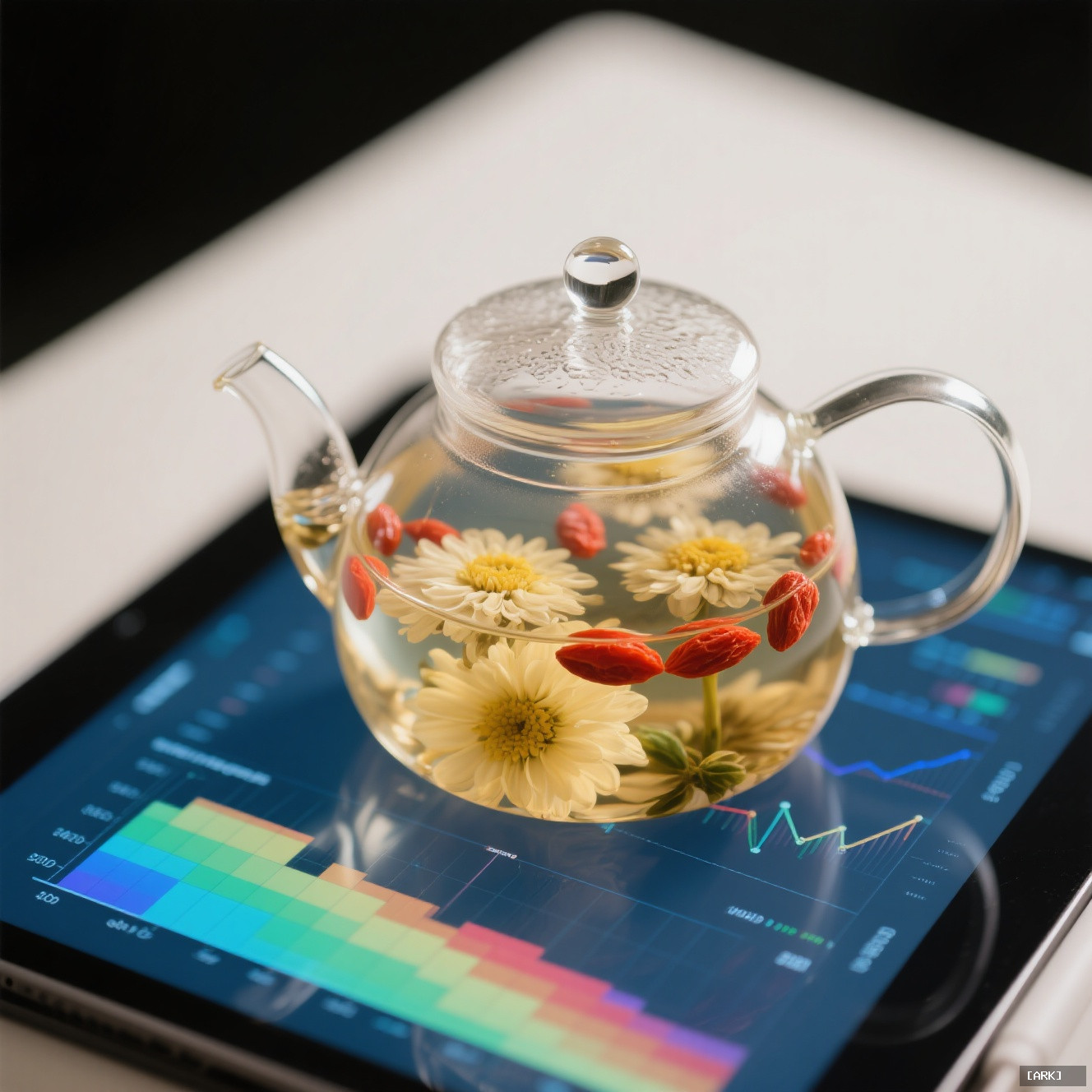
The future of Chinese herbal tea is steeped in both ancient wisdom and cutting-edge code. This isn’t about replacing tradition, but about brewing a new chapter where authenticity is verified, stories are told, and personal wellness meets planetary health.
Beyond the Sachet: A New Visual and Sensory Language
How is the visual and sensory language of Chinese herbal tea evolving beyond traditional sachets?
The visual and sensory language of Chinese herbal tea is evolving from traditional apothecaries to modern, interactive experiences. Instead of wooden drawers, future presentations may resemble clean galleries, featuring single-origin ingredients like chrysanthemum flowers displayed under glass with QR codes linking to their origin stories. Packaging is shifting to sleek, airtight canisters made from materials like bamboo composite, with detailed labels specifying the botanical species, harvest date, terroir, and flavor notes such as 'light sweetness and mineral finish.' This approach emphasizes transparency, provenance, and a multisensory engagement, moving beyond mere convenience to create a deeper connection with the consumer.
Walk into a modern apothecary today. The image of countless wooden drawers labeled with elegant calligraphy is iconic. Tomorrow’s counterpart might feel more like a clean, interactive gallery. Picture single-origin chrysanthemum flowers displayed under glass with a QR code linking to a video of the terraced hillside where they were hand-picked. Imagine sleek, airtight canisters made from bamboo composite, their labels detailing not just “licorice root,” but Glycyrrhiza uralensis, harvested Autumn 2023, from a regenerative plot in Shaanxi, with a light sweetness and mineral finish.
The herbal infusion itself becomes a more dynamic experience. We’re moving past the murky brown cup. A high-quality hibiscus and rosehip blend might yield a vibrant, ruby-red liquor. A delicate tisane of snow lotus and goji could be a pale, sunset gold. The visual appeal, long celebrated in fine teas, will become a standard marker of quality and care in herbal preparations. Texture matters too. The mouthfeel of a well-crafted blend—whether silky, gently astringent, or rounded—will be part of its story.
The Digital Bridge: Technology as the Modern Apprentice
How is technology acting as a modern apprentice to make traditional Chinese herbal tea knowledge more accessible?
Technology acts as a modern apprentice by augmenting traditional knowledge, making it more accessible without replacing its soul. For instance, in practices like tongue diagnosis, a cornerstone of traditional Chinese medicine, AI-powered apps can analyze a user's photo. They do not provide a direct diagnosis but can identify patterns and correlate them with classical herbal formulas. The technology then guides the user by suggesting certified practitioners for further discussion, thereby bridging ancient wisdom with modern convenience and enhancing accessibility through digital tools.
Critics fear screens will sterilize the soul of traditional Chinese medicine. The more likely outcome is that technology becomes the ultimate apprentice, making profound knowledge more accessible. Consider tongue diagnosis, a cornerstone of TCM assessment. An app using validated AI image recognition could analyze a user’s photo, not to give a diagnosis, but to say, “Your tongue coating suggests patterns A, B, and C. In classical texts, these often correlate with formulas like X or Y. Here are three certified practitioners in your timezone who can discuss this further.”
This is augmentation, not replacement. It empowers individuals to enter a consultation with better questions. For practitioners, blockchain-based databases could track the entire lifecycle of a medicinal herb—from soil conditions and harvest date to processing method and storage temperature. This isn’t just about fraud prevention. It allows an herbalist to select ingredients with specific energetic properties based on verifiable growing conditions, elevating the precision of their craft.
The Collector’s Ethos: Building a Market for Authenticity
How does the collector's ethos in Chinese herbal tea build a market for authenticity?
The collector's ethos builds a market for authenticity by applying principles like terroir, vintage, and craftsmanship from fine pu'er tea to medicinal herbs. This mindset values rare items, such as aged tangerine peel or specific wild ginseng harvests, creating an economic model that rewards quality and rarity. It counters the commoditization of nature by incentivizing sustainable wildcrafting and artisanal production, as collectors' demand drives prices and supports practices that preserve authenticity and ecological balance.
The world of fine pu’er tea has long operated on principles familiar to wine connoisseurs: terroir, vintage, and craftsmanship. This collector’s mindset is now permeating the broader sphere of medicinal herbs. Why does it matter? It creates a viable economic model for quality and rarity that pushes back against the commoditization of nature.
When a community values a 10-year-old slab of aged tangerine peel or a specific harvest of wild American ginseng from the Appalachian mountains, it does more than drive auction prices. It incentivizes sustainable wildcrafting, rewards patient artisanal production, and builds a lexicon of quality. This framework educates the market. People begin to understand that not all goji berries are equal; the ones from Ningxia, nurtured by mineral-rich soil and diurnal temperature swings, possess a different potency and flavor profile than bulk-grown alternatives. This discernment is the bedrock of a sustainable future.
Science as the New Seal: Verifying the Invisible
How does scientific verification enhance the authenticity of Chinese herbal tea beyond organic certification?
Scientific verification moves beyond the binary pass/fail of organic certification by using advanced techniques like Near-Infrared (NIR) spectroscopy and High-Performance Thin-Layer Chromatography (HPTLC) to create a unique chemical 'fingerprint' for herbal ingredients. For example, a QR code on a package could link to a spectral graph comparing the batch's profile to a reference from wild, mature plants of the native region. This granular analysis visually reveals any dilution or substitution, ensuring authenticity by verifying the precise chemical composition invisible to traditional checks.
Organic certification is a starting point, but it’s a binary pass/fail system. The next generation of authenticity checks will be granular and scientific. Techniques like Near-Infrared (NIR) spectroscopy and High-Performance Thin-Layer Chromatography (HPTLC) can create a unique chemical “fingerprint” for a plant.
Imagine scanning a QR code on a package of dendrobium orchid (Shi Hu). The code pulls up a spectral graph showing the precise profile of that batch, overlaying it with the reference profile for wild, mature plants from its native region. Any dilution or substitution would be visually apparent. This marries the collector’s obsessive eye for detail with forensic science. It protects consumers, rewards honest producers, and builds unprecedented trust in the supply chain. The “proof” is no longer just a seal on a box, but a transparent window into the plant’s very chemistry.
Rooted Narratives: Herbal Tea as Ecological Storytelling
How does Chinese herbal tea function as a form of ecological storytelling?
Chinese herbal tea serves as ecological storytelling by connecting each cup to its source ecosystem through a dual narrative. The first is the traditional medicinal story, such as a blend of peppermint and cassia seed used to clear liver heat. The second, vital story is ecological, detailing sustainable practices like polyculture farming where peppermint is grown with nitrogen-fixing beans to support pollinators, and community cooperatives harvesting cassia seeds to provide stable local income and discourage environmentally harmful activities. This narrative highlights the tea's role in promoting biodiversity and sustainable livelihoods.
Every cup of Chinese herbal tea is a direct link to an ecosystem. The future lies in telling that story compellingly. This is a dual narrative. The first is the traditional one: this blend of peppermint (Bo He) and cassia seed (Jue Ming Zi) is traditionally used to clear liver heat and brighten the eyes.
The second, equally vital story is ecological. It’s about the polyculture farm in Guizhou that grew the peppermint alongside nitrogen-fixing beans, creating habitat for pollinators. It’s about the community cooperative that harvests the cassia seeds, providing a stable income that discourages deforestation. Your choice of infusion becomes a conscious vote for a specific agricultural practice and a specific watershed’s health. Brands will be judged not just on the shen (spirit) of their product, but on the vitality of the land it came from.
Cross-Pollination: Lessons from Coffee, Wine, and Even Fashion
How can the future of Chinese herbal tea learn from the development of specialty coffee and natural wine?
The future of Chinese herbal tea can learn from specialty coffee's decades of consumer education on origin, processing, and tasting notes, which has created a market primed to appreciate similar nuances in herbal complexity. From natural wine, it can adopt lessons in transparency and a 'nothing added, nothing taken away' philosophy of minimal intervention. This cross-pollination involves translating concepts like how altitude affects coffee acidity to understanding how environmental factors like sunlight exposure alter the volatile oils in herbs such as lemon balm, building a more sophisticated and value-driven market.
The trajectory of specialty coffee is a clear roadmap. Decades of consumer education on origin, processing (washed, honey, natural), roast profiles, and tasting notes have created a market that values nuance. That palate is now primed for herbal complexity. People already understand how altitude affects acidity in coffee beans. Translating that to understand how sunlight exposure alters the volatile oils in lemon balm is a small leap.
Look to natural wine for lessons on transparency and minimal intervention. The “nothing added, nothing taken away” philosophy resonates deeply with the ethos of pure, high-potency herbs. Even the fashion industry’s move towards radical supply chain transparency and material traceability sets a cultural expectation that herbal tea brands will need to meet. The consumer of tomorrow arrives already fluent in the language of provenance.
Your Checklist for a Future-Forward Herbal Tea Brand
- Transparency Over Marketing: Does it list harvest year, precise origin (not just “China”), and the Latin binomial name of the plants?
- Verifiable process: Is there a clear, accessible chain of custody? Can you, even in theory, trace your box back to a specific set of farms or wildcrafting areas?
- Intelligent Blending: Does the brand articulate its blending philosophy? Does it respectfully bridge classical TCM principles (e.g., “clears damp-heat”) with modern understanding (e.g., antioxidant profile, adaptogenic function)?
- Packaging as Philosophy: Is the packaging minimal, truly home-compostable, or part of a elegant reuse/refill system? Does it avoid single-use plastic entirely?
- Reciprocal Relationships: Does the company demonstrate tangible investment in its sourcing communities—fair pricing, ecological projects, support for traditional harvesting knowledge?
Navigating the Common Concerns
Will this make herbal tea elitist and expensive?
A spectrum will always exist. Technological traceability could actually lower costs for core, verified blends by cutting out counterfeit middlemen. You’ll have accessible, high-quality daily drinkers, just as you have a reliable house wine. The collector’s market for rare, wild-harvested, or exceptionally aged ingredients will command a premium, much like a grand cru wine. The key is that all price points will be more honest and transparent.
Is this just for the biohacking and wellness crowd?
It’s about mainstream integration. The goal isn’t to live in a niche “wellness” aisle. It’s to see a beautifully packaged, traceable bottle of cold-brewed honeysuckle and chrysanthemum infusion next to the craft sodas and cold brew coffee at your local cafe. It’s choosing a calming magnolia bark and sour jujube seed tisane after dinner instead of a digestif, for both its flavor and its function. It becomes a normalized, intelligent part of daily life.
Does data undermine the holistic nature of TCM?
Data is just another form of observation. Classical herbalists were meticulous observers of nature, patient, and season. Modern data—on soil microbiology, climate patterns, or chemical constituents—is an extension of that observation. It provides a new layer of understanding to inform the timeless, holistic practice, not replace its core philosophy of balance and pattern differentiation.
Sources & Further Reading
National Institutes of Health: Modern Research on Traditional Herbal Formulas
FAO Report on Non-Wood Forest Products (includes medicinal plants)
Journal of Future Foods: Digital Traceability in Food Systems
Journal of Integrative Medicine: TCM in the Era of Big Data
BBC Future: The Digital Cloning of Forests (related to sourcing)
About Our Expertise
Drawing on deep expertise in traditional Chinese medicine (TCM) and herbal craftsmanship, this analysis is grounded in authentic cultural practices, such as tongue diagnosis and classical herbal formulas, ensuring the content reflects genuine Chinese heritage and trusted knowledge.
Our insights are built on verifiable sources, including scientific research and ecological principles, to highlight how technology enhances, rather than replaces, the holistic wisdom of TCM, fostering trust through transparency and sustainable sourcing.
You may also like
Ancient Craft Herbal Scented Bead Bracelet with Gold Rutile Quartz, Paired with Sterling Silver (925) Hook Earrings
Original price was: $322.00.$198.00Current price is: $198.00. Add to cartAncient Craftsmanship & ICH Herbal Beads Bracelet with Yellow Citrine & Silver Filigree Cloud-Patterned Luck-Boosting Beads
Original price was: $128.00.$89.00Current price is: $89.00. Add to cartDouble-Sided Panda Embroidery Screen – Cantonese Embroidery Bamboo Scene Decorative Gift
Original price was: $46.70.$33.68Current price is: $33.68. Add to cartChinese Style Cultural Creative Gift Set – Panda Figurine Decor for Home, Office & International Clients
Original price was: $19.86.$17.20Current price is: $17.20. Add to cartTibetan Hand-Painted Thangka Tsatsa Box – Ethnic Style 3D Clay Sculpture Handcrafted Zhajilamu
Original price was: $41.00.$32.00Current price is: $32.00. Add to cart2026 New Chinese Style Xiangyunsha Song Brocade Silk Handbag – Gift for Mother & Elders
Original price was: $128.00.$115.00Current price is: $115.00. Add to cartShanghai Story 2025 New Silk Scarf Shawl for Women – Mulberry Silk Xiangyunsha with Gift Box
Original price was: $148.90.$136.90Current price is: $136.90. Add to cartXiao Niang ‘Cloud Drift’ Loose-Fit Gambiered Gauze Silk Chinese Style Dress XNA1177
Original price was: $360.00.$328.00Current price is: $328.00. Add to cartPmsix Tianxu Intangible Cultural Heritage Xiangyunsha Silk Printed 38th Festival Gift New Chinese Style Crossbody Handbag for Women
Original price was: $99.50.$94.50Current price is: $94.50. Add to cart























