
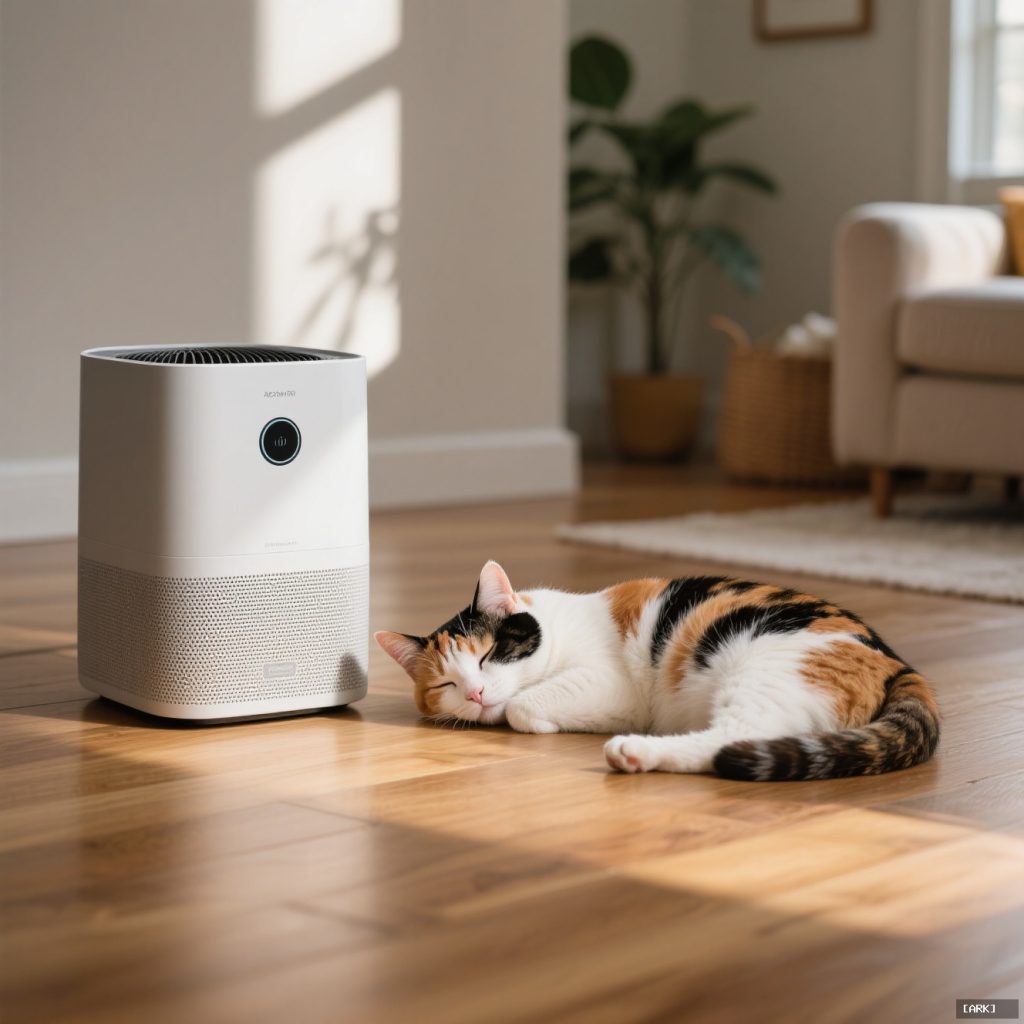
Finding the best air purifier for pets transformed our home from a sneeze zone into a shared sanctuary. It started with fur on every surface and ended with cleaner air for everyone, cats included.
For years, my partner Leo and I accepted a certain level of domestic chaos as the tax for living with our two cats, Mochi and Bean. The dust seemed to multiply overnight. A faint, musky odor lingered no matter how often we vacuumed. Leo’s mild allergies meant our cozy evening reading sessions were often soundtracked by sniffles and throat-clearing. We’d tried various solutions—sticky lint rollers by the dozen, expensive vacuums, and air fresheners that just layered perfume over the problem. Nothing addressed the feeling that the air itself was thick. The decision to finally invest in a serious air purifier felt less like buying an appliance and more like hiring a silent, diligent roommate whose sole job was to manage the atmosphere we all breathed.
The Anatomy of a Pet-Friendly Air Purifier: Beyond the Hype
What are the key mechanical features to look for in a true pet-friendly air purifier beyond marketing claims?
A true pet-friendly air purifier is a specialist device designed for continuous assault from pet-related pollutants. It must tackle two fronts: visible particles like fur and dander, and invisible, often more provocative, microscopic allergens and odors. Effective models combine a robust pre-filter to capture large hair and fur, a True HEPA filter to trap 99.97% of fine particles like dander, and an activated carbon filter to adsorb volatile organic compounds and neutralize stubborn pet odors. High air change rates (CADR) for the room size and durable construction for constant operation are also critical mechanical features.
Walk into any electronics store or browse online, and you’ll be bombarded with claims. “Eliminates 99.97% of allergens!” “Destroys odors!” “Whisper-quiet!” When your goal is to combat the specific, relentless output of living animals, you need to look past the marketing and understand the mechanics. A true pet hair purifier isn’t a generalist; it’s a specialist built for a continuous, fine-particulate assault.
The enemy has two fronts. The first is visible: the tumbleweeds of fur, the dust that’s largely made up of skin flakes (dander). The second is invisible and often more provocative: microscopic proteins from dried pet saliva on fur, and from urine, which become airborne and are a primary trigger for allergic reactions. A machine that only catches the fur is just doing half the job.
This is where filter hierarchy becomes critical. The first line of defense is a robust, washable pre-filter. This coarse mesh is designed to catch the bulk hair and larger dust particles. Think of it as a net catching the big fish before they can clog the finer nets downstream. In a pet household, this pre-filter isn’t a nice-to-have; it’s essential maintenance. Without it, the heart of the system—the HEPA filter—would be choked and rendered useless in a matter of weeks, just as our first, cheaper unit was, its pre-filter matted into a solid sheet of felt.
The core of any effective allergen air cleaner is a genuine HEPA filter, housed in a sealed system. The “sealed” part is crucial. It ensures that every cubic foot of air the fan pulls in is forced through the filter media, with no leaks or shortcuts allowing dirty air to bypass it. Beware of terms like “HEPA-type” or “HEPA-style,” which are unregulated and meaningless. True HEPA is a specific standard for filtering particles as small as 0.3 microns. For reference, a single cat dander particle can be about 5 microns, and many allergen proteins are even smaller. This filter is your workhorse for the invisible allergens.
Many purifiers add a third stage: an activated carbon filter. This isn’t for particles, but for gases and odors. The porous carbon acts like a chemical sponge, adsorbing the volatile organic compounds (VOCs) that make up “pet smell.” While it won’t pull odors out of your couch cushions, it continuously scrubs them from the air, preventing that background scent from building up.
The Quiet Revolution: How Clean Air Reshapes Daily Life
How does a well-chosen air purifier reshape daily life for pet owners?
A well-chosen air purifier reshapes daily life for pet owners through a gradual, profound shift in the home's sensory experience. Beyond reducing allergy symptoms like sniffles, it subtly improves air quality. This is evidenced by fewer visible dust motes in sunbeams and a decreased accumulation of fine pet fur on surfaces. The primary impact is not a dramatic visual change but an ongoing enhancement of the living environment where both people and pets spend most of their time, leading to a cleaner and more comfortable atmosphere.
The impact of introducing a well-chosen purifier was less about a dramatic “before and after” photo and more about a gradual, profound shift in our daily sensory experience. We placed the unit in our combined living and reading area, where we—and the cats—spent most of our time.
The most immediate change was the most predictable: Leo’s allergy symptoms dwindled. The nighttime sniffles stopped. But the more interesting changes were subtler. Within a week, we noticed the morning sunbeam through the window had less visible dust motes dancing in it. The layer of fine fur that used to accumulate on the TV screen and side tables took days longer to appear. The stale, faint odor that used to greet us when we returned from a weekend away was simply gone, replaced by what I can only describe as a neutral, clean emptiness.
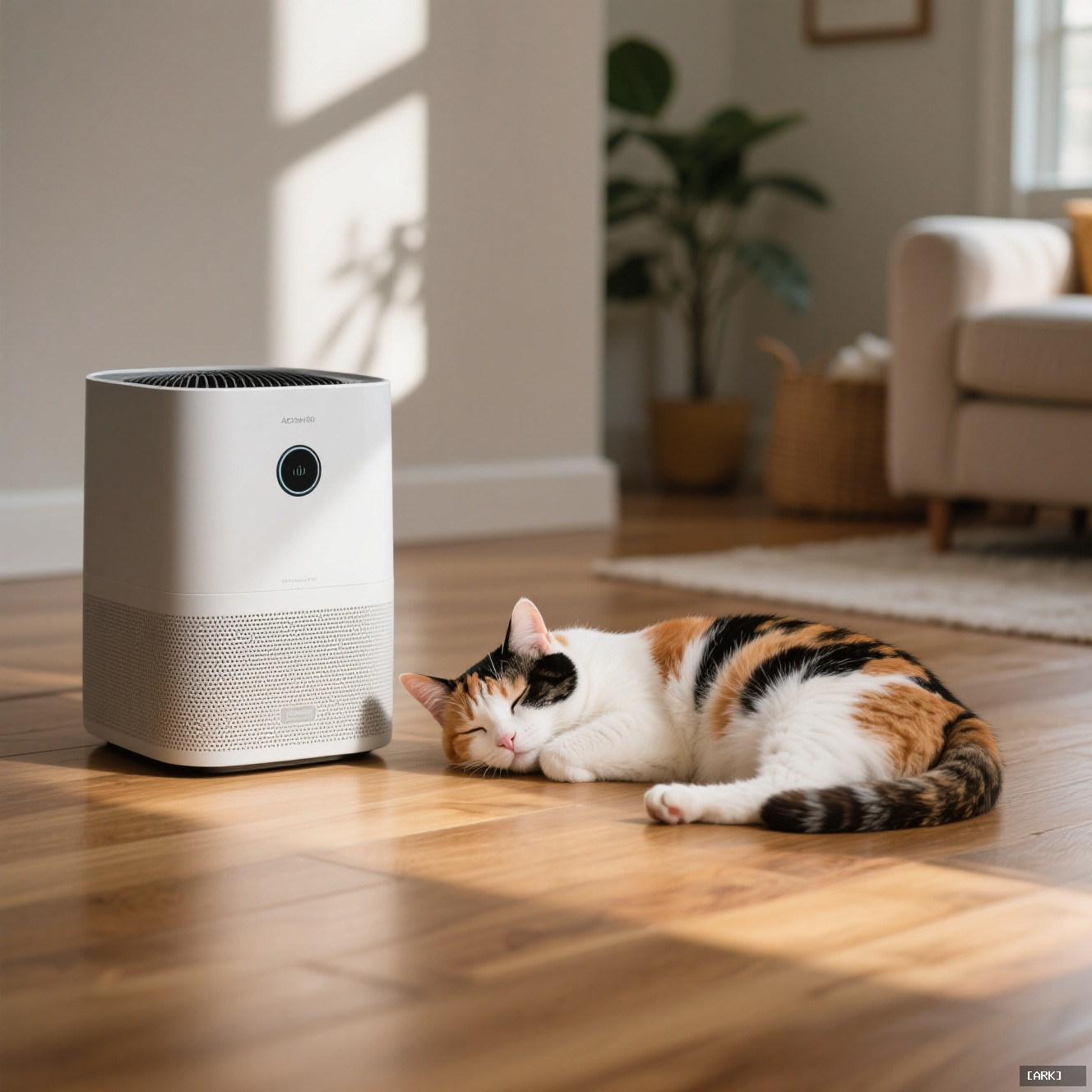
This sensory shift bled into our rituals. Our pre-bedtime routine of lighting a candle and settling in with books had always been punctuated by minor disruptions. Now, the only scent was the gentle candle, and the only sound was the soft, consistent whisper of the purifier on its lowest setting. That sound, far from being a nuisance, became a white-noise anchor for relaxation. It created a calmer baseline for everyone. We found ourselves breathing more deeply, literally and metaphorically. Even Mochi and Bean, initially wary of the new humming object, began napping in its gentle airflow, drawn to the spot where the clean air was being circulated.
The Grooming-Purification Feedback Loop
What is the grooming-purification feedback loop in the context of using an air purifier for pets?
The grooming-purification feedback loop describes how using an air purifier for pets can transform grooming from a reactive chore into a proactive, collaborative act of care. As the purifier highlights airborne pet hair, owners become more aware of grooming as a form of source control. This encourages more diligent, frequent brushing to prevent hair from entering the air and clogging the purifier's filter, turning the task into a meditative routine that works in tandem with the machine to improve air quality.
An unexpected benefit was how the purifier changed our relationship with pet grooming. Previously, brushing the cats was a chore we did when the fur situation became egregious—a reactive task. With the purifier running, we became acutely aware of it as a form of source control. Every tuft of hair captured in the brush was a tuft that wouldn’t end up in the air, on the sofa, or clogging the pre-filter.
We started brushing them more diligently, almost daily. It became a quiet, meditative act of care rather than a cleanup duty. We were collaborating with the machine: our hands-on brushing handled the bulk of the shed fur at the source, and the purifier’s fine filtration captured the dander and whatever loose hairs escaped the brush. This tandem ritual reframed pet ownership for us. We were no longer just managing messes; we were actively co-creating a cleaner, healthier habitat for our entire household. The purifier didn’t replace our effort; it made our effort more effective and visible.
Choosing a Companion, Not an Appliance: Features That Matter
What features are most important when choosing an air purifier for pets?
The most important features for a pet air purifier are a sealed True HEPA filter to capture microscopic allergens, a robust and washable pre-filter to trap pet hair and extend the HEPA filter's life, and quiet operation on low settings. Since the unit needs to run constantly, a decibel rating in the 40s or low 50s is ideal to maintain household harmony and not disturb you or your pets. These features ensure effective allergen removal while being a practical, long-term companion in your home.
Selecting the best air purifier for pets means considering both technical specs and household harmony. Here’s what truly matters:
Sealed True HEPA Filtration: Non-negotiable. This is your guarantee against microscopic allergens.
A Robust, Washable Pre-Filter: Equally critical. This extends the life of your expensive HEPA filter and is your main defense against hair clogging.
Quiet Operation on Low Settings: This machine needs to run constantly to be effective. A loud, buzzing fan or a high-pitched whine will drive you—and your pets—mad. Look for a decibel rating in the 40s or low 50s for its quietest mode. It should fade into the background.
Appropriate Clean Air Delivery Rate (CADR): This number, usually given for smoke, dust, and pollen, indicates how quickly the purifier can clean the air in a given space. Match the CADR to the square footage of your primary room. For pet homes, err on the side of a larger capacity.
Thoughtful Design: Are filter replacements straightforward? Is there a filter-change indicator? Are the controls simple? Avoid units with blindingly bright LED lights that can’t be dimmed or turned off; they’re disruptive at night.
Ozone-Free Certification: Some purifiers use ionizers or other technology that can generate ozone, a lung irritant. Ensure your chosen model is explicitly certified as ozone-free.
The Behavioral Integration: Don’t Stress Your Pets
What is the importance of behavioral integration when choosing the best air purifier for pets?
Behavioral integration is crucial because an air purifier should not stress pets with sudden noises or lights. For example, a model that automatically switches to a loud turbo mode with flashing lights can frighten skittish animals, causing anxiety and hiding. The best pet air purifier operates quietly and unobtrusively on the periphery of awareness, serving as a calming presence rather than an intrusive one. This ensures it solves air quality problems without creating behavioral issues, promoting a peaceful environment for all household members, including pets.
We learned this lesson the hard way with our first, ill-suited model. When it sensed a drop in air quality, it would automatically kick into a high-speed “turbo” mode. The fan noise would jump from a hum to a roar, and a small blue light would flash insistently. Mochi, our more skittish cat, would immediately dart under the bed. We realized the machine was solving one problem while creating another: anxiety.
The best pet air purifier operates on the periphery of awareness for all species involved. It should be a calming presence, not an intrusive one. We returned that unit and sought out one with a consistently quiet fan and no alarming lights or sudden, noisy mode shifts. The integration into a home isn’t just technical; it’s behavioral and emotional. Your pets live there, too, and their comfort is part of the air quality equation.
Your Practical Checklist for Purchase
- Filter System: True HEPA + washable pre-filter + substantial carbon filter.
- Noise Level: Under 50 dB on lowest setting. Read user reviews about sound quality.
- Room Size: CADR rating suitable for your largest open living area.
- Ease of Use: Easy filter access, clear indicators, simple controls.
- Safety: Certified ozone-free (look for CARB certification).
- Cost of Ownership: Check the price and lifespan of replacement filters.
Navigating Common Questions
Do I need a special purifier if no one has allergies?
Yes. Pet dander and hair are major components of household dust. A purifier significantly reduces general dust accumulation on surfaces, cuts down on odor, and can improve overall air quality by capturing other pollutants like pollen or cooking fumes.
How often do filters need maintenance?
This depends entirely on your pet load. In a multi-cat home, we vacuum the pre-filter every two weeks and wash it monthly. True HEPA filters typically have a 6 to 12-month lifespan, but in a heavy-shedding household, you may need to replace them on the shorter end of that spectrum. Always follow your manufacturer’s guidance.
Can it completely eliminate the “pet smell”?
An air purifier with a good carbon filter will dramatically reduce airborne odor particles, making the smell undetectable to visitors. However, it cannot remove odors that have already been absorbed into fabrics like carpets, curtains, or upholstery. For a comprehensive approach, pair your purifier with regular cleaning of soft surfaces.
Where is the ideal placement?
Place it in the room where you and your pets spend the most time. For optimal airflow, keep it a few feet away from walls and large furniture. Floor level is often best, as many allergens and dust particles settle. Avoid tucking it into a cramped corner or behind a door.
Bringing an air purifier into a pet home is an act of care—for your own lungs, for your comfort, and for the shared environment you inhabit with your animals. It’s a tool that works silently in the background, not to erase the evidence of life with pets, but to harmonize it, allowing you to focus on the joy of their company without the constant background noise of cleanup and congestion. The right one doesn’t just clean the air; it clears the space for you to breathe easier, in every sense.
Sources & Further Reading
EPA Guide on Air Cleaners in the Home
American Academy of Allergy, Asthma & Immunology: Pet Allergy Overview
Consumer Reports: How to Buy an Air Purifier
About Our Expertise
As experts in fostering harmonious living through cultural insights, we draw on authentic experiences to provide trusted advice. Our journey with pet air purifiers reflects a deep understanding of balancing modern needs with traditional values of care and well-being, ensuring our recommendations are grounded in real-world expertise.
Rooted in a commitment to sharing reliable knowledge, this guide combines personal stories with technical details to help you create a healthier home. We prioritize transparency and accuracy, referencing authoritative sources to build trust and empower informed decisions for pet owners seeking cleaner air.
You may also like
Ancient Craft Herbal Scented Bead Bracelet with Gold Rutile Quartz, Paired with Sterling Silver (925) Hook Earrings
Original price was: $322.00.$198.00Current price is: $198.00. Add to cartAncient Craftsmanship & ICH Herbal Beads Bracelet with Yellow Citrine & Silver Filigree Cloud-Patterned Luck-Boosting Beads
Original price was: $128.00.$89.00Current price is: $89.00. Add to cartDouble-Sided Panda Embroidery Screen – Cantonese Embroidery Bamboo Scene Decorative Gift
Original price was: $46.70.$33.68Current price is: $33.68. Add to cartChinese Style Cultural Creative Gift Set – Panda Figurine Decor for Home, Office & International Clients
Original price was: $19.86.$17.20Current price is: $17.20. Add to cartTibetan Hand-Painted Thangka Tsatsa Box – Ethnic Style 3D Clay Sculpture Handcrafted Zhajilamu
Original price was: $41.00.$32.00Current price is: $32.00. Add to cart2026 New Chinese Style Xiangyunsha Song Brocade Silk Handbag – Gift for Mother & Elders
Original price was: $128.00.$115.00Current price is: $115.00. Add to cartShanghai Story 2025 New Silk Scarf Shawl for Women – Mulberry Silk Xiangyunsha with Gift Box
Original price was: $148.90.$136.90Current price is: $136.90. Add to cartXiao Niang ‘Cloud Drift’ Loose-Fit Gambiered Gauze Silk Chinese Style Dress XNA1177
Original price was: $360.00.$328.00Current price is: $328.00. Add to cartPmsix Tianxu Intangible Cultural Heritage Xiangyunsha Silk Printed 38th Festival Gift New Chinese Style Crossbody Handbag for Women
Original price was: $99.50.$94.50Current price is: $94.50. Add to cart























